 Blaine
 Why Grandview Homes Face a Tougher Siding Climate
Homes in the Grandview area of Blaine deal with a combination of weather stresses that a lot of siding products simply weren't engineered for. Blaine sits right on the water in the far northwest corner of Whatcom County, which means salt-laden air moves through the neighborhood on a regular basis. That salt air doesn't just smell like the coast — it accelerates corrosion on fasteners, trim, and any siding material that isn't built to resist it.
Layer on top of that the driving rain typical of this part of the Pacific Northwest. Wind off the water pushes rain sideways into wall assemblies, not just straight down, which puts extra pressure on flashing details, seams, and butt joints. And because Blaine gets long stretches of overcast, damp weather, moss and algae have plenty of time to establish themselves on north-facing walls, shaded trim, and anywhere moisture lingers instead of shedding off.
None of this is unusual for Whatcom County. But it does mean that a siding job done to "average" standards — the kind that might hold up fine in a drier inland climate — often shows problems within a few years here. Grandview homeowners need a product and an install process that were built with this exact combination of salt, rain, and moss in mind.
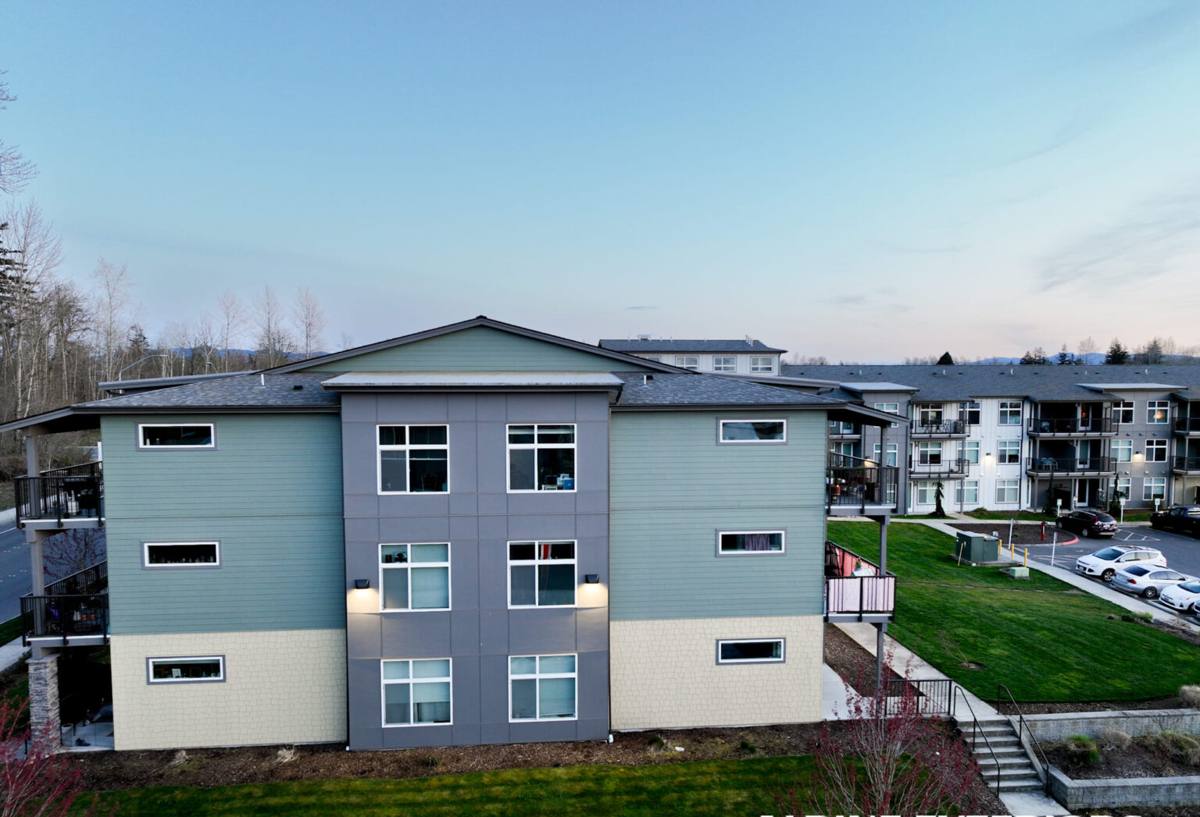
Why We Only Install James Hardie in This Climate
We made the decision to install James Hardie fiber cement siding exclusively, and a coastal Whatcom County climate is a big part of why. Hardie's HardieZone system engineers its products for specific regional conditions, and the HZ5 line — the one used throughout the Pacific Northwest — is built for cold, wet climates with extended moisture exposure. That's not marketing language; it affects the actual composition and performance of the board.
Fiber cement is non-combustible, which matters given the dry summer wildfire smoke that drifts through Western Washington some years even if direct fire risk is lower right on the water. More relevant day to day for Grandview: fiber cement doesn't absorb and swell with moisture the way wood-based or engineered-wood siding products can, so it holds its shape and paint line better through repeated wet-dry cycles.
The factory-applied ColorPlus finish is baked on under controlled conditions, which gives it better resistance to fading and moisture-driven failure than field-applied paint. In a climate where a house can go weeks without a fully dry day, that's a real practical advantage, not just a color option.
What a Correct Installation Involves
James Hardie siding performs the way it's supposed to only when it's installed to spec. A rushed or generic install erases most of the climate advantages the product offers. On a Grandview home, we pay close attention to:
- A continuous weather-resistive barrier behind the siding, with no gaps or tears left from the old material
- Proper flashing at every window, door, and roofline intersection — the spots where wind-driven rain finds its way in
- Correct fastener spacing and depth, since over-driven or under-driven nails are one of the most common causes of premature siding failure
- A minimum clearance gap at the bottom of the wall and anywhere siding meets a roof, deck, or grade, so water has somewhere to go instead of wicking upward
- Caulking only where Hardie's install guide actually calls for it — over-caulking traps moisture instead of shedding it
Every one of these details is more important in a wet, wind-driven climate than in a dry one, because mistakes get tested by the weather almost immediately instead of sitting dormant for years.
Mistakes We Watch For on Older Grandview Homes
When we re-side an existing home in the Grandview area, we're not just installing new material — we're often correcting problems left behind by an earlier siding job. A few patterns show up often enough that we check for them every time:
Hidden rot behind old siding. Wood-based siding that's been slowly absorbing moisture for years can look fine from the outside while the sheathing behind it is compromised. We check for this before anything new goes up, because covering rot with a new product just hides the problem.
Missing or undersized weep paths. Some older installs seal the bottom of the wall tight, assuming that keeps water out entirely. In practice, some moisture always gets behind cladding eventually — the difference is whether it has a way back out.
Fastening errors from lower-bid crews. Overdriven nail guns, wrong fastener length, or siding nailed directly into sheathing without proper backing are common shortcuts that shorten the life of even a good product.
Our Process for a Grandview Job
We run the same disciplined process on every Hardie install, and it doesn't get shortened for smaller jobs:
- Assessment. We walk the exterior, check for existing moisture damage, and look at how wind and rain actually hit the specific sides of the house.
- Tear-off and inspection. Old siding comes off and we inspect the sheathing underneath before anything new goes up.
- Weather-resistive barrier and flashing. This is the layer that does the real waterproofing work — the siding is the second line of defense, not the first.
- Installation. Hardie boards, panels, or trim go up to manufacturer spec, with attention to fastening, clearances, and joint placement.
- Detail work. Caulking, touch-up, and trim finishing where the install guide calls for it.
- Walkthrough. We go over the finished job with the homeowner before calling it done.
ColorPlus Finish and Choosing Colors for a Coastal Setting
James Hardie's ColorPlus technology applies color in a factory setting with multiple baked-on coats, rather than painting boards after installation. In a salt-air, high-moisture environment like Blaine, that matters for two practical reasons. First, factory finishes resist fading and chalking better than field-applied paint exposed to the same UV and salt cycle. Second, because the finish is consistent and warrantied as part of the siding system, touch-ups match properly instead of creating visible patchwork over time.
Color choice on the water tends to lean toward tones that hold up visually against gray skies and green landscape — but that's a homeowner preference call, not a performance one. Every ColorPlus color carries the same factory-finish durability regardless of shade.
What a Grandview Siding Project Actually Costs
Every home is different, so we don't quote a number until we've walked the property. But the real cost drivers on a Grandview job are consistent enough to lay out honestly:
| Factor | Why It Matters |
|---|---|
| Existing siding removal | Wood, vinyl, and other materials tear off at different speeds; hidden damage adds labor |
| Sheathing or rot repair | Any compromised wood found during tear-off needs to be replaced before new siding goes on |
| Home size and wall complexity | Dormers, bump-outs, and multiple gables add cutting, flashing, and labor time |
| Trim and accessory work | Fascia, soffit, and trim boards are often replaced or refreshed alongside the siding |
| Product line and profile | Lap siding, shingle-style panels, and board-and-batten carry different material and labor costs |
| Color selection | Custom ColorPlus colors can affect lead time and pricing versus standard offerings |
Why Hiring a Crew That Already Works Grandview Matters
A siding crew that only shows up in Blaine occasionally doesn't have the same working knowledge of how wind comes off the water on this stretch of coastline, which walls take the worst of the driving rain, or how long moss season actually runs here compared to inland Whatcom County. A local crew that has worked Grandview homes before brings that knowledge into every flashing detail and fastening decision, instead of applying a generic install that was designed for a different climate.
There's also the accountability piece. A traveling low-bid outfit is hard to reach if a flashing detail fails two winters later. A local crew has a reputation in the community to protect and is easy to call back if something needs a look.
Caring for Your Hardie Siding After Install
James Hardie siding is low-maintenance, not zero-maintenance. A little seasonal attention goes a long way in this climate:
- Rinse siding periodically to clear salt residue and organic buildup before it feeds moss growth
- Keep gutters clear so water sheds away from the wall instead of running down it
- Trim back vegetation and tree cover that keeps shaded walls damp longer than they need to be
- Inspect caulking at trim joints and penetrations every year or two, and re-seal only where it's actually failing
- Address any impact damage or chipped finish promptly rather than letting exposed edges sit through a wet winter
If you're weighing a siding project on a Grandview home in Blaine, we're glad to walk the property, look at what your walls are dealing with, and give you a straightforward, no-pressure estimate — just fill out the form below to get started.