 Blaine
 Windows Built for the Lynden Climate, Not Just the Lynden Look
Lynden sits far enough inland from Blaine's waterfront that people sometimes assume their windows get an easier ride than homes right on the water. They don't get it easy — they just get a different version of the same problem. The marine air off the Strait still reaches this far into Whatcom County, driving rain still comes in sideways during fall and winter systems, and the long stretch of gray, damp months from October through April keeps every north-facing wall and window sill wet longer than it should be. Add the moss and algae that thrive in that dampness, and you've got a climate that's steadily testing seals, frames, and glazing on almost every house in the area, whether it's a farmhouse on an acreage lot or a newer build in one of Lynden's residential subdivisions.
Custom windows for this area aren't about a fancier look. They're about getting the frame material, glazing package, and installation details right for a place that's wet more months than it's dry.
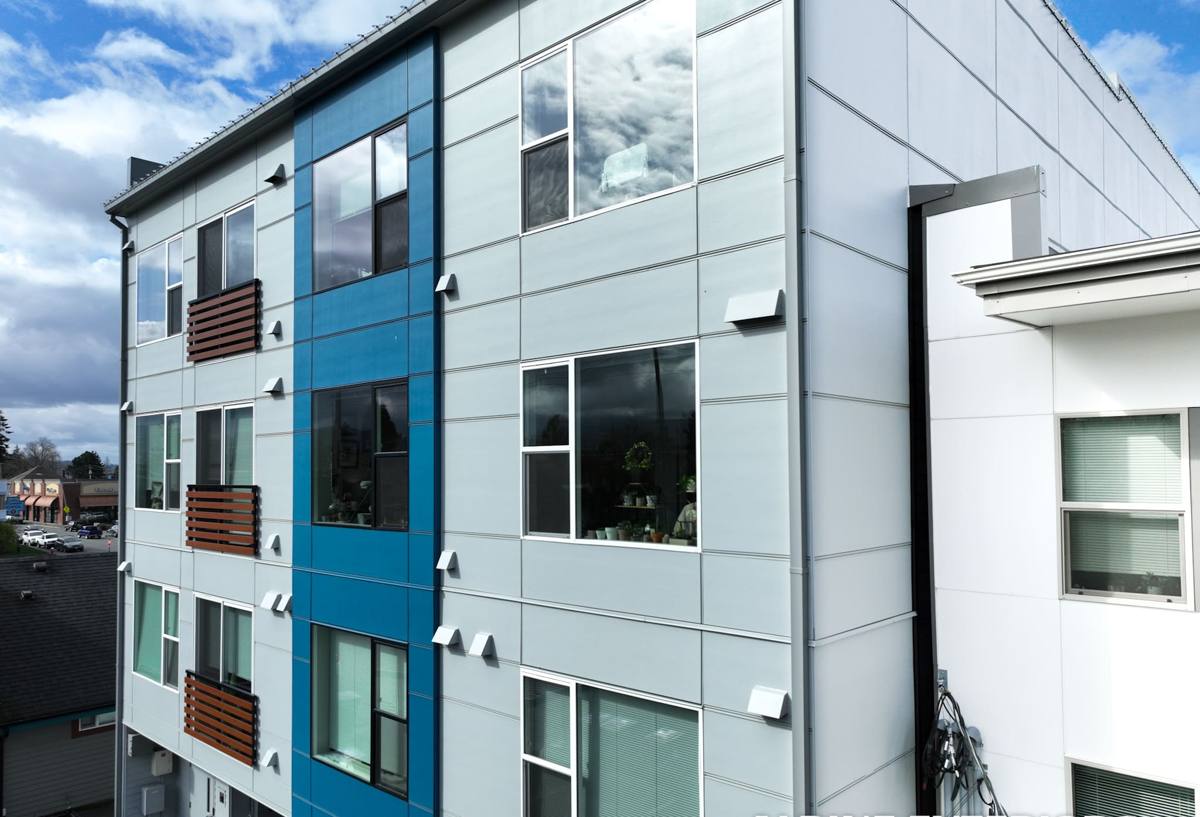
What "Custom" Actually Means for a Whatcom County Home
"Custom" gets used loosely in this trade. For us it means two things: the window is built to the actual, as-measured opening in your house — not a stock size with shims and gaps filled in — and the style, grid pattern, and trim are matched to the house instead of forced to fit whatever's on the truck.
Retrofit vs. New Construction Windows
Most of the work we do in Lynden is retrofit (also called insert or pocket) replacement — the new window goes into the existing frame, which keeps your existing exterior trim and siding largely undisturbed. That's the right call when the old frame and surrounding wall are still structurally sound. New construction windows, which have a nailing fin and require removing trim down to the sheathing, come into play when a frame has rotted, when you're changing the window's size or shape, or when it's part of a broader siding or remodel project. Neither one is automatically "better" — the right choice depends on the condition of what's already there, which is something we check before we ever quote a job, not after.
Matching the House
Farmhouses, craftsman-style homes, and newer subdivision builds all call for different grid patterns, frame colors, and proportions. A custom window shop can match sightlines and trim profiles so new windows look original to the house rather than like an obvious retrofit — that matters both for how the house looks day to day and for resale.
Frame Materials: What Holds Up in This Climate
Frame material is the decision that matters most for a place with Lynden's weather pattern. Here's how the common options actually perform over time in a wet, salt-influenced climate:
| Material | Moisture Behavior | Maintenance | Typical Lifespan |
|---|---|---|---|
| Vinyl | Won't rot or corrode; can expand/contract with temperature swings | Low — occasional cleaning | 20–30+ years |
| Fiberglass | Very stable dimensionally; excellent moisture resistance | Low | 30–40+ years |
| Wood (clad exterior) | Good if the cladding and seals stay intact; exposed wood is vulnerable | Higher — seals and cladding need periodic inspection | 20–30 years with upkeep |
| Aluminum | Prone to condensation and corrosion near salt air unless thermally broken | Moderate | Varies widely |
Our standard for this area is vinyl or fiberglass with a fully welded frame and sash, because a mechanically fastened corner is a future leak path once caulk ages and the frame flexes through a few dozen freeze-thaw and wet-dry cycles. We'll install wood-clad windows when a homeowner wants the interior wood look and understands the maintenance commitment that comes with it — that's a legitimate choice, just one we explain honestly rather than downplay.
Glazing: Where Efficiency and Moisture Control Actually Happen
The glass package matters as much as the frame. For Lynden's mix of cool, wet winters and mild summers, we generally recommend:
- Double-pane, low-E glass as the baseline — it's the right balance of cost and performance for most homes here.
- Argon gas fill between panes for a meaningful bump in insulating value without a major cost jump.
- Triple-pane for north- or west-facing rooms, homes near open fields with more wind exposure, or homeowners specifically chasing lower heating bills.
- Warm-edge spacers (not aluminum spacers) to cut down on condensation at the glass edge — condensation there is one of the first signs of a failing seal.
Condensation between the panes, not just on the surface, is the clearest sign a seal has already failed and the insulating gas has escaped — that's a warranty issue, not a cleaning issue, and worth knowing the difference.
Signs Your Current Windows Are Working Against You
Homeowners often live with failing windows for years because the signs show up gradually. Worth checking for:
- Fogging or a permanent haze between the glass panes (failed seal)
- Soft or discolored wood trim around the window, especially at the bottom sill
- Drafts you can feel with a hand near the frame on a windy day
- Windows that are hard to open, close, or lock — frames warp as wood swells and dries with the seasons
- Visible gaps between the frame and the wall, or caulk that's cracked and pulling away
- Moss or black streaking on the sill or lower frame that keeps coming back no matter how often it's cleaned
- Noticeably colder rooms near windows in winter compared to the rest of the house
Any one of these on its own isn't necessarily urgent. Several at once, especially combined with soft trim, usually means moisture has been getting behind the window longer than it looks from outside.
How We Approach a Custom Window Job
- On-site assessment. We check the condition of the existing frame, sill, and surrounding wall — not just take measurements — because that determines retrofit vs. full-frame replacement.
- Accurate measurement and product selection. Each opening is measured individually; older homes are rarely perfectly square, and a custom-built window accounts for that instead of relying on shims to fake it.
- Flashing and moisture barrier detail. This is the step that separates a window that lasts from one that leaks in five years. Proper sill pan flashing and integration with the house wrap or building paper is non-negotiable in a climate this wet — it's also the step that's easiest to shortcut and hardest to inspect after the fact.
- Installation and air-sealing. The window is set, shimmed level and square, and sealed with the right foam and sealant — not over-foamed, which can bow a frame, and not under-sealed, which leaves gaps.
- Interior and exterior finish work. Trim, caulking, and touch-up so the finished window looks like it belongs on the house.
- Final walkthrough. Every window operates — opens, closes, and locks — the way it's supposed to before we call the job done.
What Drives the Cost
There's no honest flat price for custom windows — too much depends on the specifics of your house. The factors that actually move the number:
| Factor | Why It Matters |
|---|---|
| Frame material | Vinyl is typically the most budget-friendly; fiberglass and wood-clad cost more up front |
| Retrofit vs. full-frame | Full-frame replacement involves more labor, trim, and sometimes siding repair |
| Glazing package | Triple-pane and specialty coatings add cost but also long-term efficiency |
| Window size and shape | Large picture windows, bays, and custom shapes cost more than standard double-hungs |
| Condition of the existing opening | Rot or structural repair needed behind the old window adds labor beyond the window itself |
| Number of windows | Whole-house projects typically bring a better per-window cost than one-off replacements |
We give a real, itemized number after seeing the actual openings — not a per-window estimate pulled from a national average that doesn't account for a wet Whatcom County wall.
Why It Matters That We Already Work in This Area
A crew that works Lynden and the greater Blaine area regularly knows things that show up in the work: which frame materials actually hold their finish through a Whatcom County winter, how far in from the water moisture problems still show up, and what flashing details matter most for houses that see this much rain over a year. That's not a marketing point — it changes what gets specified and how a job gets flashed. It also means callbacks are simple: we're not driving in from three counties over if something needs a second look after the first hard rain tests the seals.
Get a Straight Answer on Your Windows
If your windows are fogging, drafty, hard to operate, or just old enough that you're wondering, we'll come take a look and give you a straightforward assessment — what's actually wrong, what your real options are, and a clear cost range, with no pressure to sign anything on the spot. Use the form below to request a free estimate.