 Blaine
 New Roof Installation Built for Lynden's Weather, Not Just for the Sale
A new roof is one of the biggest single investments a homeowner in Lynden will make, and it's not a decision to base on the lowest bid alone. This corner of Whatcom County deals with a specific combination of conditions — salt-laden air blowing in off the Salish Sea, long stretches of driving rain through fall and winter, and a moss season that can run most of the year in shaded, north-facing areas. A roof that's installed correctly for this climate will outlast one that was installed the same way you'd install it in Spokane or Sacramento. The materials, the flashing details, the ventilation, and even the fastener choices all matter more here than they do in a drier, calmer climate.
This page covers what a proper new roof installation looks like for a Lynden home, what local conditions do to a roof over time, and what to expect when you work with a crew that already knows this area.
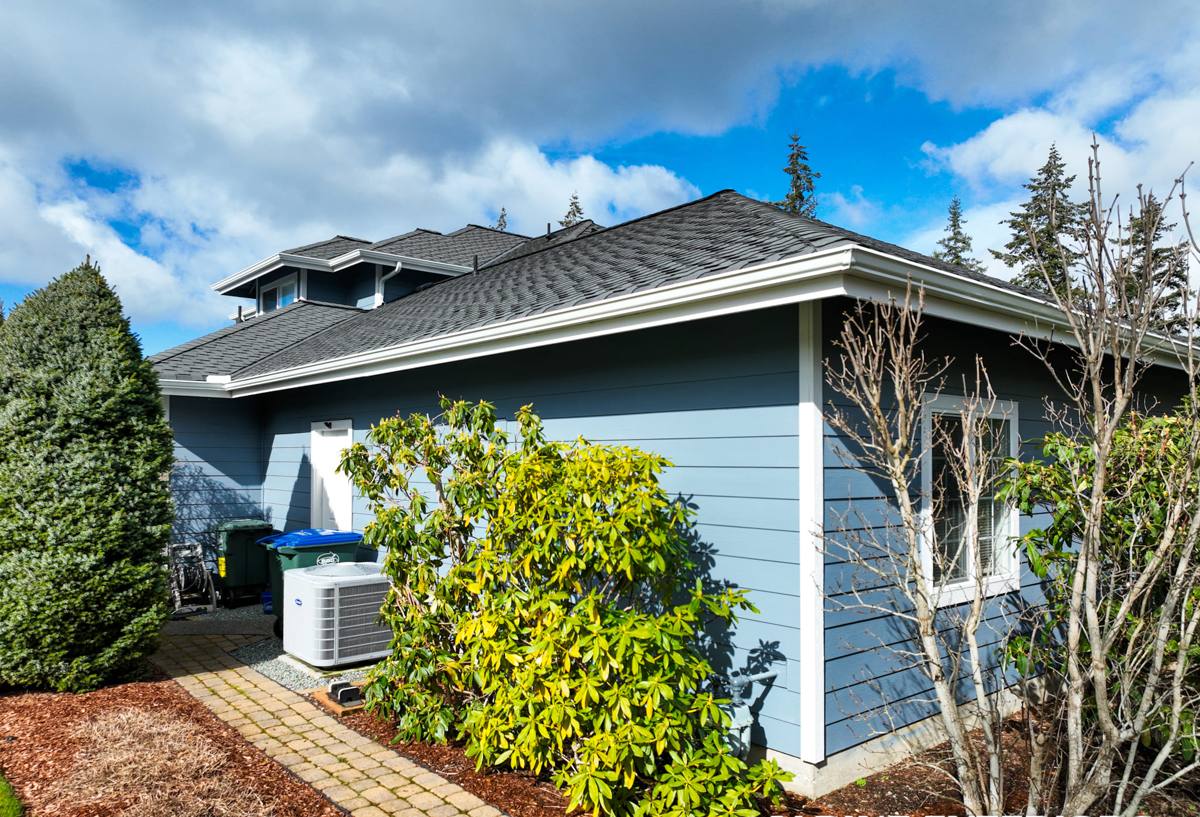
What This Climate Does to a Roof Over Time
Salt Air and Metal Fatigue
Even homes that aren't right on the water pick up salt-bearing moisture carried inland on prevailing winds. Over years, that salt content accelerates corrosion on exposed metal — flashing, fasteners, vent stacks, and gutter hardware. A roof built with the wrong grade of metal, or with metal components that aren't properly coated or isolated from dissimilar materials, will show rust and pitting well before the shingles themselves are due for replacement.
Driving Rain and Wind-Driven Water
Lynden doesn't just get rain — it gets rain pushed sideways by wind often enough that water finds its way into gaps a calmer climate would never expose. That means underlayment, flashing laps, and seal points around penetrations (vents, skylights, chimneys) have to be installed with wind-driven water in mind, not just water falling straight down. This is one of the most common places we find shortcuts on roofs that were installed by out-of-area crews working from a generic install manual.
The Long Moss Season
Shaded roof sections, north-facing slopes, and anything near overhanging trees stay damp for extended stretches here. Moss and algae take hold in that moisture and, left unaddressed, work their way under shingle tabs, lift edges, and hold water against the roof deck. A roof designed with moss prevention in mind from day one needs far less maintenance over its life than one where moss control is an afterthought.
Signs a Repair Won't Cut It Anymore
Not every roof problem means a full replacement, but there's a point where patching becomes false economy. Common signs it's time to talk about a new roof rather than another repair:
- Shingles are curling, cracking, or losing granules across large sections, not just one spot
- You've had two or more leak repairs in different locations within the past couple of years
- The roof deck shows soft spots, sagging, or visible daylight from the attic
- Moss and algae keep returning within months of cleaning, even after treatment
- The roof is at or past the manufacturer's expected service life for the material
- Flashing around chimneys, skylights, or valleys is rusted, cracked, or was never properly integrated
If your roof is showing two or more of these, a full replacement is usually the more cost-effective path — you stop paying for repeated repairs on a system that's already failing in multiple places.
What a Correct Installation Actually Involves
Tear-Off and Deck Inspection
We remove the existing roofing down to the deck rather than layering over old material. That's the only way to actually see the condition of the sheathing underneath — soft, rotted, or delaminated deck sections get replaced before anything new goes on. Installing new roofing over a compromised deck just hides the problem and shortens the life of the new roof.
Underlayment and Water Barrier
Given how much wind-driven rain this area sees, underlayment choice and installation matter as much as the shingles themselves. Eaves, valleys, and other vulnerable areas get a self-adhering water and ice barrier, with synthetic underlayment across the rest of the deck, lapped correctly to shed water even when it's blowing sideways.
Flashing Done Right
Flashing around chimneys, skylights, sidewalls, and roof-to-wall transitions is where most roof leaks actually originate — not in the open field of shingles. We use properly sized, corrosion-resistant flashing, integrated with the underlayment in the correct shingle-over-flashing sequence, rather than relying on caulk or sealant to do a flashing detail's job.
Ventilation
A roof system needs balanced intake and exhaust ventilation to manage moisture and temperature in the attic. In a climate this wet, poor ventilation traps moisture against the underside of the deck, which shortens the life of the sheathing and can promote mold and rot that has nothing to do with the shingles above it.
Fasteners and Attachment
Correct nail placement, pattern, and penetration depth affect how well a roof holds up under wind load. We follow manufacturer specifications rather than production shortcuts, because under-driven or misplaced fasteners are a common cause of premature shingle failure in windy conditions.
Choosing the Right Roofing Material for a Lynden Home
There's no single "best" roofing material for every home — the right choice depends on your roof's exposure, your budget, and how much long-term maintenance you're willing to take on. Here's how the common options compare for this climate:
| Material | Typical Lifespan | How It Handles This Climate | Trade-Offs |
|---|---|---|---|
| Architectural (dimensional) asphalt shingles | 25–30 years | Good moisture resistance with algae-resistant granule options; widely used and well-suited to wind-driven rain when installed correctly | Needs periodic moss/algae maintenance in shaded areas; lifespan shortened by poor ventilation |
| 3-tab asphalt shingles | 15–20 years | Adequate but less wind resistance and thinner profile than architectural shingles | Shorter service life; less resistant to the area's wind gusts |
| Standing seam metal | 40–50+ years | Sheds rain and moss buildup very effectively; strong wind performance | Higher upfront cost; requires correct panel and fastener specification to resist salt-air corrosion |
| Wood shake/shingle | 20–30 years with upkeep | Traditional look, but holds moisture and is one of the more moss-prone materials in a damp climate | Higher ongoing maintenance burden; more fire and moisture considerations than other options |
For most Lynden homes, architectural asphalt shingles with algae-resistant (copper- or zinc-infused) granules hit the best balance of upfront cost, appearance, and performance against moss. Standing seam metal is worth considering for homes with heavy tree cover or steep, hard-to-maintain roof planes where reducing moss maintenance long-term outweighs the higher install cost.
Moss and Algae: Building Prevention Into the Install
Rather than treating moss as something you fight after the fact, we build prevention into the installation itself where it makes sense:
- Algae-resistant shingle options for roofs with shaded or north-facing sections
- Zinc or copper strips near the ridge on request, which release trace metal ions that inhibit moss and algae growth as rain washes over them
- Correct shingle spacing and ventilation so the deck dries out between rain events instead of staying damp
- Guidance on trimming back overhanging branches that keep sections of the roof shaded and slow to dry
None of this eliminates the need for occasional roof cleaning, but it significantly reduces how often and how aggressively you'll need to deal with moss over the life of the roof.
Our Installation Process
- On-site inspection and estimate — we look at the existing roof, attic ventilation, and any problem areas before quoting anything
- Material selection — we walk through the trade-offs above so you're choosing based on your home and budget, not a sales pitch
- Scheduling around weather — roofing work is scheduled with realistic attention to rain forecasts, since a rushed install during a wet window is how leaks happen
- Tear-off and deck repair — old roofing removed, deck inspected, and any damaged sheathing replaced
- Underlayment, flashing, and shingle installation — installed to manufacturer specification with this area's wind and rain in mind
- Final walkthrough and cleanup — magnetic sweep for stray fasteners, debris removal, and a walkthrough so you know what was done and why
What a New Roof Typically Costs
Roofing costs vary based on roof size and pitch, tear-off complexity, deck condition, and material choice, so a real number requires an on-site look. As a general frame of reference for planning purposes:
| Factor | How It Affects Cost |
|---|---|
| Roof size and number of planes | More square footage and complex rooflines (valleys, dormers) increase labor and material |
| Roof pitch | Steeper roofs require more safety equipment and labor time |
| Deck condition | Rotted or soft sheathing found during tear-off adds repair cost not visible from the ground |
| Material choice | Asphalt shingles are the most budget-friendly; metal costs more upfront but lasts longer |
| Layers to remove | Removing multiple existing roof layers adds labor and disposal cost |
Most asphalt shingle replacements on a typical single-family home fall into a broad mid-range budget, with metal roofing running higher upfront but lower in lifetime maintenance. We'll give you an itemized, honest number after we've actually seen your roof — not a phone estimate.
Why It Matters to Hire a Crew That Already Works in Lynden
A roofing crew that regularly works Whatcom County knows how this area's wind, rain, and moss actually behave on a roof, not just in a training manual. That shows up in small decisions — where extra ice-and-water barrier goes, how much overhang to leave for driving rain, which shingle lines actually hold up against moss locally versus which ones just look good in a brochure. It also means we're a known, reachable crew if something needs attention after the install, rather than a company that did one job in the area and moved on.
We also handle the practical side of a re-roof — coordinating with your material supplier, disposing of tear-off debris properly, and making sure the finished roof passes inspection where required — so you're not managing logistics on top of a major home project.
Get a Free, No-Pressure Estimate
If your Lynden home's roof is showing its age, dealing with recurring moss, or just due for an honest evaluation, we'll come take a look and give you a straightforward assessment — no pressure, no inflated quote to negotiate down from. Use the form below to request your free estimate.