 Blaine
 Roof Replacement in Lynden: What the Valley's Climate Demands
Lynden sits inland in the Nooksack River valley, in the northern reach of Whatcom County near the Canadian border. It's a different setting than a waterfront property, but it still falls inside the same marine-influenced weather system that shapes roofing across this whole corner of Washington. Salt-tinged air off the Sound and the Strait still reaches this valley, just less directly than it does closer to open water. Add in rainfall that arrives wind-driven more often than it falls straight down, and mild temperatures that give moss a long season to take hold, and a full roof replacement here has to be built for sustained moisture, not just for a dry afternoon in July.
We replace roofs and handle siding, windows, and decks across this part of the county, and a full roof replacement is one of the largest single investments most homeowners make in their home's exterior. Done correctly, it should outlast the loan you took out to pay for it. Done with shortcuts at the tear-off, underlayment, or flashing stage, a brand-new roof can start showing the same problems as the one it replaced within a handful of wet seasons. This page is specifically about full roof replacement for a Lynden home — not a patch, not a spot repair — and what separates a job that lasts decades from one that doesn't.
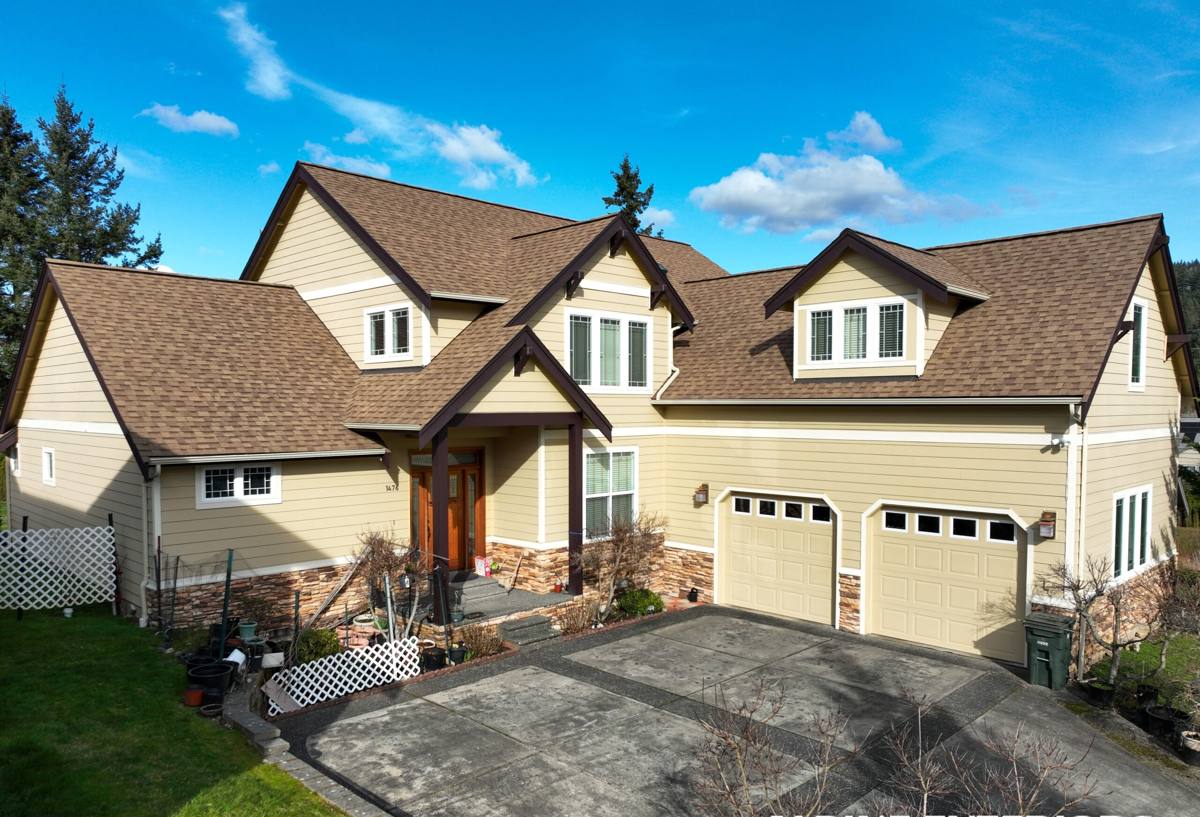
Signs a Lynden Roof Has Reached Replacement, Not Repair, Territory
Not every roofing problem calls for a full tear-off, and we won't recommend one your roof doesn't actually need yet. But certain signs point toward replacement being the more honest answer than another round of patching:
- Shingles curling, cupping, or shedding granules across most of the roof, rather than one isolated section
- Moss and algae that return within a season of being cleaned, on more than one slope
- A roof that's had several past repairs and is now approaching or past its material's rated service life
- Soft spots in the decking, a sagging roofline, or daylight visible through the roof from inside the attic
- Leaks showing up in more than one location during a heavy, wind-driven storm
- Interior ceiling staining that keeps reappearing after repairs, suggesting the problem has spread beyond one fixable point
One or two of these on their own often still point to a repair. When several show up together, or the decking underneath already has moisture damage, patchwork repair usually costs more over the following few years than a properly done replacement would have up front.
What a Correct Roof Replacement Actually Involves
The shingle or panel on top is the smallest part of what determines how long a replacement roof actually lasts in this climate. Most of what matters happens in layers you won't see once the job is finished.
Tear-Off and Deck Inspection
A full tear-off down to the plywood or OSB decking is the only way to find rot, soft spots, or moisture damage that's been developing quietly for years. Installing new roofing over an existing layer — a layover — skips that inspection entirely and simply seals whatever problems already exist underneath a fresh surface. On a true replacement, any damaged sheathing gets identified and replaced before anything new goes down.
Underlayment Built for Wind-Driven Rain
Basic felt underlayment is a weaker second line of defense than synthetic or self-adhered underlayment when rain is being pushed sideways rather than simply running off the roof. We add self-adhered ice-and-water membrane at eaves, valleys, and other spots where water and debris naturally collect, since that's exactly where a wind-driven storm finds its way in first.
Flashing at Valleys, Chimneys, and Wall Transitions
Most leaks on roofs in this region start at flashing, not out in the open field of shingles. Valleys, chimney and vent penetrations, and the transitions where a roofline meets a wall all need flashing that's properly lapped and integrated with the underlayment as part of the system — not caulked over after the fact once the shingles are already down.
Fastening and Wind Resistance
Nail pattern, count, and placement follow manufacturer specification on every job, not a faster shortcut. That's what keeps a new roof locked down under wind load instead of lifting at the edges a few years in, which matters on the more open, sun-exposed lots found on farmland-adjacent properties around Lynden just as much as it does anywhere else in the county.
Ventilation
Balanced intake and exhaust ventilation keeps the underside of the new roof deck dry year-round, which extends the material's life and starves out the moisture that feeds moss growth from below. A replacement roof can look right from the street and still be shortening its own lifespan because nobody addressed attic airflow while the old roof was off.
Choosing a Roofing Material for a Lynden Replacement
| Material | Moss & Moisture Behavior | Typical Lifespan Here | Notes for a Valley Property |
|---|---|---|---|
| Architectural asphalt shingle | Solid performance with proper ventilation; algae-resistant granule versions slow staining on shaded slopes | 25-30 years | The most common practical choice; balances upfront cost with real-world durability |
| Standing seam metal | Smooth, non-porous surface sheds water and discourages moss buildup | 40-60 years | Higher upfront cost, longest realistic lifespan for homeowners planning to stay long-term |
| Composite/synthetic shingle | Resists moisture absorption; performance varies meaningfully by product quality | 30-50 years | Worth a look for homeowners wanting a shake or slate look without the maintenance burden |
| Cedar shake | Absorbs moisture readily; needs consistent airflow underneath to dry between rains | 20-30 years with active upkeep | Highest maintenance option in a valley climate that stays damp for long stretches |
Sun exposure and tree cover vary a lot from one Lynden property to the next — some sit on more open, farmland-adjacent lots, while others are shaded by mature trees closer to the older parts of town. That variation matters more for material choice than the town's average climate does, which is why we walk the actual roof before recommending a product rather than defaulting to whatever's easiest to sell.
What Drives the Cost of a Lynden Roof Replacement
Two bids for the same roof can land thousands of dollars apart, and the gap is almost always real scope, not one contractor simply padding a number. Knowing what moves the price makes it much easier to compare estimates that look nothing alike on paper.
| Factor | What It Affects |
|---|---|
| Tear-off scope and deck repair | Whether hidden decking damage gets found and fixed before new material goes down |
| Underlayment grade | How well the roof resists wind-driven rain getting under shingle or panel edges |
| Material choice and wind rating | Expected lifespan and how the roof holds up on exposed or open lots |
| Flashing scope | How thoroughly valleys, penetrations, and wall intersections get addressed |
| Ventilation upgrades | Long-term moisture control and how long the new roofing actually lasts |
| Roof pitch and access | Labor time, staging, and safety requirements on the job site |
| Permitting | Whatcom County permitting requirements that apply to most full replacements |
A written estimate that itemizes these pieces separately tells you far more than a single lump-sum number. It's worth asking any contractor to walk you through exactly what's included, line by line, before setting two bids side by side.
How Our Roof Replacement Process Works
- On-site inspection. We walk the roof and attic in person and document deck condition, ventilation, and problem areas before writing anything up.
- Written, itemized estimate. You get a clear bid covering tear-off, underlayment, flashing, material, ventilation, and cleanup, not one vague line item.
- Permitting. We handle the Whatcom County permit process as part of the job so you're not tracking down paperwork yourself.
- Scheduling around the wet season. We build reasonable flexibility into the timeline, since weather delays are a normal part of roofing here, not an excuse we reach for later.
- Tear-off and deck repair. Old roofing comes off completely and any damaged sheathing gets replaced before anything new goes down.
- Underlayment, flashing, and material installation. Each layer goes on to manufacturer specification, with extra attention at valleys, penetrations, and wall transitions.
- Final walk-through. We review the finished roof with you in person and do a full site and magnetic nail sweep before calling the job done.
Why Hire a Crew That Already Works Lynden and the Surrounding Valley
A crew that regularly replaces roofs in and around Lynden has already seen how this valley's rain moves, which roof orientations hold moss longest through the wet months, and how an open, farmland-adjacent lot handles wind differently than a shaded, tree-lined one closer to town. That's practical knowledge that shows up in dozens of small decisions over the course of a job — decisions a crew that mostly works somewhere else might not think to make at all. It also matters after the job wraps up: a workmanship warranty is only as good as the company standing behind it years later, and that only means something if the company is still around, still local, and easy to reach.
A Practical Checklist Before You Hire a Roof Replacement Contractor
- Do they perform a full tear-off with deck inspection, or are they proposing a layover?
- Does the estimate name a specific underlayment type and material, not just "new roof"?
- Is flashing work at valleys, chimneys, and walls explicitly written into the bid?
- Do they carry current Washington contractor licensing, liability insurance, and workers' compensation?
- Can they point to recent, real replacement work in or near Lynden?
- Does the bid separate the manufacturer's material warranty from their own workmanship warranty?
Beyond the Roof: Siding, Windows, and Decks
A roof replacement is often the moment other exterior issues surface, since tear-off can expose moisture damage at a wall-to-roof transition or aging trim and siding nearby. We install siding, windows, and decks as well, and our siding standard is James Hardie fiber cement, chosen for how it holds up against sustained valley moisture and moss compared to lower-cost alternatives. If your roof project turns up something beyond the roof itself, we can address it as part of the same conversation instead of sending you to track down a second contractor.
If you're weighing a roof replacement or just want an honest read on what your Lynden roof actually needs, we're glad to take a look. Use the form below to request a free, no-pressure estimate.