 Blaine
 Siding Repair for Lynden Homes, From a Crew That Works Whatcom County
Lynden sits a bit inland from the coastline we work along near Blaine, but it shares the same Whatcom County weather pattern that wears on exterior siding year-round: long stretches of steady rain, short cool summers, and enough shade and humidity in older neighborhoods to keep moss and mildew active for most of the year. The difference in Lynden is usually less direct salt exposure and more moisture held in place by mature trees, tighter lot spacing, and farmland fog that settles in low areas overnight. Siding here doesn't fail because of one dramatic event — it fails slowly, from small entry points that let water in and never quite dry out.
This page is about one job: repairing siding on homes in and around Lynden. Not a full retrofit, not a sales pitch for replacement you don't need — just a straight look at what actually goes wrong with siding in this area, what a correct repair looks like, and how we handle it.
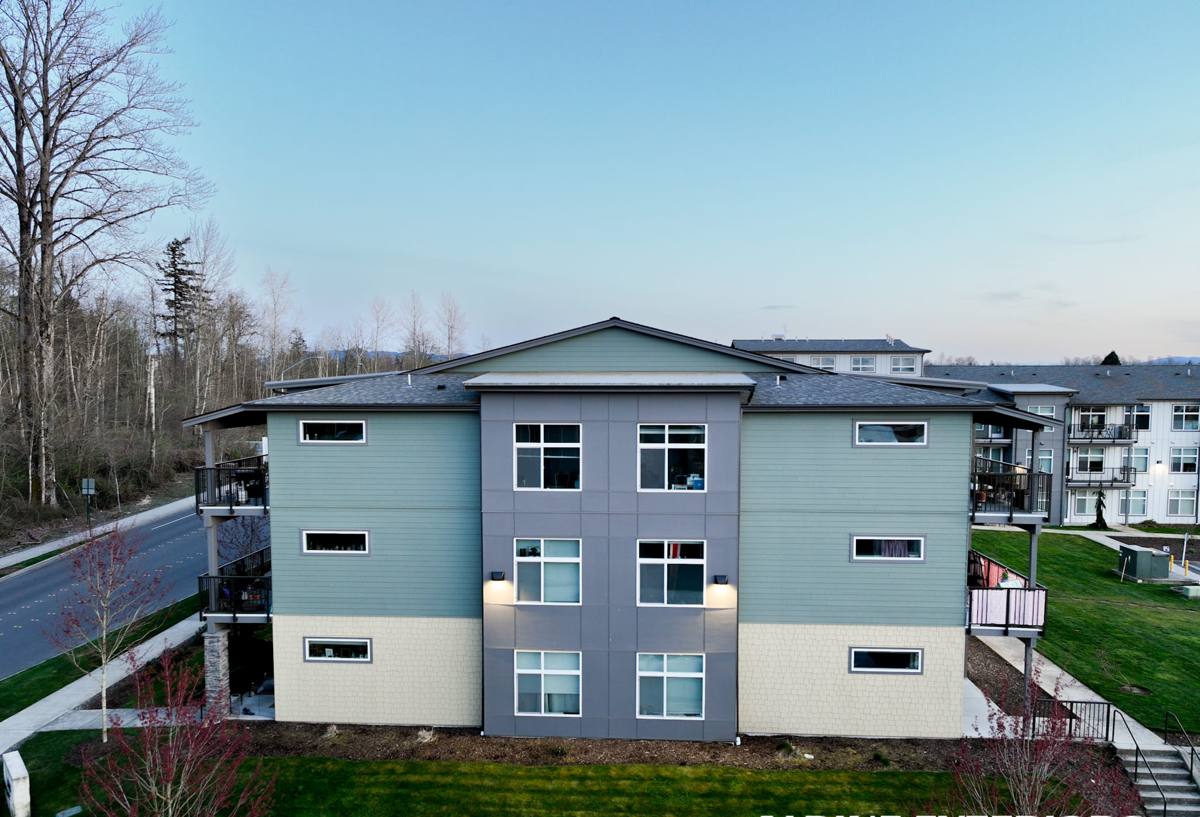
What We're Usually Called Out to Fix
Most Lynden siding repair calls fall into a handful of categories. None of them are exotic — they're the predictable result of years of wet weather working on seams, fasteners, and transitions.
Moisture and Moss at the Base
Siding near grade, under downspouts, or in shaded side yards holds moisture longer than the rest of the house. Over time that shows up as soft or delaminating panels, dark staining, or moss creeping up from the bottom edge. It's rarely the whole wall — usually a specific run of siding that never gets sun or airflow.
Cracked or Split Panels
Older fiber cement, wood, or engineered wood panels can crack at fastener points or corners after years of freeze-thaw cycling and moisture swings. A single cracked panel is a small fix if it's caught early; left alone, it becomes an open door for water behind the wall.
Failed Caulking and Trim Joints
Caulking around windows, corner boards, and trim is a maintenance item, not a permanent seal. Once it shrinks, cracks, or pulls away, water gets a direct path behind the siding at exactly the points most likely to cause rot — window sills and corner transitions.
Impact Damage
Ladders, hoses, lawn equipment, hail, and falling branches cause dents, cracks, and gouges. These are usually cosmetic until water finds the break, at which point they turn into a moisture problem.
Buckling or Warping
Panels that were installed without correct expansion gaps, or that have taken on water behind them, can bow, cup, or pull away from the wall. This is often a sign of an installation issue more than a material one.
Why Small Damage Turns Into Bigger Repairs
The pattern we see most often in Whatcom County repair calls is the same one: a small, visible problem — a hairline crack, a gap in caulking, a soft spot near a downspout — sits untouched for a season or two because it doesn't look urgent. Meanwhile water is getting behind the siding on every rain event, and Lynden gets a lot of them. By the time the damage is obvious from the street, there's often sheathing damage or framing moisture behind it that turns a one-panel repair into a multi-panel tear-out.
That's the real argument for catching siding issues early rather than waiting for a full replacement decision: a repair addressed while it's still a repair is a fraction of the cost and disruption of one that's been allowed to spread.
How We Approach a Repair
1. Inspect Past the Surface
We don't just look at the damaged panel — we check the fasteners, flashing, and house wrap behind it, and probe the surrounding area for soft wood or hidden moisture. A repair that only replaces what's visible and ignores what's underneath doesn't hold.
2. Confirm What's Actually Wrong
Sometimes what looks like a siding failure is a flashing or gutter problem pushing water into the wall assembly. We tell you which it is before we start — repairing siding without fixing the water source behind it just buys time.
3. Match Materials Correctly
If the original siding is James Hardie fiber cement, we repair with the correct matching profile, thickness, and factory finish so the patch doesn't stand out or perform differently than the surrounding panels. If the home has an older or discontinued product, we're upfront about what a true match looks like versus what's realistic.
4. Install to Spec, Not Just to Cover the Hole
Correct fastening, proper clearances at grade and roofing, and sealed joints where the manufacturer actually calls for sealant — not everywhere, since over-caulking traps moisture just as badly as under-caulking. This is where a lot of rushed repair jobs go wrong.
5. Leave the Area Better Than We Found It
If the repair exposed a drainage, ventilation, or moisture issue that caused the damage in the first place, we tell you, so the same repair isn't needed again in two years.
Repair or Replace? How We Tell You Honestly
Not every damaged section needs a full siding replacement, and not every home with a few problem spots is a candidate for patchwork repair. Here's the general framework we use when walking a Lynden property:
| What We Find | What It Usually Means | Typical Path |
|---|---|---|
| Isolated crack, dent, or impact damage | Cosmetic or early-stage, material still sound | Spot repair |
| Soft or delaminating panels in one area (e.g., under a downspout) | Localized moisture intrusion | Targeted repair plus fixing the water source |
| Repeated soft spots across multiple walls | Systemic moisture or original installation issue | Broader repair or partial re-side |
| Widespread cracking, warping, or coating failure across the house | Siding is at or past its service life | Full replacement is usually the honest recommendation |
We'll always start with the narrower fix if it's genuinely the right call. Recommending a full replacement when a repair would hold isn't how we want to run a repeat business in this area.
Why We Repair With — and Onto — James Hardie
Our company installs James Hardie fiber cement exclusively, and that includes repair work. There are a few practical reasons this matters for a Lynden repair job specifically:
- Hardie's HZ5 product line is engineered for the freeze-thaw, moisture-cycling climate the Pacific Northwest sees, which matches Whatcom County's conditions better than materials designed for drier regions.
- The factory-applied ColorPlus finish means a correctly matched replacement panel keeps its color and doesn't need field painting to blend in — important when you're patching rather than re-siding an entire wall.
- Fiber cement doesn't absorb and hold water the way engineered wood products can, which matters directly for the moss-and-moisture failure pattern common in shaded Lynden yards.
- It's non-combustible, which is a meaningful, unrelated-to-moisture reason we standardized on it across every home we touch.
If your home currently has vinyl, LP SmartSide, cedar, or another fiber cement brand, we'll still assess and repair what's there honestly — we just won't pretend every product performs the same way long-term, and if a section needs full replacement rather than patching, Hardie is what we'll recommend going in its place.
What a Correct Siding Repair Includes
- Full inspection of the damaged area plus surrounding panels and flashing, not just the obvious spot
- Identification of the actual water source, if moisture damage is involved
- Matching material, profile, and finish where an exact match is realistic
- Correct fastening pattern and manufacturer-specified clearances at grade, trim, and roofing
- Sealant only where the manufacturer's installation guidance actually calls for it
- A clear explanation of what caused the damage and whether it's likely to recur
- Cleanup that leaves the property the way we found it, minus the problem
Why Hiring a Crew That Already Works Lynden Matters
Siding repair quality comes down to two things: correctly diagnosing what's actually wrong, and installing the fix to spec rather than just covering the hole. A contractor who regularly works Whatcom County homes has already seen how the local combination of rain volume, tree cover, and cooler summers plays out on siding over ten and twenty years — which parts of a house fail first, which repairs hold, and which ones just delay a bigger problem.
When you're vetting anyone for siding repair, it's worth asking directly: what caused this damage, will the same thing happen again if you just patch it, and what material are you repairing with. A straight answer to all three is a decent filter for whether the crew is diagnosing the problem or just filling a hole.
After the Repair: Keeping It From Happening Again
A repair holds longer when a few basic things get attention going forward: keeping gutters clear so water isn't overflowing onto the wall below, trimming back vegetation that's shading a wall and keeping it damp, and doing a quick visual check after major storms for anything that looks freshly cracked or displaced. None of this requires a contractor visit — it's just the kind of upkeep that keeps a repaired section from becoming a repeat call.
If you're seeing damage, soft spots, or moss buildup on your Lynden home's siding, we're happy to take a look and give you a straight answer about what's actually going on — no pressure, no upsell to a full replacement you don't need. Request a free estimate below and we'll get a time on the calendar.