 Blaine
 Why Metal Roofing Holds Up Differently Around Lynden and Blaine
Lynden and Blaine sit in one of the wetter corners of Washington, close enough to the water and the Canadian border that homes deal with a specific combination of weather stress: salt-laden air moving in off Semiahmoo Bay and the Strait of Georgia, long stretches of driving rain off the Pacific, and short, mild winters that never get cold enough or dry enough to knock back moss growth. That combination is hard on a roof. It's also exactly the kind of environment where a correctly installed metal roof earns its cost, because the failure points that wear out asphalt shingles in this climate — granule loss from constant moisture cycling, moss lifting shingle edges, algae staining, wind-driven rain finding its way under tabs — are largely non-issues on a metal panel system done right.
That said, "metal roofing" isn't one product, and not every metal roof performs the same way here. The panel type, the fastening method, the underlayment, and the flashing details all matter more in a coastal, moss-prone climate than they would in a drier part of the state. This page covers what a Lynden-area metal roof actually needs to hold up, what our installation process looks like, and how to think about cost and material choices before you get quotes.
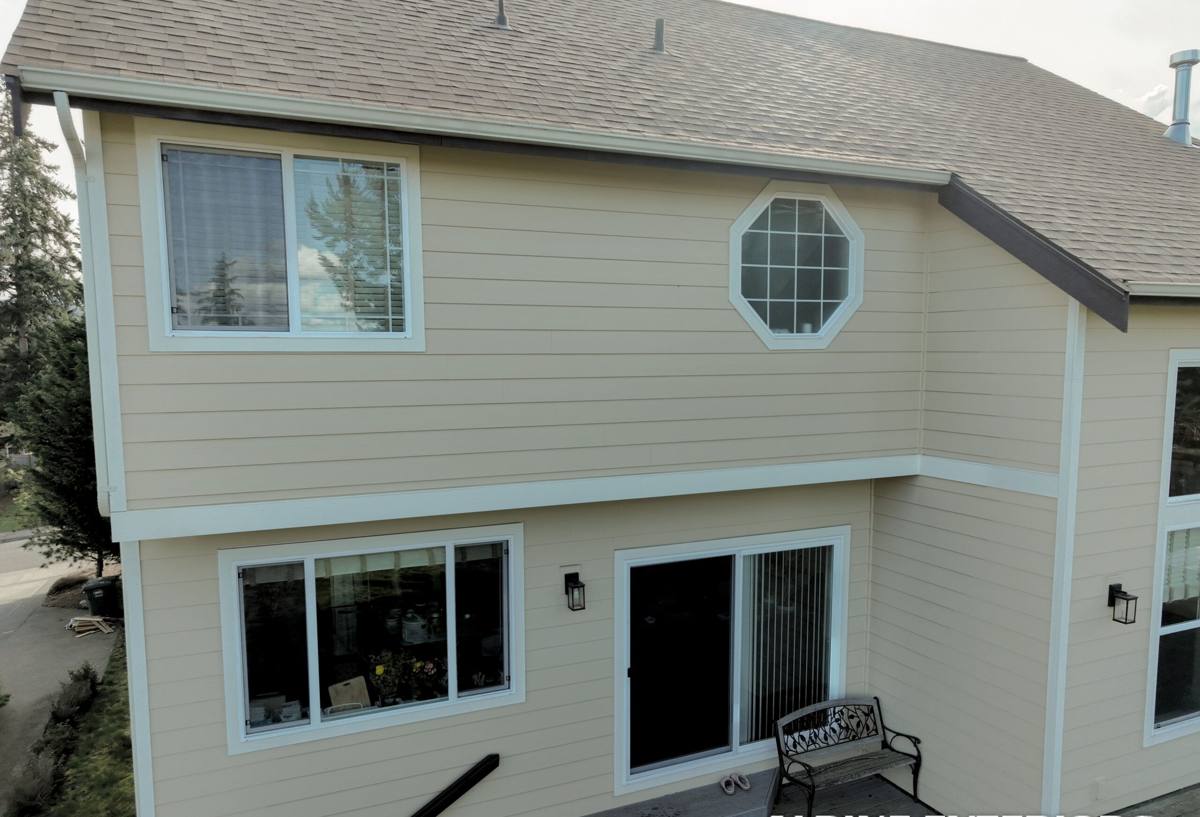
What Whatcom County Weather Actually Does to a Roof
Salt Air and Corrosion
Blaine's proximity to the water means airborne salt reaches roofs further inland than most homeowners expect, especially on homes with any elevation or direct exposure to prevailing winds. Salt accelerates corrosion on any exposed metal — fasteners, flashing edges, cut panel ends — if it isn't properly coated or protected. This is why fastener and flashing selection matters as much as the panel itself.
Driving Rain and Wind-Driven Moisture
Rain here rarely falls straight down. Wind pushes it sideways under trim, into vents, and along roof-to-wall transitions. A roof that only sheds water well on a calm day isn't doing its job in this region. Underlayment, flashing laps, and penetration seals have to be built for sideways water, not just gravity.
Moss and Organic Growth
The mild, wet winters typical of Lynden and Blaine give moss and algae a long growing season with almost no hard freeze to interrupt it. On shingles, moss roots into the granule surface and lifts edges, creating leak paths. On a smooth metal panel there's nothing for moss to grip, which is one of the more practical, non-cosmetic reasons metal performs well here — but valleys, ridge caps, and any spot where debris collects can still grow moss if they're not designed to shed water and organic matter cleanly.
Metal Panel Systems: What We Actually Install
Not all metal roofing is the same product wearing different colors. The two main categories homeowners choose between are standing seam and exposed-fastener panels, and the difference matters more in this climate than in a dry one.
| Feature | Standing Seam | Exposed-Fastener Panel |
|---|---|---|
| How it's fastened | Hidden clips under raised seams — no fasteners through the panel face | Screws driven through the panel face into the roof deck |
| Water resistance | Excellent — no penetrations in the weather surface | Good, but each fastener is a potential future leak point as gaskets age |
| Long-term maintenance | Minimal | Fastener gaskets typically need inspection/replacement over the roof's life |
| Upfront cost | Higher | Lower |
| Best fit | Primary residences, long-term ownership, higher wind/salt exposure | Outbuildings, shops, budget-driven projects |
Given the salt air and wind-driven rain typical around Blaine, we generally recommend standing seam for primary homes and reserve exposed-fastener panels for garages, shops, and secondary structures where the lower upfront cost makes more sense and the consequences of a future fastener leak are lower.
Steel vs. Aluminum
Both are viable in this climate when properly coated. Galvanized or Galvalume steel with a quality paint finish is the more common choice and holds up well. Aluminum costs more but never rusts at cut edges the way steel can if a factory coating is scratched during installation — worth discussing if your home has heavy direct salt exposure. We'll walk through the trade-off honestly based on where your property sits relative to the water, rather than upselling aluminum across the board.
What a Correct Installation Actually Involves
Metal panels are only as good as what's underneath and around them. Most metal roof failures we're called to inspect trace back to installation shortcuts, not the panel material itself. A correct job in this climate includes:
- Full synthetic underlayment rated for high-moisture climates, not just felt paper, as a backup water barrier under the entire roof
- Ice-and-water shield at eaves, valleys, and any low-slope transitions where wind-driven rain is most likely to back up
- Proper panel overlap and seam direction matched to prevailing wind and water flow across each roof plane
- Corrosion-resistant fasteners and flashing matched to the panel material, not mixed metals that can cause galvanic corrosion in a salt-air environment
- Sealed, storm-rated closures at ridges and eaves so wind-driven rain and blowing debris can't work their way underneath
- Balanced attic and roof ventilation so condensation doesn't build up under the panels from the inside, which is a common cause of hidden deck rot on metal roofs installed without adequate airflow
Skipping any one of these doesn't usually cause an immediate problem — it shows up as a leak, corrosion, or deck rot years later, which is part of why metal roofing has a reputation for being either excellent or disappointing depending entirely on who installed it.
Cost Factors for a Lynden-Area Metal Roof
Pricing depends on more than square footage. The factors below move the number up or down more than most homeowners expect:
| Factor | Why It Matters Here |
|---|---|
| Panel system chosen | Standing seam runs higher than exposed-fastener panels due to labor and material |
| Roof complexity | Valleys, dormers, and multiple planes mean more flashing work and cut edges to seal against salt corrosion |
| Tear-off vs. overlay | Removing old shingles reveals deck condition — important given how moss and moisture can hide rot on older roofs in this climate |
| Deck repair needs | Long moss exposure sometimes means sections of deck need replacement before panels go on |
| Ventilation upgrades | Older homes often need ventilation corrected as part of the job to prevent condensation issues under new metal |
We won't quote a number without seeing the roof — anyone who does is guessing. What we can say honestly is that metal roofing costs more upfront than asphalt shingles, and the value case is a longer service life with far less maintenance against moss and moisture, not a lower first bill.
How Our Process Works
1. On-Site Inspection
We walk the roof, check the deck condition, look at existing ventilation, and note any moss buildup, valley wear, or flashing issues from the current roof. This is also when we talk through panel options based on your home's exposure to wind and salt air.
2. Written Estimate
You get a clear scope of work and price — what panel system, what underlayment, what gets replaced versus reused, and a realistic timeline. No pressure to decide on the spot.
3. Tear-Off and Deck Assessment
Once we're on the roof, we check the deck for hidden moisture damage before anything new goes down. If there's rot from years of trapped moss moisture, we address it before it's covered up rather than papering over it.
4. Underlayment, Flashing, and Panel Installation
Underlayment and ice-and-water shield go down first, then flashing at every penetration and transition, then panels — installed to shed wind-driven rain, not just vertical rainfall.
5. Final Walkthrough
We walk the finished roof with you, confirm ventilation is working correctly, and go over basic care so you know what normal wear looks like versus something worth a call.
Living With a Metal Roof in This Climate
Metal roofing is genuinely low-maintenance compared to asphalt in a moss-heavy climate, but "low-maintenance" isn't "no-maintenance." A short seasonal checklist keeps a metal roof performing the way it's supposed to:
- Clear leaves, needles, and debris from valleys once or twice a year so water and moss-forming organic matter don't sit in low points
- Check gutters for buildup, especially after fall storms — clogged gutters can back water up under eave flashing
- Look for any scratched or exposed cut edges after storm season, since exposed steel edges are where corrosion starts first in salt air
- Confirm attic ventilation isn't blocked by insulation or debris, since trapped moisture is the most common cause of hidden problems under metal panels
- Have flashing and sealant at penetrations (vents, chimneys, skylights) checked every few years rather than assuming they'll last the life of the panels
Why Hiring a Crew That Already Works in Lynden and Blaine Matters
Metal roofing installation isn't regionally exotic, but the details that make it last are climate-specific. A crew that mostly works drier parts of the state may not think twice about fastener corrosion resistance, wind-driven rain at ridge closures, or ventilation strategy for a climate that almost never gets a hard, dry freeze. Those are exactly the details that separate a metal roof that looks fine for five years from one that performs well for decades in Whatcom County conditions. Working regularly in Lynden and Blaine means we're already accounting for salt exposure, moss pressure, and driving rain as default assumptions, not afterthoughts.
If you're weighing metal roofing for a home in the Lynden or Blaine area, we're happy to take a look and give you a straightforward, no-pressure estimate — what your roof actually needs, what it would cost, and what trade-offs are worth considering for your specific property. Use the form below to get started.