 Blaine
 Building a Deck That Actually Holds Up in Nooksack
A deck in the Nooksack area lives a harder life than the sales brochures let on. It sits low to the ground, close to soil that stays damp for months at a time, and it's exposed to a mix of salt-laden air drifting in off the water and driving rain that comes sideways more often than straight down. Add in a moss season that can stretch from fall through spring, and you've got a structure that's constantly fighting moisture, corrosion, and organic growth. Most deck failures we see out here aren't dramatic. They're slow: a soft spot near the ledger board, rusted-out fasteners nobody thought to check, or a green film building up on boards that never quite dry out between rains. A deck built for a dry-climate spec sheet is not the same deck you want in Whatcom County.
This page is about one thing specifically: building or replacing a deck for a Nooksack-area home, the right way, for the conditions that actually exist here.
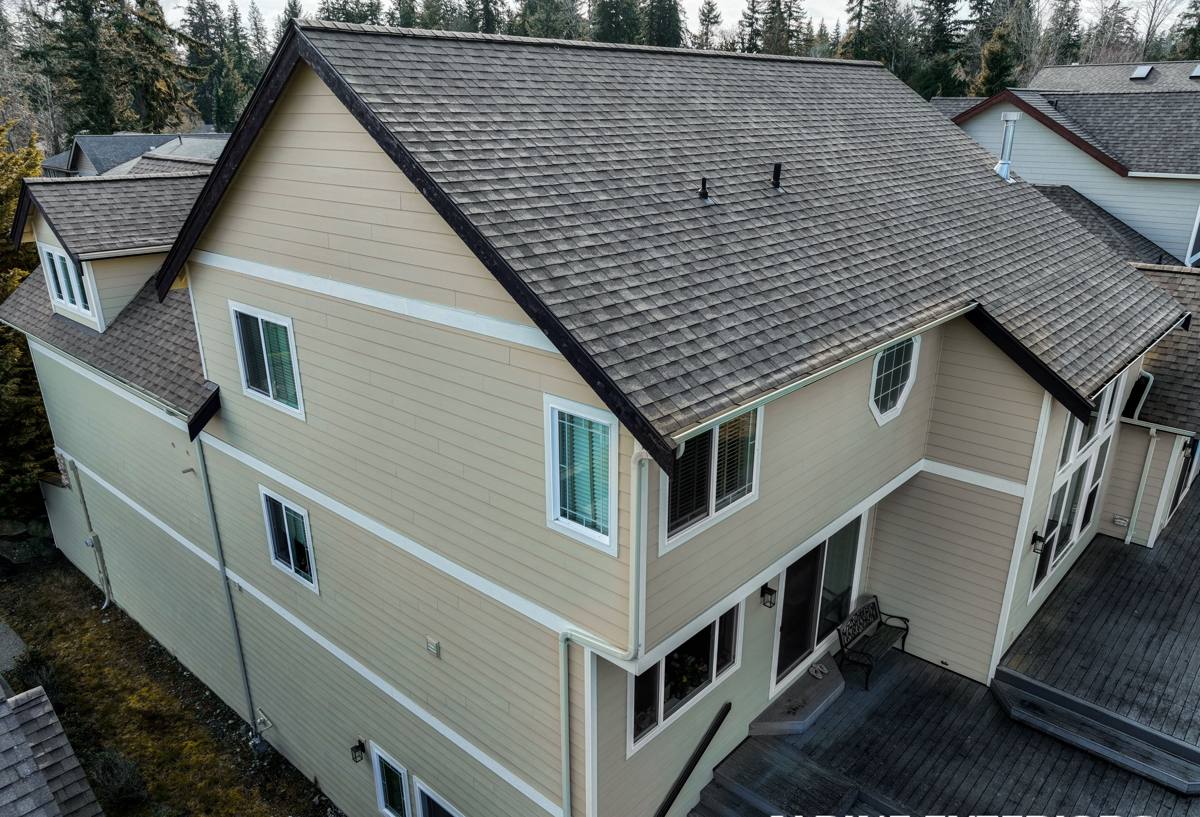
What This Climate Does to an Outdoor Deck
Salt Air and Corrosion
Even a few miles inland from open water, airborne salt accelerates corrosion on anything metal — fasteners, joist hangers, post bases, and railing hardware. Standard interior-grade screws and connectors that would last decades in a dry inland climate can start rusting and losing grip strength within a few seasons here. Once a fastener weakens, the board around it works loose, water gets into that gap, and the problem compounds.
Driving Rain
Rain that comes in at an angle finds every gap a calm, straight-down rain would miss — behind ledger boards, under poorly lapped flashing, and along the top of railing posts where end grain is exposed. Once water gets behind a ledger or into an unsealed post top, it doesn't evaporate quickly in our humidity. It sits, and wood sitting wet is wood on its way to rotting.
A Long Moss Season
Moss and algae need shade, moisture, and time — and a Nooksack-area deck under tree cover or on the north side of a house offers all three for most of the year. Beyond looking bad, moss holds moisture against the decking surface long after the rest of the yard has dried, and it makes boards genuinely slippery underfoot. A deck design that ignores sun exposure and airflow is signing up for a moss problem from day one.
What a Correctly Built Deck Involves
None of this is exotic. It's a handful of details, done correctly and in the right order, that make the difference between a deck that lasts and one that needs major repair inside ten years.
Ledger Attachment and Flashing
The ledger board — where the deck attaches to the house — is the single most common failure point on any deck, anywhere, and it's worse in a wet climate. It needs proper flashing that directs water out and away from the house sheathing, not just a bead of caulk and a prayer. We flash it correctly the first time because a ledger failure isn't a cosmetic problem — it's a structural one.
Fasteners and Hardware
Given the corrosion risk from salt air, we use fasteners and structural hardware rated for coastal and wet-climate exposure, not the cheapest box on the shelf. This is a small percentage of total project cost and one of the biggest factors in how long the frame lasts underneath the decking you actually see.
Footings and Framing
Footings need to go below the local frost line and bear on undisturbed, stable soil — not fill dirt or a shortcut poured on top of sod. Framing lumber should be rated for ground contact where it's close to grade, and joist spacing should account for the actual decking material chosen, since composite and wood have different span requirements.
Drainage and Slope
A deck surface should have a slight slope away from the house so water sheets off instead of pooling, and the structure underneath needs enough airflow that the frame can dry out between rains instead of staying damp. Skipping this is exactly how you end up with soft joists nobody notices until a board starts to sag.
Choosing Decking Material for Wet, Mossy Conditions
There's no single "best" decking material — there's a best fit for your budget, your sun exposure, and how much maintenance you actually want to do. Here's how the common options hold up specifically against rain, salt air, and moss:
| Material | Moisture & Moss Behavior | Maintenance | Typical Lifespan |
|---|---|---|---|
| Pressure-treated wood | Absorbs moisture readily; needs sealing to resist moss and rot | Annual cleaning and periodic re-sealing | 10–15 years with upkeep |
| Cedar | Naturally rot-resistant but still needs sealing in shaded, damp spots | Regular cleaning, occasional refinishing | 15–20 years with upkeep |
| Composite decking | Doesn't absorb water like wood, but can still grow surface algae/moss if never cleaned | Occasional washing, no sealing or staining | 25+ years |
| PVC decking | Fully moisture-resistant surface; least hospitable to moss growth | Occasional washing | 25–30 years |
Wood costs less up front and can look great, but it asks for real ongoing maintenance in this climate — skip a year of sealing on a shaded deck here and moss will find it. Composite and PVC cost more initially but shift the long-term work from "sealing and staining" to "occasional washing," which matters if the deck sits under trees or on a shaded side of the house. We'll walk you through the honest trade-offs for your specific site rather than pushing one product across the board.
Our Deck Building Process
- Site assessment. We look at sun exposure, drainage patterns, existing soil conditions, and how the deck ties into the house before recommending anything.
- Design and material selection. We talk through layout, decking material, railing style, and budget, with the climate trade-offs above laid out plainly.
- Permitting. We handle the permit application and inspections through the appropriate local building department so the finished deck is fully compliant.
- Construction. Footings, framing, ledger flashing, decking, and railing — built in that order, with each stage checked before we move to the next.
- Final walkthrough. We go over the finished deck with you, including what maintenance it will actually need and when.
Permits and Building Code
Deck construction in Whatcom County generally requires a building permit once a deck exceeds certain size or height thresholds, and inspections at key stages — footings, framing, and final — are standard. Skipping permits on a deck is a common shortcut some contractors take to save time, but it creates real problems later: unpermitted structural work can complicate a home sale, cause issues with insurance claims, and in some cases require the deck to be torn out and rebuilt to code. We pull the proper permits and build to the inspected standard, not around it.
Maintenance You Can Control
A well-built deck still needs some seasonal attention in this climate. None of it is complicated, but skipping it is how a good deck turns into a problem deck.
- Sweep leaves and debris off the deck surface regularly, especially in fall — trapped organic matter holds moisture and feeds moss.
- Rinse or lightly scrub decking at least once or twice a year to knock back algae and moss before it gets established.
- Check railing posts, stair connections, and visible hardware annually for rust staining or looseness.
- Keep gutters and downspouts near the deck clear so roof runoff isn't dumping extra water onto or under the structure.
- Trim back overhanging branches where practical to improve sun and airflow across shaded sections.
- Re-seal or re-stain wood decking on the schedule the product actually calls for, not just when it looks faded.
Why Hiring a Crew That Already Works in Nooksack Matters
A lot of deck problems in this region trace back to a crew building to a generic spec instead of the conditions actually in front of them. A contractor who works around Blaine and the surrounding Whatcom County area regularly already knows which fasteners hold up to the salt air, how much slope a deck needs given our rainfall, and where moss tends to take hold on a shaded lot before it becomes a slip hazard. That's not a marketing point — it shows up in which hardware gets specified, how the ledger gets flashed, and whether the crew pushes back when a design choice is going to cause problems five years down the road. We build decks in this climate every season; we're not guessing at what it needs.
What Affects the Cost of a Nooksack Deck
| Cost Factor | Why It Matters |
|---|---|
| Size and layout | More square footage and multiple levels mean more framing, footings, and labor |
| Decking material | Pressure-treated wood costs less upfront; composite and PVC cost more but reduce long-term maintenance |
| Height and stairs | Elevated decks need more substantial framing, railings, and stair structures than ground-level decks |
| Soil and footing conditions | Soft, wet, or uneven soil can require deeper or additional footings |
| Railing style | Cable, glass, and composite railing systems cost more than standard wood or metal balusters |
| Site access | Tight side yards or sloped lots can add labor time for material transport and equipment |
Deck projects in this area typically run from a few thousand dollars for a small, simple ground-level deck up to well into the tens of thousands for a large, multi-level deck with premium railing and decking materials. The only way to get a real number is a site visit — square footage alone doesn't capture what your specific slope, soil, and access will require.
Ready for a Straight Answer on Your Deck
If you're planning a new deck or replacing one that's showing its age, we're happy to come take a look and give you an honest read on what it needs — no pressure, no upsell on materials you don't need. Use the form below to request a free estimate, and we'll walk the site with you and talk through what actually makes sense for your home.