 Blaine
 Why Board & Batten Fits Peace Arch
Peace Arch sits about as close to the water and the international border as a Whatcom County neighborhood gets, and homes here carry a look that's part Pacific Northwest farmhouse, part coastal cottage. Board and batten siding — wide vertical panels with narrow battens covering the seams — has always paired well with that style. The strong vertical lines read as clean and substantial on both older homes being updated and newer builds going for a modern-farmhouse exterior.
But the reason we bring it up as a dedicated service, rather than lumping it in with general siding work, is that board and batten behaves differently than horizontal lap siding once weather gets involved. The vertical seams, the batten strips, and the exposed end grain at trim returns all create specific water-management challenges that matter more in Blaine's climate than they would somewhere drier and calmer.
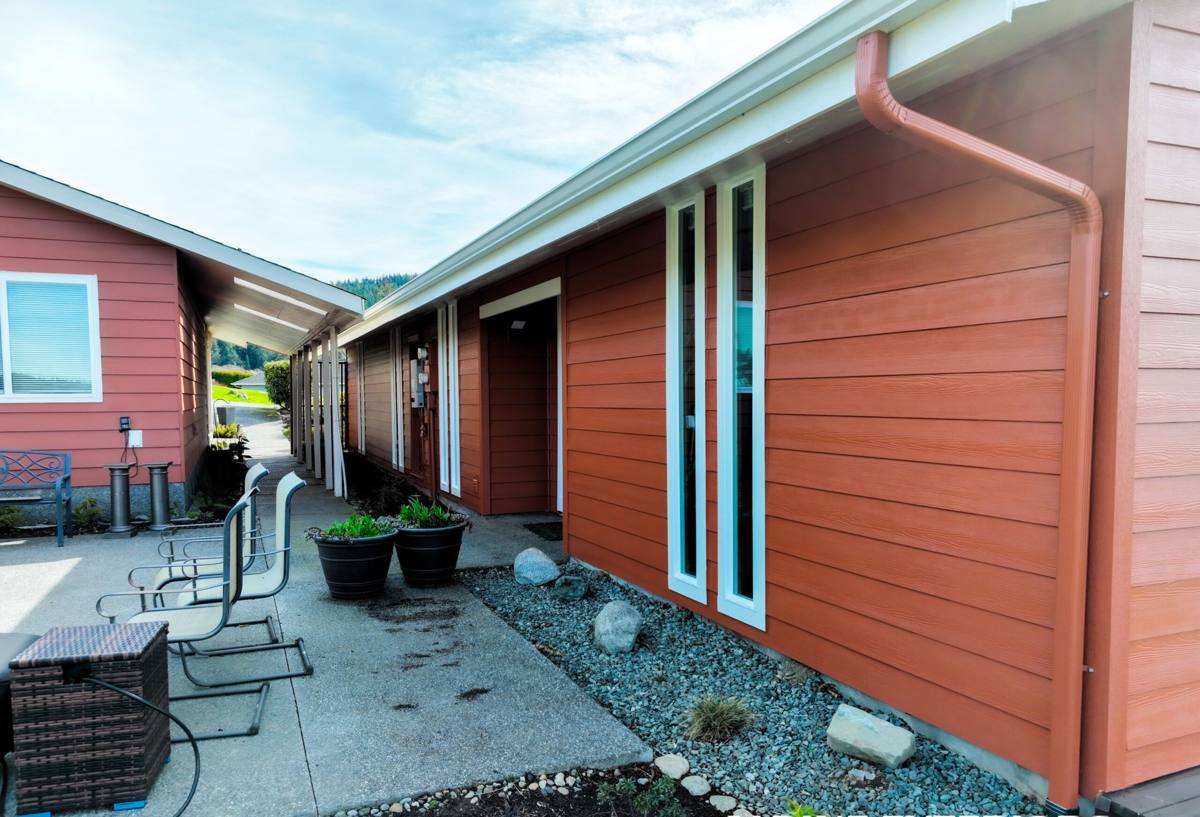
What Blaine's Climate Does to Vertical Siding
Blaine sits right on Semiahmoo Bay, and Peace Arch homes get the full package: salt-laden air blowing in off the water, driving rain that comes in sideways during winter storms, and long stretches of overcast, damp weather that keep exterior surfaces wet for days at a time. None of that is unusual for this part of Whatcom County, but it's worth being specific about what it does to siding.
Salt Air
Airborne salt accelerates corrosion on anything metal — fasteners, flashing, trim connectors — and it slowly breaks down cheaper paint films and coatings faster than inland exposure would. Vertical board and batten has more exposed batten edges and fastener lines than flat lap siding, so poor-quality fasteners or a thin factory finish show wear sooner here than they would twenty miles inland.
Driving Rain
Wind-driven rain doesn't just run down a wall — it gets pushed sideways and upward into seams and laps. Board and batten has vertical joints running the full height of the wall, and if those joints aren't detailed correctly, wind-driven rain will find its way behind the battens and into the wall assembly.
Moss Season
Blaine's moss season runs long — realistically most of the fall through spring stretch — because temperatures stay mild while moisture stays constant. Moss and algae need sustained dampness and shade to establish, and north-facing or tree-shaded walls in Peace Arch check both boxes for months at a time. Once organic growth takes hold on siding, it holds moisture against the surface even longer, which compounds the problem.
Board & Batten Built in James Hardie Fiber Cement
We install board and batten exclusively in James Hardie fiber cement — we don't offer it in vinyl, LP SmartSide, or primed wood, and that's a deliberate call, not a limitation of what we're equipped to do. Fiber cement is non-combustible, dimensionally stable, and doesn't absorb and swell with moisture the way wood-based products do. In a marine climate with sustained damp periods, that stability is what keeps board and batten looking straight and tight at the seams instead of cupping or splitting over time.
Hardie's ColorPlus factory finish is also relevant here specifically because of the salt air issue. It's baked on in a controlled factory environment rather than applied on site, which gives it better adhesion and UV resistance than field-applied paint, and it carries its own finish warranty separate from the substrate warranty. For a vertical product with a lot of exposed edge and batten surface, a finish that holds up without early fading or peeling matters more than it would on a less detail-heavy siding style.
HardiePanel and Batten Trim
The typical board and batten build uses HardiePanel vertical siding as the field panel with HardieTrim battens fastened over the seams. Panel thickness, batten spacing, and reveal are all choices that affect both appearance and how the assembly sheds water — we go through those options during the estimate rather than defaulting to one look for every house.
The Installation Details That Actually Matter
Board and batten is not more difficult to install than lap siding, but it is less forgiving of shortcuts, because every vertical seam is a potential water path straight down the wall. Since Peace Arch homes see more wind-driven rain than a sheltered inland lot, we hold to a specific set of details on every job here.
| Detail | Done Right | Common Shortcut |
|---|---|---|
| Weather-resistive barrier | Continuous, properly lapped house wrap or building paper behind the rainscreen | Reused or patched existing barrier with gaps at penetrations |
| Rainscreen gap | Furring strips create a drainage and drying gap behind the panel | Panel fastened directly to sheathing with no airspace |
| Fasteners | Hot-dip galvanized or stainless, per Hardie's fastening schedule | Standard coated fasteners that corrode faster in salt air |
| Batten seams | Panels gapped per manufacturer spec, battens sized to fully cover and fasten independently | Panels butted tight with battens relied on to hide gaps, not shed water |
| Bottom edge | Set above grade with drip edge or starter strip and clearance for drainage | Set too close to grade or hardscape, trapping moisture |
| Trim and flashing | Flashed at every window, door, and roofline transition | Caulk used in place of flashing at transitions |
The rainscreen gap is the detail that gets skipped most often because it adds a step, and it's the one that matters most in a climate where walls stay wet for extended periods. That airspace lets any moisture that does get past the cladding dry out instead of sitting against the sheathing.
Managing Moss and Algae Once the Siding Is Up
No siding material is immune to organic growth if it's shaded and damp long enough, but a few choices reduce how much of a problem it becomes on a Peace Arch home:
- Batten spacing and reveal that avoid creating tight shadow lines where moisture lingers
- Proper standoff from grade, decks, and landscaping beds so soil and mulch moisture doesn't wick directly into the lower courses
- Gutter and downspout placement that keeps roof runoff from sheeting directly down a wall section
- Trimming back vegetation that shades a wall for most of the day, where that's practical
None of this makes a wall immune to moss in a climate like this one — it reduces how fast it shows up and how often you need to deal with it.
Board & Batten vs. Other Siding Styles for Peace Arch
| Style | Look | Water Management | Best Fit |
|---|---|---|---|
| Board & batten (Hardie) | Bold vertical lines, farmhouse/coastal look | More seams to detail correctly; excellent when installed to spec | Homes wanting a distinct vertical look, gables, accent walls |
| Lap siding (Hardie) | Traditional horizontal shadow lines | Fewer vertical seams, naturally sheds water down and out | Full-house siding where lowest water risk is the priority |
| Shingle/shake panel (Hardie) | Textured, traditional coastal look | More surface area and detail work at courses | Accent gables, dormers, coastal-style homes |
Many Peace Arch homes end up mixing styles — board and batten on a gable or entry feature with lap siding on the main walls — which gets the visual character without putting the entire building envelope on the more detail-sensitive vertical system.
Our Process on Peace Arch Homes
1. On-Site Assessment
We walk the exterior with attention to wind exposure, shaded and north-facing walls, existing moisture or moss patterns, grade clearance, and how close the home sits to open water or prevailing weather. That assessment shapes the rainscreen detailing and batten layout we recommend.
2. Sheathing and Barrier Check
Before any new siding goes up, we inspect what's underneath. If sheathing shows rot or the existing weather barrier is compromised, we address that first — covering it with new siding doesn't fix it, it just hides it.
3. Install to Spec, Not to Shortcut
Rainscreen gap, proper fastening schedule, correctly lapped barrier, and flashed transitions at every opening — the same details on every job, regardless of how visible they are once the siding is up.
4. Walkthrough
We go over the finished work with you, including what routine maintenance looks like for board and batten specifically in this climate, before we call the job done.
Maintenance Checklist for This Climate
- Rinse salt residue and grime off the siding a couple of times a year, especially on water-facing walls
- Check and clear gutters before the fall rains so runoff isn't sheeting down wall sections
- Watch shaded and north-facing walls for early moss or algae growth and address it before it spreads
- Keep landscaping and mulch beds from piling up against the bottom edge of the siding
- Have caulking and sealant at trim and window transitions inspected every couple of years
- Repaint is not part of the routine — ColorPlus finish is factory-applied and not meant to need repainting on the usual homeowner cycle
Why Local Experience in Peace Arch Matters
A crew that already works this specific stretch of Blaine has seen how these houses actually weather — which walls get hit hardest by driving rain off the bay, which sides stay shaded long enough to grow moss every year, and how salt air ages fasteners and finishes over a few seasons. That's the kind of judgment that doesn't come from a spec sheet; it comes from installing and later inspecting siding on homes in this exact setting. It shapes decisions on batten spacing, fastener choice, and rainscreen detailing before the first panel goes up, instead of learning the hard way after a callback.
If you're weighing board and batten for a home in Peace Arch, we're happy to walk the exterior with you, talk through the details above in the context of your specific walls and exposure, and put together a straightforward, no-pressure estimate — just use the form below to get started.