 Blaine
 Roof Repair Built for Point Roberts' Marine Climate
Point Roberts sits on its own peninsula at the southern tip of Whatcom County, surrounded by the Strait of Georgia and Boundary Bay, and separated from the rest of the U.S. mainland by Canadian territory. That location gives it a roofing climate all its own: constant marine air, wind-driven rain off the water, and long stretches of shade and dampness that keep roofs wet far longer than homes just a few miles inland near Blaine. A roof out here works harder than a roof anywhere else in the county, and a repair that isn't done with that in mind tends to fail again within a season or two.
This page covers what roof repair actually means for a Point Roberts home — what the climate does to a roof over time, what a correct repair looks like, how our process works, and why it matters to hire a crew that's actually spent time working on the peninsula.
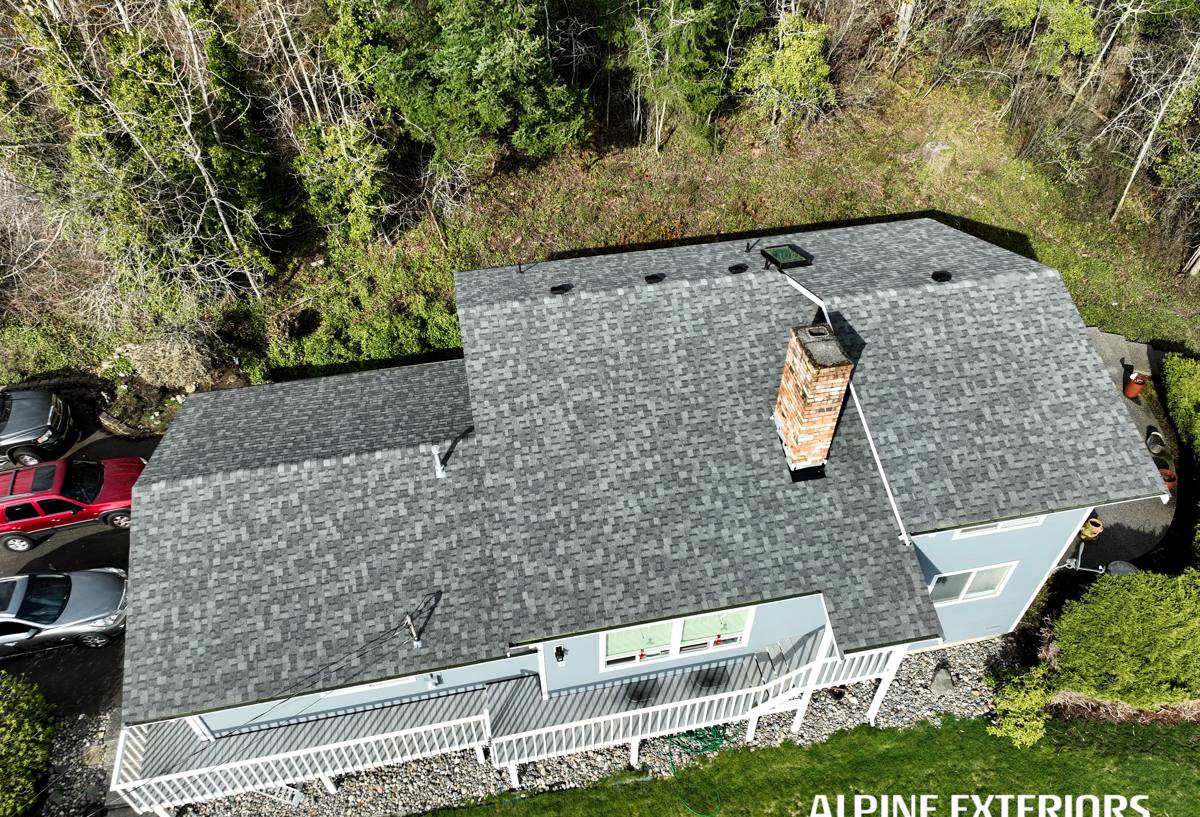
What Salt Air, Rain, and Moss Do to a Roof Over Time
Salt Air and Metal Fatigue
Homes close to the water take on a steady dose of salt-laden air. Over years, that air accelerates corrosion on exposed metal — flashing, fasteners, vents, gutter hardware, and metal roofing components. A fastener or flashing seam that would hold up fine forty miles inland can start weeping or rusting through noticeably sooner on the point. When we repair a roof out here, we pay close attention to what type of metal and fastener is going back on, not just what's fastest to install.
Driving Rain and Wind-Driven Leaks
Point Roberts catches wind off open water from multiple directions, and that wind pushes rain sideways into places a calmer climate would never test — up under shingle tabs, into vertical siding-to-roof transitions, and through marginal flashing at chimneys and skylights. Most of the leaks we get called out for aren't from a hole in the field of the roof. They're from water finding a seam, a lap, or a transition that was never sealed for wind-driven rain in the first place.
Moss, Shade, and Slow Rot
Western Washington's moss season is long, and Point Roberts' tree cover and marine humidity make it longer still on shaded roof slopes. Moss isn't just cosmetic. It holds moisture against the roofing material, lifts shingle edges as it grows, and can work its way under laps and into fastener lines. A roof with a heavy moss mat almost always has soft, damp decking underneath it by the time anyone notices — the moss has usually been doing quiet damage for a year or more before a leak shows up inside the house.
The Most Common Repair Calls We See on the Point
- Curling, cracked, or wind-lifted shingles on slopes exposed to the water
- Chimney and skylight flashing that has separated or corroded at the seams
- Moss buildup on north-facing or tree-shaded slopes with soft decking underneath
- Valley and roof-to-wall flashing leaks after sustained wind-driven rain
- Gutter and roof-edge failures that send water back up under the first course of shingles
- Rusted or failed fasteners on older metal roofing and flashing components
- Soft or spongy decking discovered during a routine inspection, before it becomes an interior leak
What a Correct Roof Repair Actually Involves
A roof repair that's done right starts with finding the actual cause of the problem, not just patching the spot where water showed up inside the house — water often travels along decking or framing before it drips somewhere visible, so the entry point and the drip point can be several feet apart. On a Point Roberts roof, a proper repair typically means:
- Tracing the leak or damage back to its true source, including checking nearby flashing, valleys, and penetrations that are commonly the real culprit
- Removing and inspecting the decking under any moss mat or soft spot, and replacing any wood that's gone soft or delaminated — not just covering it over
- Reflashing with corrosion-resistant metal sized correctly for the exposure, rather than reusing failed flashing
- Matching shingle type, color, and installation pattern as closely as possible so the repair blends into the existing roof
- Sealing all laps and transitions to handle wind-driven rain, not just standard vertical rainfall
Skipping any one of these steps is how a "repaired" roof ends up leaking again in the next storm season.
Our Roof Repair Process
- Inspection and diagnosis. We get on the roof, not just in the attic, to find the actual source of the problem and check the condition of the decking underneath.
- Honest scope and options. We tell you what we found, what's causing it, and whether a targeted repair is the right call or whether the damage has gone further than a repair can reasonably fix.
- Repair work. Damaged decking is replaced, flashing is redone with proper metal and fastening, and shingles are matched and installed to shed water the way the surrounding roof does.
- Cleanup and moss treatment. Where moss caused or contributed to the damage, we clear it from the repaired area and talk through options for keeping it from coming back.
- Walkthrough. We show you what was done and why, in plain terms, before we consider the job finished.
Repair or Replace? How We Help You Decide
Not every roof problem on the point needs a full replacement, but not every leak should be patched forever, either. These are the factors we actually weigh:
| Factor | Favors Repair | Favors Replacement |
|---|---|---|
| Roof age | Well within expected service life | At or past the end of its expected life |
| Extent of damage | Isolated to one section or penetration | Spread across multiple slopes or recurring in different spots |
| Decking condition | Solid, dry decking found on inspection | Widespread soft, delaminated, or stained decking |
| Moss history | Light, recently treated growth | Years of untreated moss with visible mat damage |
| Material availability | Matching shingles or metal still obtainable | Discontinued material that can't be reasonably matched |
| Cost over time | Repair cost is a small fraction of replacement cost | Repeated repairs are adding up toward replacement cost |
We'll always give you our honest read on which side of that table your roof falls on — including telling you when a repair is genuinely the right, more affordable answer.
Homeowner Moss and Gutter Maintenance Checklist
Between service calls, a little upkeep goes a long way toward stretching the life of a Point Roberts roof:
- Keep gutters clear of needles and debris so water isn't backing up under roof edges
- Trim back overhanging branches to reduce shade and let shaded slopes dry out faster
- Have moss treated before it forms a thick mat, not after shingles start lifting
- Walk the yard after big wind events and look up for lifted, cracked, or missing shingles
- Check attic insulation and ventilation periodically — poor airflow keeps decking damp longer after any moisture gets in
- Have flashing around chimneys and skylights checked every few years, since these are the first places wind-driven rain finds a way in
Why It Matters to Hire a Crew That Already Works Point Roberts
Point Roberts is a genuine exclave — by land, it's reachable only by crossing through Canada, which means any contractor doing work there has to plan around a border crossing every time a truck, crew, or load of materials needs to get on or off the peninsula. A contractor who hasn't worked the point before often underestimates that logistics factor, which shows up as delayed start times, forgotten materials, or rushed jobs squeezed into a single crossing. A crew that already knows the drill schedules around it properly, brings what's needed the first time, and treats a Point Roberts job with the same seriousness as one across town in Blaine.
There's also a knowledge factor. A roofer who's repaired several roofs on the peninsula has already seen how the wind comes off the water on different slopes, which flashing details tend to fail first in this exposure, and how aggressively moss takes hold on the shaded, tree-lined lots common out here. That's the kind of thing you can't fully learn from a single job — it comes from doing repeat work in the same conditions.
Materials and Workmanship Standards We Hold Ourselves To
For repair work in a marine, high-moss environment like Point Roberts, we favor corrosion-resistant flashing metals, fasteners rated for coastal exposure, and underlayment and sealants suited to wind-driven rain rather than the bare minimum a roof in a drier climate would need. We're not going to sell you an upgrade you don't need, but we also won't cut corners on the parts of a repair that are the actual reason repairs fail early in this climate. If a shortcut would save time now but cost you a callback in a year, we'll tell you that up front and do it right instead.
If you've got a leak, moss buildup, or storm damage on a Point Roberts roof, we're happy to take a look and give you a straight answer on what it needs. Fill out the form below for a free, no-pressure estimate — we'll tell you honestly whether it's a repair or something bigger, and what it'll take to fix it right.