 Blaine
 Storm Damage in Point Roberts Isn't Like Storm Damage Anywhere Else
Point Roberts sits on its own peninsula at the tip of Whatcom County, surrounded on three sides by water and exposed to weather systems that blow straight in off the Strait of Georgia and Boundary Bay. That exposure means roofs here take a different kind of beating than roofs a few miles inland in Blaine proper. Wind-driven rain finds every weak seam, salt air accelerates corrosion on fasteners and flashing, and a moss season that can run eight months or longer keeps shingles damp long after a storm has passed. A roof that looks fine from the driveway can be holding water, rot, or lifted shingles that a fast visual check from the ground will never catch.
When we talk about storm damage repair here, we're not just talking about patching a hole after a windstorm. We're talking about identifying the slower damage that storms leave behind — the kind that shows up as a stain on a ceiling weeks later, once the water has already worked its way through underlayment and decking.
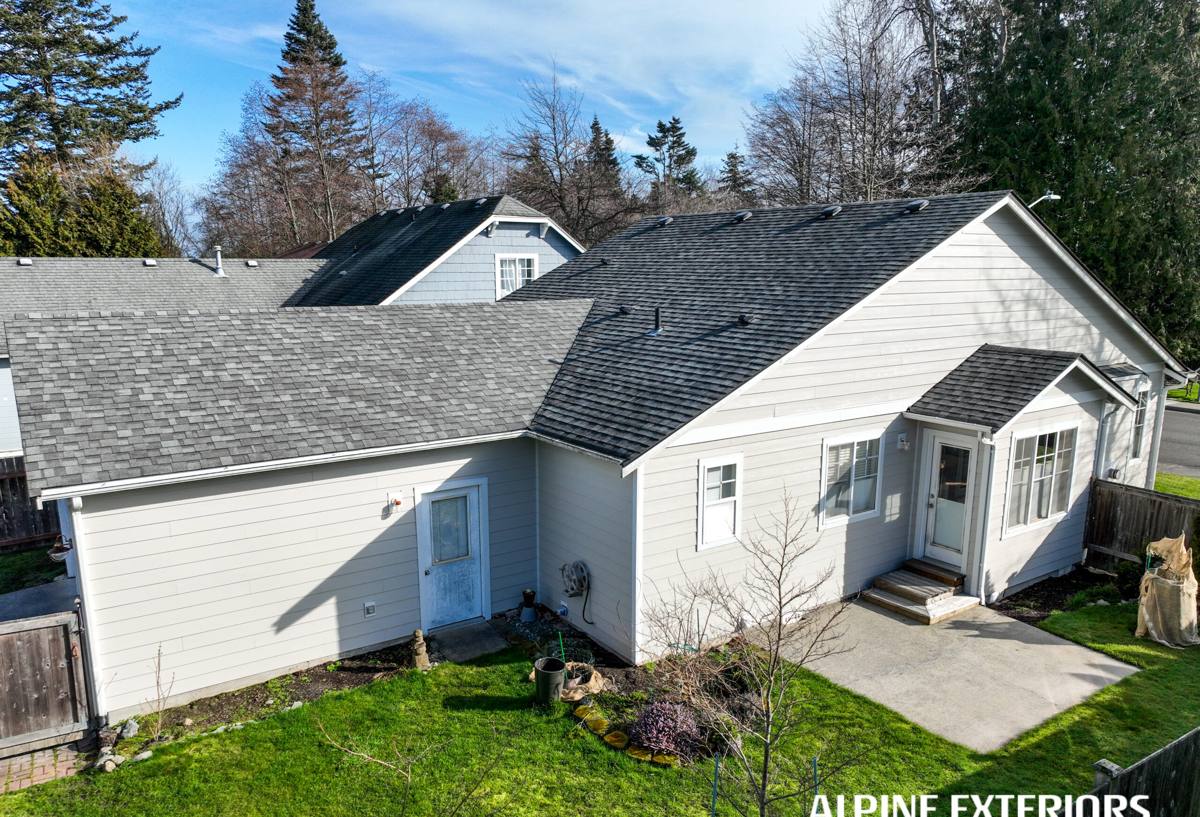
What Actually Counts as Storm Damage
Homeowners often assume storm damage means missing shingles or a downed branch through the roof. Those are the obvious cases. More often, what we find after a wind and rain event in this area falls into a handful of categories:
- Shingles lifted or creased by wind, even if they didn't blow off — these lose their seal and let water underneath on the next rain
- Flashing pulled loose or bent around chimneys, skylights, and roof-to-wall transitions
- Gutter and downspout damage that redirects water into fascia boards or siding instead of away from the foundation
- Ridge cap and hip damage from sustained wind loading, common on the more exposed, water-facing sides of a property
- Moss-driven lifting, where mats of moss trap moisture under shingle edges and a storm finishes the job by peeling them back
That last one is worth dwelling on. Moss doesn't cause storm damage on its own, but it sets the stage for it. A shingle that's been sitting under a moss mat for a year is softer, less flexible, and far more likely to crack or tear loose in the next windstorm than a clean, well-maintained shingle. In this part of Whatcom County, moss and storm damage are usually two chapters of the same story.
Signs You Can Check From the Ground
You don't need to get on the roof to notice warning signs. Look for shingle granules collecting in gutters or at downspout outlets, daylight visible through soffit vents that wasn't there before, curling or dark streaking on shingles facing the water, and any sagging along the roofline. Inside, check attic spaces after a storm for damp insulation, new water stains, or a musty smell — these often show up before any ceiling stain becomes visible from the living space below.
Why Salt Air and Long Moss Seasons Change the Repair, Not Just the Damage
A storm damage repair in a drier inland climate is often straightforward: replace the damaged material, reseal, done. On a roof that's been living in salt air and near-constant dampness, the repair has to account for what's happening around the visible damage, not just the damage itself.
Fasteners and flashing exposed to salt-laden air corrode faster than the same materials would inland, so a repair that reuses corroded nails or clips is a repair that fails again sooner. Underlayment and decking that have been damp for an extended period may look intact but have already lost structural integrity — pressing a repair straight onto compromised decking just relocates the problem a few feet over. And because moss regrows quickly in this climate, any repair that doesn't address drainage and airflow around the repaired section is setting up a repeat visit.
This is why we treat every storm repair call in Point Roberts as an inspection first and a repair second. The storm damage is often the visible symptom of a slower-moving moisture problem that's been building for a season or two.
Our Storm Damage Repair Process
1. Inspection and Documentation
We walk the roof (not just the ground) and document the actual condition — decking, underlayment, flashing, and the shingles themselves — with photos that support any insurance claim you may file. We also check attic and interior spaces for signs the damage has already traveled inward.
2. Temporary Protection
If there's an active leak or exposed decking, we tarp or otherwise stabilize the area first. Given how much rain this area sees, leaving an opening exposed even for a day or two can turn a repair into a much larger project.
3. Scope and Estimate
We give you a clear, honest breakdown of what needs to be fixed now versus what's worth watching, and what a proper repair involves in terms of materials and labor — no inflated scope, no skipped steps.
4. Repair
We replace damaged shingles, flashing, and any compromised decking or underlayment, matching materials to withstand the same wind and salt exposure that caused the original damage. Fasteners and flashing are chosen for corrosion resistance, not just cost.
5. Cleanup and Walkthrough
We clear debris, check gutters and downspouts are clear and properly pitched, and walk the repair with you so you know exactly what was done and why.
Common Repair Scenarios and What Drives the Cost
Every roof and every storm is different, but most storm damage repair calls in this area fall into a few general categories. The table below is meant to give you a realistic sense of scope, not a quote — the only way to know actual cost is a hands-on inspection.
| Scenario | Typical Scope | Cost Driver |
|---|---|---|
| Isolated wind-lifted shingles | Reseal or replace a limited section | Number of shingles, roof pitch and access |
| Flashing failure at chimney or skylight | Remove and re-flash the penetration | Flashing material and complexity of the transition |
| Moss-related lifting with underlying rot | Remove moss mats, replace shingles and decking as needed | Extent of decking damage found once shingles are pulled |
| Gutter/downspout damage redirecting water | Replace or resecure gutter runs and hangers | Length of run and whether fascia repair is also needed |
| Multiple areas after a significant windstorm | Coordinated repair across roof planes | Total area affected and material availability |
The Border Factor: Why Local Access Actually Matters Here
Point Roberts is a genuine exclave — the only way in or out by land is through Canada, crossing the border twice to get from the rest of Whatcom County. That's not a minor logistical footnote when you're trying to get a roof repaired after a storm. Crews without current border documentation, without a truck set up for the crossing, or without an established routine for getting materials and equipment through customs can lose half a day or more just getting to the job site — and that's before any work starts.
After a storm, when a tarp needs to go up before the next system rolls in, that kind of delay matters. A crew that already works Point Roberts regularly has the crossing down to routine, keeps materials staged so they're not scrambling to source something mid-repair, and isn't learning the local wind and drainage patterns for the first time on your roof. That familiarity shows up in how fast we can respond and how well the repair holds up to the next storm.
Insurance Claims: What Homeowners Should Know
Most homeowner policies cover storm damage, but coverage and claims processes vary by insurer, and we're not in a position to promise what your policy will or won't pay. What we can do is document the damage thoroughly with dated photos and a clear written scope, which gives you (and your adjuster) an honest record to work from. We're glad to walk an adjuster through what we found on the roof if that's useful, but the claim itself is between you and your insurance company.
After the Repair: Keeping the Next Storm From Doing the Same Damage
A repair that isn't followed by basic maintenance is a repair you'll likely be redoing. Given how quickly moss reestablishes itself in this climate, a few habits make a real difference in how long a repair lasts:
- Keep gutters and downspouts clear, especially heading into fall and winter storm season
- Have moss treated or removed before it mats and traps moisture, not after shingles are already lifting
- Check flashing and fastener condition every year or two, since salt air corrosion is gradual and easy to miss
- Trim back overhanging branches that keep sections of the roof shaded and damp longer than the rest
- Address small leaks immediately rather than waiting for the next storm to make them worse
Choosing a Crew for Storm Damage Repair in Point Roberts
Not every contractor that serves Blaine is set up to serve Point Roberts well, and it's worth asking a few direct questions before you hire someone for storm repair out here:
- Do they currently work in Point Roberts, or would this be their first job on the peninsula?
- Can they respond quickly enough to tarp or stabilize damage before the next storm arrives?
- Do they inspect the full roof and attic, or just patch the visible damage?
- Do they document damage clearly enough to support an insurance claim?
- Are they licensed and insured to work in Washington State?
A roof repair that's done right the first time, by a crew that understands the wind exposure, salt air, and moss cycle specific to this peninsula, costs less over time than a quick patch that needs revisiting after the next storm season.
If you've got storm damage on your Point Roberts roof — or you're not sure whether what you're seeing is storm damage, moss damage, or both — we're happy to take a look and give you a straight answer. Request a free, no-pressure estimate using the form below.