 Blaine
 Roof Repair Built for Bellingham's Climate
Bellingham sits close enough to the water that salt air is part of daily life, and close enough to the mountains that rain rolls through on a near-constant basis for much of the year. That combination is hard on roofs in ways that don't show up overnight. A roof in a drier inland climate can go years with minor wear before it becomes a real problem. A roof in Whatcom County doesn't get that grace period. Small issues — a lifted shingle tab, a gap in flashing, a clogged valley — turn into water intrusion faster here because the roof rarely gets a long stretch to fully dry out between weather systems.
We do roof repair work throughout the Bellingham area and see the same patterns over and over: moss holding moisture against shingles, flashing that's corroded faster than the roofing material around it, and gutters that can't keep up with driving rain during a real storm. None of that is unusual for this region. It's just what a Pacific Northwest roof has to deal with, and it's why repairs here need to be done with the local climate in mind, not with a generic checklist.
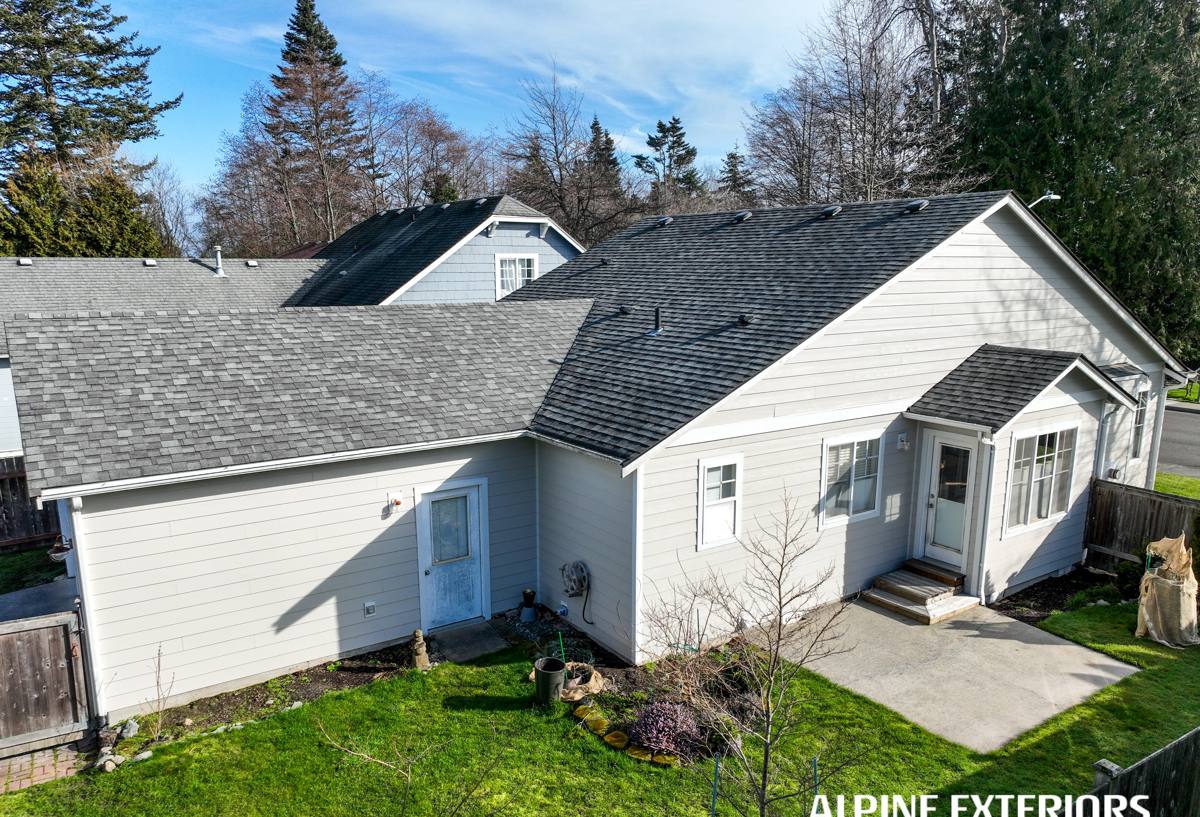
What Makes Bellingham Roofs Wear the Way They Do
Salt Air and Metal Components
Bellingham's proximity to Bellingham Bay means airborne salt is a factor even on homes that aren't right on the water. Salt accelerates corrosion on exposed metal — flashing, fasteners, vent caps, gutter hardware — well before the shingles or siding around them show their age. A roof repair that only looks at the shingles and ignores the metal underneath and around them is treating half the problem.
Moss and Sustained Moisture
Whatcom County's moss season runs long, and moss doesn't just sit on top of a roof looking messy — it holds water against the roofing surface, works into shingle laps, and lifts edges as it grows. Roofs with heavy tree cover or north-facing slopes that don't get much sun exposure are especially prone to this. Left alone, moss growth is one of the more common reasons a repairable roof section turns into a rot problem underneath.
Driving Rain and Wind
Rain that falls straight down is manageable for almost any roof. Rain that comes in sideways during a windstorm off the Sound is a different test — it finds every gap in flashing, every under-driven nail, every spot where a shingle isn't sealed down tight. Bellingham gets enough of these events that repairs need to account for wind-driven rain, not just standing water.
Common Roof Repair Issues We See Around Bellingham
- Moss-damaged or lifted shingles, especially on shaded, north-facing slopes
- Corroded or improperly lapped flashing around chimneys, skylights, and roof-to-wall transitions
- Nail pops and sealant failure from repeated wet-dry cycling
- Clogged or undersized gutters causing water to back up under the roof edge
- Soft, spongy decking discovered under damaged shingles once moisture has been getting in for a while
- Damaged boots and seals around plumbing vents, one of the most common quiet leak sources
What a Correct Roof Repair Actually Involves
A roof repair that holds up in this climate is more than swapping out a few damaged shingles. It starts with figuring out why the damage happened in the first place, because replacing a symptom without addressing the cause just buys a homeowner a year or two before the same spot fails again.
Inspection Before Anything Else
We look at the repair area and the roof around it — the decking underneath, the flashing details nearby, and how water actually moves across that section of roof during rain. A leak that shows up in one spot on the ceiling often traces back to a flashing failure or moss dam several feet away.
Flashing and Sealant Work
Since salt air shortens the working life of exposed metal, flashing repairs matter as much as shingle repairs. Corroded or improperly lapped flashing gets replaced or corrected, not just resealed over the top, since sealant alone is a temporary fix on a flashing detail that's failing structurally.
Matching Materials Correctly
Where shingles need to be replaced, we match the existing material as closely as possible in type, weight, and color so the repair doesn't stand out and, more importantly, so it performs the same as the surrounding roof. Mismatched shingle weights or profiles can create small gaps that trap water differently than the rest of the roof.
Checking the Decking
If moisture has been getting in for any length of time, the decking underneath needs to be checked for soft spots or rot. Repairing the surface over damaged decking doesn't solve anything — it just hides a structural problem under new shingles.
Repair or Replace? How We Help You Decide
Not every roof problem in Bellingham needs a full replacement, and not every roof problem should be patched indefinitely either. The honest answer depends on the roof's age, how widespread the damage is, and what's happening underneath the surface.
| Factor | Points Toward Repair | Points Toward Replacement |
|---|---|---|
| Roof age | Under roughly 15 years, still within expected lifespan | Near or past the material's typical service life |
| Extent of damage | Isolated to one section or a handful of spots | Widespread moss, curling, or granule loss across most of the roof |
| Decking condition | Solid, no rot found during inspection | Soft or rotted decking found in multiple areas |
| Flashing condition | Sound, with only minor sealant wear | Corroded or failing in several locations |
| Repair history | First or second repair on this roof | Repeated repairs to the same areas over recent years |
We'll tell you plainly which category your roof falls into. If a repair is the right call, we're not going to talk you into replacement work you don't need yet.
Our Roof Repair Process
- On-site inspection. We walk the roof (or use appropriate access for steep or fragile sections) and document what we find, including areas beyond the immediate complaint.
- Clear explanation. We show you what's actually going on, why it happened, and what it will take to fix it correctly — no vague descriptions, no pressure to add unrelated work.
- Written scope and estimate. You get a clear description of the repair, the materials involved, and the cost before any work starts.
- The repair itself. Damaged materials come out, decking is checked and repaired if needed, flashing is corrected, and new material is installed and properly sealed.
- Cleanup and final check. We clear debris from the roof and gutters and do a final look to confirm the repair area is sound.
Preparing for the Next Wet Season: A Homeowner's Checklist
A lot of roof repair calls in Bellingham could have been smaller jobs if a minor issue had been caught earlier. Between professional inspections, a few things are worth checking yourself from the ground or with a stable ladder:
- Look for moss buildup, especially on shaded or north-facing roof slopes
- Check that gutters and downspouts are clear before the fall rains pick up
- Watch for granules collecting in gutters, a sign of aging or wind-damaged shingles
- Note any daylight visible through the attic roofline, checked from inside on a bright day
- Look for water stains on interior ceilings after a heavy wind-driven rain event
- Have any roof over 12-15 years old inspected before problems become visible from the ground
None of these replace a professional inspection, but catching an early warning sign yourself can be the difference between a small repair and a much bigger one.
Why It Matters to Hire a Crew That Already Works in Bellingham
Roof repair work benefits from local familiarity in a way that's easy to underestimate. A crew that regularly works Bellingham roofs already knows which details tend to fail first in this climate — the flashing styles that hold up against salt air, the roof slopes that collect moss fastest, the gutter setups that keep up with a real Whatcom County downpour. That familiarity shortens the diagnostic part of the job and reduces the chance of a repair that looks right but doesn't hold up through the next wet season.
It also means someone is accountable locally if a repair needs a follow-up visit. Roofing work done by a crew passing through the area doesn't offer that same accountability once the job is finished and they've moved on.
Get an Honest Look at Your Roof
If you're dealing with a leak, moss buildup, or damage from a recent storm, we're happy to come take a look and give you a straight answer about what's going on and what it will take to fix it. Reach out for a free, no-pressure estimate using the form below.