 Blaine
 Storm Damage Roof Repair on Semiahmoo
Semiahmoo sits out on a narrow spit between Semiahmoo Bay and Drayton Harbor, right at the edge of Blaine and the Canadian border. It's one of the most exposed residential settings in Whatcom County — open water on more than one side, almost nothing to break the wind, and storms that arrive with more force than they do just a few miles inland. When a windstorm or heavy system moves through, roofs out here take the first and hardest hit.
Storm damage roof repair on a property like this isn't the same job as patching a roof in a sheltered inland neighborhood. The wind loading is higher, the rain comes in sideways as often as it falls straight down, and the repair has to hold up against the next storm, not just look fixed after this one. We repair storm-damaged roofs for homes in and around Semiahmoo regularly, and we approach every one of them with that exposure in mind from the first walk-around.
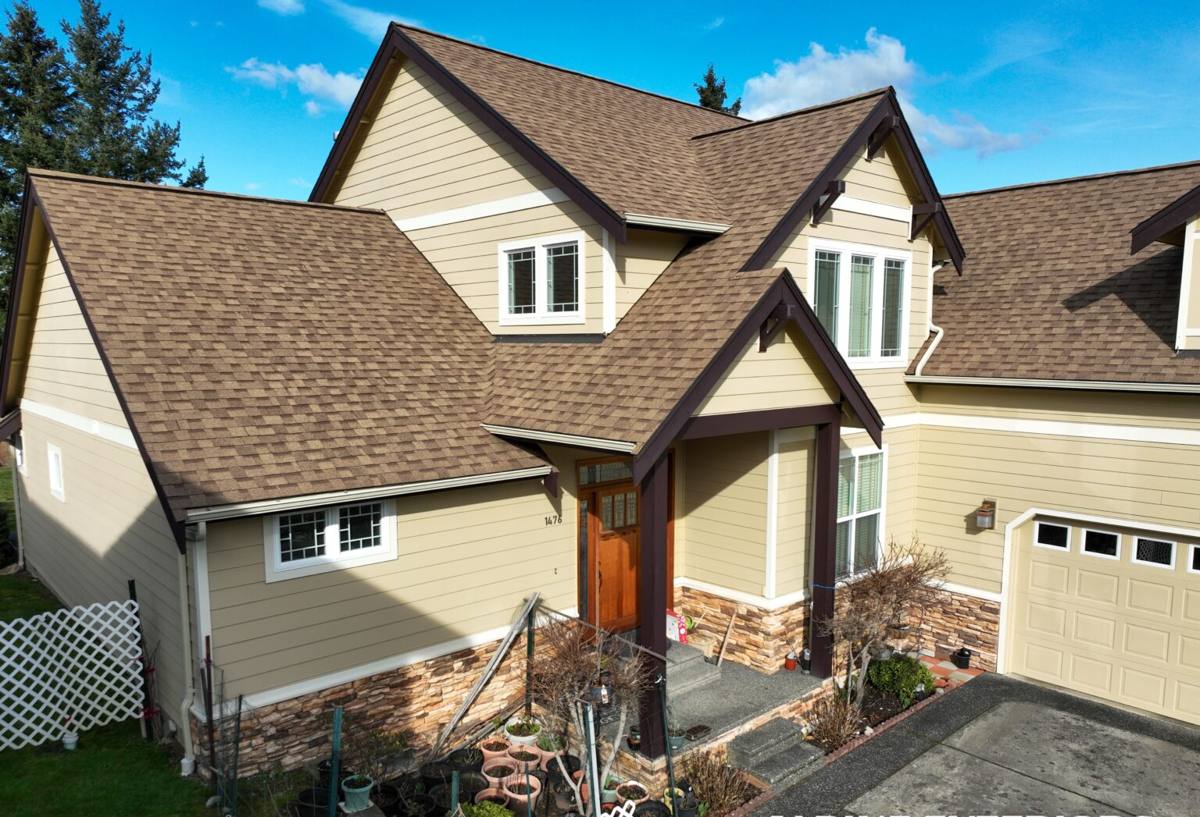
What Coastal Storms Actually Do to a Semiahmoo Roof
Wind Uplift and Lifted or Missing Shingles
Open water exposure means wind on the spit rarely arrives from a single, predictable direction. Gusts off the bay can catch shingle edges, ridge caps, and ventilation components from angles a more sheltered roof rarely sees, working fasteners loose and lifting tabs that then crack or tear off entirely in the next blow. A roof that looks intact from the ground can still have dozens of compromised shingles once you're actually up on the slope.
Wind-Driven Rain at Flashing and Penetrations
Storms here don't just drop rain — they drive it sideways into every joint, valley, and penetration on the roof plane. Flashing around chimneys, skylights, vent pipes, and roof-to-wall transitions is where that pressure finds its way in first, and a flashing detail that's held up fine for years in normal weather can still fail during one bad wind event if it was ever marginal to begin with. Most of the interior water stains we get called out for trace back to a flashing point, not a hole in the field of the roof.
Salt Air Accelerating Every Weak Point
Because Semiahmoo has water on more than one side, salt-laden air reaches roofs here from multiple directions rather than one prevailing exposure. Salt speeds up corrosion in exposed fasteners, flashing, and metal trim, which means storm damage often shows up first at the metal components — a rusted-through flashing edge or a corroded fastener head — rather than the shingles themselves. Any repair that doesn't account for that accelerated corrosion is a repair that's likely to need redoing sooner than it should.
A Moss Season That Barely Lets Up
Mild temperatures, near-constant humidity, and shaded north-facing slopes add up to a moss season that runs most of the year across this part of Whatcom County. Moss holds moisture directly against the roofing material, and on a roof that's already storm-damaged, that trapped moisture speeds up rot in the decking underneath long before it's visible from inside the attic. A storm repair on a Semiahmoo roof isn't complete if it leaves existing moss buildup untouched around the repaired area.
Signs Your Semiahmoo Roof Has Storm Damage
Not all storm damage is obvious from the ground, and some of it doesn't show up inside the house until it's been an active leak for weeks or months. After any significant wind event, it's worth checking for the following:
- Shingles that are cracked, curled, creased, or missing entirely, especially near ridges and edges
- Granules collecting in gutters or at the base of downspouts after a storm
- Flashing that's visibly bent, lifted, or separated from the surface it's sealed against
- Soft spots or slight sagging when walking the attic, particularly near roof-to-wall transitions
- New water staining on interior ceilings or walls, especially after a windy system off the water
- Debris strikes, punctures, or dents from branches or wind-carried material
- Moss or dark streaking that's worsened noticeably since the last inspection
What a Correct Storm Damage Repair Involves
Assessment Before Any Work Starts
A proper storm repair starts with a full look at the roof, not just the spot where the leak is showing up inside. Wind and rain damage rarely stay contained to one area, and a repair that only addresses the visible symptom often leaves a second compromised area to fail in the next storm. We walk the whole roof plane, check flashing at every penetration, and look at the decking underneath any area we open up before deciding on the scope of repair.
Flashing and Underlayment First, Shingles Second
On an exposed property like this, the underlayment and flashing are doing more of the actual waterproofing work than most homeowners realize — the shingles are the first line of defense, but the layers underneath are what keep the house dry if that first line gets breached in a storm. Any storm repair we do replaces damaged underlayment and re-details flashing to current standards, not just whatever was there before, since a like-for-like patch on marginal flashing just sets up the same failure again.
Matching Materials Instead of Patching Blind
Where shingles need replacing, matching the existing material in type, weight, and as close to color as the product line allows matters more on a storm repair than people expect — a mismatched patch doesn't just look wrong, it can create a slightly different water-shedding profile at the seam between old and new material. When an exact match isn't available because a shingle line has been discontinued, we tell homeowners that directly instead of installing something that won't blend or perform the same way.
Correcting the Moss and Corrosion Issues Found Along the Way
Because Semiahmoo's climate accelerates both moss growth and metal corrosion, we treat those as part of the repair scope when we find them near the damaged area, not as a separate upsell. A repair that replaces damaged shingles but leaves a corroding flashing edge or an active moss colony two feet away hasn't actually solved the underlying exposure problem — it's bought a little time before the next storm reopens it.
Storm Damage and Insurance: What to Know Going In
Many storm repairs on Whatcom County homes are covered in some form by homeowner's insurance, but coverage details, deductibles, and what counts as storm damage versus wear and tear vary by policy and by carrier. We're not insurance adjusters and we don't represent that we can guarantee a claim outcome. What we do provide is a clear, honest, written description and documentation of the damage we find, which homeowners are free to bring to their insurance company as part of a claim. We'd rather give you an accurate picture of the roof than tell you what we think you want to hear for a claim to go through.
Repair vs. Replacement: What Actually Drives That Decision
| Factor | Leans Toward Repair | Leans Toward Replacement |
|---|---|---|
| Roof age | Well within its expected service life | Already near or past typical lifespan for the material |
| Extent of damage | Limited to one section or a small number of penetrations | Widespread across multiple slopes or repeated storm events |
| Underlying decking | Solid, dry wood found once opened up | Soft, rotted, or moisture-damaged decking present |
| Material availability | Existing shingle line still in production and matchable | Discontinued product with no reasonable match available |
| Prior repair history | First significant storm issue on this roof | Pattern of recurring leaks or repairs in different spots |
None of these factors decide anything on their own — we look at all of them together and give a straight recommendation, including telling a homeowner when a repair is genuinely the right call rather than pushing toward a full replacement that isn't needed yet.
A Few Questions Worth Asking Before You Commit to Either Option
- Is the damage isolated, or is it a symptom of the roof's overall age and condition?
- What did the decking look like once the damaged area was opened up?
- Is the current shingle line still available to match, or close enough to blend?
- Has this roof had other repairs recently, and if so, where?
- What's the honest cost difference between repairing well now and replacing in a few years anyway?
Our Process for Semiahmoo Storm Repairs
We start with a full roof assessment, not just a look at the area where the leak or damage is visible, since storm damage on an exposed spit property rarely stays contained to a single spot. From there we give a clear, written scope covering exactly what we found, what needs to happen, and an honest repair-versus-replacement read if the roof's age or condition puts that decision in play. Work itself prioritizes flashing and underlayment correction alongside the visible shingle repair, and we address moss or corrosion issues we find near the repair area rather than working around them. We document the damage clearly enough that homeowners have something solid to bring to an insurance conversation if they choose to.
Why a Crew That Already Works Semiahmoo Matters
A roofing crew that regularly works this specific stretch of coastline already knows how wind, salt air, and near-constant moisture behave differently here than they do even a short distance inland in Blaine. That shows up in the details that actually determine whether a storm repair holds — which flashing profile handles multi-directional wind-driven rain, which fastener grade resists salt corrosion, and where extra attention around moss-prone north faces is worth the time. Those aren't judgment calls you can make well from a truck that's never worked an exposed waterfront roof before.
If a recent storm has left you with a leak, missing shingles, or just some uncertainty about what your roof went through, we're glad to take a look and give you a straight answer about what it actually needs. Reach out below for a free, no-pressure estimate.