 Blaine
 Siding Installation Built for the Peace Arch Neighborhood
Homes near the Peace Arch border crossing sit in one of the more exposed corners of Whatcom County. The lots here are close enough to Semiahmoo Bay and Drayton Harbor that salt-laden marine air is a daily fact of life, not an occasional weather event. Add in wind-driven rain off the Strait of Georgia and the long, damp shoulder seasons that let moss and algae take hold on anything that stays wet too long, and you get a siding environment that punishes shortcuts. A siding job that would hold up fine forty miles inland can fail early here if it wasn't detailed for this specific exposure.
This page is about one job in one area: installing new siding on a home in or near the Peace Arch neighborhood of Blaine. It's not a general overview of siding options — it's what we've learned about doing this job correctly, on this coastline, and why the details matter more here than they do in most of Whatcom County.
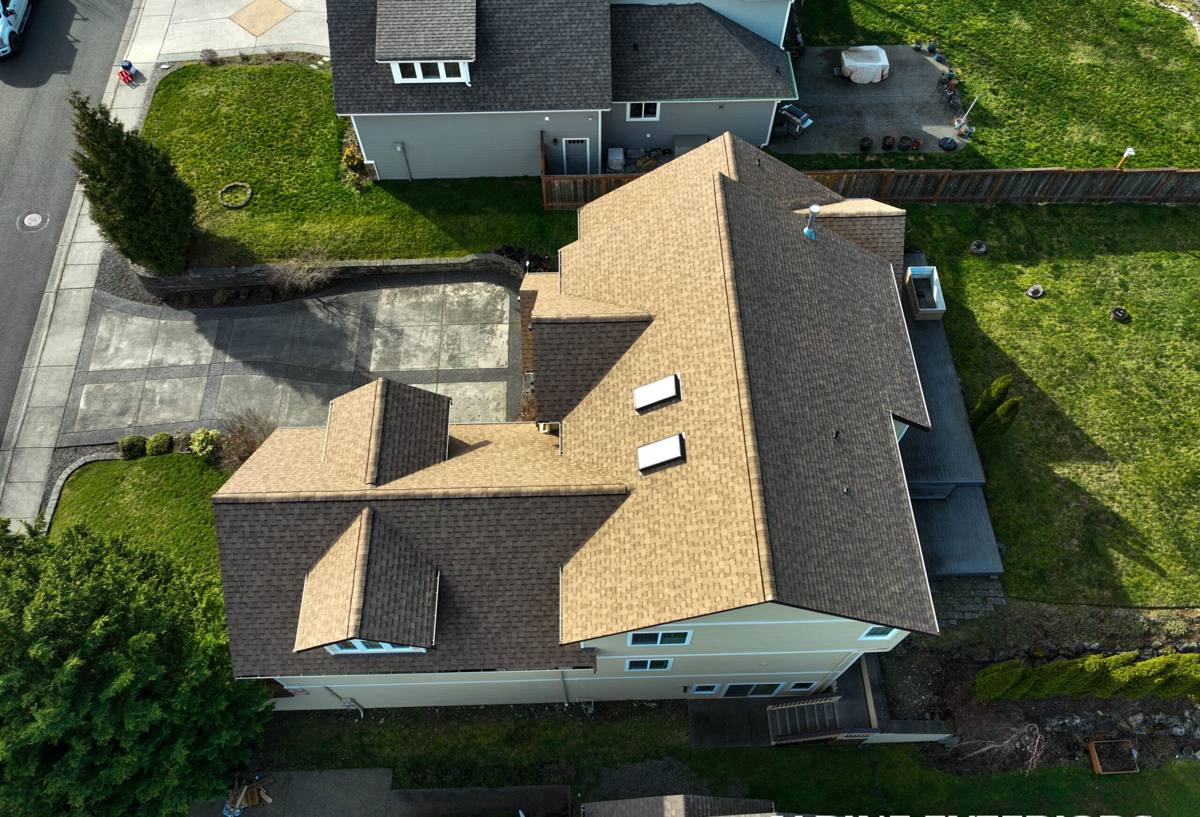
What Peace Arch-Area Homes Are Actually Up Against
Salt Air and Coastal Corrosion
Proximity to Semiahmoo Bay means airborne salt settles on siding, trim, and especially fasteners. Over years, salt exposure accelerates corrosion in anything that isn't rated for a coastal environment — cheap staples, uncoated nail heads, and lower-grade trim hardware all show it first. It shows up as rust streaking down the face of the siding, swollen fastener holes, and eventually loose boards.
Driving Rain and Wind-Driven Moisture
Blaine's exposure to weather moving in off the water means rain here doesn't just fall — it gets pushed sideways into wall assemblies, especially on street-facing and water-facing elevations. Siding that relies on face-sealed caulk joints instead of proper flashing and drainage tends to let moisture in behind the cladding, where it can sit against sheathing for months before anyone notices a problem.
Moss, Shade, and Slow-Drying Walls
Mature trees and long overcast stretches mean north- and east-facing walls in this neighborhood can stay damp for days after a storm passes. That's ideal growing conditions for moss and algae on porous or textured siding surfaces, and it's part of why the drainage gap behind the siding matters as much as the siding material itself.
What a Correct Installation Actually Involves
The siding material gets most of the attention, but in a climate like this, the assembly behind it does most of the work. A correct installation on a Peace Arch-area home includes:
- A continuous weather-resistive barrier, properly lapped shingle-style so water sheds outward at every seam
- Flashing at every window, door, deck ledger, and roof-to-wall intersection — the points where most real-world leaks start
- A drainage gap (rainscreen) behind the siding so any moisture that does get past the cladding can drain and the wall can dry
- Corrosion-resistant fasteners driven to the manufacturer's exact pattern and depth, not just "close enough"
- Correct clearances at grade, roof lines, and decks so siding never sits in standing water or constant splash-back
- Factory-finished panel edges sealed per spec at cuts and joints, so raw material doesn't wick moisture
Skip any one of these and the siding itself becomes almost irrelevant — water will find the weak point. This is the part of the job that doesn't show up in a walk-around inspection after the crew leaves, which is exactly why it has to be done right the first time.
Why We Install Only James Hardie Fiber Cement
We install one siding system: James Hardie fiber cement. We made that call because of exactly the conditions described above. Fiber cement doesn't rot, doesn't feed moss the way wood fiber can, and doesn't warp or delaminate the way some engineered wood and lower-grade composite products can when they take on repeated moisture. It's also non-combustible, which matters to insurers and to homeowners thinking about long-term risk.
Hardie's HZ5 product line is engineered for exactly this kind of climate — freeze-thaw cycling combined with sustained damp, marine exposure. The factory-applied ColorPlus finish is baked on under controlled conditions, which gives it more consistent adhesion and weather resistance than field-applied paint, and it carries its own finish warranty separate from the product warranty. For a home taking the kind of exposure a Peace Arch-facing wall gets, that combination — the substrate and the finish — is what we're willing to put our name behind.
We don't install LP SmartSide, vinyl, cedar, primed spruce, or other fiber cement brands, and we're upfront about why: those products can be installed well and plenty of them are on solid homes around Blaine. But each comes with a trade-off — vinyl can warp and fade and offers little at seams and inside corners in wind-driven rain; engineered wood products depend heavily on unbroken factory coating for their moisture resistance; cedar and primed wood need a maintenance commitment most homeowners underestimate. On this coastline, we'd rather stand behind one product system we know inside and out than install several and hope each one holds up.
Our Installation Process
1. Site and Exposure Assessment
We walk the home and note which elevations take the worst of the water-facing wind and rain, where trees keep walls shaded and slow to dry, and where the existing siding or sheathing shows signs of past moisture problems.
2. Tear-Off and Sheathing Check
Old siding comes off and we inspect the sheathing underneath. Soft or water-stained sheathing gets flagged and replaced before anything new goes up — covering a compromised wall with new siding just hides the problem.
3. Weather Barrier and Flashing
We install the water-resistive barrier and flash every penetration and transition point before the rainscreen and siding go on. This is the step that determines how the wall performs in a wind-driven rain event, years down the road.
4. Rainscreen and Panel Installation
Furring strips or a manufactured rainscreen product create the drainage gap, then Hardie panels or lap siding go up to spec — fastener pattern, spacing, and clearances all follow Hardie's published installation requirements, not a generic approach.
5. Trim, Caulking, and Touch-Up
Trim, corners, and joints get sealed with the correct sealants at the correct locations — sealant is a backup layer here, not the primary defense, because we've already built drainage and flashing into the assembly.
6. Final Walkthrough
We walk the finished job with the homeowner, point out anything worth knowing about maintenance, and confirm everything matches what was scoped.
Comparing Siding Options for This Exposure
Every siding material can be installed correctly. The question for a Peace Arch-area home is how each one behaves after ten or twenty years of this specific salt-air, high-rain climate.
| Material | Salt air / coastal exposure | Moisture and rain behavior | Long-term maintenance |
|---|---|---|---|
| James Hardie fiber cement | Non-combustible, engineered HZ5 line for marine/freeze-thaw climates | Doesn't rot or delaminate; drainage plane does the heavy lifting | Factory finish holds color; repaint cycle is long |
| Vinyl | Can chalk, fade, and become brittle with UV and salt exposure over time | Relies heavily on lap and seam design; less forgiving of wind-driven rain | Low upkeep but limited repair options if damaged or faded unevenly |
| Engineered wood (LP SmartSide, etc.) | Performs well if coating stays intact; salt air adds wear at cut edges and joints | Moisture resistance depends on unbroken factory coating | Edge sealing and touch-up are important maintenance items |
| Cedar / primed wood | Natural material, attractive, but more vulnerable in sustained damp and shade | Absorbs moisture; prone to moss and algae in slow-drying areas | Regular refinishing and moisture monitoring required |
This isn't a claim that other materials fail outright — plenty of homes around Blaine carry them without issue. It's why, for the specific exposure this neighborhood sees, we standardized on one system engineered for it.
What Drives the Cost of a Peace Arch Siding Job
Every home is different, so we won't quote a number without seeing the house, but the variables that move the price on a job like this are consistent:
- Tear-off scope — how much of the existing siding and any damaged sheathing needs to come off and be replaced
- Home size and wall complexity — square footage, number of corners, gables, and dormers
- Siding profile — lap siding, panel systems, and shingle-style Hardie products carry different material and labor costs
- Trim and detail work — window and door trim, corner boards, and fascia detailing add labor time
- Access and site conditions — grade, landscaping, and how close the home sits to fences or neighboring structures
- Repairs uncovered during tear-off — rotted sheathing or framing found once old siding comes off
We walk through each of these on-site before putting together a scope, so the estimate reflects your home rather than a generic average.
Why a Crew That Already Works This Area Matters
A siding crew that's worked homes near the Peace Arch crossing already knows which elevations take the worst of the weather, how far moss and algae tend to creep on shaded walls in this specific microclimate, and what flashing details actually hold up here versus what looks fine on paper. That's not something you get from a general contractor working siding as a side trade — it comes from doing this exact job, in this exact place, repeatedly.
It also matters for something more practical: permitting and inspection expectations in Whatcom County, and knowing what condition to expect when old siding comes off a home that's been absorbing coastal weather for decades. None of that replaces a proper site visit, but it means fewer surprises once the job is underway.
If you're planning a siding project near the Peace Arch neighborhood, we're happy to walk the property, look at what your home is dealing with, and put together a straightforward, no-pressure estimate — use the form below to get started.