 Blaine
 Why Bellingham Siding Wears Differently Than Siding Inland
Bellingham sits close enough to salt water and open exposure that homes here take on a combination of stresses most inland Washington towns never deal with at the same intensity. Salt-laden air off the bay works its way into seams, fastener heads, and any spot where paint or caulk has started to fail. Add Whatcom County's long stretch of driving rain — often blown sideways by wind off the water — and siding here is being tested on two fronts at once: chemical breakdown from salt exposure and constant moisture intrusion from wind-driven rain that doesn't respect a standard overlap.
Then there's moss. Bellingham's mild, wet winters and shaded lots (mature trees, north-facing walls, homes tucked close together) create a moss season that can run seven or eight months out of the year. Moss holds moisture directly against the siding surface far longer than open air would, and it does this quietly — a homeowner can walk past a moss-covered section of wall for a year without realizing the siding underneath is staying damp the entire time.
None of this means Bellingham siding fails faster than siding anywhere else. It means the failure points are different, and a repair that doesn't account for salt, wind-driven rain, and prolonged moss contact is a repair that's likely to need doing again in a few years.
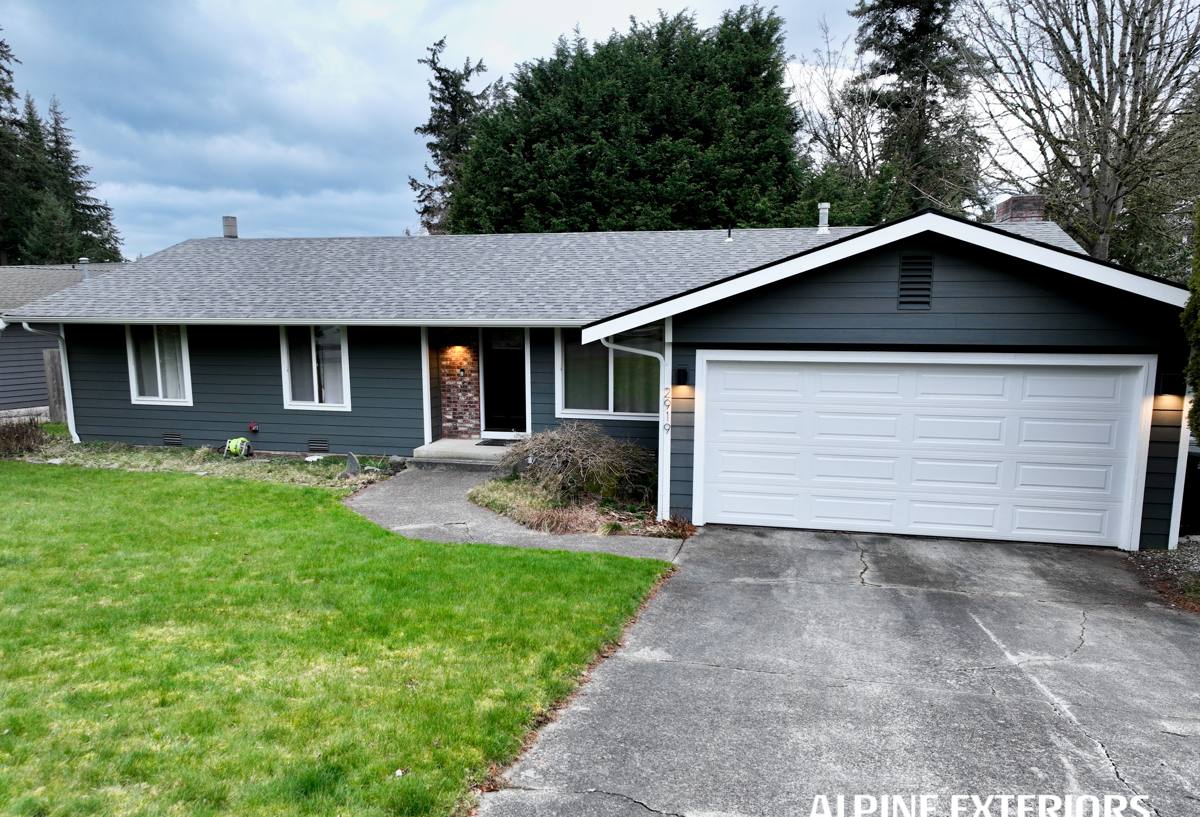
Signs Your Siding Needs Repair, Not Replacement
Most homes we look at in Bellingham don't need a full re-side — they need targeted repair done correctly, which is a very different scope of work than a quick patch. Here's what we're actually looking for during an assessment.
Water Damage Signs
Soft or spongy spots when you press on the siding, staining or dark streaking below seams, paint that's bubbling or peeling in a pattern that follows a joint line, and — on the interior — musty smells or discoloration on the drywall near an exterior wall. These point to moisture getting behind the siding rather than just weathering the surface.
Moss and Organic Growth
Moss on a roof gets attention; moss creeping onto siding often doesn't, especially on shaded north and west walls common on wooded Bellingham lots. Green or black staining that keeps coming back no matter how many times it's rinsed off is a sign the surface is staying wet longer than it should, which is worth investigating even if the siding underneath still looks intact.
Cracking, Warping, and Fastener Failure
Cracked boards, buckling or waviness along a wall plane, and fastener heads that have started to rust or back out are all localized problems. In most cases these don't mean the whole wall is compromised — they mean the specific board or section needs to come off, the substrate needs to be checked, and the repair needs to go back in matched and properly fastened.
What a Correct Repair Actually Involves
A siding repair that's done right is not just "replace the bad board and caulk the edges." That approach hides a problem instead of fixing it, and in a climate like Bellingham's, hidden moisture problems come back worse.
Checking What's Behind the Siding
Any time we pull a damaged section, we're looking at the weather-resistive barrier and sheathing underneath before anything goes back up. If water has been getting in, the barrier or sheathing may be compromised even though the visible siding damage looks minor. Repairing over a wet or rotted substrate is one of the most common shortcuts that leads to a repeat call a couple years later.
Matching Material and Profile
Siding repairs stand out badly when the replacement piece doesn't match the existing reveal, texture, or paint finish. Getting a clean match matters both for appearance and for making sure water sheds the way the original installation intended — a mismatched profile can create a new place for water to collect.
Proper Flashing and Fastening
Every seam, corner, and penetration point (hose bibs, vents, light fixtures) needs correct flashing and sealant, not just caulk smeared over a gap. And fasteners need to be the right type and depth for the material — under-driven or corroded fasteners are a frequent root cause of the "leaking siding" calls we get in older Bellingham neighborhoods.
Repair or Replace? How to Think About It
Homeowners often assume any visible damage means a full re-side, but that's rarely true unless the damage is widespread or the siding is failing across multiple walls. Here's a general framework we use when evaluating a home.
| Factor | Repair Usually Makes Sense | Replacement Usually Makes Sense |
|---|---|---|
| Extent of damage | Isolated to one or two walls or sections | Recurring damage across most of the home |
| Substrate condition | Sheathing and barrier are sound once opened up | Rot or moisture damage found in multiple areas |
| Age of existing siding | Siding is mid-life and otherwise performing well | Siding is at or past its expected service life |
| Material match | Matching material is available and can blend in | Existing product is discontinued or hard to match |
| Underlying cause | A specific, fixable cause (one bad seam, storm impact) | Systemic issue (original install error, wrong product for the site) |
We'll always tell you honestly which category your home falls into. A repair-only recommendation isn't us trying to save money on materials — it's us not selling you work you don't need.
Why We Only Repair With James Hardie Fiber Cement
We install and repair exclusively with James Hardie fiber cement siding, and that standard shapes how we approach repair work too. Fiber cement doesn't absorb and swell with moisture the way wood-based products can, and it doesn't degrade under UV and salt exposure the way some vinyl products do over time — both of which matter directly for a coastal-influenced climate like Bellingham's.
Hardie's ColorPlus factory finish also means a well-matched repair board can blend into existing siding far more consistently than a field-painted patch, since the color and sheen are baked in at the factory rather than applied on site. And because Hardie's HZ5 product line is engineered specifically for climates with significant moisture exposure, a repair using the correct HZ-rated product is built for the same conditions the original siding is facing — not a generic patch that happens to be the closest match available.
We don't repair with LP SmartSide, vinyl, or other fiber cement brands, even as a patch on an existing installation, because we won't put our name on work using a product we don't stand behind long-term. If your home currently has one of those products and needs a repair, we'll walk you through what fiber cement repair or replacement would look like honestly, without pressure.
Our Repair Process
Every repair follows the same sequence, whether it's a single damaged board or a multi-section repair after storm damage.
- On-site inspection of the damaged area and a check of the rest of the exterior for related issues you may not have noticed
- Removal of the affected siding and inspection of the sheathing and weather-resistive barrier underneath
- Repair or replacement of any compromised substrate before new siding goes back up
- Installation of matched James Hardie material with correct flashing, fastening, and sealant at every seam and penetration
- Final walk-through so you can see exactly what was done and why
We won't close up a wall over a problem we found — if the underlying issue is bigger than the visible damage suggested, we'll tell you before we proceed, not after.
Why Hiring a Crew That Already Works Bellingham Matters
Siding repair isn't one-size-fits-all across Washington. A crew that mostly works drier, inland areas may not think twice about a moss-shaded north wall or a seam facing the prevailing wind off the water — details that matter a lot here. Knowing which walls in a Bellingham home take the worst of the wind-driven rain, and which shaded corners are most likely to hold moss and moisture, comes from having done this repeatedly in this specific area, not from a general siding background.
There's also a practical side: a crew already working in Whatcom County knows local permitting expectations, has a working relationship with material suppliers who stock the Hardie HZ5 product line for this climate zone, and isn't learning the region's weather patterns on your project. That familiarity shows up in fewer surprises and a repair that's built for the conditions your specific wall actually faces.
Keeping Repaired Siding in Good Shape
Once a repair is done correctly, a little ongoing attention keeps it that way — especially given how long moss season runs here. Rinse siding periodically to keep organic growth from establishing, trim back vegetation and tree limbs that keep a wall shaded and damp, and do a visual check after major windstorms for any cracked boards or lifted flashing. Catching a small issue early is almost always cheaper and simpler than catching it after a full moss or rain season has had time to work on it.
If you're seeing damage, staining, or persistent moss on your Bellingham home's siding, we're happy to take a look and give you an honest read on what it actually needs — repair or replacement — with no pressure either way. Reach out for a free estimate using the form below.