 Blaine
 California Creek: A Different Kind of Exposure Than Blaine's Open Waterfront
California Creek doesn't sit out on open water the way some Blaine neighborhoods do. It's set back from the immediate shoreline, along lower, creek-fed ground with more tree cover and more shade than you'll find on an exposed bay-front lot. That difference matters more than it might seem. Homes right on the water take a direct hit from wind-driven salt spray. Homes along the California Creek corridor deal with a quieter but equally persistent problem: shaded walls, damp ground, and marine air that still drifts in off Semiahmoo Bay and settles into low-lying, tree-sheltered lots and just doesn't leave for long stretches of the year.
We replace siding on homes throughout this part of Whatcom County, and California Creek properties tend to show a distinct wear pattern compared to open-water Blaine homes. Understanding that pattern — where the moisture actually comes from and how long it sits against a wall before drying out — is the difference between a siding job that looks fine at handoff and one that actually holds up through another twenty Blaine winters.
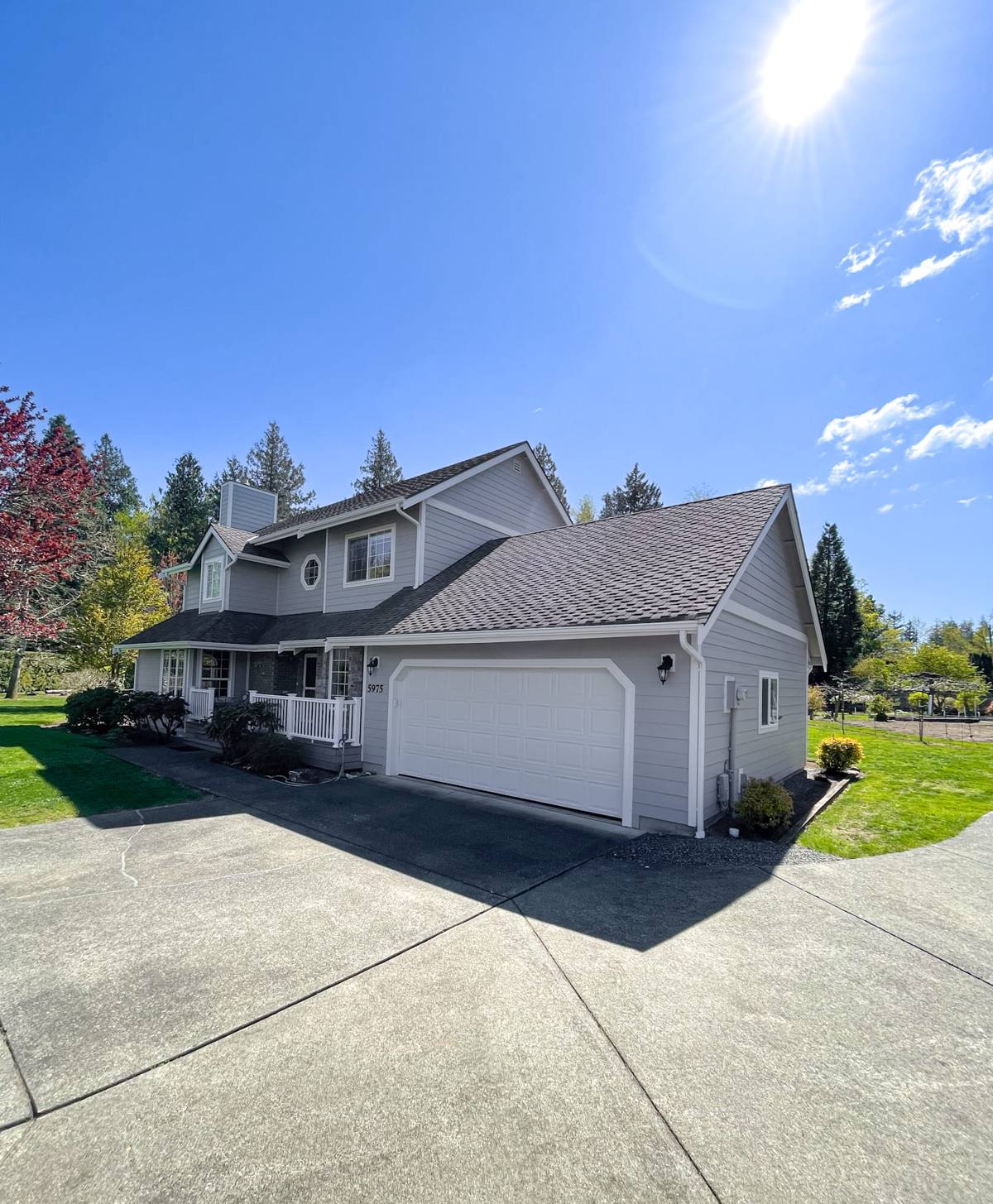
What This Environment Does to Siding Over Time
Shade, Tree Cover, and a Long Moss Season
Mature tree canopy is common along creek corridors like this one, and it does two things to a house: it blocks a lot of direct sun, and it drops needles, leaves, and debris into gutters and along wall bases. Less sun means walls stay wet longer after every rain. That combination turns into a moss and algae season that can run most of the year on north-facing or heavily shaded elevations — longer than what an open, sun-exposed Blaine lot typically sees.
Damp Ground and Slow-Drying Wall Bases
Low-lying, creek-adjacent ground drains more slowly than higher, better-exposed lots. That means the bottom few feet of exterior wall — right where siding meets foundation, deck ledgers, and grade — spends more time sitting near damp soil and standing groundwater after heavy weather. That's exactly where poorly detailed siding starts to fail first, regardless of the material.
Salt Air That Still Reaches Inland
Being off the open water doesn't mean California Creek is free of marine exposure. Salt-laden air moving in off Semiahmoo Bay still reaches homes set back from the shoreline, just in a lower, steadier dose rather than a direct blast. Over years, that steady low-level exposure still accelerates corrosion in fasteners and lower-grade trim hardware, and it still works against paints and finishes that aren't built for a marine climate.
Warning Signs Worth Checking on a California Creek Home
Because this area's problems build slowly rather than showing up as an obvious storm-damage event, homeowners often don't notice trouble until it's well established. A few things worth checking yourself before calling anyone out:
- Persistent green or black streaking on shaded or tree-sheltered walls, especially north-facing sides
- Soft, spongy, or slightly bulging spots low on the wall, near grade, decks, or downspouts
- Caulk at siding seams and trim that's cracked, shrunk, or pulled away rather than sealed tight
- Paint or finish that's chalking, fading unevenly, or peeling in patches rather than wearing uniformly
- Swelling, delamination, or a puffy look at butt joints or cut edges of existing siding boards
- Dark staining trailing down from window sills or under roof-to-wall transitions
Any one of these can be cosmetic and minor. Several together, especially on the shaded or low side of the house, usually mean moisture has been getting behind the cladding for a while.
Why We Install Only James Hardie Fiber Cement for This Area
We install one siding system, and it's James Hardie fiber cement. That's a standard we hold to because of what we've consistently found on tear-offs in exactly this kind of shaded, damp, low-lying setting — not a brand preference we picked off a supplier list.
- Non-combustible core: Fiber cement doesn't feed a fire the way wood-based siding products can, which matters for both safety and insurance considerations.
- Factory-applied ColorPlus finish: The finish is baked on under controlled conditions rather than brushed on in the field, which holds up far longer against the fading, chalking, and moisture intrusion that shaded, damp walls accelerate.
- HZ5 climate engineering: Hardie's HZ5 formulation is built for regions dealing with heavy, sustained moisture exposure and freeze-thaw cycling, which describes this stretch of Whatcom County well.
- Dimensional stability: Fiber cement doesn't swell, cup, or delaminate the way engineered wood products can after repeated wetting in a slow-drying, shaded location.
- Strong transferable warranty: Backed by one of the more substantial warranty structures in the industry, provided installation follows Hardie's published spec.
We don't install LP SmartSide, vinyl siding, Cemplank, Allura, primed spruce, or cedar. Every one of those products has a place in the market, and plenty of homeowners elsewhere are satisfied with them. On a shaded, slow-drying California Creek lot specifically, we've made a professional call that we'd rather stand fully behind one system we trust than offer something cheaper that quietly pushes maintenance risk back onto the homeowner a few years down the road.
What Correct Installation Looks Like Here
Drainage Plane and Rain-Screen Detailing
On a wall that stays damp longer because of shade and low ground, the assembly behind the siding matters as much as the siding itself. A proper water-resistive barrier, correctly lapped, combined with drainage or rain-screen detailing where the wall assembly calls for it, gives any bulk moisture that does get past the cladding a way out instead of a place to sit and soak into sheathing.
Flashing at Roof Lines, Windows, and Grade
Roof-to-wall transitions, window and door openings, and the bottom termination near grade or a deck ledger are where water finds its way in on almost every failed siding job we tear off. Kickout flashing at roof-to-wall intersections, correctly lapped window flashing, and proper clearance at the base of the wall aren't optional add-ons — they're the details that determine whether a California Creek home's siding lasts one decade or several.
Fastening and Clearance Standards
Fastener type, spacing, and depth all have to match Hardie's specification for the product line and exposure being installed. Clearance from grade, roofing, and decking also has to meet spec — shortcuts here are invisible on installation day and show up as rot or corrosion damage years later, usually right at the low points we already flagged as trouble spots for this area.
Our Process for a California Creek Siding Replacement
- On-site assessment of the existing siding and wall assembly, with particular attention to shaded elevations, wall bases near grade, and any moisture already trapped behind the cladding
- Full or partial tear-off, with sheathing inspected and any rot or moisture-damaged material repaired before anything new goes back on
- Installation or correction of the water-resistive barrier and flashing at every roof line, window, door, and grade transition
- James Hardie fiber cement installed to manufacturer specification for fastening, spacing, and clearance
- Final walkthrough and cleanup, with a clear explanation of what was found and what was changed from the original assembly
Cost Factors for This Neighborhood
Every siding replacement estimate is specific to the house, but a few factors consistently move the number up or down on California Creek projects:
| Factor | Why It Affects Your Estimate |
|---|---|
| Extent of hidden moisture damage | Shaded, slow-drying walls more often need sheathing repair once old siding comes off, which isn't fully knowable until tear-off begins |
| Tear-off vs. install over existing siding | Full tear-off costs more upfront but is the only way to properly inspect and correct the drainage plane behind the wall |
| Trim, color, and detail complexity | Homes with more window and roofline transitions require more flashing and finish work than a simple rectangular wall |
| Site access and tree cover | Mature landscaping and creek-side terrain can limit staging and material access, affecting labor time |
| Square footage and wall height | Larger and taller wall areas mean more material and more labor hours, straightforwardly scaling the total cost |
Why a Crew That Already Works California Creek Matters
A contractor who regularly works this part of Blaine already knows that a California Creek home's problems usually show up on the shaded, low side of the house before anywhere else, and that the fix isn't just swapping old boards for new ones — it's correcting drainage and flashing details that a generic install would skip. That familiarity comes from repeated tear-offs in this exact setting, not from a single job here and there between other neighborhoods.
It also means knowing which parts of a property need extra attention before a problem is visible from the street: the base of a wall near a downspout, a stretch of siding under mature trees, or a section that never sees direct sun. Those are the spots where a local crew's experience actually changes the outcome.
Keeping New Siding Performing After Installation
Correctly installed Hardie siding is low-maintenance, but "low-maintenance" isn't "no-maintenance," especially in a shaded, damp setting like this one. A short, realistic list of what actually helps:
- Keep gutters and downspouts clear, especially under tree cover, so water isn't overflowing directly onto siding below
- Trim back branches and vegetation that keep a wall section shaded and damp longer than the rest of the house
- Rinse off moss, algae, or built-up debris on shaded elevations before it has years to establish itself
- Check caulking at trim and seams periodically, and re-caulk before gaps become an entry point for water
- Walk the base of exterior walls after major storms, looking for standing water or soil built up against the siding
If you're weighing a siding replacement for a California Creek property, we're glad to walk the house with you and give an honest read on what it actually needs — no pressure, no upsell. Reach out below for a free estimate.