 Blaine
 Why Siding Wears Differently Out Here
Nooksack sits inland from Blaine but still lives inside the same weather system that rolls off the Strait of Georgia and up the Nooksack River valley: long stretches of low-intensity rain, salt-tinged air pushed in from Semiahmoo Bay and the Strait, and shade-heavy tree lines that keep siding damp for days after a storm passes. None of that is dramatic on its own. It's the accumulation that does the damage. Whatcom County doesn't get hurricanes or hailstorms that tear siding off in an afternoon — it gets ten months a year of moisture sitting against a wall, and that's a slower, sneakier kind of failure.
Homes in and around Nooksack tend to be a mix of older farmhouses, ranch-style homes from the '70s and '80s, and newer construction — a lot of it sided in materials that were never engineered for this climate. Cedar shakes cup and split. Vinyl gets brittle in cold snaps and doesn't stop water from getting behind it in the first place. Primed wood composites swell at the cut edges and start delaminating within a handful of winters. When we go out on a siding call in Nooksack, the failure pattern is almost always the same: moisture got behind the cladding months or years before anyone noticed, and by the time paint is peeling or boards are soft, the sheathing underneath has already started to suffer.
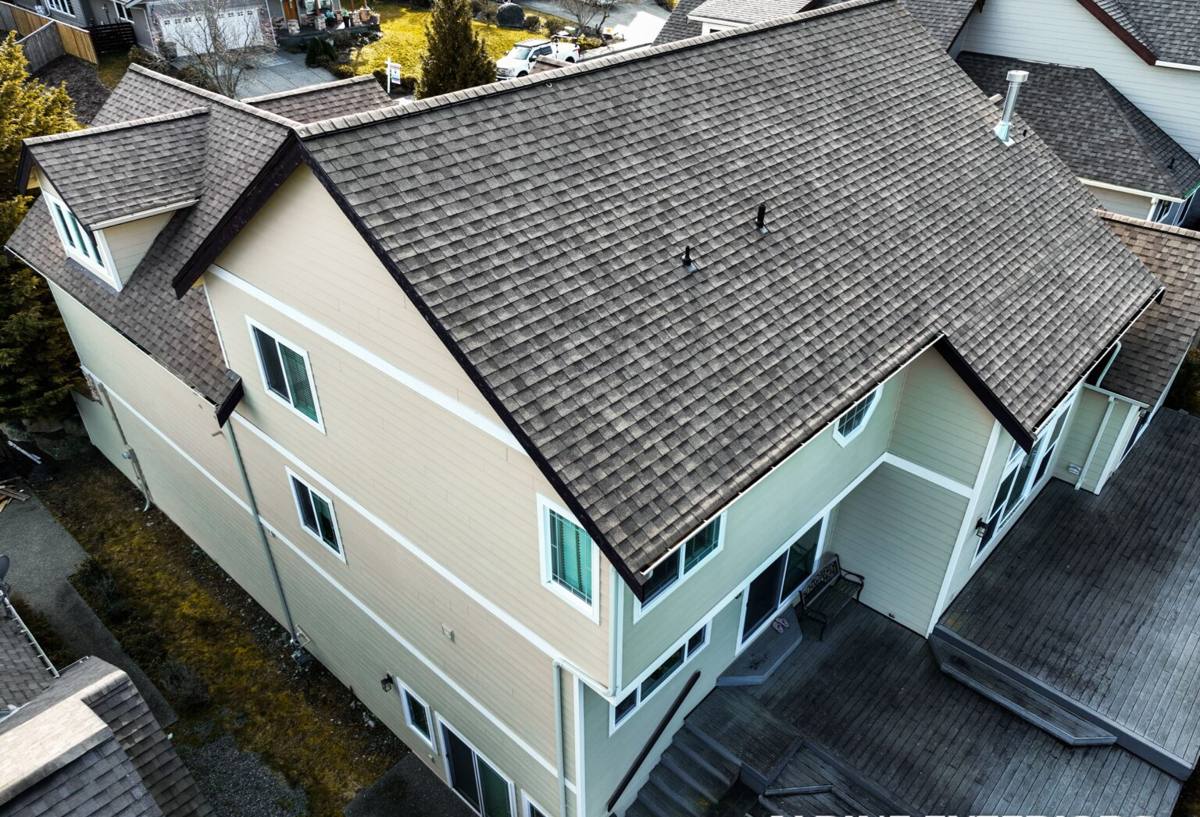
Signs Your Siding Is Telling You Something
Most homeowners don't replace siding because they want to — they replace it because it's failing, and failing siding gives you warning signs long before it becomes an emergency. Catching these early saves real money, because sheathing and framing repairs cost far more than siding alone.
- Paint that keeps failing within 2-3 years of a repaint, especially on north- and west-facing walls
- Soft or spongy spots when you press on siding near the bottom courses, around windows, or at trim joints
- Visible cupping, splitting, or bowing in individual boards or shakes
- Persistent green or black staining that comes back within a season of cleaning — a sign the surface is staying wet longer than it should
- Gaps opening up at butt joints, corner boards, or where siding meets window and door trim
- Rising energy bills with no other explanation, which can point to moisture-saturated insulation behind the cladding
- Any bubbling, blistering, or a faint musty smell near exterior walls from inside the house
If more than one of these shows up at the same time, it's worth having someone look at the wall assembly, not just the surface. Surface-level fixes on a wall that's already wet underneath just buy a little time before the same symptoms come back worse.
Moss Season Deserves Its Own Mention
Whatcom County's moss season runs long — often from late fall through spring — and it doesn't just grow on roofs. Given shade, a north exposure, and a siding surface with any texture or seams for spores to catch in, moss will colonize wood and lower-grade composite siding over time. It holds moisture directly against the surface, which is exactly the opposite of what siding is supposed to do. Some materials tolerate this better than others, and that difference matters a lot when you're choosing what goes back on the wall.
What a Correct Siding Replacement Actually Involves
Replacing siding isn't just pulling old boards off and nailing new ones on. Done right, it's a full inspection and rebuild of the water management system behind the cladding — because the siding itself is only the outermost layer of a wall that's supposed to shed water, not soak it up.
Tear-Off and Inspection
We remove the existing siding down to the sheathing and inspect every wall section for rot, soft spots, and moisture intrusion. This is the point where problems that were invisible from outside — usually around windows, at the base of walls, and behind old trim — get found and dealt with before anything new goes up. Skipping this step is the single most common reason a siding job fails early.
Repair and Prep
Any damaged sheathing or framing gets repaired or replaced. This is also when flashing gets corrected — window and door flashing, kick-out flashing at roof-to-wall intersections, and drip caps above trim — because flashing mistakes are behind a large share of the moisture problems we find in this region.
Weather-Resistive Barrier
A new house wrap or weather-resistive barrier goes on, lapped correctly at every seam and penetration so water is directed down and out rather than into the wall. In a climate that stays wet for long stretches, this layer matters as much as the siding itself.
Rainscreen or Furring When Called For
On walls with heavier moisture exposure — shaded sides, north walls, areas that stay damp longest — a furred or rainscreen assembly creates an air gap behind the siding so it can dry out between rain events instead of sitting wet against the sheathing. It's not always necessary, but on the right wall it's the difference between siding that lasts and siding that doesn't.
Installation to Manufacturer Spec
Correct fastener type and spacing, correct clearances at grade and at roof lines, correct joint treatment, and factory-finished color and caulking that's actually rated for the product. This is where a lot of installations quietly go wrong — the material can be excellent and still fail if it's hung incorrectly.
Why We Install Only James Hardie Fiber Cement
We made a decision a while back to standardize on James Hardie fiber cement siding and stop installing everything else — vinyl, LP SmartSide, primed wood, cedar. That's not a marketing position, it's a practical one built on what actually holds up in this part of Washington.
Fiber cement is non-combustible, doesn't absorb water the way wood-based products do, and doesn't expand and contract with temperature swings the way vinyl does. Hardie's ColorPlus factory finish is baked on under controlled conditions rather than painted on site, which means better adhesion and a finish that's built to handle exactly the kind of driving rain and salt air this area gets. Hardie also builds region-specific HZ5 products engineered for colder, wetter climate zones — which is a meaningful advantage over one-size-fits-all siding.
None of that makes the product installer-proof. Fiber cement still has to be cut, fastened, and flashed correctly, and a mediocre installation of a great product still under-performs a great installation. That's why we treat the install process — the tear-off, the flashing, the barrier, the fastening — as just as important as the material decision.
How the Materials Actually Compare
| Material | Moisture Behavior | Moss/Salt Air Resistance | Typical Lifespan Here |
|---|---|---|---|
| James Hardie fiber cement | Doesn't swell, rot, or absorb water like wood | Strong; factory finish resists staining and holds up to salt exposure | Decades, with correct install and normal upkeep |
| Vinyl | Doesn't rot, but water can travel behind panels unnoticed | Can chalk, fade, and become brittle over time | Moderate; varies widely with quality and installation |
| Cedar | Absorbs moisture; prone to cupping and splitting | Vulnerable to moss and requires regular treatment | Shorter without diligent, ongoing maintenance |
| Primed wood composite (LP-type) | Edge swelling common if not perfectly sealed and maintained | Moderate; depends heavily on maintenance schedule | Shorter in consistently wet climates |
This isn't to say every alternative product is a bad product in every climate — it's that Whatcom County's combination of persistent rain, salt-tinged air, and long moss season punishes maintenance gaps harder than a lot of other regions do. That's the lens we use when we recommend what goes on a wall.
Our Process, Start to Finish
- Estimate and walkthrough — we look at the whole exterior, not just the obviously damaged section, since siding problems rarely stay isolated
- Written scope — what's being replaced, what materials and Hardie product line, and what the flashing and barrier plan looks like
- Tear-off and inspection — old siding comes off, sheathing gets checked, and we show you what we find before covering it back up
- Repairs — any rot or damage gets addressed before new material goes on
- Barrier, flashing, and rainscreen where needed — the parts you won't see again once the job is done, and the parts that matter most
- Hardie installation — cut, fastened, and finished to manufacturer spec
- Final walkthrough — we go over the finished work with you before calling it done
What Drives the Cost of a Siding Replacement
| Factor | Why It Matters |
|---|---|
| Extent of hidden damage found at tear-off | Rotted sheathing or framing adds repair scope you can't price until the old siding is off |
| Home size and wall complexity | More corners, dormers, and trim details mean more labor and material cutting |
| Hardie product line chosen | Lap siding, shingle-style panels, and board-and-batten carry different material and labor costs |
| Whether a rainscreen assembly is added | Extra labor and material, but often worth it on chronically damp walls |
| Trim and accessory work | Corner boards, window trim, and fascia often get replaced alongside siding |
| Access and site conditions | Steep grades, tree cover, or tight setbacks can affect staging and labor time |
We give real numbers after a walkthrough, not a phone estimate — too much of the actual cost depends on what's behind the old siding, and we'd rather tell you honestly than lowball a number and revise it later.
Why Local Experience in This Area Actually Matters
A crew that's worked Nooksack and the surrounding Blaine and Whatcom County area knows which wall orientations tend to hide moisture problems, how aggressive moss season gets on shaded north walls, and what flashing details tend to have been done wrong on homes of a certain age or builder era. That's not something you get from a general contractor passing through — it comes from having done this specific work, on this specific kind of weather, repeatedly. It shows up in small decisions: where we recommend a rainscreen and where we don't, how we detail flashing around older window styles common in the area, and what we flag during inspection because we've seen it fail before on a similar house nearby.
Caring for New Siding After Installation
Hardie fiber cement is low-maintenance, not no-maintenance. A simple annual routine keeps it performing the way it's designed to:
- Rinse the exterior once or twice a year to clear pollen, dust, and early moss growth before it takes hold
- Keep gutters clear so overflow doesn't run down the siding face repeatedly in one spot
- Trim back vegetation that keeps a wall section shaded and damp longer than the rest of the house
- Check caulking at trim joints and penetrations every year or two and touch up as needed
- Address any impact damage or chipping promptly so the ColorPlus finish stays sealed
None of this is heavy work — it's the kind of upkeep that takes an afternoon and prevents the slow moisture accumulation that causes most siding failures in this climate to begin with.
If your siding is showing any of the signs above, or you just want an honest read on what shape your walls are actually in, we're happy to come take a look. Estimates are free, there's no pressure, and you'll get a straight answer about what your home actually needs.