 Blaine
 Why Sumas Homes Need Windows Built for This Climate
Sumas sits in a part of Whatcom County that gets more rain days than most homeowners expect when they move here, and the moisture doesn't let up for long stretches of the year. Add in the marine air that pushes inland from the coast near Blaine, and you get a climate that's hard on any window that wasn't installed correctly the first time. Driving rain doesn't just fall straight down here — wind pushes it sideways into wall assemblies, and if a window's flashing or sealant isn't right, water finds its way behind the trim before anyone notices a problem.
Then there's moss season, which in this part of Washington isn't really a season at all — it's most of the year. Constant dampness on north-facing walls, shaded siding, and window sills that never fully dry out creates the exact conditions moss and mildew need to take hold. Windows that trap moisture in their frames or sills, rather than shedding it, end up hosting that growth right at the glass line.
None of this means Sumas homes need anything exotic. It means the basics — material choice, flashing detail, and glazing — have to be done right, because the climate here won't forgive shortcuts the way a drier region might.
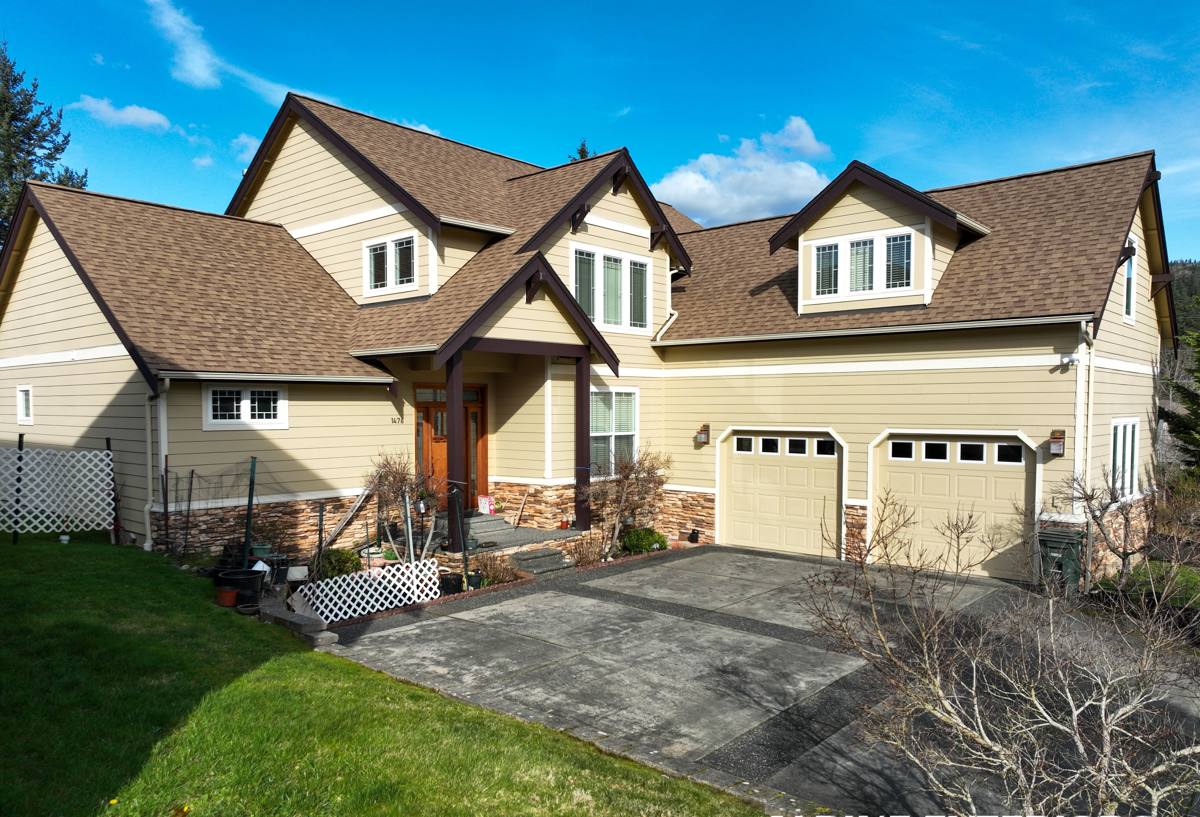
What "Custom" Actually Means for a Sumas Home
Custom windows aren't about fancy shapes or luxury upgrades by default. Most of the time, "custom" simply means the window is built to fit an opening that doesn't match a stock size — which is common in older homes, additions, and houses that have settled over the decades. Whatcom County has a lot of housing stock that predates modern manufactured window sizing, so a true measure-and-build approach is often the only way to get a window that seals properly without gaps packed full of foam and trim to hide the mismatch.
Custom also covers situations where a homeowner wants a specific look — a different grille pattern, a non-standard operating style, or glass suited to a particular exposure — but for Sumas the most important "custom" decisions are usually practical: getting the frame material, the glazing package, and the flashing detail matched to the wall it's going into.
Common Reasons Sumas Homeowners Replace Windows
- Visible fogging or moisture between panes, meaning the seal has failed
- Soft or discolored wood at the sill or lower frame corners
- Persistent moss or black staining on the sill that keeps returning after cleaning
- Drafts or cold spots felt near the frame in winter
- Windows that are difficult to open, often from swelling or warping
- An addition or remodel that needs openings sized to fit new framing
What Correct Installation Involves
The window itself is only part of the job. In a climate like this, the installation detail matters as much as the product. A correct install starts with removing the old window and inspecting the rough opening for hidden rot or moisture damage before anything new goes in — this is often where problems that caused the original failure get found.
From there, proper flashing is what actually keeps wind-driven rain out. That means flashing tape or membrane integrated with the building's water-resistive barrier in the right shingle-lapped order, a sloped sill pan so any water that does get past the glass drains outward instead of pooling, and sealant used at the right joints — not as a substitute for flashing, but as a backup to it. Skipping or rushing this step is the single most common reason a window that looks fine from the street ends up with rot inside the wall a few years later.
Insulation around the frame needs to be done carefully too — packed too tight, foam can bow the frame and cause the window to bind or leak; too loose, and it leaves a cold gap that shows up as condensation on the interior glass during cold, damp mornings, which is common here in winter.
Frame Materials: What Holds Up Here
Frame material is one of the biggest factors in how a window performs against constant moisture and repeated wet-dry cycling. There's no single "best" material for every home — it depends on the home's style, budget, and how exposed the window is to weather.
| Material | Moisture Behavior | Maintenance | Best Fit |
|---|---|---|---|
| Vinyl | Won't rot; can expand/contract with temperature swings | Low — occasional cleaning | Budget-conscious replacements, most home styles |
| Fiberglass | Very stable in wet/dry cycling, resists warping | Low | Homes wanting long-term durability, larger openings |
| Wood (unclad) | Attractive but absorbs moisture without diligent upkeep | High — regular sealing/painting required | Historic or period-style homes where appearance is the priority |
| Wood-clad (exterior-protected) | Exterior cladding sheds water; interior wood stays dry | Moderate | Homeowners who want a wood interior look with less exterior upkeep |
| Aluminum | Durable but conducts cold, prone to condensation without thermal breaks | Low | Specific architectural applications, less common in residential retrofits here |
For a lot of Sumas homes, vinyl or fiberglass ends up being the practical choice specifically because they don't absorb water the way unprotected wood does, and this region simply doesn't give wood trim much chance to dry out between rain events.
Glazing and Glass Choices That Matter Locally
Double-pane, gas-filled glass is the standard baseline at this point, and for good reason — it cuts down on the interior condensation that shows up constantly during Whatcom County's cold, wet mornings. Triple-pane glass adds another layer of insulation and can help further on north-facing or particularly exposed walls, though it comes at a higher cost and added weight that affects frame and hardware requirements.
Low-E coatings help manage heat loss in winter and solar gain in the rare stretches of strong summer sun, and they're worth having on essentially any replacement window in this area. What's less useful here is chasing glass technology built for climates dealing with intense summer heat — the priority in Sumas is managing cold, damp air and condensation control, not blocking extreme sun.
Why Local Experience Actually Matters Here
A window installed by someone unfamiliar with this specific climate can look perfectly fine on install day and still fail within a few wet seasons. The failures that show up here — rot behind trim, moss creeping onto sills, condensation between panes — are slow, and they're caused by decisions made during installation that aren't visible once the trim goes back on.
A crew that already works around Blaine and Sumas has usually already seen what happens when flashing is skipped on this type of siding, or when a sill pan wasn't sloped correctly on a wall that takes direct wind-driven rain. That's not a marketing point — it's the practical value of having made (and fixed) those mistakes on other homes in this same weather pattern rather than on yours.
Local familiarity also helps with permitting and inspection expectations, since window replacement and structural opening changes are typically subject to local building code requirements that can vary by jurisdiction, including egress sizing for bedroom windows.
Our Process for a Sumas Window Project
- On-site assessment — we look at existing windows, check for hidden moisture or rot around openings, and measure precisely rather than estimating.
- Material and glazing selection — matched to the home's exposure, style, and your budget, with honest trade-offs explained rather than upsold.
- Custom fabrication or ordering — windows built or ordered to the actual opening dimensions, not the nearest stock size.
- Removal and opening inspection — old windows come out carefully so we can check framing condition before anything new goes in.
- Proper flashing and sill pan installation — integrated with the wall's water barrier, sloped to drain, sealed at the correct points.
- Careful insulation and interior/exterior trim finishing — sealed against drafts without over-packing the frame.
- Final walkthrough — operation check, seal check, and cleanup before we consider the job done.
Maintenance That Keeps Windows Performing
Even a correctly installed window needs some upkeep in this climate. A little seasonal attention goes a long way toward preventing the moss and moisture issues that are common on homes throughout Whatcom County.
- Clear debris from window sills and tracks so water doesn't sit and pool
- Rinse or brush off early moss growth before it establishes and holds moisture against the frame
- Check exterior caulking annually for cracking or gaps, especially after a hard winter
- Wipe down interior condensation promptly to protect sills and interior trim
- Watch for sticking or difficulty operating, which can signal frame swelling or a developing seal issue
Cost Factors to Expect
Pricing depends on frame material, glazing package, window size, and how much of the surrounding trim or siding needs to be opened up to do the flashing correctly. Custom-sized openings, multiple windows done as one project, and any hidden rot repair found during removal all affect the final number. Rather than quote a figure that won't reflect your home's actual openings and condition, we walk every project and give a written estimate based on what we actually find — not a phone-quote guess.
If you're weighing whether to replace one failing window or plan a full-home project, we're happy to talk through both the near-term fix and the longer-term picture so you can make that call with real numbers in front of you.
If you're dealing with a window that's fogging, sticking, or growing moss along the sill, or you're planning ahead for a remodel, we'll come take a look and give you a straightforward, no-pressure estimate — just fill out the form below.