 Blaine
 Building Decks for Bellingham's Marine Climate
Bellingham sits right on the water, and that changes what a deck has to survive. Salt-laced air off Bellingham Bay, long stretches of driving rain through fall and winter, and a moss season that can run from October well into spring all put steady pressure on outdoor structures. A deck that would hold up fine in a drier inland climate can start showing problems here in a fraction of the time if it wasn't built with this specific environment in mind.
We build and repair decks throughout the Bellingham area as part of our regular work in Whatcom County, and the failures we get called out for tend to follow a pattern: fasteners that corroded faster than expected, ledger boards that trapped moisture against the house, decking that held water instead of shedding it, and railings that loosened because the posts were never properly flashed. None of that is unusual for the region. It's just what happens when a deck is built to a generic spec instead of a coastal one.
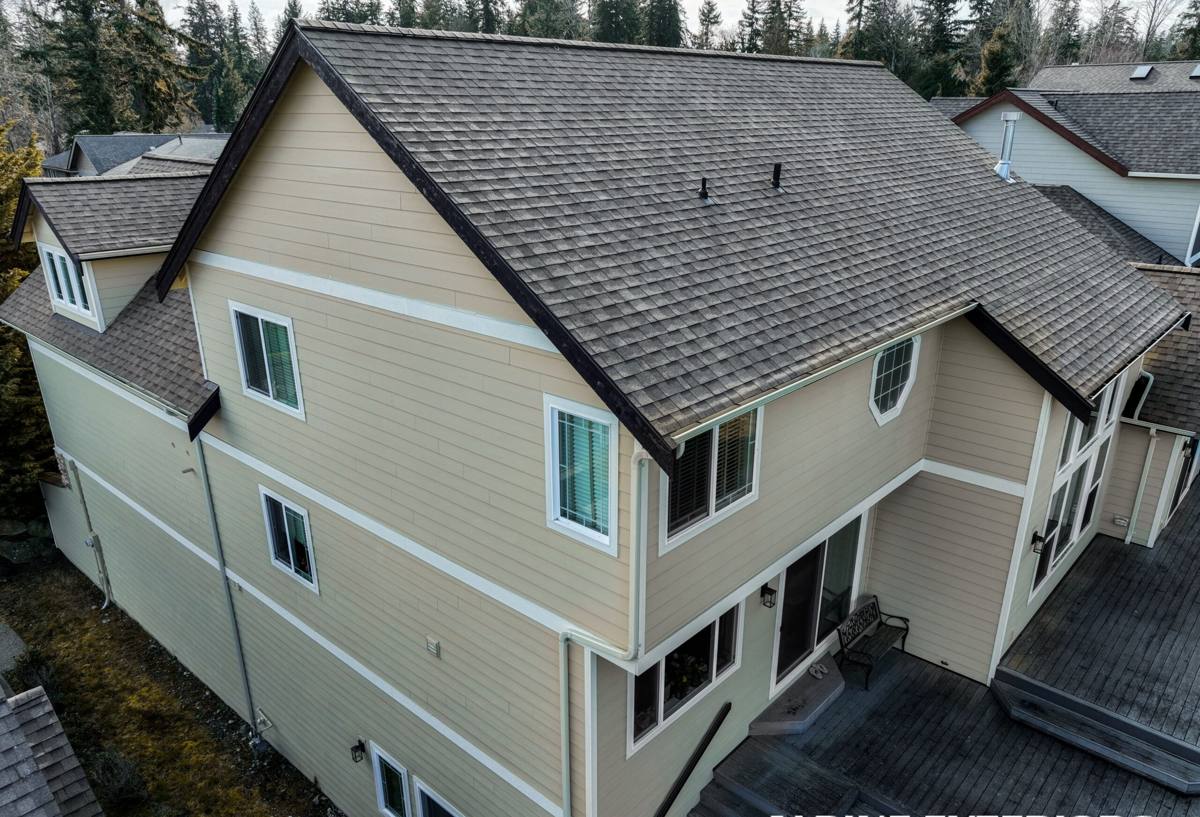
What Salt Air, Rain, and Moss Actually Do to a Deck
Salt Air and Metal Hardware
Proximity to salt water accelerates corrosion on anything metal — joist hangers, screws, bolts, and railing brackets included. Standard electro-galvanized fasteners can start rusting within a few years this close to the bay, and once a fastener corrodes, it loses holding strength long before it looks obviously bad. That's a structural issue, not a cosmetic one.
Driving Rain and Water Intrusion
Wind-driven rain doesn't just fall straight down — it gets pushed sideways under railings, into ledger connections, and between decking boards that aren't spaced or sloped correctly. Over time, water that has nowhere to go finds its way into framing, and wood framing that stays damp for extended periods is where rot starts, usually out of sight underneath the deck surface.
Moss and Organic Growth
Bellingham's moss season is long because the conditions that grow moss — shade, moisture, and mild temperatures — are present most of the year. Moss on a deck surface isn't just unsightly; it holds moisture against the decking material and creates a genuinely slick, slip-prone surface, especially on sloped or covered sections that don't get much direct sun to dry out.
Choosing the Right Decking Material
There's no single "best" decking material for every home — it depends on budget, how much upkeep you're willing to do, and how exposed the deck is to weather. Here's how the common options actually compare in this climate:
| Material | Upfront Cost | Maintenance in This Climate | Typical Lifespan Here |
|---|---|---|---|
| Pressure-treated wood | Lowest | Annual cleaning and resealing to fight moss and moisture; most upkeep of any option | 10-15 years with consistent maintenance |
| Cedar | Moderate | Regular cleaning and periodic sealing; naturally more rot-resistant than treated pine but still needs care | 15-20 years, well maintained |
| Composite decking | Higher | Occasional washing to keep moss and mildew from taking hold; no staining or sealing required | 25-30 years, backed by manufacturer warranty |
| PVC decking | Highest | Lowest maintenance of the group; resists moisture absorption almost entirely | 25-30+ years, backed by manufacturer warranty |
We install both quality wood and composite/PVC systems and won't push one over the other without understanding what the homeowner actually wants to deal with long-term. Wood costs less to install but asks more of you every year — cleaning, sealing, and watching for moss buildup in shaded spots. Composite and PVC cost more upfront but are a better fit if you'd rather spend a weekend using the deck than maintaining it, which is a real consideration given how much of the year this climate stays damp.
What a Properly Built Deck Requires in This Climate
Regardless of which decking material you choose, the parts of the deck you don't see are what determine whether it lasts. In a coastal, high-moisture climate like Bellingham's, several details matter more than they would elsewhere:
- Ledger board flashing: Where the deck attaches to the house needs proper flashing and a moisture barrier so water is directed away from the rim joist, not trapped behind the ledger.
- Corrosion-resistant fasteners: Stainless steel or heavy hot-dip galvanized hardware, rated for ground contact and coastal exposure, instead of standard electro-galvanized fasteners that corrode faster near salt air.
- Joist tape or protective flashing on framing: Covering the tops of joists and beams keeps water from soaking directly into cut lumber, which is one of the most common early rot points.
- Proper board spacing and slope: Decking needs consistent gaps for drainage and airflow, and the overall structure should have a slight slope away from the house so water doesn't pool.
- Footings sized for actual soil and frost conditions: Whatcom County soil and drainage vary block to block; footings need to be sized and set to local code, not guessed at.
- Railing posts properly through-bolted and flashed: Loose or leaning railings are almost always a sign the post connection was never sealed against water intrusion in the first place.
Design Choices Worth Thinking Through for a Bellingham Property
Covered vs. Open Decks
A partial or full roof over a deck section makes a real difference in how much you actually use it given how much rain this area gets. It also reduces direct weathering on the decking surface underneath, which can extend its usable life. The trade-off is less direct sun and, in shaded corners, more moss pressure if airflow isn't accounted for in the design.
Multi-Level and Sloped Lots
A lot of Bellingham properties sit on grades that call for multi-level decks or taller support structures. That means more engineering attention on footings, bracing, and stair design — not a place to cut corners, since these are the components carrying the most structural load.
Railings and Views
If the deck faces the bay or open water, cable or glass panel railings preserve sightlines better than solid rail systems, but they come with their own maintenance considerations in salt air — hardware and cable systems need to be rated for coastal exposure just like everything else on the structure.
Our Deck-Building Process
- On-site assessment and design conversation. We look at the actual lot — grade, sun and shade exposure, drainage patterns, and how the deck attaches to the existing structure — before recommending a layout or material.
- Permitting. Most decks above a certain height or attached to the home require a permit through the local jurisdiction. We handle that process so it's not something you have to navigate on your own.
- Framing and structural work. This is where the climate-specific details — flashing, fastener choice, joist protection, footing depth — get built in correctly, since none of it is visible or fixable later without tearing the deck apart.
- Decking, railing, and finish work. Surface material goes down with proper spacing and fastening, followed by railings, stairs, and any trim or lighting.
- Final walkthrough. We go over the finished deck together, including basic maintenance guidance specific to the material you chose.
Living With a Deck in a Marine Climate
Even a well-built deck needs some seasonal attention here. Wood decks benefit from an annual wash and periodic resealing to keep moss from gaining a foothold, particularly in shaded areas that don't dry out quickly. Composite and PVC decks need far less — usually just a wash a couple of times a year — but they're not entirely maintenance-free either; organic growth can still develop on any surface that stays damp long enough. Gutters and downspouts near the deck should be checked periodically too, since misdirected roof runoff is a common, avoidable source of extra moisture load on a deck structure.
Signs Your Existing Deck May Have a Problem
- Soft or spongy spots in the decking or framing underneath
- Rust staining around fasteners or joist hangers
- Railings or posts that flex or feel loose when pushed
- Persistent moss or dark staining that returns quickly after cleaning
- Gaps or separation where the deck meets the house
- Visible sagging between support posts
Any of these are worth a closer look before they turn into a larger structural repair.
Why Hire a Crew That Already Works in Bellingham
Building a deck correctly for this climate isn't complicated, but it does require actually accounting for salt air, sustained rain, and moss the way a generic build spec doesn't. A crew that regularly works Bellingham and the surrounding Whatcom County area already knows which fastener grades hold up near the water, how local permitting works, and which framing details matter most given the exposure a particular lot gets. That familiarity shows up in fewer callbacks and a deck that's still solid well past the point a shortcut build would start failing.
If you're planning a new deck or need to know whether an existing one is holding up the way it should, we're happy to take a look and give you a straightforward, no-pressure estimate. Use the form below to get started.