 Blaine
 Bellingham's Siding Problem Isn't the Rain Alone
Most homeowners in the Bellingham area already know their siding has to handle rain. What catches people off guard is everything else stacked on top of it: salt-laden air drifting in off the water, wind-driven rain that hits walls sideways instead of straight down, and a moss and mildew season that can run most of the year in the shaded, damp pockets around a house. Any one of those is manageable. All three together, year after year, is what actually wears siding out — and it's why so many homes in Whatcom County end up needing replacement siding well before the original product's rated lifespan.
This page is about one specific job: installing James Hardie fiber cement siding correctly on a home in the Bellingham area, done by a crew based nearby in Blaine that already understands what this stretch of Pacific Northwest coastline does to a wall system.
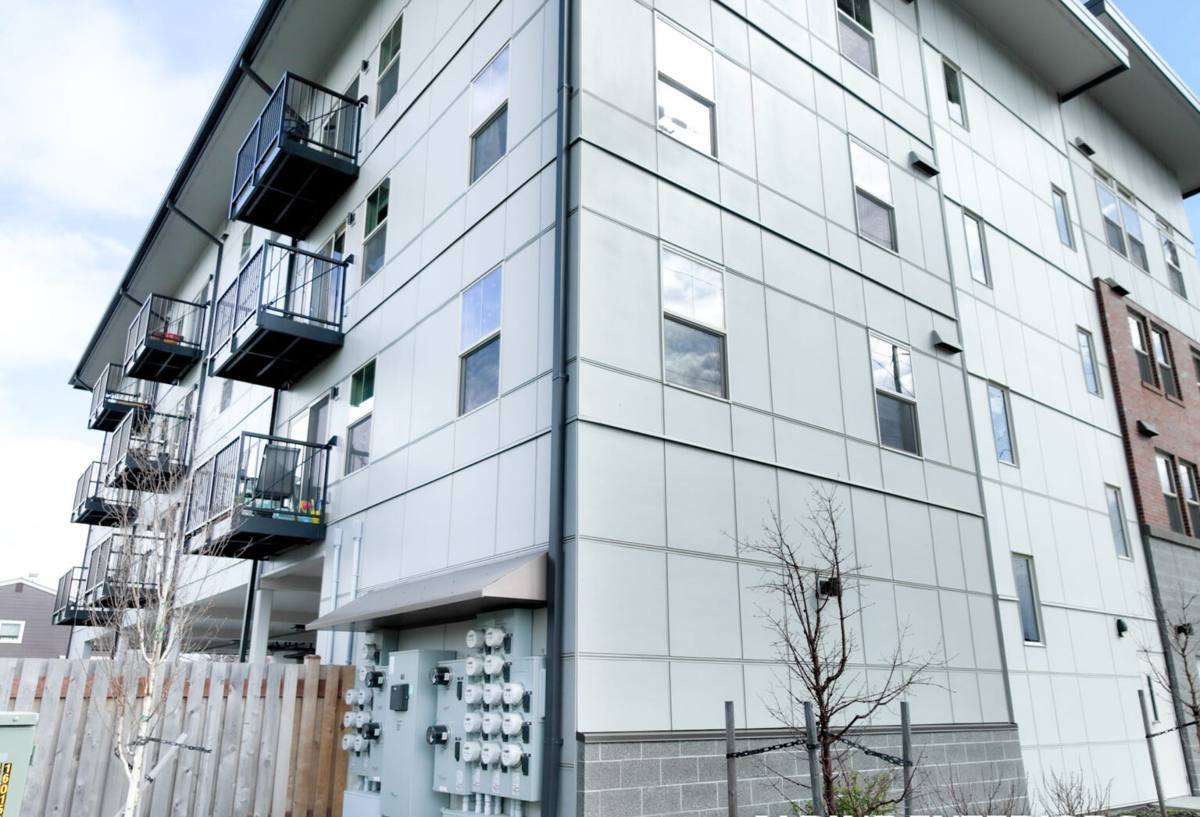
What Salt Air, Driving Rain, and Moss Season Actually Do to Siding
These three conditions don't just make a house look dirty faster. They attack siding through different mechanisms, and a product or installation that isn't built to resist all three will fail in the specific spot where it's weakest.
Salt Air
Proximity to Puget Sound and the Strait of Georgia means airborne salt is a constant, low-grade presence on this coastline. Salt is hygroscopic — it pulls moisture out of the air and holds it against a surface. On fasteners, trim, and any exposed metal flashing, that means accelerated corrosion. On siding materials that aren't dimensionally stable, repeated salt-moisture cycling stresses joints, seams, and caulked edges faster than plain rainfall would on its own.
Driving Rain
Wind off the water doesn't let rain fall straight down — it pushes it sideways into walls, under laps, and into any gap that wasn't sealed or flashed correctly. A siding system depends on more than the face material to keep water out; the drainage plane behind it, the flashing at every penetration, and the lap geometry all have to work together. Driving rain finds the one detail that was rushed.
Moss and Mildew Season
Shaded north walls, tree-lined lots, and the region's long stretches of overcast, damp weather create ideal conditions for moss and mildew growth on exterior surfaces. Organic growth isn't just cosmetic — moss holds moisture against siding and trim, extending the time wood-based or moisture-sensitive materials stay wet, which is exactly the condition that leads to rot and paint failure.
Why We Install Only James Hardie Fiber Cement
We don't install LP SmartSide, vinyl, Cemplank, Allura, primed spruce, or cedar. That's a deliberate standard, not a lack of options. Each of those products has legitimate strengths, but each also has a trade-off that shows up faster in a climate like this one — vinyl expands and contracts with temperature swings and can warp or crack in sustained wind exposure; engineered wood products are more vulnerable to sustained moisture at cut edges and seams; untreated wood siding needs a maintenance commitment most homeowners don't want to keep up with in a climate this wet.
James Hardie fiber cement is non-combustible, holds its shape in temperature and moisture swings far better than wood-based or vinyl products, and carries a factory-applied ColorPlus finish that's baked on under controlled conditions rather than field-painted. For a coastal Whatcom County home, that combination — dimensional stability, moisture resistance, and a finish that doesn't rely on a painter's timing and weather window — is the reason we standardized on it.
HZ5 vs. HZ10: Climate-Engineered Product Lines
James Hardie manufactures siding in different formulations engineered for different climate zones. The HZ10 line is built for the wetter, more humid coastal and Pacific Northwest conditions, with enhanced moisture and mold resistance compared to products designed for drier inland climates. Specifying the correct HZ line for a Bellingham-area home isn't optional — it's the difference between a product engineered for this exact weather pattern and one that's merely adequate.
| Factor | James Hardie Fiber Cement | Vinyl | Engineered Wood (e.g. LP SmartSide) |
|---|---|---|---|
| Salt air / corrosion resistance | High — cement-based, doesn't corrode | Moderate — can become brittle over time | Moderate — vulnerable at exposed edges |
| Driving rain / moisture at seams | High when flashed correctly | Moderate — laps can be forced by wind | Lower — cut edges and seams absorb moisture |
| Moss/mildew resistance | High — inorganic material, factory finish | Moderate — organic growth on surface | Lower — wood-based substrate is food source |
| Fire resistance | Non-combustible | Melts/deforms in heat | Combustible (wood-based) |
| Finish durability | Factory ColorPlus, long repaint interval | Color molded in, can fade/chalk | Field-painted, shorter repaint interval |
What a Correct Installation Actually Involves
The siding panel itself is only one layer of the system. Most siding failures in this climate trace back to what's underneath and around the panels, not the panels themselves. A correct job on a Bellingham-area home includes:
The Drainage Plane and Rain Screen Gap
Behind every Hardie panel should be a properly lapped weather-resistant barrier, and in high-exposure conditions, a rain screen gap that lets any moisture that does get behind the siding drain and dry out instead of sitting against the wall sheathing. Skipping or shortcutting this layer is one of the most common ways contractors save time — and it's invisible until the wall has a moisture problem years later.
Flashing at Every Penetration
Windows, doors, vents, hose bibs, light fixtures, and roof-to-wall transitions all need proper flashing integrated with the water-resistant barrier before siding goes on. In driving rain, these penetration points are where wind-forced water finds its way in if flashing was skipped or installed out of sequence.
Fastening and Clearances
James Hardie specifies exact fastener types, spacing, and placement, along with minimum clearances from grade, roof lines, and other siding-to-surface transitions. Installing too close to grade or a roofline traps moisture against the bottom edge of the panel — exactly the kind of detail that matters more here than in a drier climate.
Caulking and Joint Treatment
Butt joints and trim transitions need the right sealant, applied correctly, not just as a cosmetic gap-filler. In salt air, standard caulk can degrade faster than manufacturer-rated sealants — using the wrong product is a slow failure that shows up as staining and gaps within a few years.
- Weather-resistant barrier installed and lapped correctly, shingle-style, before any siding goes on
- Rain screen/drainage gap where exposure warrants it
- Flashing integrated at every window, door, and penetration — not caulk used as a substitute for flashing
- Correct HZ product line specified for coastal Whatcom County exposure
- Manufacturer-specified fastener type, spacing, and clearance from grade and rooflines
- Sealant rated for coastal/salt-air exposure at joints and trim transitions
- Final inspection of laps, corners, and caulk lines before the crew leaves the site
Our Process for Bellingham-Area Homes
The process itself isn't unusual, but every step is shaped by what this climate demands.
- On-site assessment. We look at wall exposure, prevailing wind and rain direction, shaded/moss-prone areas, and the condition of the existing wall assembly before quoting anything.
- Product and line selection. We specify the correct James Hardie profile and HZ formulation for the home's exposure, not a one-size-fits-all default.
- Tear-off and substrate check. Old siding comes off, and we check the sheathing underneath for existing moisture damage before covering it back up — this is the point where hidden problems either get fixed or get sealed in for years.
- Barrier and flashing installation. This is the layer that determines whether the job holds up in driving rain, and it's done before a single piece of visible siding goes up.
- Siding installation to spec. Correct fastening, spacing, and clearances, following James Hardie's installation guidelines rather than shortcuts.
- Final walkthrough. We review laps, trim, and caulk lines with the homeowner before calling the job complete.
Maintenance in This Climate
James Hardie siding is low-maintenance compared to wood or vinyl, but "low-maintenance" doesn't mean "no maintenance" in a climate with this much moss and salt exposure. A little seasonal attention protects the investment:
- Rinse siding periodically to clear salt residue and organic buildup, especially on north-facing and shaded walls
- Keep gutters clear so overflow doesn't run down the face of the siding
- Trim back vegetation and tree cover that keeps a wall section shaded and damp longer than the rest of the house
- Inspect caulk lines and trim joints annually for early cracking or gaps
- Address any moss growth on adjacent roofing before it spreads onto siding surfaces below
Cost Factors for a Bellingham-Area Hardie Installation
Every home is different, and we don't publish blanket pricing because wall exposure, existing damage, and home size all move the number. What we can tell you is what actually drives cost up or down on a job in this area:
| Factor | Why It Matters Here |
|---|---|
| Wall exposure to wind-driven rain | More exposed elevations may need additional flashing or rain screen detail |
| Existing sheathing condition | Hidden moisture damage from a prior installation adds repair scope before new siding goes on |
| Home size and wall complexity | More corners, penetrations, and trim transitions mean more labor-intensive detail work |
| Product profile and color | Lap width, texture, and ColorPlus color selection affect material cost |
| Access and site conditions | Tight lots, slopes, or limited equipment access affect labor time |
Why a Crew That Already Works This Area Matters
Siding installation instructions read the same everywhere in the country, but applying them correctly depends on understanding the actual conditions a wall will face. A crew that already works the Bellingham and Blaine area knows which elevations typically take the worst of the wind-driven rain, where moss tends to build up fastest, and how much salt exposure to plan for based on proximity to the water — that judgment doesn't come from a spec sheet, it comes from having done the work here repeatedly. It also means faster, more realistic scheduling around this region's weather windows, and a crew that's accountable locally rather than a name that shows up once and moves on.
Get a Straight Answer for Your Home
If your siding is showing moss buildup, staining, or soft spots — or you're just planning ahead before it becomes a problem — we're happy to take a look and give you a straightforward, no-pressure estimate for James Hardie siding built for what a Bellingham-area home actually has to withstand. Use the form below to get started.