 Blaine
 Building Decks for Birch Point's Waterfront Climate
Birch Point sits close enough to the water that homes here deal with a different set of conditions than decks built a few miles inland in Blaine or elsewhere in Whatcom County. Salt-laden air, near-constant driving rain through the fall and winter, and a long moss season that can run from October into April all put extra stress on outdoor structures. A deck built without those specifics in mind will show it early — soft spots in the decking, streaking and corrosion around fasteners, and a slick, mossy surface that becomes a real slip hazard.
A custom deck for Birch Point isn't just about the layout and the railing style you like. It's about choosing materials and building details that are matched to a marine-influenced microclimate, so the deck still looks and performs well after several wet seasons, not just the first one.
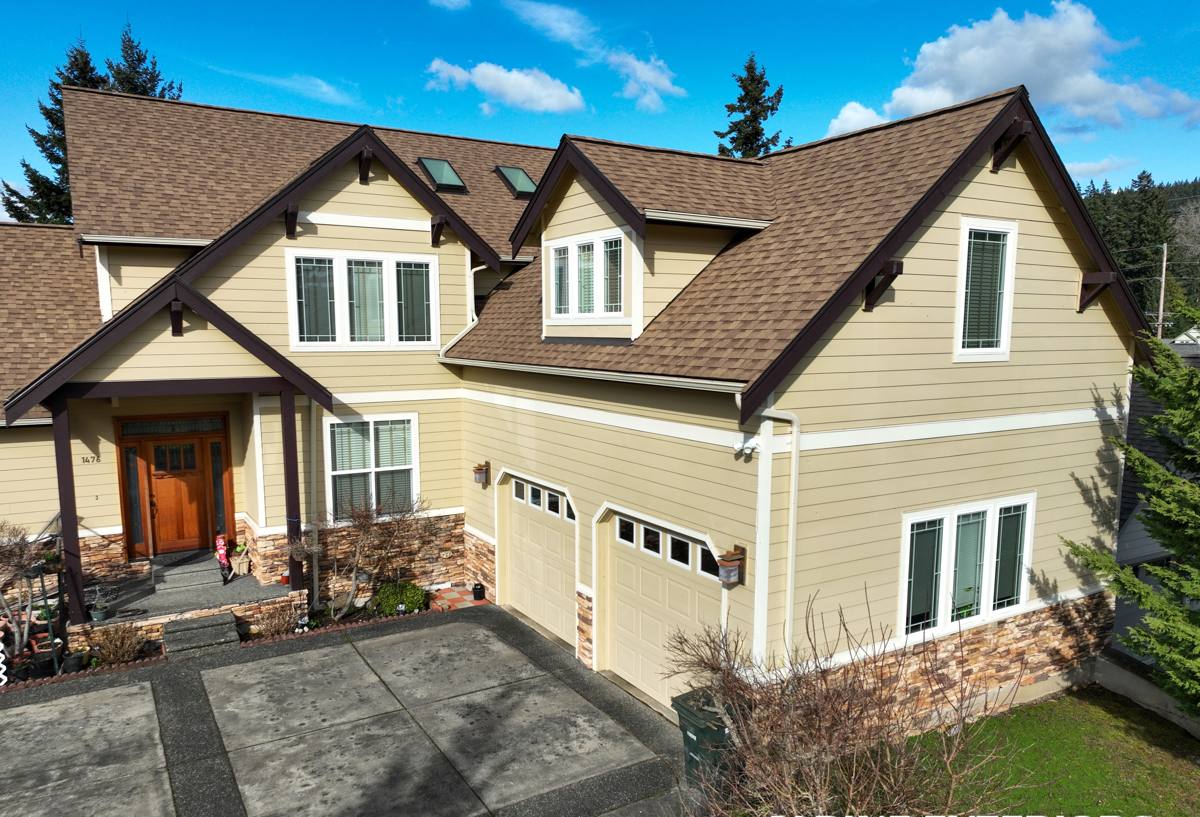
What Salt Air and Moisture Do to a Deck Over Time
Salt air accelerates corrosion on any metal it touches, and it touches everything — fasteners, brackets, railing hardware, even the heads of screws holding down decking boards. Combine that with Whatcom County's driving rain, which tends to hit at an angle rather than straight down, and water gets pushed into joints, end grain, and fastener holes that a dry-climate deck design would never have to worry about.
Fasteners and Hardware
Standard galvanized fasteners can start showing rust streaks within a year or two in a coastal exposure like Birch Point. We build with stainless steel or marine-grade coated fasteners and structural hardware in areas exposed to salt air, and we pay attention to where dissimilar metals meet, since that's where galvanic corrosion shows up fastest.
Wood Movement and Moisture Cycling
Wood decking swells and shrinks as it absorbs and releases moisture through repeated wet-dry cycles. In a climate where it rarely gets a long, dry stretch to fully dry out, that cycling doesn't fully reverse — boards cup, fasteners work loose, and end grain left unsealed starts to check and split. None of that is a defect in the wood; it's what happens when installation details don't account for how slowly things dry out here.
Choosing Decking Materials for Birch Point Homes
There's no single "correct" decking material for every home — it depends on your budget, how much upkeep you want to do, and how close to the water your lot sits. Here's how the common options actually compare for this kind of exposure.
| Material | Salt Air / Moisture Performance | Maintenance | Typical Lifespan Here |
|---|---|---|---|
| Pressure-treated wood | Good if properly sealed and re-sealed; end grain and fastener holes are the weak points | Annual cleaning, re-sealing every 1-2 years | 10-15 years with upkeep |
| Cedar | Naturally rot- and insect-resistant, but still needs sealing to handle driving rain | Cleaning and sealing every 1-2 years | 15-20 years with upkeep |
| Capped composite | Excellent — the cap resists moisture absorption and salt residue better than any wood | Occasional washing, no sealing or staining | 25+ years, backed by manufacturer warranty |
| Uncapped composite | Fair — can absorb moisture at cut edges and is more prone to surface staining over time | Periodic cleaning, more attention to cut edges | 15-20 years |
For homes right at Birch Point where salt exposure and driving rain are constant, we generally steer clients toward capped composite or well-sealed cedar. Pressure-treated wood is still a sound, budget-friendly choice — it just asks more of the homeowner in terms of upkeep, and we're upfront about that trade-off rather than oversell it.
A Note on Uncapped or Lower-Grade Composite
We're selective about which composite products we install. Some older or lower-grade uncapped boards can absorb moisture at the cut ends and are more prone to mold or discoloration in a wet, salt-influenced climate. That's a maintenance and appearance trade-off worth knowing about upfront, not a reason to assume every composite product performs the same — capped products largely solve this issue.
Framing and Structure: What's Different Near the Water
The parts of a deck you don't see are what determine whether it's still solid in ten years. In a coastal exposure like Birch Point, we pay particular attention to:
Ledger Board Flashing
Where the deck attaches to the house is the single most common failure point on any deck, and it's worse in a climate with this much sustained rain. Proper flashing — installed so water sheds away from the house rather than behind the ledger board — is non-negotiable, regardless of what decking material sits on top.
Footings and Post Bases
Footings need to be sized and set to local frost and soil conditions, and post bases should hold the post above the deck surface so wood never sits in standing water. On lots with sandy or looser coastal soil, we check bearing conditions rather than assuming a standard footing depth is automatically adequate.
Joist Protection
Joist tape or an equivalent moisture barrier over the top of each joist keeps rain from soaking directly into cut lumber through screw holes — a small detail that matters a lot more here than it would in a drier inland climate.
Drainage, Slope, and Moss Prevention
Moss doesn't just grow on roofs in Whatcom County — it grows on decks too, especially on north-facing or shaded sections that stay damp for days after a rain. A deck surface that holds water is a deck surface that grows moss, and moss on a walking surface is a genuine fall hazard, not just a cosmetic issue.
- Decking should have a slight slope, generally around 1/8 inch per foot, so water runs off rather than pooling
- Board spacing needs to allow airflow underneath so the structure can dry between rain events
- Shaded or tree-covered sections benefit from a decking texture or finish that stays less slick when damp
- Gutters and downspouts near the deck should direct water away from the structure, not onto it
- Periodic cleaning removes the organic buildup moss needs to take hold in the first place
Getting the slope and airflow right at the framing stage does more to prevent moss than any cleaning product applied after the fact.
Our Process for a Birch Point Deck
Every property is different, but the general sequence for a custom deck project looks like this:
- On-site assessment — we look at sun and shade exposure, drainage patterns, soil conditions, and how close the lot sits to salt air influence
- Design and material selection — layout, decking material, and railing system chosen based on your budget, maintenance preference, and the site conditions we found
- Permitting — we handle the paperwork with Whatcom County where required based on deck height and footprint
- Framing and structural work — footings, ledger flashing, joist protection, and framing built to hold up in this specific climate
- Decking, railing, and finish work — installed with corrosion-resistant fasteners and proper spacing for drainage and airflow
- Final walkthrough — we go over care and maintenance specific to the material you chose
Permits and Whatcom County Considerations
Most raised decks require a building permit in Whatcom County, and the requirements can shift depending on deck height, proximity to property lines, and whether the structure is attached to the house. Waterfront and near-shore properties around Birch Point sometimes carry additional setback or shoreline considerations depending on the parcel. We handle the permit process as part of the job so you're not left tracking down requirements on your own, and we won't cut corners on inspections just to save time.
Why Hire a Crew That Already Works Birch Point
A deck built with generic, one-size-fits-all details might look fine on day one anywhere. The difference shows up two or three wet seasons later — in whether the fasteners are still tight, whether the ledger flashing kept water out of the house, and whether the surface stays walkable instead of growing moss every winter. Crews that regularly work the Blaine and Birch Point area already know which details matter for this specific exposure: the fastener grade, the flashing approach, the slope tolerances that actually shed water in driving rain. That local repetition is what keeps a deck performing well past the first couple of years, not just looking good in the first photos.
If you're planning a new deck or replacing one that's showing its age, we're happy to come take a look and walk you through options for your specific lot. Reach out for a free, no-pressure estimate using the form below.