 Blaine
 Roofing in California Creek Isn't the Same as Roofing Inland
California Creek sits close enough to Drayton Harbor and the Salish Sea that homes here deal with a different set of roofing conditions than a house twenty miles inland. The air carries salt. The rain comes sideways as often as it comes straight down. And the tree cover that makes this part of Whatcom County so pleasant to live in also means a lot of roofs never get a full day of direct sun, which is exactly what moss and moisture need to take hold. An asphalt shingle roof that's installed the same way you'd install one in a dry inland subdivision will not hold up the same way out here. The materials, the flashing details, and the maintenance schedule all need to account for the actual conditions on the ground, not the conditions in a manufacturer's spec sheet written for the whole country.
This page is about that one job — asphalt shingle roofing for California Creek homes — and what it actually takes to get it right in a Blaine, Whatcom County climate.
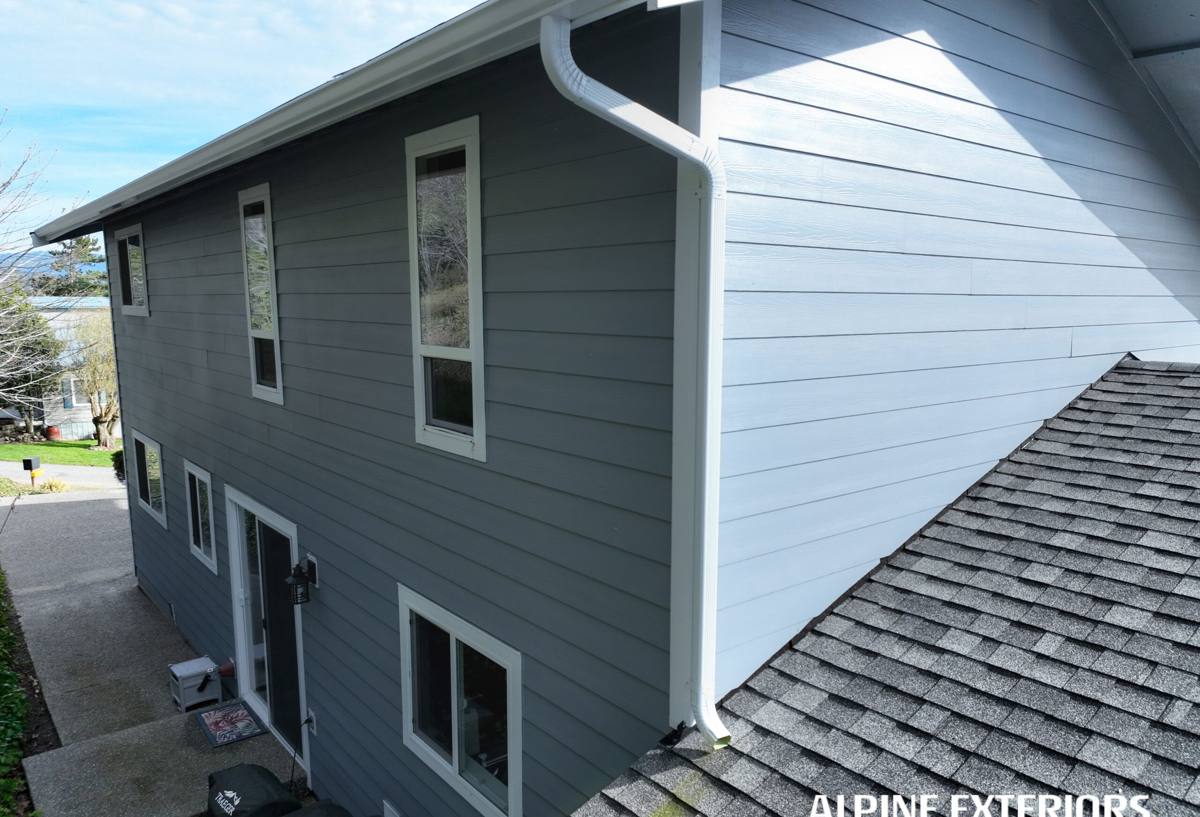
What Salt Air, Driving Rain, and Moss Actually Do to a Roof
Salt Air and Metal Components
Asphalt shingles themselves aren't especially bothered by salt air, but the metal that holds a roof together is. Nails, flashing, and roof vents corrode faster near the water than they do a few miles inland. Cheap electro-galvanized fasteners can start rusting within a handful of years in a salt-air environment. Once fasteners weaken, shingles lift in wind, and once flashing corrodes, water finds its way under the roofing system instead of running off it. This is one of the most common causes of premature roof failure we see on homes close to the water, and it's almost entirely preventable with the right materials up front.
Wind-Driven Rain
Blaine gets weather off the water, and that means rain doesn't always fall straight down — it gets pushed sideways under wind pressure. A roof that would shed water fine in a calm rain can leak in a wind-driven storm if the underlayment, valleys, and flashing weren't built to handle rain pushed uphill or sideways under the shingle tabs. This is a detail problem, not a shingle-brand problem. It's solved with underlayment coverage, proper laps, and sealed penetrations, not by buying a more expensive shingle.
Moss and Shaded, North-Facing Slopes
Whatcom County's long wet season gives moss months to establish itself, and the tree cover common around California Creek keeps north-facing and shaded roof slopes damp well after the rest of the roof has dried out. Moss isn't just cosmetic. As it grows, it lifts shingle edges, holds moisture against the roof deck, and accelerates granule loss. Left unchecked for a few seasons, moss can shave real years off a roof's service life.
What a Correctly Installed Asphalt Shingle Roof Actually Involves
A roof is a system, not a single product. Getting an asphalt shingle roof right in this climate means paying attention to every layer, not just the shingle you can see from the street.
- Deck inspection and repair — any soft, delaminated, or water-stained sheathing gets replaced before a single shingle goes down. Roofing over a bad deck just hides the problem.
- Ice-and-water shield at eaves, valleys, and penetrations — a self-adhering waterproof membrane in the spots most likely to see standing water or wind-driven rain, not just the minimum code requires.
- Full synthetic underlayment — a continuous water-resistant layer under the whole roof, properly lapped, so the shingles aren't the only thing standing between the house and the weather.
- Corrosion-resistant fasteners and flashing — stainless or heavier-gauge galvanized materials in step flashing, counter flashing, valleys, and nails, especially given the salt-air exposure this close to the water.
- Correct nailing pattern — the right number of nails, in the right location on each shingle, is what actually determines wind resistance. This is a labor detail, not a material one, and it's one of the most commonly rushed steps in the trade.
- Balanced attic ventilation — intake and exhaust that actually move air, which controls moisture buildup under the deck and reduces moss-friendly damp conditions.
- Algae-resistant (AR) shingles — shingles with copper- or zinc-infused granules that resist the algae and moss growth that thrives in this climate. This one change alone makes a real difference on shaded slopes.
Shingle Options for a California Creek Roof
There isn't one "correct" shingle for every home — it depends on budget, roof pitch, sun exposure, and how long you plan to be in the house. Here's how the common tiers stack up for this specific climate:
| Shingle Type | Typical Lifespan | Moss/Algae Resistance | Wind Rating | Best For |
|---|---|---|---|---|
| Standard 3-tab | 15–20 years | Low unless AR-treated | Lower end of the range | Budget-driven projects, non-shaded slopes |
| Architectural (laminate) | 25–30 years | Good with AR granules | Mid-to-high | Most California Creek homes — the practical middle ground |
| Premium/designer AR | 30+ years | Best available in asphalt | High | Shaded, north-facing, or heavy tree-cover lots |
For most homes near California Creek, we steer people toward an architectural shingle with algae-resistant granules. It's not the cheapest option, but given how much shade and moisture this area sees, the extra upfront cost usually pays for itself in avoided moss treatments and a longer service life before the next full replacement.
How the Process Works
- On-site inspection — we look at the current roof, the deck condition, ventilation, and any moss or wear patterns specific to your lot's sun and wind exposure.
- Written estimate — a clear scope of work and price range, with the reasoning behind material choices explained, not just a number.
- Scheduling around weather — asphalt shingle installation needs a reasonably dry window. In this climate that means watching the forecast closely and being upfront if a job needs to shift a few days.
- Tear-off and deck check — old roofing comes off, the deck gets inspected and repaired as needed, and any hidden moisture damage gets addressed before it's covered back up.
- Installation — underlayment, flashing, shingles, and ventilation go in following the layered system described above, not just "shingles nailed to plywood."
- Site cleanup — magnetic sweep for nails, debris hauled off, yard and driveway left as we found them.
- Final walkthrough — we go over the finished roof with you before calling the job done.
Why a Crew That Already Works This Area Matters
There's a real difference between a contractor who's driven through Blaine and one who works California Creek roofs regularly. A crew already familiar with this stretch of Whatcom County knows which slopes tend to hold moss longest, how far wind-driven rain typically reaches up a roofline near the water, and what local permitting and inspection expectations look like. That local knowledge shows up in material choices and flashing decisions before a problem ever happens, not as a fix after a leak shows up on your ceiling. It also means faster response if a storm causes damage — you're not waiting for a crew to drive in from out of the county.
Maintenance That Actually Extends Roof Life Here
Asphalt shingle roofs in this climate aren't "install and forget." A little attention on a regular schedule goes a long way:
- Check shaded and north-facing slopes for moss growth at least once a year, ideally before the wet season sets in.
- Keep gutters and valleys clear of needles and debris so water has a clear path off the roof.
- Trim back overhanging branches to cut down shade and debris buildup on vulnerable slopes.
- Have flashing around chimneys, vents, and skylights inspected periodically — these are the most common leak points, especially with salt-air corrosion in play.
- Address moss early with a gentle, non-pressure-washed treatment approach — aggressive cleaning methods can strip granules and shorten shingle life faster than the moss itself.
- After any major windstorm off the water, do a visual check for lifted or missing shingles.
Signs It's Time for a Repair or Replacement
Not every roof issue near California Creek means a full replacement. Some signs point to a targeted repair; others mean the roof's overall service life is running out.
- Granules collecting in gutters — normal in small amounts as a roof ages, a concern if it's heavy and widespread.
- Curling, cracking, or cupping shingles, especially on sun-and-wind-exposed slopes.
- Persistent moss on multiple slopes despite cleaning — often a sign of moisture staying trapped longer than it should.
- Visible daylight or water staining in the attic near flashing points.
- A roof approaching or past the expected lifespan for its shingle tier, especially if it was installed before AR granules or upgraded underlayment were standard practice.
If you're only seeing one or two of these signs, a repair is often enough. If several show up together, that usually points to a system nearing the end of its useful life rather than a spot fix.
Get a Straight Answer for Your Roof
Every roof near California Creek carries its own mix of sun exposure, tree cover, and wind direction, so the right approach for your home depends on seeing it in person. If you'd like an honest look at where your roof stands and what it would take to get it right for this climate, request a free, no-pressure estimate using the form below.