 Blaine
 Siding Built for Sumas and Blaine's Border-Country Climate
Homes around Sumas and Blaine sit in one of the more demanding climate pockets in Whatcom County. You've got salt-laden air drifting in off the Strait of Georgia and Boundary Bay, long stretches of driving rain pushed in by Pacific storm systems, and a moss and mildew season that can run eight months or longer in shaded, north-facing spots. Add in the temperature swings that come with being this close to the Canadian border — damp, mild winters followed by humid summer mornings — and you have a set of conditions that will find every weakness in a siding system within a few years, not a few decades.
We install James Hardie fiber cement siding exclusively, and we work this specific area regularly. That matters more than it sounds like it should. A siding job done to a generic spec, without accounting for what Sumas and Blaine actually throw at a house, tends to show problems early — moisture staining at the bottom courses, moss creeping up from ground level, caulk lines failing at year three instead of year ten. This page covers what a correctly installed siding job looks like here, what it should include, and why the installation details matter as much as the product choice.
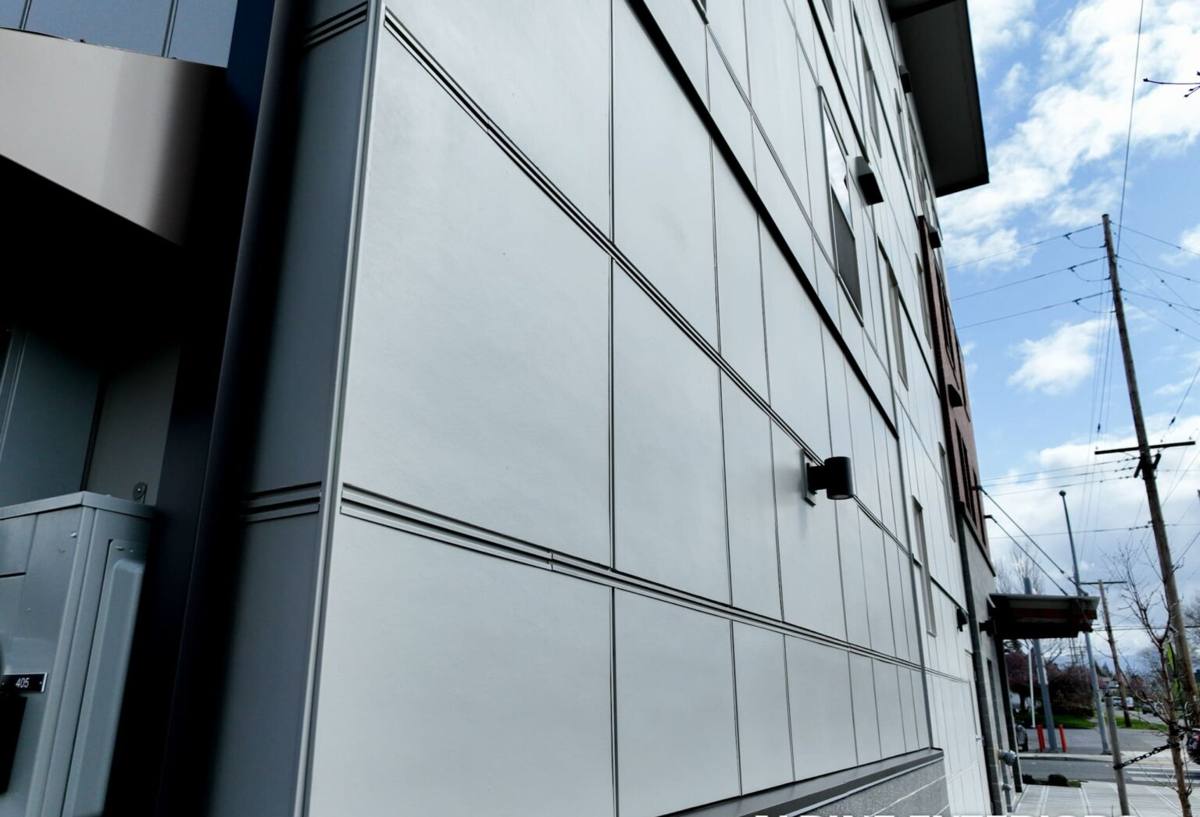
What Local Homes Are Actually Up Against
Salt Air and Coastal Exposure
Blaine sits right on the water, and even properties several miles inland in Sumas get some benefit — or cost — of that marine air moving through the county. Salt-carrying moisture accelerates corrosion on fasteners, trim flashing, and any metal component in the siding assembly. It also breaks down paint films faster than it would in a drier inland climate, which is one of the reasons factory-applied, baked-on finishes hold up so much better here than field-applied paint.
Driving Rain, Not Just Rain
This isn't a light-drizzle climate. Storms here often come with real wind behind them, which pushes water sideways into wall assemblies rather than letting it run straight down and off. That means lap joints, butt seams, and penetrations around windows and doors take on water pressure that a fair-weather installation detail won't handle. Rainscreen gaps, proper flashing sequencing, and correct lap spacing aren't optional extras in this climate — they're the difference between a wall that dries out between storms and one that stays damp underneath the cladding.
Moss, Algae, and Extended Shade Season
Between tree cover, short winter daylight hours, and the sheer number of overcast days, north- and east-facing walls in this area often stay damp for days at a time. Untreated or poorly finished siding surfaces become a growth medium for moss and algae faster than most homeowners expect. This isn't just cosmetic — sustained organic growth holds moisture against the substrate and accelerates whatever degradation process is already underway.
Why We Only Install James Hardie Here
We made a deliberate decision to standardize on James Hardie fiber cement and stop installing vinyl, LP SmartSide, or other engineered wood and composite products. In a climate like Sumas and Blaine's, the reasons show up fast:
- Non-combustible core: fiber cement doesn't feed a fire the way wood-based products can, which matters for insurance conversations as much as safety.
- Moisture-resistant by composition: Hardie's fiber cement doesn't swell, delaminate, or absorb water the way engineered wood substrates can when a seal fails.
- ColorPlus factory finish: baked-on, not field-sprayed, which holds color and resists fading and chalking far longer under salt air and UV exposure than a job-site paint job.
- Climate-engineered HZ product lines: Hardie manufactures HZ5 boards specifically for wetter, harsher climate zones, which the Pacific Northwest qualifies as.
- Strong transferable warranty: backed by the manufacturer, not just the installer, and it survives a change of ownership if the home sells.
None of this means other products are junk. Vinyl is inexpensive and low-maintenance in mild climates. LP SmartSide performs reasonably well when the envelope is kept dry. But in a climate that regularly tests moisture management — driving rain, salt air, extended damp shade — we'd rather stand behind one product system we trust completely than offer a menu of options with different long-term risk profiles. That's a business decision we're upfront about, not a claim that alternatives are unsafe or defective.
What a Correct Installation Actually Involves
The board itself is only part of the equation. Most premature siding failures we get called out to inspect in this area trace back to installation shortcuts, not product defects. A correct James Hardie install here includes:
- Weather-resistive barrier inspection or replacement — the water-resistive barrier behind the siding has to be continuous and properly lapped before a single board goes up.
- Rainscreen or drainage plane — a gap behind the siding lets bulk water drain and lets the wall assembly dry, which is essential given how much driving rain this area sees.
- Correct flashing at every penetration — windows, doors, hose bibs, light fixtures, and any other wall penetration need step and head flashing detailed to shed water outward, not trap it.
- Manufacturer-spec fastening — proper fastener type, spacing, and embedment depth, since Hardie's warranty is contingent on following their installation manual, not general carpentry practice.
- Correct clearances — ground clearance, roofline clearance, and gaps at trim and corners, sized to let the assembly move and drain without wicking moisture.
- Factory-cut edges sealed where field-cut — any board cut on site needs the cut edge primed or sealed per spec, since raw cut edges are the most common point of moisture intrusion.
Skip any one of these steps and you can still end up with a wall that looks right for a few years before the underlying moisture problems surface.
How Our Process Works
1. On-Site Assessment
We walk the exterior, check the current siding and sheathing condition where accessible, and look specifically at north- and east-facing walls, ground clearance, and any areas showing existing moss, staining, or soft spots — the areas this climate stresses hardest.
2. Scope and Product Selection
We help you choose from Hardie's plank, panel, and shingle lines and the appropriate HZ climate rating, along with color and texture options, based on your home's exposure and your preferences.
3. Tear-Off and Substrate Repair
Old siding comes off, and we address any sheathing or framing damage found underneath before anything new goes up — covering damaged substrate with new siding just locks the problem inside the wall.
4. Weather Barrier and Drainage Plane
New or inspected weather-resistive barrier goes down first, followed by a proper rainscreen gap, which is one of the most important — and most commonly skipped — steps in this climate.
5. Installation to Manufacturer Spec
Boards go up following James Hardie's fastening, spacing, and flashing requirements exactly, which is also what keeps the manufacturer's warranty intact.
6. Final Walkthrough
We walk the finished job with you, checking sightlines, caulking, and trim details before calling it complete.
Cost Factors to Understand Before You Budget
| Factor | Why It Affects Cost |
|---|---|
| Home size and wall complexity | More corners, dormers, and roof intersections mean more cutting, flashing, and labor time |
| Tear-off scope | Removing old siding and disposing of it adds labor and dump fees beyond a straight install |
| Substrate condition | Rotted sheathing or framing found during tear-off requires repair before new siding goes on |
| Product line and profile | Lap, shingle, and panel systems, plus trim and accent choices, price differently |
| Access and site conditions | Steep lots, tight setbacks, or multi-story walls affect equipment and labor needs |
| Existing moisture damage | Homes with prior water intrusion may need more extensive drainage plane work |
We give real numbers after seeing the house — broad national averages don't account for what's actually going on behind your walls, and in a climate like this one, what's behind the wall is often the real story.
Signs Your Sumas or Blaine Home May Need New Siding Soon
- Persistent moss or algae growth that returns quickly after cleaning
- Soft spots, bubbling, or visible warping, especially on north- or east-facing walls
- Paint that's peeling or chalking faster than it used to
- Visible gaps, cracking, or separation at seams and corners
- Musty smell or staining on interior walls that share an exterior wall
- Siding that's original to a home built before modern drainage-plane practices were standard
None of these on their own means the siding has failed, but they're worth having looked at before the next storm season, not after.
Why Local Experience Matters
A crew that installs siding across a range of climates has to generalize. A crew that works Sumas, Blaine, and the rest of Whatcom County regularly already knows which walls in this area take the worst of the wind-driven rain, how much moss pressure to expect on shaded elevations, and how the salt air off the Strait affects fastener and flashing choices. That local pattern recognition shows up in the details — where we add extra flashing attention, how we handle ground clearance on properties with heavier moisture exposure, and which walls get the closest inspection during tear-off. It's the difference between a generic install and one built for the specific conditions your home actually faces.
If you're weighing a siding replacement in Sumas or Blaine, we're happy to walk your property, look at what your current siding is telling us, and give you a straight assessment — no pressure, no inflated scope. Reach out for a free estimate using the form below.