 Blaine
 Building a Deck That Can Handle Cherry Point's Climate
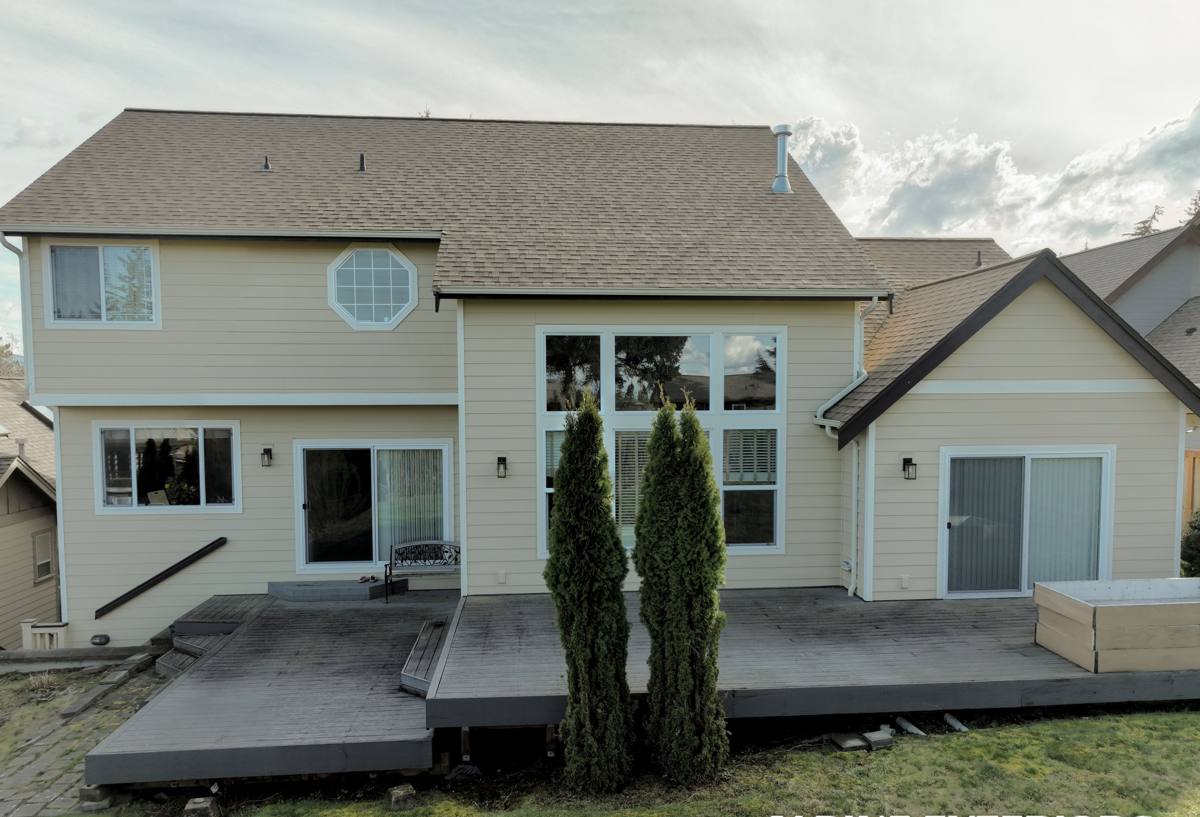
Cherry Point sits right on the Whatcom County shoreline near Blaine, and that location shapes everything about how a deck should be built here. Salt-laden marine air moves in off the water, driving rain comes in sideways more often than most homeowners expect, and the region's long, wet moss season keeps horizontal surfaces damp for weeks at a time. A deck built to a generic spec sheet from a big-box store rarely accounts for any of that. A deck built for this specific stretch of coastline does.
This page focuses on one thing: building or replacing a deck for a home in the Cherry Point area, and what that actually requires given the climate, the ground, and the way sun and moisture move across a property this close to the Strait.
What Salt Air, Rain, and Moss Actually Do to a Deck
It helps to understand the mechanisms before talking about the fix, because each one attacks a different part of the structure.
Salt Air
Airborne salt accelerates corrosion on any exposed metal — fasteners, brackets, railing hardware, even the heads of screws that are only slightly proud of the decking surface. Once corrosion starts on a fastener, it doesn't stay contained; rust streaks bleed into the wood or composite around it and the connection weakens from the inside, often before there's any visible sign on top.
Driving Rain
Rain that comes in at an angle, rather than straight down, gets pushed into places a deck isn't normally designed to shed water from — under railing base plates, behind fascia boards, into the gap where decking meets the house at the ledger. Standing or trapped moisture in those spots is where rot starts, usually years before it's visible from the top of the deck.
Moss and Sustained Dampness
A long moss season means deck boards, especially in shaded or north-facing areas, stay damp for extended stretches rather than drying out between rain events. Moss and algae hold that moisture against the wood or composite surface, which both accelerates decay in wood decking and makes composite and PVC surfaces slick and slippery underfoot.
Material Choice: What Actually Holds Up Here
There's no single "best" decking material — there's a best material for this climate and this budget. The honest trade-offs matter more than any brand name.
| Material | Moisture Resistance | Maintenance | Typical Lifespan Here |
|---|---|---|---|
| Pressure-Treated Fir/Pine | Moderate — depends entirely on sealing schedule | Annual cleaning and re-sealing recommended | 10–15 years with upkeep |
| Cedar | Naturally decay-resistant, but surface needs care | Periodic oiling or staining to prevent graying and splitting | 15–20 years with upkeep |
| Capped Composite | High — plastic cap resists moisture intrusion | Occasional washing; no sealing or staining | 25+ years |
| PVC Decking | Very high — no wood fiber to absorb moisture | Lowest — washing only | 25+ years |
We don't push one material on every job. Cedar still makes sense for homeowners who want a natural look and are willing to maintain it. Capped composite and PVC make sense for anyone who wants to stop thinking about their deck once it's built, particularly on shaded or moss-prone areas of a lot. What we steer people away from is uncapped, first-generation composite — the older style with exposed wood fiber in the board — because in a wet, marine climate it absorbs moisture at the core and can swell or fail well before the warranty period is over. That's a maintenance-burden and moisture-behavior issue, not a brand issue, and it applies regardless of who manufactured the board.
Fasteners and Hardware: The Detail Most Decks Get Wrong
In a salt-air environment, the hardware matters as much as the decking itself. Standard galvanized fasteners can start showing corrosion within a few years this close to the water. We use stainless steel or marine-rated fasteners and connectors on Cherry Point jobs specifically because the cost difference upfront is small compared to the cost of a deck that has to be partially rebuilt because its structural connectors failed early. Hidden fastener systems also get extra attention here — any hidden clip system has to be checked for how it handles moisture intrusion at the fastener point, not just how clean it looks on the surface.
Framing, Footings, and the Ledger Connection
The parts of a deck nobody sees are the parts most likely to fail first in this climate.
Footings
Whatcom County's soil and frost conditions mean footing depth and sizing need to match local code, not a rule of thumb from a different region. We size and place footings based on the actual load path of the deck and the soil conditions on that specific lot.
Ledger Board Attachment
Where a deck attaches to the house is the single most common source of hidden rot on any deck, anywhere — and driving rain makes it worse here than in drier climates. Proper flashing at the ledger, correct fastener spacing, and a gap or drainage path behind the ledger board are not optional details; they're the difference between a deck that lasts decades and one that develops a hidden rot problem behind the siding.
Framing Material and Spacing
Joist spacing gets tightened up for composite and PVC decking compared to what's typical for wood, since those materials can behave differently under load and temperature swings than solid lumber. We frame to the decking manufacturer's spec, not a generic joist layout.
Drainage, Airflow, and Keeping Moss From Taking Over
Moss doesn't grow because a deck was built badly on the surface — it grows because moisture has nowhere to go and no way to dry out. A few structural choices make a real difference over the life of the deck:
- Consistent board spacing that lets water drain through rather than pool on top
- Under-deck airflow, especially on lower or ground-level decks, so the underside can dry between rain events
- Grading and drainage below the deck so water doesn't collect and stay under the structure
- Keeping decking boards clear of overhanging vegetation where possible, since shaded, damp areas are where moss establishes first
- Using a surface texture or finish that sheds water rather than holding a film across the board
None of these fixes moss completely — this is a genuinely mossy climate — but they buy homeowners real time between cleanings and cut down how aggressively it grows back.
How We Approach a Cherry Point Deck Project
The process is straightforward, but each step gets adjusted for the site conditions rather than run on autopilot.
- On-site assessment — we look at sun exposure, wind exposure, existing drainage, and how close the deck will sit to salt air and moisture sources before recommending materials.
- Material and layout discussion — we walk through the real trade-offs between wood, composite, and PVC for that specific location on the property, including budget and maintenance expectations.
- Permitting — decks over a certain size or height typically require a permit in Whatcom County; we handle that process rather than leaving it to the homeowner.
- Framing and structural work — footings, ledger attachment, and framing done to code with corrosion-resistant hardware throughout.
- Decking, railing, and finish work — installed with attention to drainage, fastener placement, and the small details that determine how the deck ages.
- Final walkthrough — we go over basic care so the deck starts its life maintained correctly, not guessed at.
Maintaining a Deck in a Marine Climate
Even the right materials and the right build need some ongoing care in this climate. This is the short list we give Cherry Point homeowners:
- Rinse or sweep debris off the deck regularly, especially in fall and winter when organic matter builds up fastest
- Clean moss and algae off surfaces before it gets established, rather than after it's already staining the boards
- Check railing hardware and visible fasteners once a year for early rust or corrosion, particularly after storm seasons
- Re-seal or re-stain wood decking on the schedule the finish product calls for — skipping a year in this climate shows up fast
- Keep gutters and downspouts near the deck clear so roof runoff isn't dumping extra water onto or under the structure
- Trim back vegetation that's shading the deck and keeping it damp longer than it needs to be
Why Local Experience on This Coastline Matters
A deck built to a generic spec might look fine for the first year or two anywhere. The problems that show up in a marine, high-moisture climate like Cherry Point's usually take a few seasons to appear — corroding hardware, a soft spot behind the ledger, moss that keeps coming back no matter how often it's cleaned. A crew that already builds decks in this specific environment knows which details are worth the extra cost upfront and which shortcuts cause the most expensive problems later. That's the difference between a deck that needs real repair work in year five and one that's still solid at year twenty-five.
If you're planning a new deck or replacing one that hasn't held up to the Cherry Point weather, we're happy to take a look at your property and put together a free, no-pressure estimate. There's a form below — reach out and we'll walk through what your specific site needs.