 Blaine
 Cherry Point: A Coastal Community With Real Weather Exposure
Cherry Point sits on the water near Blaine, out on the open edge of Whatcom County where weather off the Strait of Georgia hits with little to break it up first. Homes here don't get the benefit of tree cover or terrain that shelters more inland parts of the county, which means siding on a Cherry Point house is doing harder work, day in and day out, than siding on a comparable home twenty minutes inland. Salt air, driving rain, and a moss season that can stretch most of the year are simply part of owning property out here, and the exterior of the house is what absorbs all of it first.
We install James Hardie fiber cement siding, and only James Hardie fiber cement siding. That's not a marketing line — it's a professional standard we settled on after years of tear-offs and service calls in exposed, high-moisture parts of Whatcom County, Cherry Point included. This page focuses on that one service, in this one area, because the two are connected: the siding that makes sense for a sheltered inland lot isn't always the right call out here, and a generic "siding services" page doesn't say much about what a Cherry Point home actually needs.
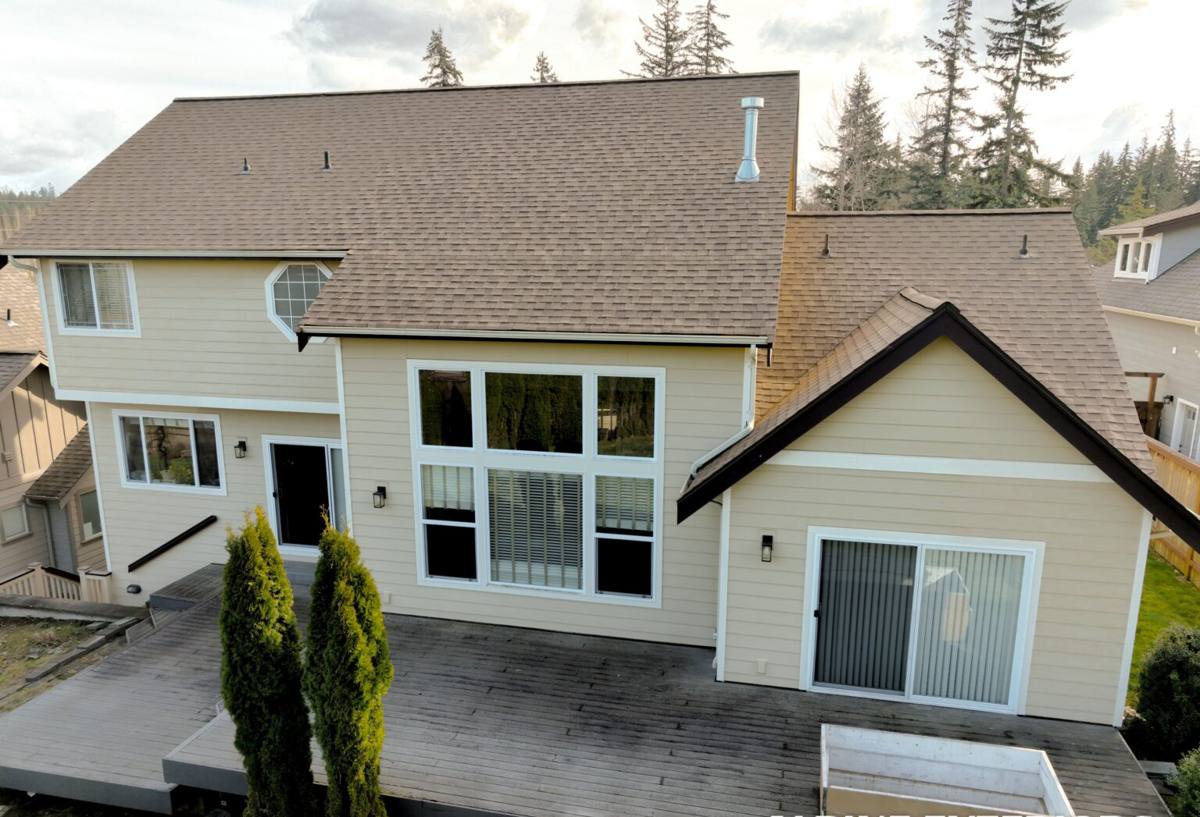
What Cherry Point's Climate Demands From a Siding System
Salt Air, Close to the Water
Homes near the water at Cherry Point take a steadier dose of salt-laden air than houses set further back from the shoreline. Salt speeds up corrosion on fasteners, flashing, and any exposed metal trim, and it breaks down lower-quality paints and coatings faster than they'd wear in a dry, inland climate. Out here, the difference between a fastener rated for coastal exposure and one that isn't shows up in years, not decades.
Driving Rain With Nothing to Block It
Storms coming off the strait don't fall straight down on a Cherry Point roofline — wind pushes rain sideways into wall assemblies, window and door flashing, and every seam where trim meets siding. That sideways-driven moisture is harder on a house than the same total rainfall would be somewhere calmer, and it's exactly the kind of exposure that finds any gap a rushed installation leaves behind. With little natural windbreak around much of Cherry Point, this pattern shows up more often and with more force than it does in sheltered parts of the county.
A Moss Season That Doesn't Really End
Mild temperatures and near-constant moisture add up to a moss and mildew season that runs most of the year on shaded or north-facing walls. Surfaces that stay damp the longest are the first to grow it, and any siding material with even a little surface porosity becomes a growth surface over time. On Cherry Point lots with tree cover or limited winter sun, that growth can start showing within a year or two on the wrong material.
Why James Hardie Fiber Cement Is the Only Siding We Install Here
We used to work with a wider range of siding products. We narrowed that down to one, and the reason came from what we kept finding on tear-offs in coastal, high-moisture parts of the county like Cherry Point — not from a supplier deal or a sales incentive.
- Non-combustible core: Fiber cement doesn't feed a fire the way wood-based siding products can, which matters for both safety and, often, insurance considerations.
- Factory-applied ColorPlus finish: The color is baked on under controlled factory conditions instead of brushed on in the field, so it holds its finish longer against fading, chalking, and salt-air exposure.
- Climate-engineered HZ product lines: Hardie's HZ5 formulation is built for regions with sustained moisture and freeze-thaw cycling, which is a fair description of coastal Whatcom County.
- Dimensional stability: Fiber cement doesn't swell, cup, or warp the way engineered wood products can after repeated exposure to wet, wind-driven weather.
- Strong transferable warranty: Hardie backs the product with one of the stronger warranty structures in the industry, as long as installation follows their spec.
We don't install LP SmartSide, vinyl siding, Cemplank, Allura, primed spruce, or cedar. Each has a place in the market and homeowners who are satisfied with them. But in a location as exposed as Cherry Point, we've made a professional call to install one system we fully stand behind rather than offer something cheaper that quietly shifts maintenance risk onto the homeowner a few years down the road.
James Hardie Product Lines and Where Each Fits a Cherry Point Home
James Hardie isn't a single product — it's a system of siding, trim, and soffit profiles designed to work together. Picking the right combination for a Cherry Point home comes down to the home's style, its sun and wind exposure, and how much of the wall faces the water directly.
| Product Line | What It Is | Where It Fits Best |
|---|---|---|
| HardiePlank lap siding | Horizontal lap boards, the most common Hardie profile | Traditional and modern home styles across most of Cherry Point |
| HardieShingle | Textured, staggered-edge panels that mimic cedar shingle siding | Homes wanting a shingle look without cedar's moisture upkeep |
| HardiePanel | Large-format vertical panels, often with battens | Modern designs and accent walls, gables, and mixed-material facades |
| HardieTrim | Fiber cement trim boards for corners, fascia, and window surrounds | Every project — trim is where a lot of water intrusion starts if it's mismatched or poorly sealed |
For the most exposed, water-facing walls at Cherry Point, we generally recommend HZ5 in whichever profile suits the home's design, since that formulation is built specifically for the moisture and freeze-thaw conditions this stretch of coastline sees. The color and profile decisions are aesthetic; the HZ5 specification is a climate decision, and we treat it as one.
What Correct Installation Looks Like on a Cherry Point Home
Hardie siding performs the way it's engineered to only when it's installed correctly, and in an exposed location like Cherry Point, the details matter more than they would in a milder, more sheltered setting. A few of the basics we won't skip:
- Rain screen gap: A small drainage cavity behind the siding lets any moisture that gets past the exterior surface drain and evaporate instead of sitting against the wall sheathing.
- Correct fastener type and spacing: Hardie specifies fastener placement and corrosion-resistant fastener types for a reason; loose spacing or the wrong fastener is one of the more common causes of early failure we find on tear-offs.
- Properly lapped house wrap and flashing: Every seam and penetration needs to shed water downward and outward, especially on walls that take wind-driven rain directly off the strait.
- Sealed butt joints and trim transitions: Open or poorly sealed joints are where salt-laden moisture finds its way behind the siding first.
- Manufacturer-specified clearances: Proper gaps at grade, roofline, and deck ledgers keep siding from sitting in standing moisture, which matters on lots where drainage isn't ideal.
None of this is exotic or optional. It's the manufacturer's own installation spec, followed consistently rather than shortcut on the parts of the job that are hardest to see once the siding is up and the crew has moved on.
Our Process for a Cherry Point Siding Project
Walking the Property First
We start with an on-site look at the home, not a phone estimate. Cherry Point lots vary a lot in how directly they face the water and how much wind and rain exposure a given wall actually sees, so we want eyes on the house before putting a real number on the work.
Checking What's Behind the Old Siding
Once tear-off starts, we check the sheathing and framing underneath for moisture damage before anything new goes up. In a location like Cherry Point, it's common to find some substrate softening behind older or poorly installed siding, and that gets addressed before the new system goes on rather than covered over.
Installing to Hardie's Spec, Not a Shortcut Version
Rain screen gap, fastener type and spacing, flashing laps, and joint sealing all follow the manufacturer's installation guidelines, not a faster version of them. This is the stage where the climate-specific details from the section above actually get built into the wall.
Final Walkthrough and Warranty Registration
We walk the finished job with the homeowner, and we make sure the product warranty is properly registered. A correctly installed, properly registered Hardie system is what keeps that warranty meaningful if anything ever does come up down the road.
Signs a Cherry Point Home's Siding Needs Attention
- Moss or dark staining that returns quickly after cleaning, especially on shaded or north-facing walls
- Soft or spongy siding, particularly low on the wall or around window and door trim
- Rust staining or visibly corroded fasteners and trim, more common this close to the water
- Peeling paint, chalking, or visible warping on walls exposed to sun and wind off the strait
- Cracked, buckled, or separating boards, especially at butt joints and corners
- Gaps or shrinkage at trim transitions where water can start tracking behind the siding
Any one of these on its own isn't necessarily an emergency, but on a Cherry Point home they tend to compound quickly once moisture gets behind the siding, so it's worth having a look sooner rather than later.
Cost Factors for a Cherry Point Hardie Siding Project
| Factor | What Drives It | Cherry Point Consideration |
|---|---|---|
| Home size and shape | Total wall area, number of gables, corners, and trim details | More corners and transitions mean more sealed joints exposed to wind-driven rain |
| Tear-off vs. overlay | Whether old siding and any damaged substrate need full removal | Water-facing walls more often need substrate repair before new siding goes on |
| Product line and profile | HardiePlank vs. Shingle vs. Panel, plus trim complexity | HZ5 is generally the right call for walls facing the water directly |
| Color and finish | Standard ColorPlus color selection vs. custom or field-painted options | Factory-applied ColorPlus finish holds up better against salt air over time |
These are general cost drivers, not a quote. Two houses on the same road at Cherry Point can need very different scopes of work once tear-off actually starts, which is part of why we're cautious about phone or online estimates that skip a real walk-through of the property.
Why a Crew That Already Works Cherry Point Matters
A siding crew that regularly works this part of Whatcom County has already seen how salt air, driving rain, and a long moss season actually behave on real Cherry Point homes over a full year, not just how a product performs on a spec sheet. That experience shapes practical decisions on install day: which walls take the most direct wind and rain, where extra flashing attention pays off, and which fastener and clearance details are worth the extra time so a homeowner isn't dealing with a callback after the next storm off the water. Cherry Point's exposure isn't identical to more sheltered parts of the county, and a crew that knows the difference builds accordingly instead of applying a generic approach to every job.
If your Cherry Point home needs new siding or you're not sure whether what's on the walls now is holding up the way it should, we're glad to take a look and give you a straightforward, honest assessment. Reach out using the form below to schedule a free, no-pressure estimate.