 Blaine
 Building New in Cherry Point? Get the Windows Right the First Time
Cherry Point sits right up against the Strait of Georgia, and that shoreline exposure shapes almost every decision that goes into a new home here — including windows. If you're framing a new build or working with a builder on one, the window installation isn't something to leave as an afterthought once drywall is scheduled. Done correctly during construction, windows integrate into the wall assembly as a system: flashing, water-resistive barrier, sill pan, and window unit all working together to keep wind-driven rain and salt-laden air out for decades. Done poorly, the problems don't show up on day one — they show up two or three winters later as stains, soft trim, or a drafty room, and by then the fix means opening up finished walls.
We install new-construction windows for homes in and around Blaine and Whatcom County regularly, and Cherry Point's particular mix of open water exposure, wind, and a long wet season means we treat these installs a little differently than a sheltered inland lot. This page covers what that means in practice.
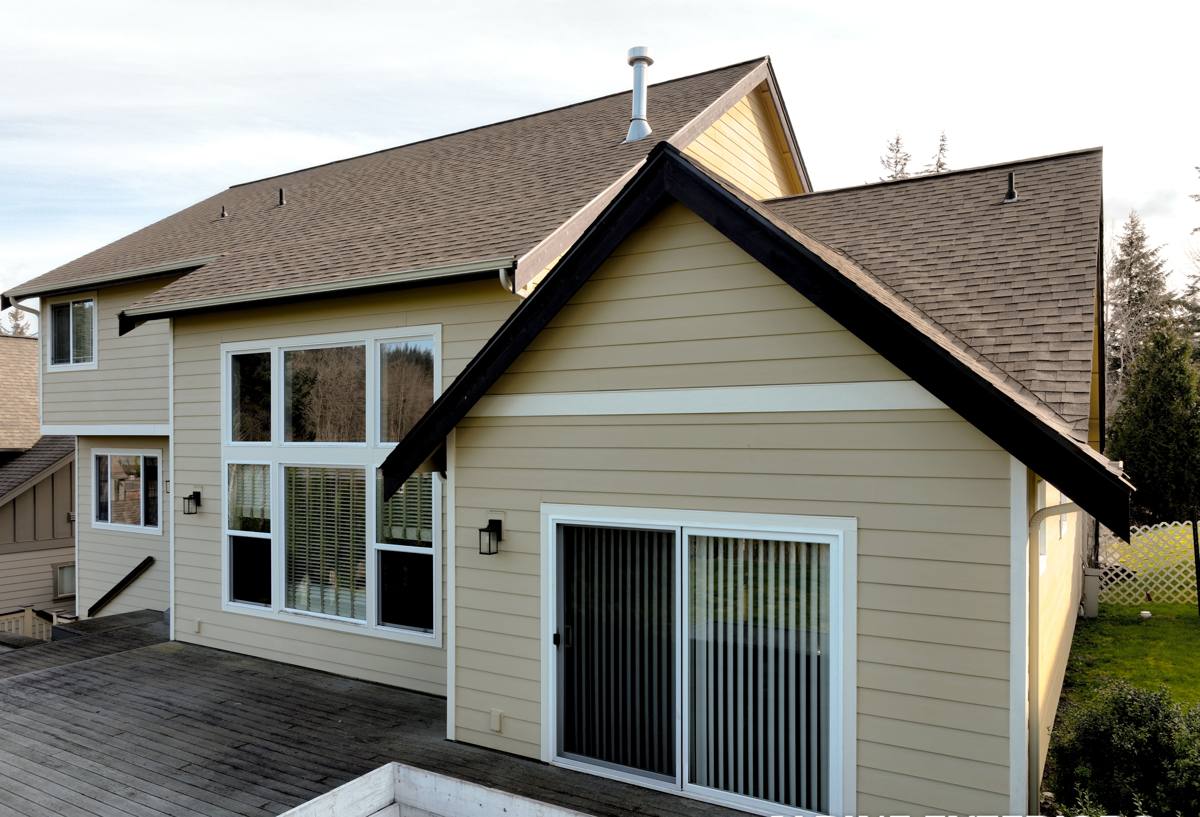
What Cherry Point's Climate Actually Demands From a Window Install
Salt Air and Corrosion
Properties close to the water pick up airborne salt that settles on exterior surfaces and works into any exposed metal — fasteners, hardware, uncoated flashing, and cheap window components. Over years, that accelerates pitting and corrosion in a way inland Whatcom County homes simply don't experience. It doesn't mean every metal component fails, but it does mean material choices near Cherry Point's shoreline should be made with that exposure in mind rather than defaulting to whatever's cheapest.
Driving Rain and Wind Load
Open water means fewer windbreaks, and storms coming off the Strait can drive rain sideways into a wall assembly rather than letting it run straight down. A window that would be fine on a sheltered lot can leak on an exposed Cherry Point elevation if the flashing details, sill pan, and sealant joints aren't built to handle rain being pushed into the gaps rather than falling past them. Wind load also matters for structural performance — a new build gives you the chance to size and rate windows for the actual exposure of the lot, not just code minimums.
Moss, Mildew, and a Long Damp Season
Whatcom County's wet months stretch long, and shaded or north-facing elevations near tree lines stay damp for weeks at a stretch. That doesn't just grow moss on roofs — it keeps window sills, trim, and cladding around openings wet longer than in drier climates, which is exactly the condition that turns a minor flashing gap into a rot problem. New construction is the one time you can build in drainage and drying capacity before anything is buttoned up.
New-Construction vs. Replacement Windows — Why the Install Method Is Different
Homeowners sometimes assume "new-construction window" just means a window that's new. It actually refers to a specific installation method, and it matters which one your builder is using.
| Factor | New-Construction (Nail-Fin) Windows | Replacement / Retrofit Windows |
|---|---|---|
| How it attaches | Nailing flange fastens to sheathing before siding goes on | Fits inside existing frame or opening, no flange |
| Flashing integration | Fully integrated with the wall's water-resistive barrier and sill pan | Relies on sealant and existing wall flashing, which may be older or compromised |
| Best use case | New builds, additions, or full wall re-sides where sheathing is exposed | Existing homes where walls stay closed up |
| Long-term performance on exposed sites | Higher — drainage plane is built correctly from scratch | Depends heavily on condition of existing opening |
For a Cherry Point new build, nail-fin new-construction windows are almost always the right call, since the wall is open and you get to build the drainage plane correctly the first time — sill pan, flashing tape, and window flange layered so water sheds outward at every point, rather than patched together after the fact.
What a Correct New-Construction Install Actually Involves
The window itself is only part of the job. The install sequence around it is what determines whether the opening stays dry for the next 30 years.
- Rough opening check — verified square, level, and sized to the window manufacturer's tolerances before anything is installed.
- Sill pan flashing — a sloped, sealed pan under the window so any water that gets past the glass or frame drains back outside rather than pooling on the sill.
- Water-resistive barrier integration — house wrap or building paper lapped correctly with the window flange, shingle-style, so water is always directed downward and outward.
- Window setting and fastening — shimmed plumb and square, fastened per manufacturer spec so the frame isn't racked, which affects both weather seal and how smoothly the sash operates for years.
- Head flashing — installed above the window and integrated with the WRB so rain running down the wall is kicked out past the opening instead of behind it.
- Sealant at the right joints only — sealant is a backup, not the primary defense; over-sealing every joint can actually trap moisture that should be able to drain or dry.
On an exposed Cherry Point elevation, we pay particular attention to the head flashing and sill pan details, since those are the two points most likely to fail under sustained wind-driven rain.
Choosing Frame Material for a Shoreline-Adjacent New Build
There's no single "correct" frame material for every home — it's a trade-off between maintenance, cost, and how the material handles salt air and moisture over time.
| Frame Type | How It Handles Salt Air & Moisture | Maintenance |
|---|---|---|
| Vinyl | Doesn't corrode; UV and thermal cycling are the main long-term concerns | Low — occasional cleaning |
| Fiberglass | Very stable dimensionally, resists moisture and salt exposure well | Low |
| Aluminum-clad wood | Cladding protects the exterior, but any breach exposes wood beneath to interior condensation risk | Moderate — joints and cladding seams need periodic checks |
| Bare aluminum | Prone to pitting and corrosion in salt air over time unless marine-grade and well-finished | Higher near shoreline exposure |
For most Cherry Point new builds we lean toward vinyl or fiberglass frames on exposed elevations specifically because they sidestep the corrosion question entirely. That's a maintenance and longevity call, not a statement that other materials can't be made to work — it just means fewer things to inspect and reseal over the years on a site this close to open water.
Our Process for New-Construction Window Installs Near Blaine
We work directly with builders and homeowners on new construction, which means coordinating before the walls are ever closed up.
- Review the plans and rough opening sizes with the builder before framing is finalized, so window sizes and swing directions are locked in early.
- Walk the lot to gauge actual exposure — how much the specific elevation faces open water and prevailing storm direction — since that affects flashing detail and frame choice recommendations.
- Select window products and glass packages based on that exposure, not a one-size-fits-all spec sheet.
- Install using the full flashing sequence above, with photos taken at each stage before the wall is closed in, since that's the only point those layers are ever visible again.
- Final check of operation, seal, and trim once siding and interior finish work are complete.
A Practical Checklist Before You Sign Off on a Window Package
- Confirm the install method is true new-construction (nail-fin), not a retrofit unit set into a rough opening.
- Ask what sill pan flashing product and method will be used — this should have a specific answer, not a vague "we'll seal it up."
- Check the frame material recommendation against how exposed your specific elevation is to wind and open water.
- Get the glass package's U-factor and any low-E or gas-fill specs in writing, matched to your home's orientation.
- Ask whether flashing will be photographed before the wall is closed up — if a crew won't document it, that's worth asking why.
- Verify the window's design pressure (DP) rating is appropriate for an open-water-adjacent lot, not just code minimum.
Why It Matters That Your Crew Already Works Cherry Point
Whatcom County has a lot of microclimates within a few miles — a lot tucked behind trees a mile inland behaves differently than one sitting open to the Strait. A crew that already installs windows around Cherry Point and Blaine has seen which details actually get tested by this specific exposure and which corners get cut on standard installs that don't hold up here. That shows up in small decisions: how much head flashing overlap to use, which sealant chemistry holds up in salt air without going brittle, and how much to weight frame material choice against the site's real exposure rather than a generic spec sheet. It also means fewer surprises coordinating with local builders and inspectors who are used to the same conditions.
New construction only gives you one shot at getting the wall assembly right before it's covered up. Getting that right the first time, on a site with Cherry Point's exposure, is worth more than saving a little on an install method that wasn't built for this kind of weather.
After Move-In: What Cherry Point Homeowners Should Expect
Even a correctly installed window benefits from a little seasonal attention on an exposed site. Rinse accumulated salt residue off exterior frames and glass periodically, especially after storms, since dried salt film left in place accelerates wear on hardware and finishes. Check weep holes at the base of the frame each fall to make sure they're clear, since a blocked weep hole defeats the drainage the install was built around. And keep an eye on shaded or north-facing sills during the wet months — that's where moss and mildew take hold first if debris is allowed to sit.
If you're planning a new build in Cherry Point or working with a builder who needs a window subcontractor who already understands this stretch of coastline, we're happy to walk the lot and talk through options. Reach out for a free, no-pressure estimate using the form below.