 Blaine
 Building a Custom Deck for Point Roberts' Exposed Location
Point Roberts sits at the end of a peninsula with water on three sides, cut off from the rest of Whatcom County by geography in a way no other town in the area is. Boundary Bay lies to the east and the Strait of Georgia to the west, and there's very little land between either shoreline and most homes in Point Roberts. That kind of open water exposure means salt air, wind, and driving rain reach properties here with less to slow them down first, and a deck — built with no roof over it, sitting outside year-round — takes the full brunt of that.
A custom deck built for Point Roberts isn't just a layout and material choice made to look good. It's a set of decisions about fasteners, framing, and drainage that hold up specifically to sustained salt exposure and wind-driven rain coming off open water, not a generic deck plan installed wherever. This page covers what a Point Roberts deck actually needs, what a correct build involves, and how our process accounts for a few things about this location that don't come up on a typical job elsewhere in the county.
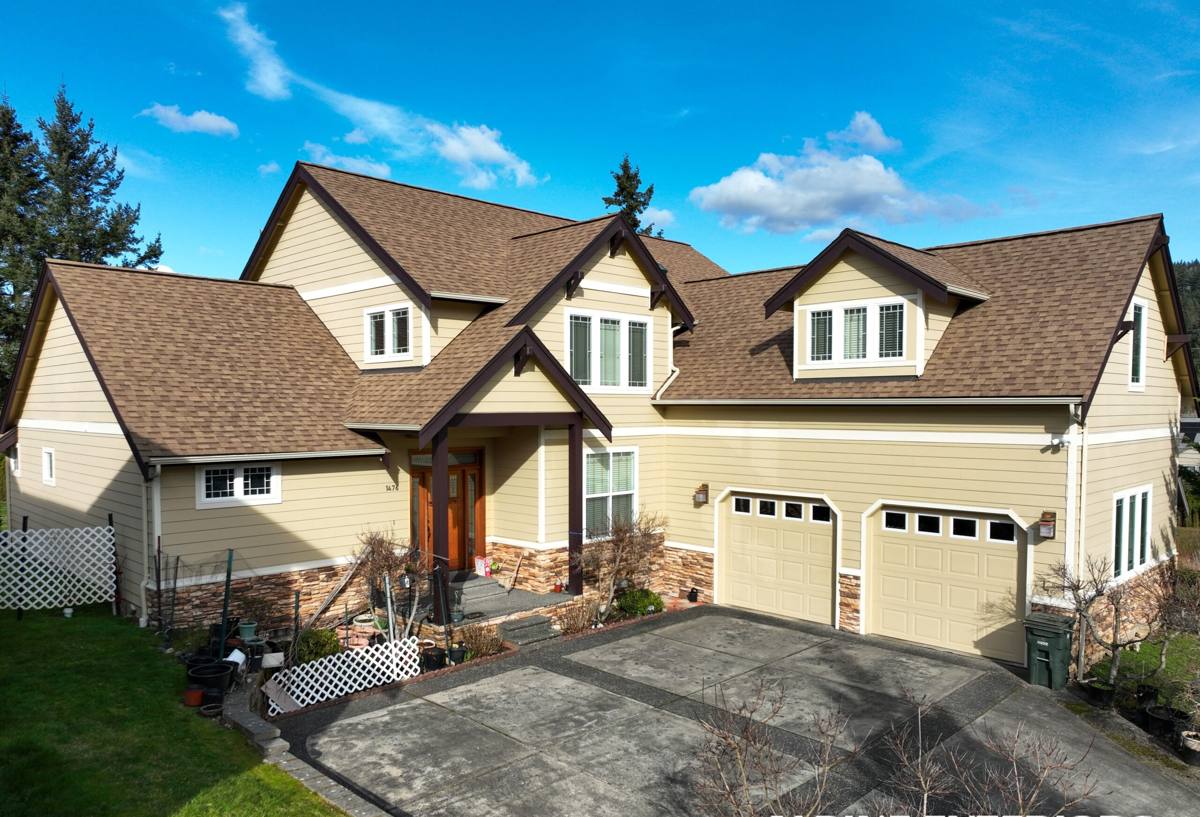
What Point Roberts' Location Does to a Deck
Wind and Salt Air From Two Directions
Most towns in Whatcom County face salt exposure from one direction — a bay, a harbor, a stretch of coastline. Point Roberts sits between two open bodies of water, so wind and salt-laden air can move across a property from either the bay side or the strait side depending on the weather. A deck sits directly in that path with nothing to break it up, and exposed metal — fasteners, brackets, post hardware — corrodes faster here than it does on a more sheltered lot. A corroding fastener loses holding strength well before it looks obviously bad, which matters on a structure people stand on.
Driving Rain With Little to Slow It Down
Storms coming off the water don't fall straight down here; wind pushes rain sideways, driving it up under railings, into ledger connections, and between deck boards that aren't gapped correctly. A surface that would shed water fine on a calm day can trap moisture the moment wind gets involved, and on an exposed peninsula like this, wind-driven rain is closer to the norm than the exception during the wet season.
A Moss Season That Rarely Lets Up
Mild temperatures and near-constant moisture give moss and mildew a long growing season across this part of Whatcom County, and it runs even longer on exposed, shaded, or north-facing decks that stay damp between rain events. Horizontal surfaces hold water longer than a wall does, and any decking material with even a little surface porosity gives moss something to take hold of.
Choosing the Right Decking Material for This Exposure
Material choice carries more weight in Point Roberts than it does in a more sheltered spot, because the gap between a well-suited product and a poorly-suited one shows up faster under this kind of exposure. The three main categories homeowners weigh are pressure-treated or cedar wood, capped composite, and cellular PVC.
Wood
Pressure-treated lumber and cedar look good when new and remain a popular choice, but both need regular sealing or staining to hold up against sustained moisture, and both are more vulnerable to fastener corrosion in salt air over time. Left unmaintained even a season or two in this exposure, wood is usually the first material to show moss, graying, and soft spots.
Capped Composite
Capped composite boards have a plastic shell around a wood-fiber composite core, which resists moisture absorption, staining, and UV fade far better than uncapped composite or wood. In a two-sided salt-air environment like Point Roberts, that cap layer is doing real work — it's the difference between a board that needs occasional washing and one that needs ongoing sealing to keep up.
Cellular PVC
PVC decking contains no wood fiber, so it doesn't absorb moisture the way even capped composite can at cut edges or fastener holes. It typically costs more than composite and can flex more under heavy point loads, but for a deck close to the water on either side of the peninsula, some homeowners find the added moisture resistance worth the extra cost.
| Material | Handling Salt Air & Moisture | Moss Resistance | Upkeep |
|---|---|---|---|
| Cellular PVC | Excellent — no wood fiber to absorb moisture | Strong, smooth non-porous surface | Occasional washing |
| Capped composite | Strong — cap layer resists moisture and staining | Good on most lines | Occasional washing |
| Uncapped composite | Moderate — some moisture absorption at exposed fiber | Fair; more prone to buildup over time | Periodic cleaning |
| Cedar | Moderate — natural resistance, but needs sealing | Fair when sealed and maintained | Regular oiling or sealing |
| Pressure-treated wood | Weak against sustained two-sided salt exposure | Poor without regular treatment | Regular sealing or staining |
What a Correctly Built Deck Involves Here
The decking surface gets most of a homeowner's attention, but under Point Roberts' exposure, the framing, fasteners, and drainage details underneath are what actually determine how long the deck holds up. A build done right for this location includes:
- Framing material rated for sustained moisture exposure, sized correctly for the span and load rather than built to a generic spec
- Stainless steel or coastal-grade corrosion-resistant fasteners throughout — standard hardware starts corroding in this kind of two-sided salt exposure faster than most homeowners expect
- Hidden fastener systems on the deck surface where the product supports it, reducing exposed metal and giving a cleaner walking surface
- Correct board gapping for drainage and material movement, so wind-driven rain and standing moisture can actually drain and dry between boards
- Proper ledger board flashing where the deck ties into the house, one of the most common places moisture gets into a poorly built deck
- Joist spacing matched to the specific decking product's span rating, not a one-size framing layout
- Railing and post attachment sized for the site's actual wind exposure, which on an open peninsula lot can be significant on either the bay or strait side
- Ventilation and grading underneath the deck so moisture doesn't sit against the framing between storms
Skip any of those and the deck usually still looks fine on day one. The problems show up a few winters later — a soft joist, a loosening railing post, or fastener corrosion staining the boards around it.
Crossing the Border: What That Means for Your Deck Project
Point Roberts is part of the United States, but it's physically cut off from the rest of Whatcom County — the only land route in and out runs through Canada. That's not just a curiosity for anyone building here; it shapes how a construction project actually gets scheduled and supplied. Material deliveries, equipment, and crew travel all have to account for a border crossing, and a contractor unfamiliar with that reality can end up building in delays or costs a homeowner isn't expecting.
We plan around it as a normal part of the job rather than treating it as a surprise mid-project. That means ordering decking material and hardware with the crossing factored into the timeline, coordinating crew schedules realistically instead of assuming mainland travel times, and being upfront with homeowners about how that logistics reality affects a project's schedule from the start.
Custom Design Considerations for Point Roberts Properties
A meaningful share of homes in Point Roberts are used seasonally rather than year-round, which changes some of the practical calculus on a deck project. A deck that needs regular seasonal maintenance is a harder ask when the owner isn't on-site to handle it, so low-maintenance material choices and simpler upkeep routines often matter more here than they would for a full-time residence. Beyond that, wind exposure affects how open a railing design can be versus how much a partial screen or windbreak adds, and which side of the peninsula a property faces — bay or strait — affects sun, wind, and moss patterns enough to change material and design recommendations from one lot to the next.
How Our Process Works
We start with a site visit to see what's actually there — existing structure condition if it's a replacement, drainage and grade around the deck area, which direction the site faces relative to the bay and strait, and how exposed the lot is to prevailing wind. From there we walk through decking material options that fit the budget, how the space will get used, and whether the property is a full-time home or a seasonal one, since that affects how much upkeep makes sense to plan around.
Permitting in Point Roberts follows Whatcom County's standard setback, structural, and elevation requirements, and we handle that as part of the job. Material ordering and crew scheduling account for border-crossing logistics from the outset, so it isn't a mid-project surprise. Once permitted, the build follows the sequence above — substructure and framing first, sized and fastened for the site's real exposure, then the decking surface, railing, and any stairs or trim. We finish with a walkthrough covering what your specific material actually needs going forward, which for most modern decking is minimal, but not nothing.
What Your Deck Still Needs From You
Even a well-built deck in the right material needs some routine attention under this kind of exposure to reach its full lifespan. A short list worth keeping in mind:
- Rinse or wash the deck surface periodically to clear salt residue, pollen, and organic buildup before it works into the surface or cap layer
- Keep gaps between boards clear of leaves and debris so water and airflow can move through the way the design intends
- Check railing posts and hardware once a year for early corrosion or loosening, especially heading into the wet season
- Trim back overhanging branches or plants that hold moisture against the deck or block sun and airflow across the surface
- Address any soft framing or standing water underneath right away — that's a structural issue, not a cosmetic one
- If the property sits vacant for stretches, arrange a periodic check rather than letting a season pass unseen, since small issues here are far cheaper to catch early than after they've spread
Why It Matters That We Already Work Point Roberts
Point Roberts is a small enough community that not every contractor in Whatcom County regularly takes on jobs here, and the ones who don't are often working out a border crossing, material logistics, and this location's two-sided wind and salt exposure for the first time on your project. Working this area regularly means those variables are already familiar — corrosion-grade fastener requirements for sustained salt exposure from both the bay and strait sides, wind loads tied to an open peninsula lot, and moss pressure that runs longer here than in more sheltered parts of the county. We've also worked out the scheduling and supply logistics that come with the border crossing, so it's accounted for in the timeline rather than discovered partway through.
That familiarity carries into the smaller judgment calls too — how to orient a deck for the wind a particular lot actually sees, what upkeep realistically makes sense for a seasonal property, and being straightforward about what a deck here needs to last versus what's just an extra line item.
Whether you're replacing a tired deck, building new, or want a straight read on what a custom deck would take on your Point Roberts property, we're glad to walk the site with you and lay out the options plainly. Reach out below for a free, no-pressure estimate.