 Blaine
 Fiber Cement Siding for Dakota Creek Homes Near Blaine
The Dakota Creek area sits on the edge of Blaine, in the northwest corner of Whatcom County, close enough to Semiahmoo Bay and Drayton Harbor that the same salt air, driving rain, and moss pressure that shapes the rest of Blaine's housing stock applies here too — often with the added wrinkle of low-lying, creek-adjacent lots that hold moisture a little longer than higher ground further into town. Homes along and near Dakota Creek deal with a wetter, shadier microclimate on top of Blaine's already demanding coastal weather, which makes the siding material and installation details matter more here than they would on a drier, more sheltered lot.
We install fiber cement siding for homes throughout the Dakota Creek area, and we install exactly one system: James Hardie. That's not a brand preference we picked off a supplier list — it's a standard we settled on after years of siding work in Whatcom County's wettest, saltiest, most moss-prone conditions, including the low-lying, tree-shaded lots that cluster near creeks and drainages like this one.
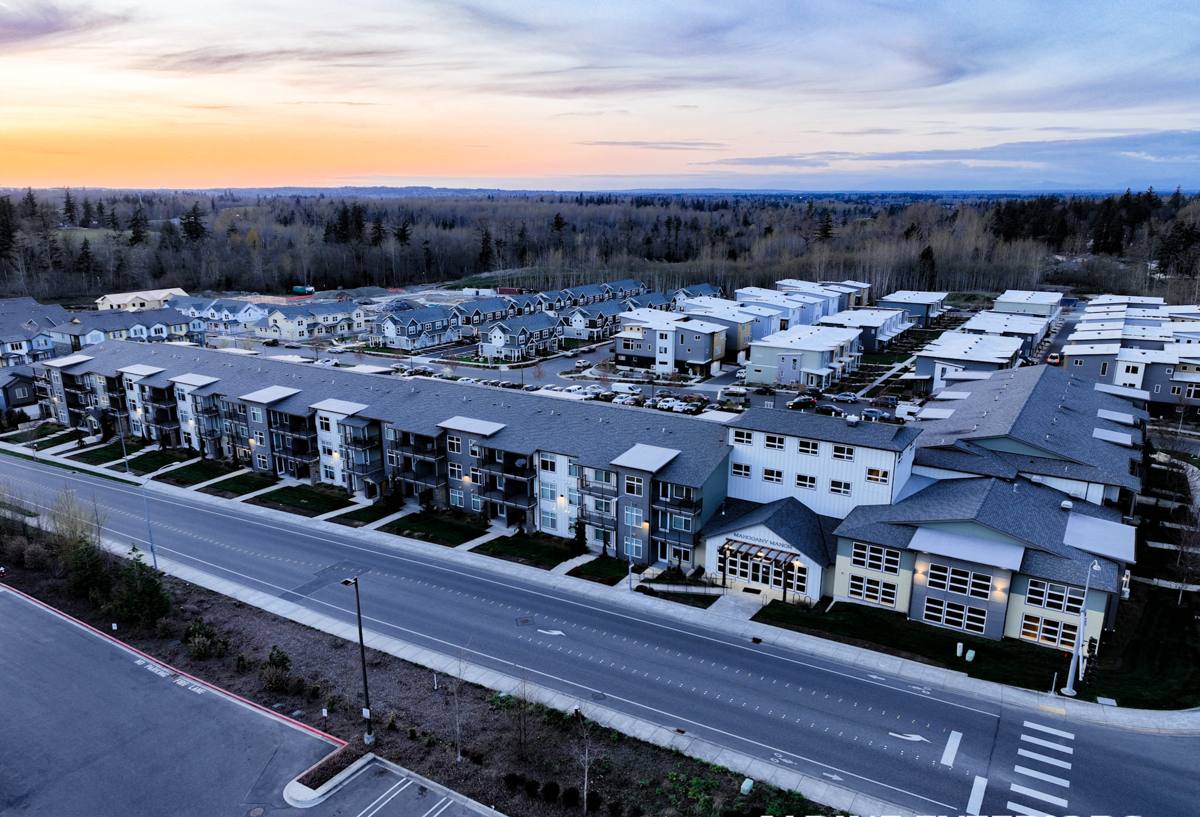
What Dakota Creek's Setting Does to a House
Salt Air Off Semiahmoo Bay and Drayton Harbor
Blaine's proximity to the water means most of the town, Dakota Creek included, gets a steady dose of salt-laden marine air. Salt speeds up corrosion on fasteners, flashing, and any exposed metal trim, and it breaks down lower-quality paints and coatings faster than they'd wear in a drier inland climate. That corrosion pressure doesn't stop at the waterfront — it travels on the wind, which means homes set back from the bay near Dakota Creek still need siding, hardware, and fasteners chosen with salt exposure in mind.
Driving Rain and Low-Lying Ground
Storms coming off the water push rain sideways into wall assemblies, window flashing, and roof-to-wall transitions rather than dropping it straight down, and that wind-driven pattern is a regular feature of Blaine's weather. Add in the lower, creek-adjacent terrain that defines the Dakota Creek area, and water has more opportunity to sit against a foundation or lower wall section before it drains away. Grading, drainage, and the details at the bottom courses of siding carry more weight here than they would on a well-drained, elevated lot.
A Long, Shaded Moss Season
Tree cover along the creek corridor keeps a lot of Dakota Creek homes shaded through much of the year, and shade combined with near-constant coastal moisture is exactly what moss and mildew need to take hold. Roofs and siding walls that stay damp longest are the first places it shows up, and any material with even a little surface porosity becomes a growth surface over time. Homes with heavier tree cover close to the creek tend to need more frequent exterior attention than homes on open, sun-exposed lots elsewhere in Blaine.
Why Fiber Cement Is the Right Call for This Setting
Vinyl siding is lightweight and inexpensive, but it softens and warps under sustained heat and can crack in cold snaps, and its seams give wind-driven rain more places to work its way in over time — a real liability on a lot that already holds moisture longer than most. Engineered wood products and primed wood siding perform well when they stay dry, but they depend on an unbroken paint or coating layer to keep moisture out, and a shaded, damp lot near a creek is about the toughest place to keep that layer intact year after year. Cedar is a genuinely attractive, traditional choice, but it needs regular refinishing to hold up against this kind of sustained moisture, and skipping even one or two maintenance cycles can let rot get started underneath a finish that still looks fine from the yard.
Fiber cement doesn't share those weaknesses. It doesn't swell, cup, or warp the way wood-based products can, it holds a factory finish far longer than field-applied paint, and it doesn't feed a fire the way wood siding does. None of that makes it maintenance-free, but it shifts the maintenance burden from constant vigilance to periodic, predictable upkeep — a meaningful difference on a lot where shade and moisture already work against a house.
Why We Install Only James Hardie
We used to offer a broader range of siding products. We stopped, and the reason came from what we kept finding on tear-offs and service calls in Whatcom County's wettest, shadiest conditions — the same conditions that describe a lot of the Dakota Creek area.
- Non-combustible core: Fiber cement doesn't feed a fire the way wood-based siding can, which matters for both safety and insurance considerations.
- Factory-applied ColorPlus finish: The color is baked on under controlled factory conditions instead of brushed on in the field, so it holds up longer against fading, chalking, and the moisture this area sees for much of the year.
- Climate-engineered HZ product lines: Hardie's HZ5 formulation is built for regions with sustained moisture and freeze-thaw cycling, which fits coastal Whatcom County closely.
- Dimensional stability: Fiber cement doesn't swell, cup, or warp after repeated wet-dry cycling the way engineered wood can.
- Strong transferable warranty: Hardie backs the product with one of the stronger warranty structures in the industry, provided installation follows their spec.
We won't install LP SmartSide, vinyl siding, Cemplank, Allura, primed spruce, or cedar. Each has its place and homeowners who are satisfied with it. But on a low-lying, shaded, creek-adjacent lot in a coastal town, we've made a professional call to install the one system we fully stand behind, rather than offer something cheaper that quietly shifts maintenance risk onto the homeowner down the road.
What a Correct Installation Involves Here
Fiber cement only performs the way it's supposed to when it's installed to spec, and on Dakota Creek's damper, shadier lots, the installation details matter more than they would on a drier site. A few basics we won't skip:
- Rain screen gap: A small drainage cavity behind the siding lets any moisture that gets past the exterior surface drain and evaporate instead of sitting against the wall sheathing.
- Correct fastener spacing and type: Hardie specifies fastener placement and corrosion-resistant fastener types for a reason; loose spacing or the wrong fastener is one of the more common causes of early failure we find on tear-offs.
- Properly lapped house wrap and flashing: Every seam and penetration needs to shed water downward and outward, especially on walls that face wind-driven rain off the water.
- Sealed butt joints and trim transitions: Open or poorly sealed joints are where moisture finds its way behind the siding first, and on a shaded lot that moisture has less chance to dry out once it's in.
- Ground clearance at the base: Keeping the bottom edge of the siding a proper distance above grade or hardscape matters more on low-lying ground where water sits longer after a storm.
None of this is exotic. It's the manufacturer's own installation spec, followed consistently on the parts of the job that are hardest to check once the siding is up and the job looks finished.
How the Project Works, Start to Finish
- Walkthrough and assessment: We look at the existing siding, any moisture or substrate damage, tree cover, drainage, and how the lot sits relative to the creek and the street before quoting anything.
- Scope and estimate: We put together a written scope covering tear-off or overlay, substrate repair if needed, trim and flashing detail, and the Hardie product line and color that fits the home.
- Prep and moisture check: Before new siding goes up, we confirm the sheathing underneath is sound and dry, and address anything that isn't rather than covering it over.
- Installation to Hardie spec: Rain screen, fastener type and spacing, flashing laps, and joint sealing all follow the manufacturer's requirements, not a shortcut version of them.
- Final walkthrough: We go over the finished work with the homeowner before considering the job done.
Cost Factors for Fiber Cement Siding Near Dakota Creek
| Factor | Why It Matters | Dakota Creek Consideration |
|---|---|---|
| Tear-off vs. overlay | Removing old siding costs more but lets us check the wall underneath | Higher priority on shaded, moisture-prone lots where hidden damage is more likely |
| Substrate repair | Rotten or soft sheathing needs to be replaced before new siding goes up | More common on lots that stay damp longer near the creek |
| Trim and detail complexity | More corners, windows, and transitions mean more flashing and labor | No change specific to this area, but still a major cost driver |
| Product line and color | HZ5 panels, trim profiles, and ColorPlus color all affect material cost | Darker ColorPlus colors can help hide moss and organic staining common on shaded walls |
| Site access | Tree cover, slope, and tight lot lines affect scaffolding and material staging | Creek-adjacent lots sometimes have more tree cover and grade change to work around |
These are general drivers, not a quote. Every lot near Dakota Creek sits at a slightly different distance from the water and the creek itself, with different tree cover and drainage, so we walk the property before putting a real number on the work.
Signs a Dakota Creek Home Needs New Siding
- Moss or dark staining that returns quickly after cleaning, especially on shaded walls
- Soft or spongy siding low on the wall or near the ground
- Rust staining or corroded fasteners and trim
- Peeling paint or visible warping on north-facing or tree-shaded siding
- Gaps or separation at butt joints and trim transitions
- A musty smell or staining on interior walls that share an exterior wall with a shaded, damp side of the house
Why a Crew That Already Works Dakota Creek Matters
A contractor who works Blaine regularly, including the Dakota Creek area specifically, has a feel for which lots stay wet longest, which walls need extra flashing attention, and where a shaded, creek-adjacent site calls for a different approach than an open, sun-exposed one across town. That's not something a crew based an hour away and unfamiliar with this stretch of Whatcom County picks up from a single site visit. It shows up in small decisions on install day — how much rain screen gap to leave, where to add extra sealant, which fastener spacing to hold to on a wall that rarely gets direct sun — the kind of judgment calls that determine whether a siding job holds up cleanly for decades or starts showing trouble in five years.
Get a Free, No-Pressure Estimate
If your Dakota Creek home needs new siding, or you're not sure whether what you're seeing is a maintenance issue or a sign of something more serious underneath, we're glad to take a look. Reach out using the form below to schedule a free, honest estimate — no pressure, no upsell script.