 Blaine
 Building Decks for the Dakota Creek Climate
A deck near Dakota Creek lives a harder life than a deck built inland. This corner of Whatcom County sits close to the water, which means salt-laden air moving off Semiahmoo Bay and Drayton Harbor, long stretches of driving rain through the fall and winter, and a moss and algae season that can run most of the year on shaded or north-facing surfaces. A deck that's framed, fastened, and finished without accounting for that combination will show it early — soft spots, rust streaks at the hardware, slick boards, and premature graying or checking on the decking itself.
We build and repair decks around Blaine with that climate in mind from the first framing decision, not as an afterthought. That means choosing materials and connectors rated for coastal exposure, designing drainage and airflow into the structure, and building in the maintenance access a deck near the water actually needs. This page walks through what that looks like in practice, so you know what to expect and what to ask for.
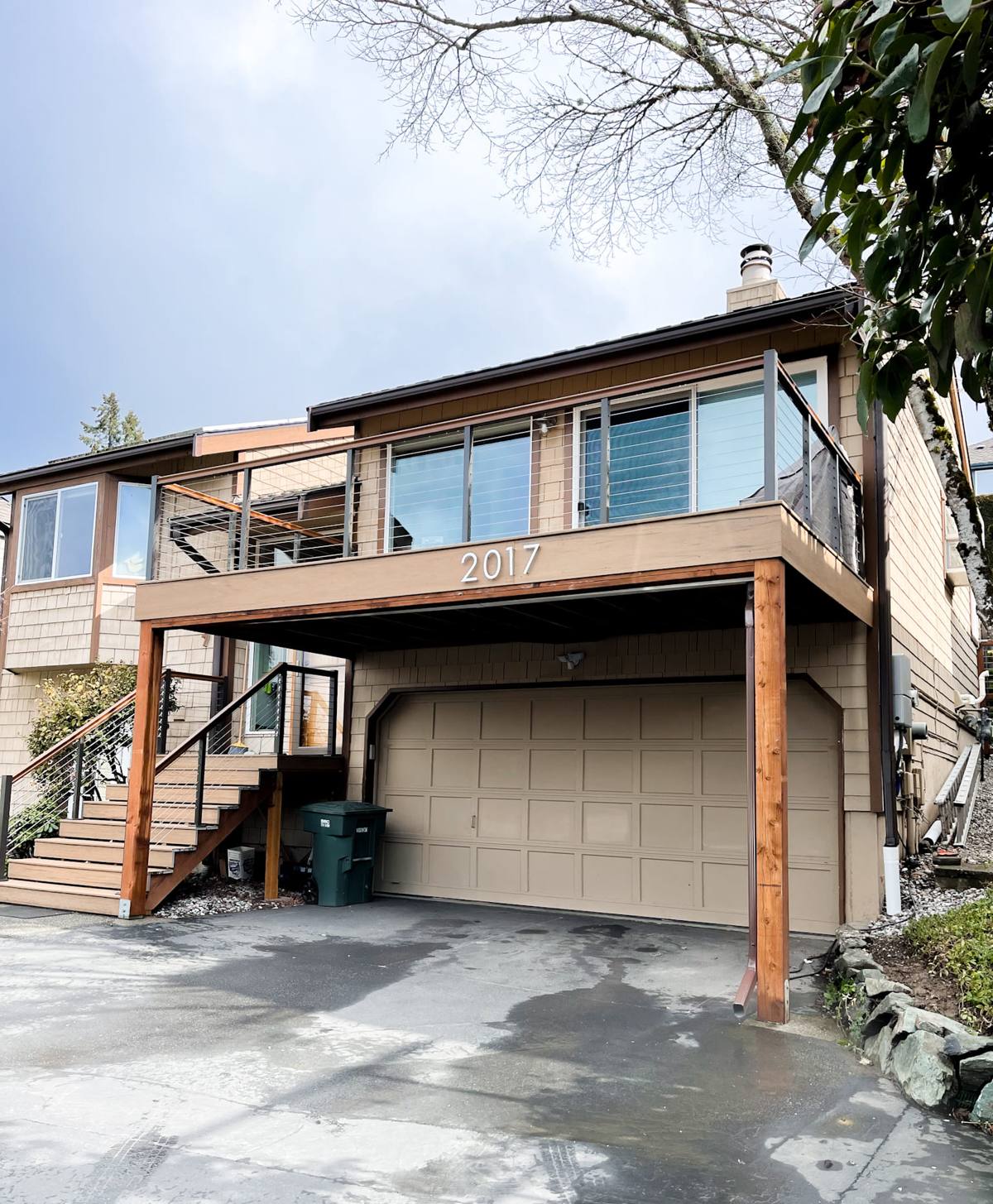
What Salt Air, Rain, and Moss Actually Do to a Deck
Each of these factors attacks a deck differently, and a correctly built deck addresses all three at once rather than treating one and ignoring the others.
Salt Air
Airborne salt accelerates corrosion on any exposed metal — nails, screws, joist hangers, post bases, and railing brackets. Once a fastener starts to rust, it weakens, stains the wood or composite around it, and eventually needs replacing. On a deck near Dakota Creek, standard zinc-coated hardware corrodes faster than it would ten or twenty miles inland.
Driving Rain
Wind-driven rain off the water doesn't just fall straight down — it gets pushed sideways under railings, into ledger board connections, and behind fascia. Any gap in flashing or a ledger attached without a proper moisture barrier becomes a slow leak into the house framing, which is one of the most expensive mistakes a deck can cause.
Moss and Algae
Shaded decks, north-facing decks, and anything under tree cover stay damp for extended stretches given this area's cloud cover and rainfall pattern. That moisture supports moss and algae growth on any surface that doesn't drain and dry quickly, which makes boards slick underfoot and, over time, holds moisture against the decking surface long enough to accelerate rot or surface breakdown.
Choosing Decking Material for This Climate
There's no single "right" decking material for every homeowner — it depends on budget, maintenance tolerance, and how much shade and moisture the specific deck location deals with. Here's how the common options actually perform in a marine climate like Blaine's.
| Material | Upfront Cost | Maintenance | Performance Near Salt Air & Moisture |
|---|---|---|---|
| Pressure-treated lumber | Lowest | Regular cleaning and periodic sealing/staining | Good if maintained; end grain and fastener points need attention |
| Cedar | Moderate | Sealing or oiling needed to hold color and resist moisture | Naturally rot-resistant but still needs upkeep in constant damp |
| Composite (capped) | Higher | Occasional washing; no sealing or staining | Strong resistance to moisture and moss buildup; won't splinter or gray |
| PVC decking | Highest | Occasional washing | Fully moisture-resistant; performs well in shaded, damp spots |
Composite decking typically costs more per square foot than pressure-treated lumber, though the gap has narrowed over the years, and many homeowners find the lower maintenance offsets that difference over the life of the deck. Wood remains a solid choice when it's properly maintained — the trade-off is that "properly maintained" means real, ongoing work, especially on a deck exposed to this much moisture. We'll walk through the honest trade-offs for your specific site rather than push one product for every job.
Framing and Structure: What's Underneath Matters Most
The decking surface is what you see, but the framing underneath determines whether the deck is still sound in fifteen years. A few things we treat as non-negotiable on every deck we build:
- Footings sized and set below frost depth, with proper drainage around the base so water doesn't pool against concrete
- Ledger board attachment with correct flashing and a moisture barrier between the ledger and the house — this is the single most common source of hidden water damage on deck-to-house connections
- Joist spacing appropriate to the decking material chosen — composite and PVC often require tighter spacing than lumber
- Adequate airflow underneath the deck so the frame can dry out between rain events instead of staying wet
- Post bases that keep wood posts off the ground and out of standing water
A deck can look finished and still be built wrong underneath. Framing mistakes don't usually show up on day one — they show up two or three winters later, once moisture has had time to work into a weak connection.
Fasteners and Hardware: The Detail Most Decks Get Wrong
This is where a lot of decks near the water fail early, and it's an easy thing to get right. Standard electro-galvanized fasteners and connectors are not built for sustained salt air exposure. We use stainless steel or heavy hot-dip galvanized hardware rated for coastal and treated-lumber contact on connections that matter — joist hangers, structural screws, post bases, and railing hardware. It costs more than generic hardware, but replacing rusted-out connectors on a deck that's otherwise sound is a needless expense we'd rather help you avoid from the start.
Hidden fastener systems on composite and PVC decking also need to be matched to the specific product — using the wrong clip system, or spacing clips incorrectly, causes boards to loosen or buckle over time. We install to the manufacturer's specification for whatever decking product you choose, which also keeps the product warranty intact.
Managing Moss, Algae, and Drainage
You can't eliminate moss risk on a shaded deck in this climate, but you can design a deck that dries out fast enough to keep it from taking hold. That starts with the gaps between boards, which need to be sized correctly for drainage and airflow — too tight and water sits on the surface, too wide and it becomes a maintenance and safety issue of its own. It also means grading and drainage around the deck's perimeter so runoff doesn't pool underneath, and where a deck sits under significant tree cover, sometimes recommending a decking material more resistant to moss than raw wood.
None of this eliminates cleaning altogether. A yearly wash-down, even on composite and PVC, keeps organic buildup from getting a foothold and keeps the surface from getting slick during the wetter months. We're happy to walk you through a simple seasonal maintenance routine specific to your deck's exposure and material.
Our Deck Building Process
- On-site assessment — we look at sun and shade exposure, drainage, proximity to the house, and how exposed the site is to wind and rain off the water
- Material and layout discussion — we go over decking options, railing choices, and layout based on your budget and how you'll use the space
- Permitting — where required, we handle the permit process with the local jurisdiction before work starts
- Framing — footings, ledger attachment, joists, and hardware built to hold up in this climate, not just to pass a quick inspection
- Decking, railing, and finish work — installed to manufacturer spec, with attention to fastener spacing, gapping, and edge details
- Final walkthrough — we go over the finished deck with you, including what maintenance it needs and when
We don't skip steps to move faster, and we won't build a ledger connection or a footing in a way we wouldn't accept on our own house.
Permits and Local Code Considerations
Most new decks and many significant deck rebuilds in Whatcom County require a building permit, particularly for elevated structures, anything attached to the house, or decks above a certain size or height. Requirements can vary depending on the deck's height, guardrail needs, and proximity to property lines. We handle permit applications and inspections as part of the build process so you're not left navigating that on your own, and so the finished deck is one you can insure and sell without complications down the road.
Why Local Experience in Dakota Creek Matters
A contractor who mostly builds decks in drier, inland climates will often default to standard hardware, standard spacing, and standard assumptions about how fast a deck dries out — because that's what works where they usually build. Those defaults don't hold up the same way this close to the water. Knowing how much salt exposure a given site actually gets, which corners of a lot stay shaded and damp longest, and how local wind and rain patterns hit a deck's ledger and railing connections comes from building decks in this specific area, season after season.
That local knowledge shows up in small decisions — hardware choice, board gapping, where drainage needs extra attention — that add up to a deck that's still solid well after the first few winters, instead of one that needs early repairs.
If you're planning a new deck or replacing one that's showing its age, we're glad to take a look and give you a straightforward, no-pressure estimate. There's no cost and no obligation — just an honest read on what your specific site needs. Use the form below to get started.