 Blaine
 Building a Deck That Actually Holds Up in Everson
Everson sits inland along the Nooksack River in Whatcom County, a few miles from the damp, moss-heavy stretch of Northwest Washington that gives every outdoor structure here a harder job than it would have almost anywhere else in the country. A deck built here isn't just a place to put a grill and some chairs — it's a structure that has to shed water for months at a time, resist moss and algae that thrive in shade and humidity, and stay sound through freeze-thaw cycles without the benefit of long dry stretches to fully dry out in between. Homes closer to the water in Blaine deal with salt-laden air on top of that; Everson is spared the salt, but it gets the same driving rain and the same long, gray moss season that eats at wood, hardware, and finishes if a deck isn't built with that reality in mind.
A lot of decks fail early not because the materials were bad, but because the details that matter most in a wet climate got skipped — a ledger board without proper flashing, joists spaced too far apart for the decking used, fasteners that weren't rated for ground contact or coastal-adjacent moisture. This page covers what actually goes into a deck built for Everson conditions, what our process looks like, and why local experience matters more here than it does in a drier part of the country.
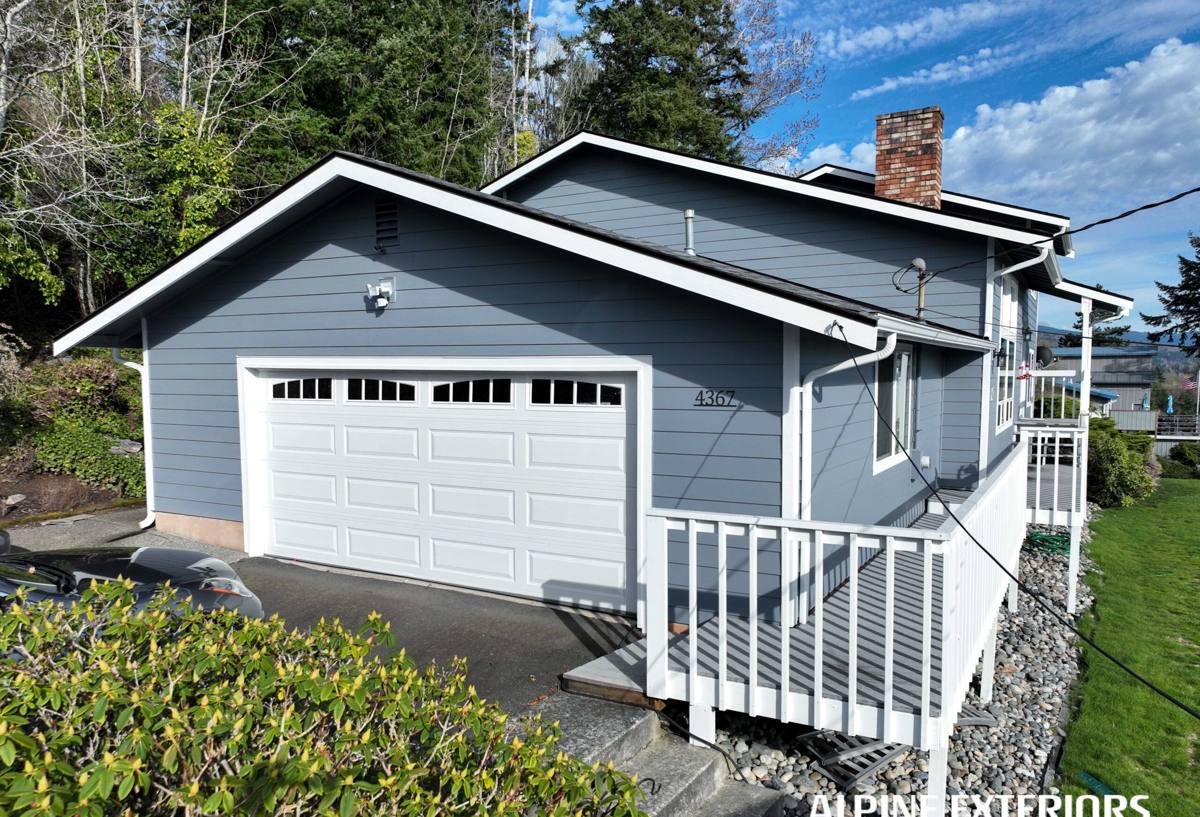
What Rain and Moss Season Do to a Deck Built Without This Climate in Mind
Whatcom County doesn't get brief, hard downpours followed by weeks of sun the way some regions do. It gets steady, extended rain and long stretches of overcast, humid weather — conditions that keep wood damp for days at a time and give moss, algae, and mildew everything they need to take hold. A deck that isn't detailed for this pattern shows it fast:
- Standing water on deck boards that are too tightly spaced or laid flat with no drainage gap
- Moss and green algae film building up on north-facing or shaded sections within a season or two
- Soft, spongy spots where the ledger board meets the house, usually from missing or failed flashing
- Rusted or corroded fasteners bleeding rust streaks into the decking
- Warped, cupped, or split boards where lower-grade lumber wasn't properly dried or sealed before installation
- Rot at post bases and stair stringers where wood sits in contact with wet soil or mulch
None of these are inevitable. They're the result of a deck being built to a generic spec instead of to the conditions it actually has to survive in.
Choosing the Right Decking Material for Everson
There's no single "best" decking material — the right choice depends on budget, how much upkeep a homeowner is willing to do, and how exposed the deck is to sun, shade, and moisture. What matters is picking honestly, with the climate factored in, rather than defaulting to whatever's cheapest per board foot.
Pressure-Treated Lumber
The most common and budget-friendly option. Treated lumber resists rot and insects reasonably well, but it still needs to dry out between rain events, and it will grow moss and mildew on shaded sections if it's never cleaned or sealed. It's a solid choice for a deck that's going to get regular maintenance — sealing every couple of years, periodic cleaning — but it's the material that punishes neglect the fastest in this climate.
Cedar and Other Natural Woods
Cedar has natural oils that give it some rot and insect resistance, and it holds up well aesthetically, but it's not maintenance-free. In a climate with this much sustained moisture, cedar still needs sealing and cleaning on a regular schedule, and it costs more upfront than pressure-treated lumber. It's a good middle-ground choice for homeowners who want a natural wood look and are willing to keep up with it.
Composite Decking
Composite boards cost more upfront but don't rot, splinter, or need staining, and modern composites are formulated to resist mold and algae far better than wood. In a climate with a long moss season, that's a real advantage — composite still needs occasional washing to keep it from getting slick with algae film, but it won't soak up moisture and rot the way wood can. For decks that get heavy shade or sit close to the ground where airflow is limited, composite is often the more honest long-term choice, even with the higher initial cost.
| Material | Upfront Cost | Moisture & Rot Resistance | Moss/Algae Maintenance |
|---|---|---|---|
| Pressure-Treated Wood | Lowest | Good, if sealed regularly | Needs regular cleaning and sealing |
| Cedar | Mid-range | Good natural resistance, still needs care | Needs cleaning and periodic sealing |
| Composite | Highest | Excellent — won't rot | Occasional washing, no sealing needed |
Structural Details That Matter More Here Than in a Drier Climate
Ledger Board Flashing
Where a deck attaches to the house, the ledger board is the single most common source of hidden rot. In a climate with this much sustained rain, proper flashing — installed correctly, in the right order relative to the house's water-resistive barrier — is what keeps water from tracking behind the ledger and rotting the rim joist or sill plate out of sight. This is one detail that's genuinely hard to inspect once the deck is finished, which is exactly why it has to be done right the first time.
Footings and Post Bases
Footings need to bear on solid, undisturbed soil below the frost line and clear of organic material — your local building department will specify the required depth for Whatcom County. Post bases should hold posts up off the deck surface and out of standing water, since end-grain wood sitting in a puddle is one of the fastest ways to start rot at the base of a structure.
Board Spacing and Airflow
Deck boards need consistent gapping to let water drain through rather than pool on the surface, and the framing underneath needs enough clearance and airflow to let the structure actually dry out between rain events. A deck built low to the ground with no ventilation underneath will stay damp far longer than one with proper clearance, which speeds up rot and moss growth in the framing where you can't see it.
Fasteners and Hardware
Hardware matters as much as the lumber it's holding together. Fasteners, joist hangers, and structural connectors should be rated for the exposure they'll actually see — this part of Whatcom County doesn't demand the same coastal-grade hardware Blaine's waterfront properties sometimes need, but standard interior-rated hardware still isn't the right call for a structure that's wet for months at a time.
Permits and Local Code Considerations
Most deck projects that involve a new structure attached to the house, or a deck built more than a modest height off grade, require a permit through Whatcom County. Permit requirements can also depend on the deck's size, height, and proximity to property lines. We handle the permitting conversation as part of the process — figuring out what's required for a given project, submitting what's needed, and making sure the work passes inspection — so it isn't something the homeowner has to sort out on their own.
Our Deck Building Process
Design and Planning
We start by walking the site, talking through how the deck will actually be used, and working out a layout and material plan that fits the budget and the site's sun, shade, and drainage conditions.
Permitting
Where a permit is required, we handle the submission and coordinate inspections so the project moves forward without the homeowner having to chase paperwork.
Site Prep and Footings
We lay out and dig footings to the depth and spacing the design and local code call for, making sure they land on solid soil rather than fill or disturbed ground.
Framing
Framing is built with attention to the details that matter most in this climate — proper ledger flashing where the deck meets the house, adequate joist spacing for the decking material chosen, and hardware rated for sustained wet exposure.
Decking, Railing, and Finish Work
Decking is installed with consistent drainage gaps, and railings and stairs are built to code for height and spacing. If the material is wood, we talk through sealing and finish options before the project wraps up.
Final Walkthrough
We walk the finished deck with the homeowner, cover any maintenance needs specific to the material chosen, and make sure everything's been inspected and signed off where a permit was involved.
Maintaining a Deck Through Everson's Moss Season
Even a well-built deck needs some seasonal attention in this climate. A short list of what actually keeps a deck sound year after year:
- Sweep debris off the deck surface regularly, especially in fall when leaves and needles trap moisture against the boards
- Wash down shaded or north-facing sections at least once a year to keep moss and algae from getting established
- Check and reseal wood decking on a regular schedule — how often depends on the sealer and sun exposure
- Keep gutters and downspouts clear so runoff isn't dumping extra water onto or near the deck
- Inspect ledger board flashing and post bases annually for any sign of soft or discolored wood
- Clear soil, mulch, or plant growth away from direct contact with posts and framing
Why Hire a Crew That Already Works in Everson
A deck design that works fine in a dry climate can fail here within a few years if it's built to the same spec. Knowing how much rain this area actually gets, how long the moss season runs, and which details fail first in local conditions comes from building decks here, not from a generic plan. We build decks for Everson and the surrounding Whatcom County area with those conditions factored in from the design stage on, not added as an afterthought once something's already gone wrong.
If you're planning a new deck or need to talk through repair versus replacement on an existing one, we're happy to take a look and put together a free, no-pressure estimate — just fill out the form below.