 Blaine
 Why Decks in Everson Wear Out Faster Than Homeowners Expect
Everson sits inland from the coast, but it still gets the full weather package that defines this part of Whatcom County: long wet winters, a short dry summer, and a marine-influenced climate that carries salt-tinged, moisture-heavy air off the Strait of Georgia and Puget Sound. That combination is hard on exterior wood structures. A deck here isn't just dealing with rain — it's dealing with rain that lingers, humidity that doesn't fully clear between storms, and shade from surrounding trees and structures that keeps boards damp for days at a stretch.
The result is a predictable pattern we see on older decks throughout the area: moss and algae taking hold on north-facing sections first, ledger boards and joists staying wet long after the surface looks dry, and fasteners corroding from the inside out where nobody's looking. Decks that were built to a builder-grade standard 15 to 25 years ago are now reaching the point where patching no longer makes sense. Replacement isn't about cosmetics at that stage — it's about the structure underneath no longer being trustworthy.
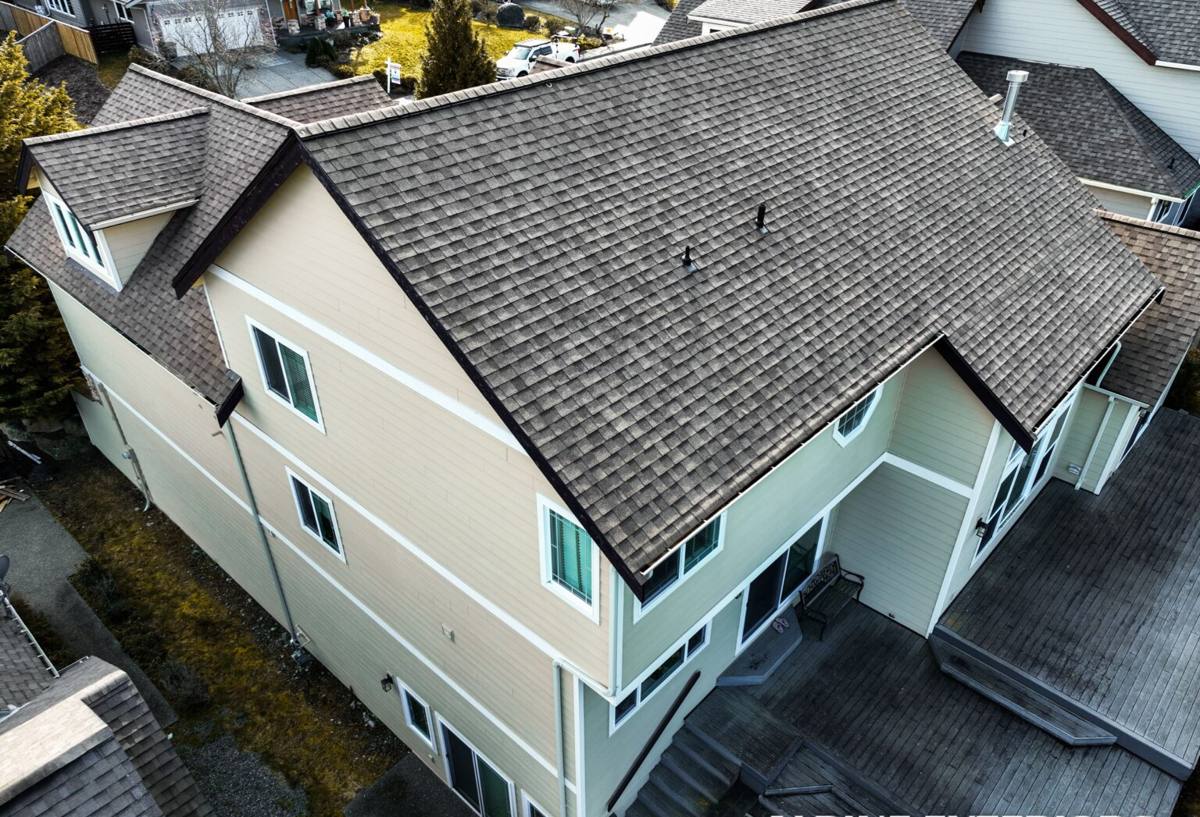
Signs a Deck Needs Replacement, Not Just Repair
Not every tired-looking deck needs to come out. But there's a difference between a deck that needs cleaning and fresh boards, and one that needs to be rebuilt from the ground up. Here's how we tell the difference during an on-site look:
- Soft or spongy decking — if a screwdriver sinks into the board with light pressure, the wood fibers are breaking down from moisture, not just weathering on the surface.
- Ledger board separation or staining — dark streaking or gapping where the deck attaches to the house often means water has been getting behind the flashing for years.
- Wobble at the railings or posts — this points to post rot at grade level or failed connections, not a cosmetic issue.
- Persistent moss that returns within weeks of cleaning — a sign the deck's drainage and airflow were never right to begin with.
- Undersized or corroded fasteners — older decks in this region were often built with fasteners not rated for the moisture exposure they actually get.
If most of the deck shows one or two of these signs, repair can still make sense. If several show up together — especially structural ones like ledger separation or post rot — replacement is almost always the more honest recommendation, both for safety and for what you'll actually spend over time patching a failing structure.
Why "Just the Boards" Repairs Often Fall Short
A common request we get is to swap out visibly bad decking boards while leaving the framing alone. Sometimes that's the right call. But if the framing was built without adequate joist spacing, without proper flashing at the ledger, or with lumber that was already marginal, new boards on top of a compromised frame just buy a few more years before the same problems resurface — now with fresh material sitting on old rot.
What a Correct Deck Replacement Actually Involves
A deck replacement done right is a structural project, not a surface one. The parts that matter most are the parts you won't see once it's finished:
Ledger and Flashing
Where the deck attaches to the house is the single most common failure point in this climate. Correct installation means proper flashing that directs water away from the house sheathing, not just a ledger board bolted flush against siding. This is the detail that determines whether the deck stays dry at its most vulnerable connection for the next 20 years or starts failing again in five.
Footings and Posts
Footings need to be sized and set to current code depth, with posts held up off the concrete on proper post bases rather than buried or sitting in standing water. In wet clay-heavy soils, which are common in this part of Whatcom County, footing drainage matters as much as footing size.
Framing and Joist Spacing
Joist spacing has to match the decking material being used — composite boards generally need tighter spacing than solid wood to avoid flexing over time. This is a step that's easy to get wrong if the framing is built before the final decking choice is locked in.
Fasteners and Hardware
Everything below the decking surface — joist hangers, structural screws, post bases — should be corrosion-resistant hardware rated for ground contact and coastal-influenced moisture exposure. Cutting corners here is invisible until it isn't.
Choosing a Decking Material for This Climate
There's no single "best" decking material — there's a best fit for how you use the deck, your maintenance appetite, and your budget. Here's how the common options actually compare for a property in this area:
| Material | Moisture Behavior | Maintenance | Typical Lifespan |
|---|---|---|---|
| Pressure-treated wood | Resists rot when sealed regularly; end grain is the weak point | Annual cleaning and re-sealing recommended | 15-20 years with upkeep |
| Cedar | Naturally moisture-resistant, but softens without upkeep | Periodic cleaning, staining or sealing every 2-3 years | 15-25 years with upkeep |
| Composite decking | Doesn't absorb moisture or rot; resists moss staining better on the surface | Occasional washing, no sealing or staining | 25-30+ years, manufacturer-dependent |
In a climate with as much sustained moisture as Everson gets, composite has become the material we recommend most often for homeowners who don't want a recurring maintenance chore. That said, wood and cedar are still solid choices for homeowners who prefer the natural look and are willing to keep up with sealing on a schedule — the trade-off is honest maintenance time, not a defect in the material.
Our Deck Replacement Process
- On-site assessment — we inspect the existing deck's framing, ledger connection, footings, and posts to determine what's salvageable and what isn't.
- Written scope and estimate — a clear breakdown of what's being removed, what's being rebuilt, and what materials are proposed, with no vague line items.
- Demolition and disposal — full removal of the old structure, including hauling, so you're not left with debris to manage.
- Framing rebuild — new ledger flashing, footings, posts, and joists built to current code and sized for your chosen decking material.
- Decking installation — boards installed with proper spacing and fastening method for the material chosen.
- Railings and final details — railing systems, stair connections, and any trim work completed and inspected for solid attachment.
- Final walkthrough — we go over the finished deck with you before calling the job complete.
Permits and Code Considerations
Most deck replacements that involve structural changes — new footings, altered ledger attachment, or railing height changes — require a permit through the applicable Whatcom County or local building department, depending on where the property sits. Guardrail height, baluster spacing, and stair rise/run all have code minimums that older decks frequently don't meet, since standards have tightened over the decades. Part of doing a replacement correctly is bringing those elements up to current code, not just replicating what was there before.
What Affects the Cost of a Deck Replacement
| Factor | Why It Matters |
|---|---|
| Deck size and shape | Square footage and the number of angles, levels, or stairs directly drive material and labor time |
| Decking material | Composite typically costs more upfront than wood but less over the deck's lifespan in maintenance |
| Framing condition | Rotted footings or posts that need full replacement add labor beyond a straightforward re-deck |
| Height and access | Elevated decks or decks with limited site access require more scaffolding, bracing, and time |
| Railing and stair complexity | Custom railing systems and multi-level stairs add both material and installation time |
Rather than quote a broad range that doesn't mean much without seeing your deck, we walk the site and give you a written estimate based on what's actually there — the condition of the framing is usually the biggest swing factor, more than the decking material choice itself.
Keeping a New Deck Ahead of Moss and Moisture
Even a well-built deck needs a little seasonal attention in this climate. A short list of habits goes a long way toward protecting the investment:
- Sweep off leaves and debris regularly, especially in fall — trapped organic material holds moisture against the boards and feeds moss growth.
- Rinse or lightly scrub moss-prone shaded areas before it gets established, rather than after it's taken hold.
- Keep gutters and downspouts near the deck clear so runoff isn't draining directly onto or under the structure.
- For wood or cedar decking, stay on a sealing schedule rather than waiting until boards look visibly dry or gray.
- Check railing posts and stair connections once a year for movement, especially after a hard winter.
- Trim back overhanging vegetation to let more light and airflow reach shaded sections of the deck.
Why It Matters to Hire a Crew That Already Works in Everson
A deck built to a generic spec sheet doesn't always hold up the same way here as it would somewhere drier. Crews who work regularly in Everson and the surrounding Whatcom County communities know which details actually matter locally — how ledger flashing needs to handle sustained wet seasons, how footing drainage behaves in this area's soil, and which decking materials hold up against a moss season that can stretch for months rather than weeks. That local pattern recognition is the difference between a deck that looks good at handoff and one that's still solid a decade later.
If your deck is showing signs of age, or you're just not sure whether it needs repair or full replacement, we're happy to take a look and give you a straight answer. Reach out for a free, no-pressure estimate using the form below.