 Blaine
 Windows Built for Everson's Weather, Not Just the Showroom
Everson sits in the Nooksack River valley, inside a stretch of Whatcom County that sees a long wet season, heavy fall and winter rain, and enough shade and humidity in places to grow moss on anything that sits still too long. When storms roll in off the Strait of Georgia and push inland, they bring driving rain at angles that punish poorly flashed windows. None of that is dramatic on its own, but year after year it's exactly the kind of slow, steady exposure that finds every weak point in a window installation — not the window itself, usually, but the way it was set into the wall.
We install windows across Whatcom County, and Everson homes tend to fall into a few categories: older farmhouses and post-war homes with original wood windows, 1980s-2000s construction with aluminum or early vinyl units nearing the end of their service life, and newer builds where the windows are fine but a remodel or addition calls for matching new openings. Whatever the starting point, the goal on this page is the same: what a correct window installation looks like for a home in this specific climate, and why the install matters as much as the window.
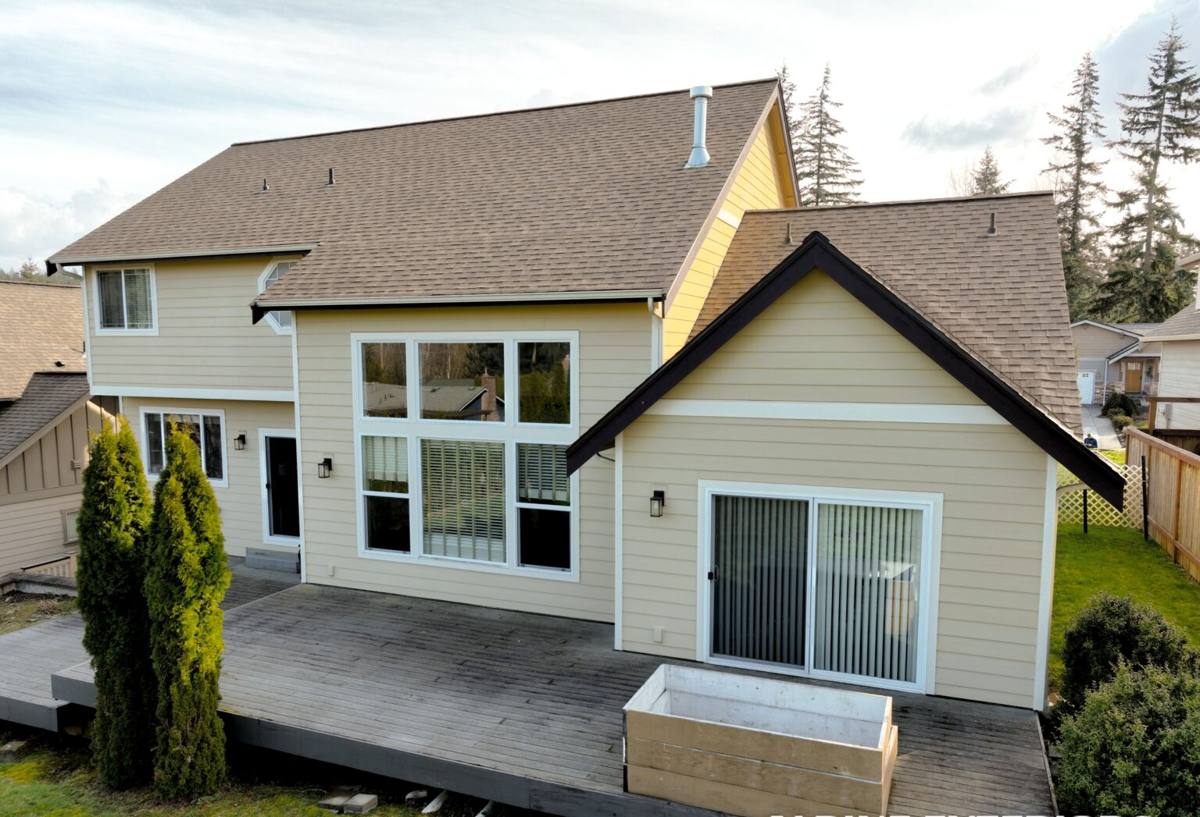
What the Climate Actually Does to a Window Opening
A window doesn't fail because it's a bad product most of the time. It fails because water gets behind it and has nowhere to go. In a marine-influenced climate like ours, that happens in a few predictable ways:
- Wind-driven rain forces water sideways and upward against the frame, past gaps that would never leak in a calmer climate.
- Prolonged damp seasons mean any trapped moisture behind the window doesn't get a chance to dry out before the next storm arrives.
- Moss and organic growth on trim, sills, and nearby siding hold moisture against the wall longer than bare wood or vinyl would on its own.
- Temperature swings between damp mornings and warmer afternoons cause condensation inside poorly sealed frames, which looks like a window problem but is often a moisture-management problem.
None of this is unique to Everson, but it's a real, ongoing factor for any home in this part of Whatcom County, and it's why we treat flashing and water management as the actual core of the job — the window is almost the easy part.
What a Correct Window Installation Involves
It starts with the opening, not the window
Before a new window goes in, we check the rough opening for rot, soft framing, and how the existing weather-resistive barrier (house wrap or building paper) is integrated. On older Everson homes, this is often where we find the real story — a window that looks fine from inside but has been sitting in a slowly rotting sill for years.
Flashing is the part that actually keeps water out
Proper installation means flashing tape or flashing pan at the sill, integrated so that any water that does get past the window sheds back outward rather than pooling. The head flashing and side flashing need to shingle correctly with the house wrap — water always has to be directed down and out, never trapped behind a layer that seals it in.
Sealing and insulating the gap
Around the window frame, we use low-expansion foam or backer rod and sealant rated for exterior use, never gap-filling foam that can bow a frame out of square. The exterior perimeter gets sealed with a quality sealant designed to flex through temperature and moisture changes rather than crack after a season or two.
Interior and exterior trim done last, not first
Trim goes back only after we've confirmed the window operates correctly and the flashing and sealing are sound. Rushing trim over an unverified install is one of the most common shortcuts we see when we're called in to fix someone else's work.
Signs an Everson Home May Need New Windows
Not every window problem means full replacement, but these are the signs worth having looked at:
- Fogging or condensation between panes on double- or triple-glazed units — this means the seal has failed and can't be repaired
- Soft or discolored wood trim around the window, especially at the bottom sill
- Visible gaps, drafts, or a noticeable temperature difference near the window in winter
- Difficulty opening, closing, or locking — frames can warp slightly as wood swells and shrinks with moisture
- Moss or dark staining on the siding directly below a window, which often points to water shedding from a failed sill rather than the roof
- Paint or finish peeling specifically around the window frame while the rest of the wall looks fine
Our Process
- On-site assessment. We look at every window being discussed, check the framing and siding condition around each opening, and talk through what's actually needed versus what can wait.
- Honest scope and estimate. You get a clear breakdown of what we're replacing, what products we're recommending and why, and a written estimate — no pressure to do more than the home needs.
- Opening prep. Old windows come out carefully, and we inspect and repair any framing or sheathing issues before anything new goes in. This is the step that gets skipped on rushed jobs, and it's the one that matters most long-term.
- Flashing and installation. New flashing integrated with the existing water-resistive barrier, window set plumb and square, and mechanically fastened per manufacturer specs.
- Sealing, insulating, and trim. Interior and exterior finish work completed once the window is confirmed operating correctly.
- Final walkthrough. We check operation, sightlines, and cleanup with you before calling the job done.
Choosing Windows for Whatcom County Conditions
There's no single "best" window material — it depends on the home, the budget, and how much upkeep you want to take on. Here's how the common options compare for a climate like ours:
| Material | Moisture Behavior | Maintenance | Typical Fit |
|---|---|---|---|
| Vinyl | Won't rot; handles damp conditions well | Low — occasional cleaning | Most Everson homes, especially replacements |
| Fiberglass | Very stable in moisture and temperature swings | Low | Homes wanting a longer-term, lower-movement frame |
| Wood | Attractive but vulnerable to rot without diligent upkeep | High — repainting, sealing, inspection | Historic or period-correct homes where appearance matters most |
| Wood-clad (wood interior, exterior cladding) | Exterior handles weather; interior still needs some care | Moderate | Homeowners wanting a wood look with less exterior maintenance |
| Aluminum | Prone to condensation in our climate without thermal breaks | Low, but performance concerns | Generally not what we recommend for this region unless thermally broken |
We generally steer Everson homeowners toward vinyl or fiberglass for most replacement projects, simply because they hold up with the least maintenance burden in a climate that stays damp for so much of the year. Solid wood windows can still be the right call on a historic home where matching the original look matters more than minimizing upkeep — that's a homeowner's call, and we'll give you a straight answer about what each option means for maintenance down the road.
What Affects the Cost
We don't quote sight-unseen prices because every opening is different, but the main factors that move cost up or down are:
- Number of windows and whether it's a whole-house project or a handful of units
- Condition of the existing framing — rot repair adds labor and material beyond the window itself
- Window size, shape, and whether any are custom or non-standard dimensions
- Material choice (vinyl generally costs less than fiberglass or wood-clad)
- Whether it's a like-for-like replacement or a structural change to the opening
- Interior and exterior trim work needed to finish the job cleanly
Broadly, straightforward vinyl replacements in an existing opening sit at the lower end of the range, while custom sizes, wood-clad materials, or openings needing framing repair push costs higher. We'll walk through the real numbers for your home during the estimate rather than guessing over the phone.
Why Hire a Crew That Already Works in Everson
A window installer who works across Whatcom County regularly has already seen how homes in this specific area age — where moss tends to build up, which older framing methods show up most often in this part of the county, and how driving rain off a fall storm actually behaves against a wall versus how it looks in a manufacturer's installation diagram. That familiarity shows up in small decisions: how much flashing overlap to use, where to double-check for hidden rot before closing up the wall, and which products actually hold up here instead of just performing well in a milder climate's sales literature.
It also means straightforward logistics — a crew based nearby can show up for the walkthrough, the install, and any follow-up without the scheduling friction of an out-of-area contractor. For a job where getting the flashing detail right matters more than almost anything else, that local familiarity isn't a nice-to-have, it's part of the actual quality of the work.
Keeping New Windows Performing Long-Term
A correct installation does most of the work, but a little seasonal attention keeps windows performing for decades:
- Clear debris and moss from sills and nearby trim before fall rains set in
- Check exterior caulking annually and re-seal any cracked or shrunk sections
- Wipe down tracks and hardware so moving parts don't stick or corrode
- Watch for condensation between panes — it signals a seal failure, not a cleaning issue
- Keep gutters and downspouts clear so roof runoff isn't dumping extra water near window heads
If you're dealing with drafty, foggy, or failing windows on an Everson home, or planning ahead for a remodel, we're happy to take a look and walk you through honest options — no pressure, no upsell. Use the form below to request a free estimate.