 Blaine
 Fiber Cement Siding Built for What Ferndale Weather Does to a Wall
Ferndale sits in the stretch of Whatcom County where three things quietly wear down exterior siding year after year: salt-tinged air moving in off the water, wind-driven rain that rarely falls straight down, and a moss season that can run nine or ten months on shaded, north-facing walls. None of those three things destroy siding overnight. They work slowly, finding the weak point in a finish or a joint and turning a small maintenance item into a real repair years before it should have happened. Fiber cement siding, installed correctly, is one of the few exterior products built to hold up against that combination instead of slowly losing the fight to it.
Our crew is based in Blaine, a short drive up the road from Ferndale, and fiber cement installation for homes in this part of the county is a service we perform often enough to know which details actually matter here and which ones are just manufacturer boilerplate that doesn't change the outcome on a real house.
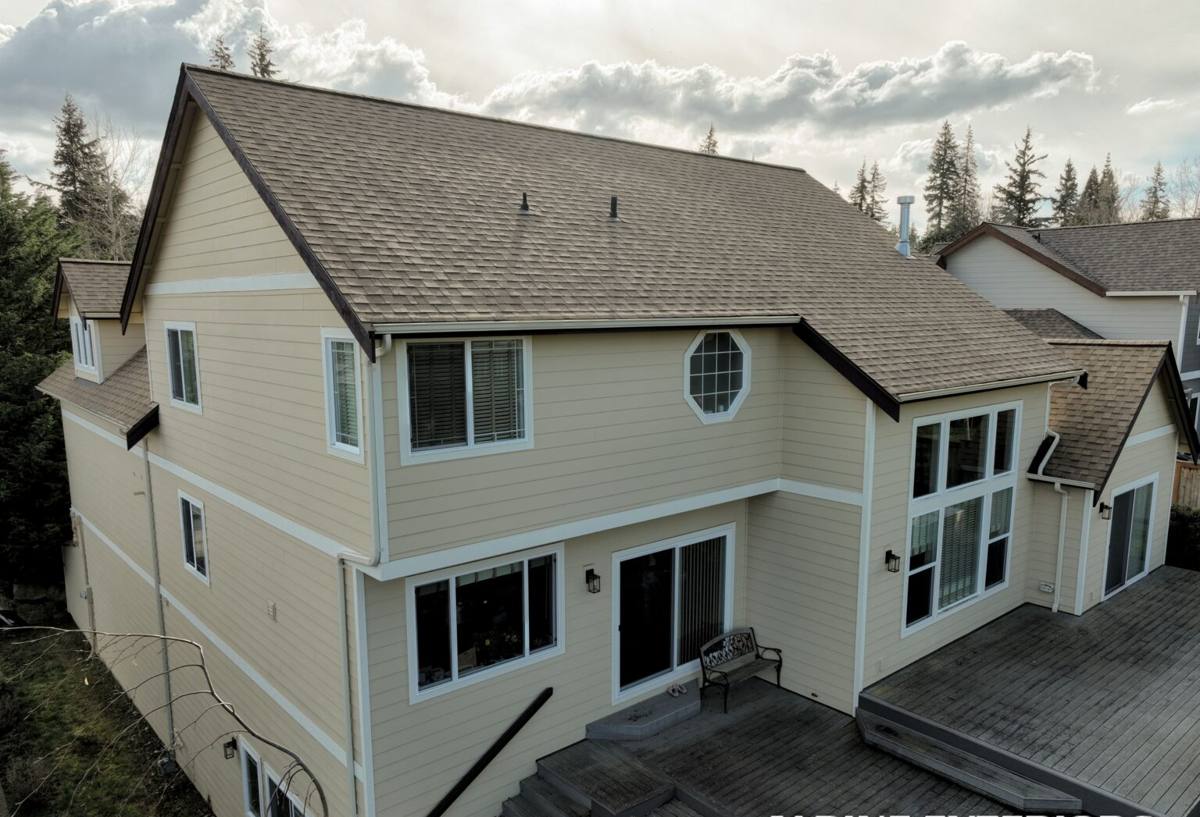
What "Correct Installation" Actually Means on a Ferndale Home
Fiber cement's reputation for durability assumes the installation followed the manufacturer's actual specifications, not whatever version is faster to get through in a day. On a home taking on wind-driven rain and long stretches of damp shade, the details below are the difference between siding that holds its warranty and looks right for decades, and siding that develops problems at the exact points where corners got cut.
Clearance from Grade, Roofline, and Decking
Fiber cement needs a minimum clearance from the ground, from roof lines, and from attached decks or patios. Skip that clearance and the bottom courses sit close enough to splash-back and standing moisture that the caulked edges and cut ends take on water faster than the rest of the wall. It's an easy detail to get wrong on additions, porches, and anywhere grade has crept up over the years.
House Wrap and Flashing Integration
Behind the siding, the house wrap and flashing are doing the actual work of keeping water out of the wall assembly; the siding is the first line of defense, not the only one. Window and door flashing, kick-out flashing at roof-to-wall intersections, and correct lapping of the weather-resistive barrier all have to be sequenced properly before a single piece of Hardie goes up. In a climate where rain gets pushed sideways into every gap, a flashing detail done out of order is a leak waiting for the right storm.
Fastening Pattern and Joint Treatment
James Hardie specifies fastener type, spacing, and placement for a reason, and getting it wrong can void the warranty even when the siding itself was never the problem. Butt joints need to be caulked or backed correctly, and factory-cut ends need sealing before they go up, not after someone notices a gap later. These aren't dramatic details, but they're what separates a fiber cement install that performs for thirty years from one that starts showing trouble at year eight.
Why We Only Install James Hardie Fiber Cement
We don't install vinyl, LP SmartSide, Cemplank, Allura, primed spruce, or cedar. That's not a knock on every homeowner who has one of those products on their house today; it's a professional standard we settled on after seeing which materials actually hold up under sustained coastal moisture and which ones lean too heavily on perfect, uninterrupted maintenance to perform. James Hardie's cement-based core doesn't swell, cup, or feed fungus growth the way wood-based or wood-adjacent products can, and the ColorPlus factory finish resists the fading and edge breakdown that salt air accelerates in field-applied paint. Hardie's HZ5 product line is engineered specifically for regions with heavy moisture exposure, which is a real fit for this part of Whatcom County rather than a marketing label. The system includes horizontal lap siding, panels for board-and-batten or modern facades, and matching trim and soffit pieces, all engineered to move and age together rather than mixing materials that expand, weather, and fade at different rates. When it's installed to spec, it comes with a long, often-transferable warranty, which is one more reason we put our name behind this one system instead of offering a menu of products with very different long-term track records.
Signs a Ferndale Home's Siding Is Overdue for Replacement
- Soft or spongy spots when you press on the siding, especially near the bottom courses or under windows.
- Paint that's failing faster than it used to, or bubbling and peeling in patches rather than evenly across a wall.
- Persistent moss, algae, or dark staining on north-facing or heavily shaded walls that comes back within a season of cleaning.
- Visible gaps, warping, or cupping at seams and butt joints.
- Higher heating bills without another clear cause, which can point to moisture-compromised insulation behind failing siding.
- Original siding on a home built more than 20-25 years ago, especially if it's never been inspected behind the surface.
Any one of these on its own might be minor. Two or three together, especially on a home that's taken a couple of decades of Whatcom County winters, usually means it's worth having someone look behind the siding rather than just patching what's visible from the yard.
Our Process for a Ferndale Fiber Cement Job
- Walk the property. We look at the actual condition of the existing siding, the home's exposure to wind and rain, and any trouble spots before quoting anything.
- Confirm permit requirements. We check whether the scope of work needs a building permit in Blaine or Whatcom County and handle the filing when it does.
- Decide tear-off vs. overlay. Most jobs in this climate call for a full tear-off, since it's the only reliable way to catch hidden moisture damage before it's sealed behind new siding.
- Inspect and repair the substrate. Any rotted sheathing or framing gets addressed before new house wrap goes on; new siding over a compromised substrate just hides the problem for a few more years.
- Install house wrap and flashing. Sequenced correctly at every window, door, and roof intersection before any siding starts.
- Install Hardie siding to spec. Correct clearances, fastening pattern, and joint treatment throughout the job, not just on the sections that are easy to reach.
- Final walk-through. We go over the finished work with you before calling the job done, not after.
Tear-Off vs. Overlay: What We Actually Look For
Overlaying new siding over old is sometimes technically possible, but on a Ferndale home it usually isn't the right call. Whatcom County's moisture load means older siding, especially anything past 15-20 years old, has a real chance of hiding trapped water damage behind it that an overlay would simply seal in rather than fix. A tear-off costs more in labor up front, but it's the only way to actually see the sheathing, framing, and house wrap condition before deciding what the wall needs. We'll tell you honestly if a given home is a rare case where overlay makes sense, but we won't recommend it just because it's the faster, cheaper bid.
Cost Factors for a Ferndale Fiber Cement Project
| Factor | What It Affects | Why It Matters in Ferndale |
|---|---|---|
| Tear-off vs. overlay | Labor hours and substrate access | Tear-off is usually the right call given how often hidden moisture damage shows up under older siding here |
| Substrate repair | Cost added before new siding goes on | Years of wind-driven rain finding small gaps can rot sheathing well before it's visible from outside |
| Home complexity | Labor time and trim detail | More corners, dormers, and roof intersections mean more flashing joints exposed to sideways rain |
| Siding profile and finish | Material cost per square | Factory ColorPlus finishes cost more upfront but outlast field-applied paint against salt air and UV |
| Site access | Equipment staging and crew time | Larger lots and detached outbuildings common around Ferndale can add setup time to a job |
We don't quote a job off a price sheet over the phone. Every one of those factors changes with the actual house, which is why a real number comes only after walking the property.
Why a Crew That Already Works This Area Matters
Fiber cement is not a forgiving material to learn on. It's heavier than most siding products, it has to be cut and fastened a specific way, and the manufacturer's clearance and flashing requirements aren't optional if you want the warranty to hold up. A crew that installs Hardie regularly in this exact climate, not occasionally as one option among several, has already worked through the judgment calls that come up on real houses: where extra flashing makes sense even when the spec sheet doesn't explicitly call for it, how much clearance to leave on a lot where grade has crept up over the years, and which walls in this area tend to hold moss longest and deserve extra attention at the joints. Being based in Blaine means we're a short drive from Ferndale for the walk-through, the install, and anything that comes up afterward, rather than a crew that treats the area as a stop on a wider regional route.
Get a Free, No-Pressure Estimate
If your Ferndale home needs new siding, or you're just not sure whether what you have is holding up the way it should, we're glad to walk the property and give you a straight answer about what we'd recommend and why. Use the form below to schedule a free estimate, no pressure and no upsell script.