 Blaine
 Point Roberts Is a Different Climate Than the Rest of Blaine
Point Roberts sits on its own peninsula, surrounded by water on three sides, which means homes there take a harder hit from the weather than a house just a few miles inland in Blaine proper. Wind has open water to build speed across before it reaches a wall, salt spray rides in on that wind, and there's little in the way of tree cover or terrain to slow any of it down. Add in the long gray stretch of fall and winter that Whatcom County is known for, and you've got a combination — salt air, driving rain, and months of damp shade — that ages siding faster than almost anywhere else in the region.
That's not a reason to panic about your siding. It's a reason to be specific about what you install and how it's installed. A product and a crew that would be perfectly fine on a sheltered inland lot can fall short here, and the failures usually don't show up for a few years — by which point the damage is already behind the wall.
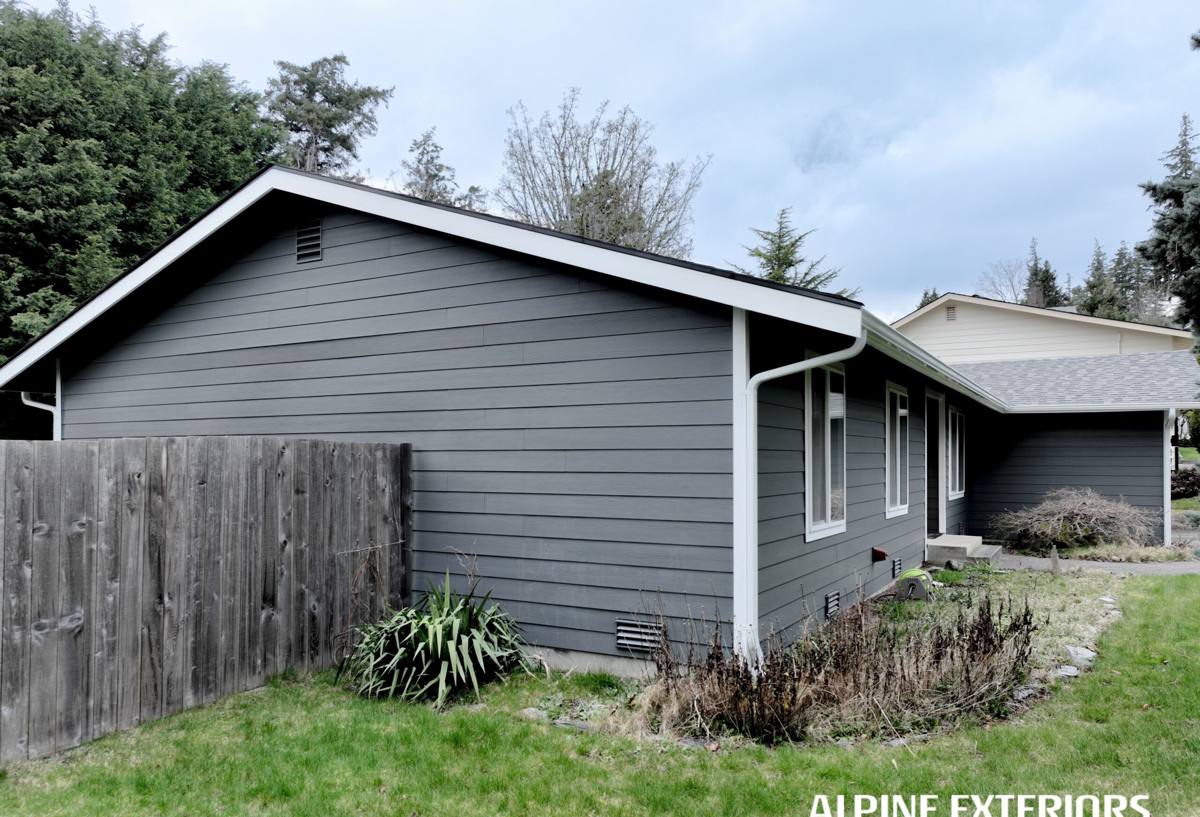
What Salt Air, Driving Rain, and Moss Actually Do to Siding
Each of these three factors attacks siding in a different way, and understanding the mechanism helps explain why the fix isn't just "pick a tougher-looking product."
- Salt air accelerates corrosion of anything metal — fasteners, flashing, trim screws — and it degrades some paint and coating systems faster than a standard inland weathering rating accounts for.
- Driving rain doesn't fall straight down here; wind pushes it sideways and up under laps, trim, and butt joints. Siding that relies on caulk alone, rather than proper flashing and drainage, eventually lets water behind it.
- Moss and algae need moisture and shade to establish, and Point Roberts has both for a good part of the year. Once organic growth takes hold on a porous or absorbent surface, it holds moisture against the material and speeds up rot, delamination, or coating breakdown underneath it.
Individually, any one of these is manageable. Together, and applied to a home for years without a break, they expose the difference between a siding job done to spec and one that was done "good enough."
Why We Install Only James Hardie Fiber Cement
We don't install vinyl, LP SmartSide, primed spruce, cedar, or other fiber cement brands. That's a standard we hold across every job, not just Point Roberts, but it matters more here than almost anywhere else we work.
Vinyl expands and contracts with temperature swings and can distort or become brittle over time; it's also a poor match for a job where wind-driven rain is a constant, since its overlapping panels aren't sealed the way fiber cement lap siding can be detailed. Cedar and primed wood products look good on day one, but they're organic material sitting in a climate that's practically built for moss and rot if maintenance ever slips. Engineered wood siding has known moisture-sensitivity issues at cut edges and panel joints that we're not comfortable putting on a home exposed to this much salt air and driving rain.
James Hardie fiber cement is cement, sand, and cellulose fiber — it doesn't rot, it's not combustible, and it holds paint and factory finish far longer than wood-based products in wet, salty conditions. Hardie also makes an HZ5 product line specifically engineered for climates like ours, with moisture and freeze-thaw performance tuned for the Pacific Northwest. That's not marketing — it's the specific reason it's the only product we put our name behind.
| Material | Salt air / corrosion behavior | Wind-driven rain performance | Moss / algae resistance |
|---|---|---|---|
| James Hardie fiber cement | Non-metallic substrate; factory finish holds up well; stainless fasteners recommended near water | Rigid panels, detailed flashing and laps shed water when installed to spec | Dense, factory-finished surface resists growth better than porous wood |
| Vinyl siding | Fasteners and trim can corrode; panel itself doesn't rust but can chalk and fade | Overlapping panels not fully sealed; wind-driven rain can get behind it | Can host mildew/algae in shaded, damp areas |
| Cedar / primed wood | Fasteners at risk; wood itself doesn't corrode but absorbs salt-laden moisture | Absorbs moisture at end grain and joints if not maintained | Organic material — highly susceptible without regular upkeep |
| Engineered wood (e.g. LP SmartSide) | Moderate; main concern is moisture at cut edges, not corrosion | Known sensitivity at panel joints and untreated cuts | Better than raw wood but still organic-based, needs sealed edges |
What a Correct Fiber Cement Installation Involves Here
Water Management First
The siding itself is the last line of defense, not the only one. A correct install starts with a water-resistive barrier behind the panels, properly lapped and taped, with flashing at every window, door, deck ledger, and roof-to-wall intersection. On a peninsula home taking wind-driven rain from multiple directions over the years, this layer is what actually keeps water out of the wall assembly — the siding sheds the bulk of it, but the barrier catches what gets through.
Fastening and Clearances
Hardie has specific fastener spacing, penetration depth, and clearance requirements — including minimum gaps above roof lines, decks, and grade — that are easy to shortcut and hard to notice once the job is done. In a salt-air environment we also pay attention to fastener material, since corrosion-resistant fasteners matter more here than on an inland job.
Joints, Caulking, and Finish
Butt joints and trim intersections are where driving rain finds its way in if they're not detailed correctly. We follow Hardie's joint treatment and sealant guidance rather than relying on caulk to do all the work. For finish, factory-applied ColorPlus coating is baked on under controlled conditions and carries its own finish warranty — it holds color and resists the kind of moss staining and fading that field-applied paint struggles with in a shaded, wet climate.
Our Process for a Point Roberts Siding Project
- Inspection and moisture check — we look at the existing siding, sheathing, and any signs of trapped moisture or rot before recommending a scope.
- Tear-off vs. overclad decision — if the wall assembly underneath is sound and dry, overcladding may be an option; if there's hidden moisture damage, that gets addressed first, not covered up.
- Water-resistive barrier and flashing — installed or repaired to current standards before any siding goes up.
- Hardie panel installation — installed to manufacturer fastening, clearance, and joint specifications, not shortcuts.
- Trim, caulking, and final detailing — the places most likely to leak get the most attention.
- Walkthrough and cleanup — you get a clear look at what was done and why, in plain terms.
What Drives the Cost of a Job Out Here
| Factor | Why it matters in Point Roberts |
|---|---|
| Tear-off vs. overclad | Removing old siding to inspect and repair the wall assembly costs more up front but is often necessary if moisture has already gotten in |
| Home size and wall complexity | More corners, dormers, and trim detail means more flashing and joint work, which takes time to do correctly |
| Existing moisture or rot damage | Long-term exposure to driving rain and shade can mean sheathing repair before new siding goes on |
| Site access and logistics | Point Roberts' location affects material delivery scheduling and crew logistics compared to a job in central Blaine |
| Finish choice | Factory ColorPlus finish costs more up front than unfinished panel but avoids a repaint cycle for years |
Why a Crew That Already Works Point Roberts Matters
Point Roberts isn't a typical job site for most Whatcom County contractors. Getting crews, materials, and equipment there involves planning that a lot of companies simply don't bother with, which means homeowners out there sometimes get whichever contractor is willing to make the trip rather than the one best suited to the job. We already schedule and staff for Point Roberts work, so you're not paying a premium for novelty or getting a rushed job from a crew that would rather be somewhere closer.
We also know what this specific exposure does to a wall over time, because we've seen it — the fastener corrosion, the moss lines under a roof edge, the joints that failed first. That's the kind of detail knowledge that comes from working the peninsula repeatedly, not from a general siding background applied to an unfamiliar site.
Signs Your Current Siding Is Losing the Fight
- Dark green or black streaking, especially on north- or shade-facing walls
- Soft or spongy spots when you press on the siding, particularly near the bottom courses or trim
- Paint that's peeling, bubbling, or chalking faster than it should
- Visible rust streaks below fasteners or trim screws
- Gaps opening up at butt joints, corners, or window trim
- A musty smell or visible staining on interior walls that share an exterior wall with problem siding
Any one of these on its own isn't necessarily an emergency, but a few of them together are worth having a professional look at before the next wet season adds to the damage.
Let's Take a Look at Your Siding
If you're in Point Roberts and dealing with siding that's showing its age — or you're planning ahead before the next winter's rain and wind take more of a toll — we're happy to come take a look. The estimate is free, there's no pressure, and you'll get a straight answer about what your home actually needs.