 Blaine
 Roofing in Cherry Point: A Different Set of Demands
Cherry Point sits along the Whatcom County shoreline north of Blaine, close enough to the water that salt air is a daily fact of life for every roof in the area, not an occasional nuisance. Add in driving rain off the Strait of Georgia and a moss season that runs longer here than it does further inland, and you get a set of conditions that wears out an ordinary roof faster than most manufacturers' warranty literature accounts for. We install new roofs for homes throughout Cherry Point and the surrounding Blaine area, and the specs we build to are shaped directly by what that combination of salt, moisture, and shade does to a roof over time.
A new roof installation isn't just laying down shingles. It's a system of layered materials working together to shed water, resist wind, and survive years of salt exposure without the fasteners, flashing, or underlayment failing first. Get any one layer wrong and the rest of the system is only as good as its weakest point.
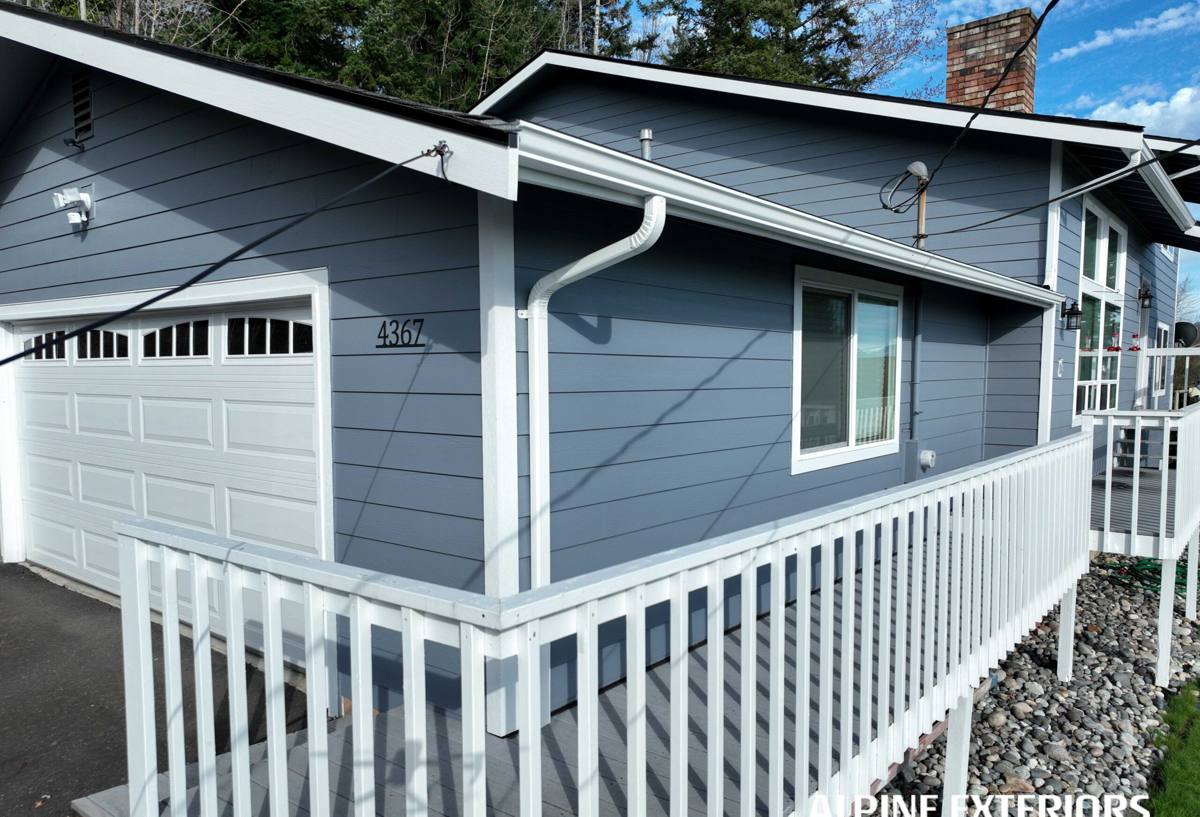
What Cherry Point's Climate Does to a Roof
Salt Air and Metal Fatigue
Airborne salt from the Strait accelerates corrosion on anything metal — nails, flashing, vent caps, gutter hardware. On a standard roof built with generic fasteners, that corrosion often shows up first at the flashing lines and fastener heads, well before the shingles themselves show any wear. Once a fastener starts to corrode, it loses holding power, and a roof deck that isn't holding tight in a windstorm is a roof that's one bad storm away from a real problem.
Driving Rain and Wind-Driven Water
Cherry Point's exposure to weather coming off the water means rain doesn't always fall straight down — it gets pushed sideways into roof edges, valleys, and any gap in the flashing. A roof built for a sheltered inland lot can handle that kind of wind-driven rain poorly, because the assumptions behind standard installation specs assume mostly vertical water flow. Valleys, ridge caps, and penetrations around vents and chimneys need extra attention here, since those are exactly the spots where sideways-driven water finds its way in.
A Long Moss and Algae Season
Cool, damp conditions for much of the year make Whatcom County generally moss-prone, and Cherry Point's tree cover and marine humidity keep that season going longer than it runs in drier parts of the county. Moss doesn't just look bad — it holds moisture against the roofing material, works its way under shingle edges, and can lift granules and shorten the service life of an otherwise sound roof. North-facing slopes and shaded valleys are usually the first places it takes hold.
What a Correct New Roof Installation Involves
A roof is a system, not a single product. Each layer has a job, and skipping or shortcutting any one of them undermines the whole assembly, especially in a climate that gives a roof no real off-season.
- Deck inspection and repair: The plywood or OSB deck underneath gets checked for rot, delamination, or soft spots before anything new goes down — covering a compromised deck just hides the problem.
- Ice and water shield at vulnerable areas: Eaves, valleys, and penetrations get a self-adhering waterproof membrane, which matters more here than in drier regions because those are the spots wind-driven rain targets first.
- Synthetic underlayment across the full deck: A high-quality synthetic underlayment sheds incidental moisture and holds up through the installation process better than older felt products, especially on a damp Whatcom County job site.
- Corrosion-resistant flashing and fasteners: Given the salt exposure at Cherry Point, we don't cut corners on fastener and flashing material — the wrong metal here corrodes years ahead of schedule.
- Proper ventilation: Balanced intake and exhaust ventilation keeps the attic dry and temperature-regulated, which reduces condensation buildup that can rot a deck from underneath, independent of anything happening on the roof surface.
- Correct nailing pattern and exposure: Manufacturer-specified nailing patterns and shingle exposure are what the wind rating actually depends on — a roof installed off-spec voids that rating even if it looks fine from the ground.
Material Choices That Hold Up on a Cherry Point Roof
We install architectural asphalt shingle systems rated for high-wind and marine exposure, along with corrosion-resistant flashing and fastener packages suited to salt air. Standing seam metal roofing is also a strong option for homes closer to the water, given its resistance to wind uplift and its long service life against salt exposure, though it comes with a higher upfront cost. The right choice depends on the home's exposure, roof pitch, and the homeowner's budget and long-term plans for the property.
| Factor | Architectural Asphalt Shingle | Standing Seam Metal |
|---|---|---|
| Upfront cost | Lower | Higher |
| Wind resistance (properly installed) | Good | Excellent |
| Salt air / corrosion resistance | Good, with proper flashing package | Excellent |
| Moss resistance | Moderate — benefits from zinc or copper strips | High — smooth surface sheds debris |
| Typical service life | 25–30 years | 40–50+ years |
| Maintenance | Periodic moss treatment, gutter clearing | Minimal, occasional fastener check |
Why Salt Exposure Changes the Cost Math
Homeowners closer to the water sometimes assume a new roof is a new roof regardless of location. In practice, the fastener grade, flashing metal, and underlayment quality that hold up at Cherry Point cost more than the minimum spec used further inland — and that's before considering roof size, pitch, layers of old roofing to remove, and access. A fair estimate accounts for those material upgrades up front rather than quoting an inland spec and letting the homeowner discover the difference in five years when the flashing starts to fail.
Signs Your Roof Needs Replacing, Not Just Repairing
Not every roof problem calls for a full replacement, but a few signs point toward it being the more honest recommendation rather than another round of patching.
- Shingles that are curling, cupping, or losing granules across large sections rather than one isolated spot
- Soft spots in the deck when walked on, which usually means moisture has already reached the wood
- Repeated leaks in different locations after multiple repair attempts
- Heavy, persistent moss or algae growth that keeps returning after cleaning
- Visible daylight through the roof boards from inside the attic
- A roof already at or past its expected service life for its material type
Our Installation Process
We start with an on-site inspection of the existing roof, the deck underneath, and the home's ventilation setup, and we look specifically at how salt exposure and shading have affected different roof planes — that varies more from one side of a Cherry Point home to the other than it does on a typical inland lot. From there we walk the homeowner through material options and give a clear, written scope and price before any work begins, so there's no ambiguity about what's included.
On install day, the old roofing comes off down to the deck, the deck gets inspected and any necessary repairs made, and then the new system goes on in order: ice and water shield at the vulnerable areas, full synthetic underlayment, corrosion-resistant flashing at every valley and penetration, the roofing material itself installed to manufacturer spec, and ridge ventilation completed last. We clean the site thoroughly, including a magnetic sweep for stray fasteners, before calling the job done.
A Quick Checklist Before You Sign With Any Roofing Contractor
- Ask what flashing and fastener material they use, and whether it's rated for coastal or marine exposure
- Confirm current Washington contractor licensing and active liability insurance
- Get a written scope of work that specifies underlayment type, ventilation plan, and warranty terms
- Ask how they handle deck repair if rot or soft spots are found once the old roof comes off
- Ask for a clear explanation of manufacturer wind-rating requirements and how their installation meets them
Why Local Experience at Cherry Point Matters
A roofing crew that already works this stretch of Whatcom County knows which roof planes take the worst of the wind-driven rain, where moss tends to establish first, and which fastener and flashing grades actually hold up against the salt air instead of failing early. That's not something a general spec sheet captures — it comes from having done the work here repeatedly and having seen, on tear-offs, exactly where a lower-grade installation lets go first. That familiarity shows up in decisions homeowners never see directly: extra flashing at a valley that catches more water than it looks like it would, or a fastener upgrade on a wall face that takes the brunt of the weather off the water.
If you're weighing a new roof for a Cherry Point property, we're glad to walk the roof with you and give an honest assessment of what it actually needs, with no pressure to upsize the scope beyond what the home requires. Reach out below for a free, no-pressure estimate.