 Blaine
 Roofing for Nooksack's Wet, Moss-Prone Climate
A new roof in Nooksack has to do more than shed water. Whatcom County sits under a wet marine air mass most of the year, and homes here deal with a combination that's harder on roofing than a lot of homeowners realize: long stretches of driving, wind-blown rain, salt-laden air moving in off the coast, and shade from mature Douglas fir and cedar that keeps roof surfaces damp for days after a storm passes. That dampness is exactly what moss and algae need to take hold, and once moss establishes itself on a roof, it does more than look bad — it lifts shingle edges, holds water against the deck, and shortens the life of the roof underneath it.
A roof built for a drier climate, or installed without attention to ventilation and moisture detailing, will show its age in Nooksack faster than it would somewhere inland and dry. That's the starting point for every roof we install here: assume the roof will be wet more often than not, and detail it accordingly.
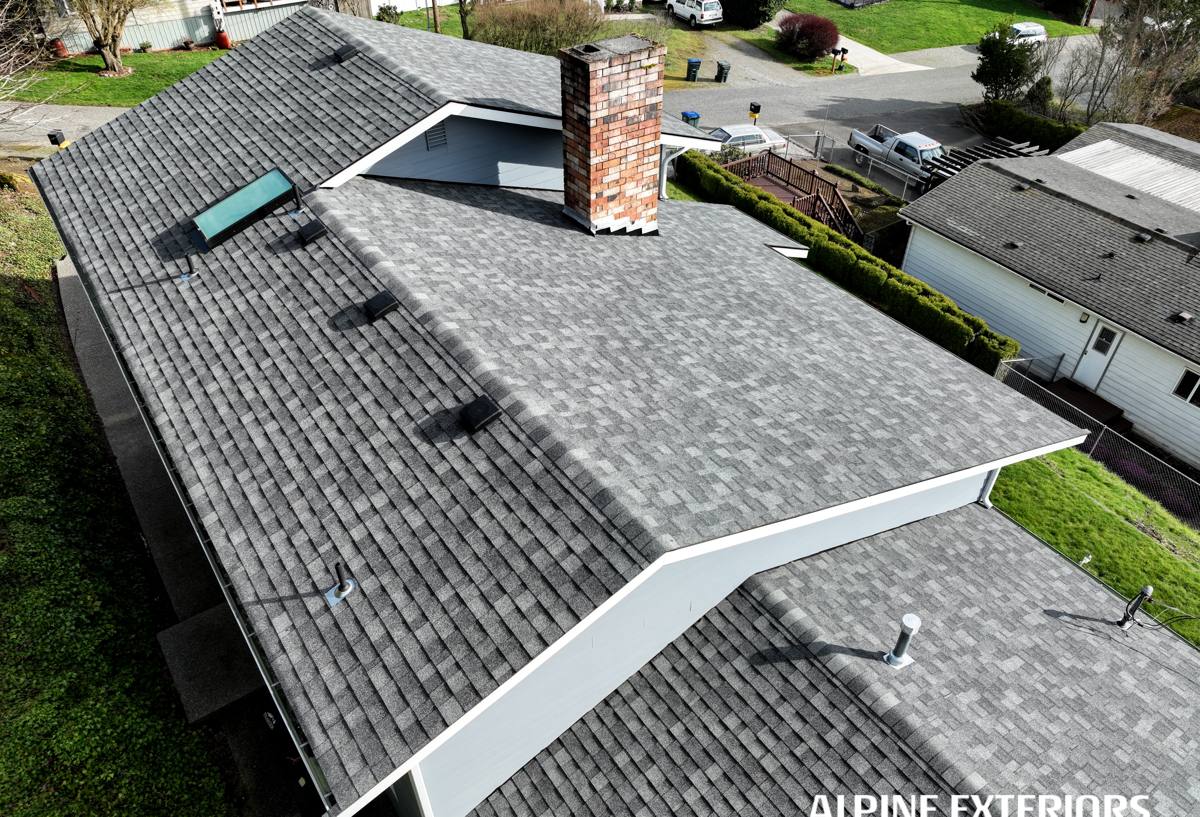
What a Correct Roof Replacement Actually Involves
"New roof" gets used loosely. A correct installation is a system of layers working together, not just new shingles laid over what was there before. Skipping steps is the single biggest reason roofs fail early in wet climates like ours.
Tear-Off and Deck Inspection
We remove the old roofing down to the deck rather than layering over it. That's the only way to actually see what's underneath — soft or delaminated plywood, rot around old flashing, or past leaks that were never addressed. Any damaged decking gets replaced before anything new goes down. Roofing over a compromised deck just hides a problem that will resurface later, usually as a leak.
Underlayment and Ice & Water Barrier
In a climate with this much sustained rain, the underlayment matters almost as much as the shingles themselves. We use synthetic underlayment across the field of the roof and self-adhering ice and water barrier at the eaves, valleys, and any low-slope transitions — the spots where wind-driven rain is most likely to work its way backward under the shingle edge.
Flashing Details
Most roof leaks in this region don't come from failed shingles in the open field — they come from flashing. Chimneys, skylights, sidewalls, and valleys are where water finds a way in if the metalwork isn't done correctly. We install new flashing rather than reusing old pieces, and we pay particular attention to step flashing at sidewalls and counter-flashing at chimneys, since those are the details that get rushed on lower-quality installs.
Ventilation
A roof that can't breathe traps moisture in the attic, which condenses, soaks insulation, and rots the deck from underneath — often before any exterior sign shows up. We balance intake at the soffits with exhaust at the ridge so the attic actually moves air. This also helps control ice damming in the rare hard freezes we do get, and it reduces the humid conditions that feed moss growth on the underside of the roofing.
Choosing the Right Roofing Material for Whatcom County Weather
There's no single "best" roofing material — the right choice depends on the home, the budget, and how much long-term maintenance the owner wants to take on. Here's how the common options compare for a wet, moss-prone, salt-air-influenced climate like Nooksack's:
| Material | Moss/Algae Resistance | Typical Lifespan Here | Maintenance Needs | Rough Cost Position |
|---|---|---|---|---|
| Algae-resistant architectural asphalt shingle | Good, with copper/zinc strips | 25-30 years | Periodic moss removal, gutter clearing | Moderate |
| Standard 3-tab asphalt shingle | Fair — no built-in algae resistance | 15-20 years | More frequent moss/algae treatment | Lower upfront |
| Standing seam metal | Excellent — moss struggles to grip smooth metal | 40-50+ years | Low; occasional debris clearing | Higher upfront |
| Composite/synthetic shake | Good, product-dependent | 30-40 years | Low to moderate | Moderate to higher |
For most Nooksack homes, we lean toward algae-resistant architectural shingles as the practical middle ground — good moss resistance, a strong warranty structure, and a cost that fits most budgets. For homeowners planning to stay long-term or who want to minimize roof maintenance altogether, metal is worth serious consideration despite the higher upfront cost, since it essentially removes moss as an ongoing issue. We're happy to walk through the real trade-offs for your specific roof rather than push one product across the board.
Designing the Roof to Fight Moss Before It Starts
Moss prevention is partly about material choice and partly about how the roof is detailed and maintained. A few things make a measurable difference over the life of the roof:
- Zinc or copper strips installed near the ridge — rain washing over them releases trace metal ions that inhibit moss and algae growth down the slope.
- Algae-resistant shingle granules, which are now standard on most quality architectural shingle lines and cost little to nothing extra over standard granules.
- Proper valley and gutter sizing so water and debris move off the roof instead of pooling against shaded areas.
- Trimming overhanging branches where practical, since shade and falling needles are two of the biggest contributors to moss buildup on wooded lots common around Nooksack.
- Keeping gutters and valleys clear of needle litter, which holds moisture directly against the roofing surface.
None of these steps eliminate moss risk entirely — nothing does in this climate — but together they buy years of extra life and a lot less maintenance hassle.
Our Nooksack Roof Installation Process
- On-site inspection and estimate. We look at the existing roof, attic ventilation, and any visible problem areas, and give you a clear, honest estimate — no pressure, no inflated scare tactics.
- Material selection. We go over the options that make sense for your home, budget, and how long you plan to stay in it.
- Scheduling around the weather. Roofing is weather-dependent work. We plan installs around dry windows and won't tear off a roof if a multi-day soak is in the forecast.
- Tear-off and deck repair. Old roofing comes off, the deck gets inspected, and any damaged sheathing is replaced.
- Installation of underlayment, flashing, and roofing material in the sequence and detailing described above.
- Final walkthrough and cleanup, including a magnetic sweep for nails and debris removal, so the property is left clean.
Timeline and What to Expect During the Project
Most single-family roof replacements in the Nooksack area take one to three days of active work once materials are on site, depending on roof size, pitch, and complexity of the layout — steep roofs, multiple valleys, and dormers all add time. Expect noise and some vibration inside the house during tear-off and nailing. We protect landscaping, gutters, and siding during the work and do a full cleanup pass, including a nail sweep of the yard and driveway, before we consider the job finished.
Because this region's weather can turn quickly, we build a little flexibility into scheduling. If rain moves in mid-project, exposed sections are protected and work resumes as soon as conditions allow — we don't leave a deck open to the weather overnight.
What Affects the Cost of a New Roof
Every roof is priced individually, but the main variables that move the number up or down are consistent:
- Roof size and pitch — steeper roofs take longer and require more safety setup.
- Number of layers to remove — tearing off multiple old layers costs more than a single-layer tear-off.
- Deck condition — rotted or soft sheathing found during tear-off adds material and labor.
- Roof complexity — valleys, dormers, skylights, and chimneys each add flashing work.
- Material choice — asphalt, metal, and composite products sit at different price points, as shown above.
- Ventilation upgrades — adding or correcting ridge and soffit venting where the existing system is inadequate.
We give a firm, itemized estimate before any work starts, so there are no surprise line items once the tear-off is underway.
Why Local Whatcom County Experience Matters
A roofing crew that regularly works Blaine, Nooksack, and the rest of Whatcom County knows the practical realities that don't show up in a generic install: how our rain moves in wind-driven bursts that test flashing details harder than a straight-down rain would, which tree-heavy lots tend to need extra moss prevention, and how local permitting and inspection work in this county. That local familiarity translates into fewer callbacks and a roof that's actually built for the conditions it will sit under for the next few decades, not just the conditions on the spec sheet.
It also means we're a known, reachable crew if a question comes up after the job is done — not a company that installed a roof and moved on to the next region.
After Installation: Keeping Your New Roof Performing
A well-installed roof still benefits from basic upkeep in this climate. A short annual routine goes a long way:
- Clear gutters and valleys of needles and debris at least twice a year, more often on heavily wooded lots.
- Do a visual check after major windstorms for lifted or missing shingles.
- Watch for moss starting to establish near the ridge and address it early, before it spreads and lifts shingle edges.
- Keep overhanging branches trimmed back where reasonably possible.
- Have the roof looked at professionally every few years, especially as it approaches the back half of its expected lifespan.
If you're weighing a roof replacement for a home in Nooksack, we're glad to come take a look and give you a straight, no-pressure estimate — no scare tactics, just an honest read on your roof's condition and what it would take to do the job right. Use the form below to get started.