 Blaine
 Deck Repair Built for Nooksack's Weather
Nooksack sits inland from the Salish Sea but still gets the full package of Whatcom County weather: salt-tinged air pushing in off the water, long stretches of driving rain through fall and winter, and a moss season that can run eight months or more on a shaded deck. None of that is kind to wood, fasteners, or footings. A deck that looked fine two summers ago can hide soft joists, rusted hardware, or a ledger board pulling away from the house — problems that start small and get expensive fast if they sit under a layer of moss where nobody's looking closely.
We repair decks in Nooksack and the surrounding Blaine service area regularly, which means we're not guessing at how this climate treats a deck — we're looking at the same failure patterns over and over and fixing them the right way, not just patching what shows.
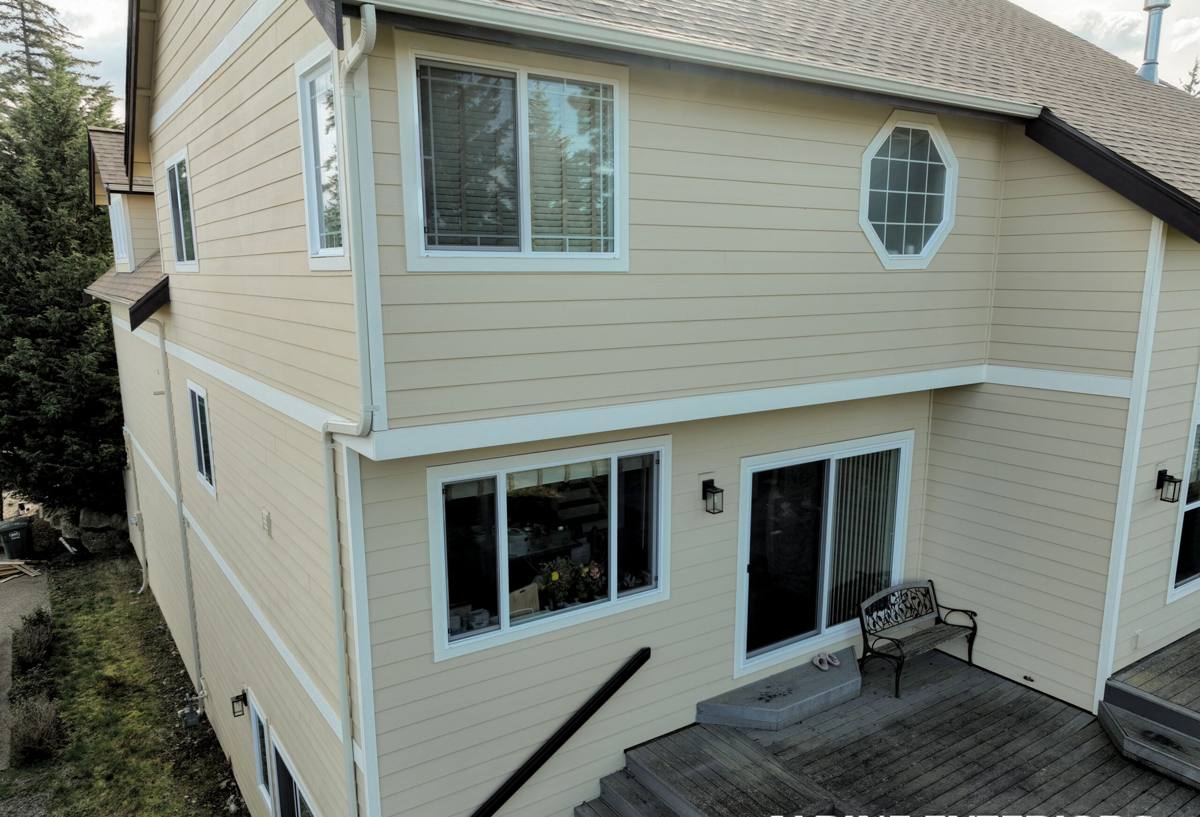
What This Climate Does to a Deck
Moisture That Never Fully Leaves
Whatcom County doesn't get long dry stretches most years. A deck that's shaded by trees or the house itself can stay damp for days after a storm, which is exactly the condition rot fungus and moss need to take hold. Moss holds moisture directly against the decking surface, and once it's established it's doing more damage than it looks like from a few feet away.
Salt Air and Metal Fasteners
Being close to the water means airborne salt reaches further inland than people expect. Standard fasteners, joist hangers, and hardware that aren't rated for coastal exposure corrode faster here than they would further inland. Rusted hardware is one of the most common things we find when we pull up decking during a repair — often before the wood itself shows much damage.
Freeze-Thaw and Wood Movement
Whatcom County winters aren't brutal, but the repeated cycle of wet, cold, and the occasional freeze causes wood to expand and contract. Over years that movement loosens fasteners, opens gaps at the ledger board, and stresses joints that were tight when the deck was built.
Signs a Nooksack Deck Needs Repair
Most deck problems announce themselves before they become dangerous, if you know what to look for. Deck repair is usually more affordable and less disruptive than replacement, but only if it's caught while the damage is still localized.
- Boards that feel spongy, springy, or soft underfoot in specific spots
- Visible gaps or rust streaks where the deck ledger meets the house
- Railings or posts that wiggle more than they used to
- Persistent moss or dark staining on the same boards season after season
- Fasteners with visible rust bleeding into the surrounding wood
- Stairs that feel less solid than they did a year or two ago
- Standing water that doesn't drain off the deck surface within an hour or two of rain stopping
Any one of these on its own might be minor. Several together usually means it's time for a real inspection rather than another season of hoping it holds.
What a Correct Deck Repair Actually Involves
Starting Below the Surface
A repair that only replaces the boards you can see is a cosmetic fix, not a structural one. We start by checking what's underneath: ledger board attachment, joist condition, post bases, and the hardware holding it all together. If the framing is compromised, new decking on top of it just buys a little time before the same problem resurfaces.
Matching Hardware to the Environment
Given the salt air this area sees, we use fasteners and connectors rated for coastal or wet-climate exposure rather than standard hardware. It costs a bit more up front, but it's the difference between hardware that lasts and hardware we're replacing again in a few years.
Addressing the Cause, Not Just the Symptom
If a deck is rotting because water is pooling against the house or draining poorly, replacing the wood without fixing the drainage or flashing means the same damage comes back. Part of an honest repair is telling you when the real fix is a flashing detail, a grade change, or better ventilation underneath the deck — not just new boards.
Repair or Replace: How to Think About It
This is the question most homeowners actually want answered, and the honest answer depends on how much of the deck is affected and where.
| Factor | Repair Usually Makes Sense | Replacement Usually Makes Sense |
|---|---|---|
| Extent of damage | Isolated boards, one section, or a single railing/stair run | Rot or corrosion spread across most of the structure |
| Framing condition | Joists and ledger are structurally sound | Multiple joists or the ledger board are compromised |
| Age of the deck | Newer deck with a localized issue | Deck is near or past its expected service life |
| Underlying cause | A fixable drainage or flashing issue | Design flaw causing repeated, widespread failure |
| Budget goals | Extend usable life at lower cost | Want a long-term reset and possibly a design change |
Broadly, straightforward board and hardware repairs on a structurally sound deck tend to run in the low hundreds to low thousands of dollars depending on scope. Once you're replacing significant framing, the cost gap between "repair" and "just rebuild this section" narrows quickly — and we'll tell you plainly when that's the case rather than stretching out a repair that won't hold.
Wood, Composite, and What We Recommend for Repairs
Most decks in this area are built with pressure-treated framing and either wood or composite decking on top. When we repair a section, we match materials to what's already there wherever possible, but there are trade-offs worth knowing.
Pressure-treated lumber is affordable and easy to match to existing decking, but it needs regular sealing or staining to hold up against Whatcom County's rain — skip that maintenance for a couple of seasons and moss and graying set back in fast. Composite decking resists moss and moisture damage better and doesn't need sealing, but it's a different look and thickness than most older wood decks, so patching a small section with composite can be visually obvious. For full section replacements or larger repairs, we'll walk through both options honestly rather than defaulting to whichever is easier for us to install.
Our Deck Repair Process
- Inspection: We check decking, framing, ledger attachment, posts, footings, and hardware condition, not just the visible surface.
- Written scope: You get a clear explanation of what's failing, why, and what it will take to fix it correctly — including if replacement is the more honest recommendation.
- Repair: We replace only what needs replacing, using coastal-rated hardware and matched or compatible materials.
- Drainage and moss prevention check: Where moisture or moss has been a recurring issue, we address the underlying cause — grading, gaps for airflow, or flashing — as part of the repair, not as a separate upsell.
- Final walkthrough: We confirm the deck is solid underfoot, railings are secure, and you know what maintenance (if any) will keep it that way.
Staying Ahead of Moss and Moisture Damage
Given how long moss season runs here, a little seasonal attention prevents most of the repairs we get called out for. None of this requires special equipment or a contractor visit — it's just easy to let slide.
- Sweep debris and standing moss off the deck surface before it has a chance to establish, especially in shaded corners
- Check that gaps between boards stay clear so water can drain through rather than pooling
- Look underneath the deck once or twice a year for standing water or poor airflow
- Reseal or restain wood decking on the manufacturer's recommended schedule, not just when it looks worn
- Watch the ledger board area where the deck meets the house — it's the spot most prone to hidden moisture damage
- Address small soft spots or loose railings right away rather than waiting for them to spread
Why Hire a Crew That Already Works in Nooksack
Deck repair looks straightforward on paper, but the details that matter — which hardware actually holds up to this air, how much moss pressure a shaded deck really sees, where drainage problems tend to hide in this kind of terrain — come from working on decks in this area repeatedly, not from a general checklist. We already know what Nooksack and the broader Blaine area throw at a deck over a wet Whatcom County winter, and we build every repair to hold up to it, not just to pass a quick look.
If your deck has a soft spot, a wobbly railing, or moss that won't quit coming back, we're happy to take a look and give you a straight answer on what it actually needs. Reach out for a free, no-pressure estimate using the form below.