 Blaine
 Why Windows Wear Out Faster Near Nooksack
Homes around Nooksack and the greater Blaine area sit in a marine climate that's hard on building materials in ways that don't show up right away. Salt-laden air moving in off the water corrodes exposed metal hardware, hinges, and cheap window frames over time. Driving rain, pushed sideways by wind rather than falling straight down, finds every gap in old flashing and worn weatherstripping. And the long, damp moss season here — often eight months or more of the year with real moisture in the air — keeps wood trim and window sills wet longer than they were ever designed to handle.
Individually, none of that destroys a window overnight. Together, over ten or twenty years, they explain why so many Whatcom County homes end up with windows that look fine from the driveway but are quietly leaking air, fogging between panes, or letting water into the wall cavity around the frame. Energy-efficient window work out here isn't just about lowering a heating bill — it's about stopping moisture and salt-driven deterioration before it becomes a bigger repair.
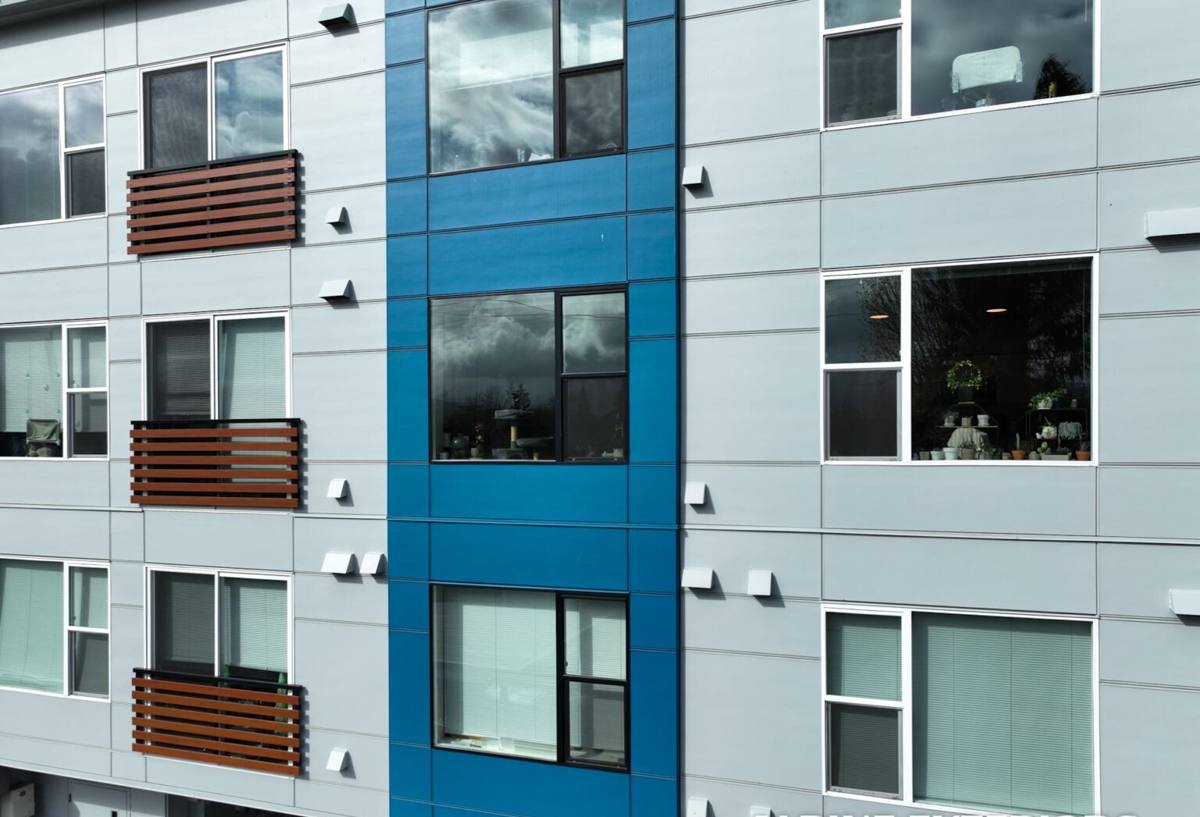
What "Energy-Efficient" Really Means in This Climate
Energy efficiency gets marketed as a glass spec, but glass is only part of the equation for a house near Nooksack. The bigger factors are usually air sealing and moisture management around the window opening itself.
Glass and Frame Performance
Double-pane glass with a low-E coating and an insulated spacer is the baseline for this region — it cuts heat loss and reduces condensation on the inside of the glass during cold, damp mornings. Frame material matters too: vinyl, fiberglass, and wood-clad frames all perform differently under constant moisture and salt exposure, which we cover in the comparison below.
Installation and Air Sealing
A high-performance window installed with gaps in the flashing or a poorly sealed rough opening will underperform a mid-grade window installed correctly. In our experience, most of the energy loss and water intrusion we find in older homes traces back to the installation, not the window unit itself. That's why we treat flashing, sill pans, and sealant work as equally important as the window product.
Signs Your Current Windows Are Costing You Money
- Noticeable draft or cold spot near the window frame, even with the window fully closed
- Condensation or fogging between the panes of glass, meaning the seal has failed
- Visible corrosion on hinges, locks, or metal cranks
- Soft, discolored, or spongy wood trim or sill around the window
- Difficulty opening, closing, or locking the window — frames can swell or warp with moisture cycling
- Higher-than-expected heating bills compared to similar-sized homes nearby
- Visible daylight or a whistling sound around the frame during windy weather
What a Correct Window Replacement Involves
Replacing a window properly is more than removing the old unit and setting a new one in the opening. In a climate that pushes rain sideways and keeps humidity high for months at a time, the details around the window matter as much as the window itself.
Removal and Inspection
We remove the old window carefully and inspect the rough opening for hidden water damage, rot, or mold before anything new goes in. This step gets skipped by crews trying to move fast, and it's usually where problems from a previous poor installation get discovered.
Flashing and Moisture Barrier
Proper sill pan flashing and integration with the house's weather-resistant barrier is what keeps wind-driven rain from tracking behind the siding and into the wall. This is the single most important — and most commonly rushed — part of a window installation in a wet coastal climate.
Air Sealing and Insulation
The gap between the window frame and the rough opening gets sealed and insulated correctly, not just stuffed with excess spray foam or left with a bead of caulk on the exterior trim.
Final Weatherproofing
Exterior trim, caulking, and any cladding disturbed during the install gets sealed and finished so the whole assembly sheds water the way it's supposed to.
Choosing a Window Type for This Climate
There's no single "best" window for every home — the right choice depends on your budget, your home's exposure to wind and rain, and how much upkeep you want to take on. Here's how the common frame materials compare for homes in this area.
| Frame Material | Moisture & Salt Air Resistance | Maintenance | Typical Lifespan |
|---|---|---|---|
| Vinyl | Good — won't rot or corrode, some UV fading over decades | Low — occasional cleaning | 20–30 years |
| Fiberglass | Excellent — very stable in wet, temperature-swinging conditions | Low | 30–40+ years |
| Wood-clad | Fair to good — cladding protects the exterior, but cut edges and seals need attention | Moderate — periodic inspection of seals and interior wood finish | 20–30 years with upkeep |
| Aluminum | Poor to fair near salt air — prone to corrosion and poor insulation unless thermally broken | Moderate to high | Varies widely |
For most homes near Nooksack and the Blaine coastline, we steer people toward vinyl or fiberglass for the exterior-facing units because they hold up better against salt air and constant moisture with the least ongoing maintenance. Wood-clad windows can still be a good fit on more protected elevations of a home, where exposure to driving rain is lower.
Cost Factors to Expect
Window replacement pricing varies by size, quantity, frame material, and how much work the opening itself needs. Broadly, homeowners in this area should expect costs to fall into a wide range depending on these factors rather than a flat per-window price.
| Factor | Why It Affects Cost |
|---|---|
| Frame material | Vinyl is generally the most affordable; fiberglass and wood-clad cost more upfront |
| Window size and style | Larger units, custom shapes, and operable styles (casement, awning) cost more than standard fixed or single-hung windows |
| Condition of the rough opening | Hidden rot or water damage found during removal adds repair work before the new window goes in |
| Number of windows | Full-home replacements typically bring a better per-unit cost than one-off swaps |
| Trim and siding work | Matching or repairing exterior trim and cladding around the new window adds labor |
We give straight, itemized estimates so you know what you're paying for — the window unit, the labor, and any opening repair — rather than a single bundled number that hides where the cost is coming from.
Our Process
- On-site inspection of each window and its surrounding trim, sill, and siding condition
- Honest assessment of which windows need full replacement versus repair
- Written estimate broken out by window, material, and labor
- Careful removal with inspection of the rough opening before installing anything new
- Proper sill pan flashing and moisture barrier integration
- Air sealing and insulation around the frame
- Exterior trim and caulking finished to shed wind-driven rain
- Final walkthrough so you can see and test every window before we call the job done
Why Local Experience in the Nooksack and Blaine Area Matters
A crew that works this corner of Whatcom County regularly has seen how salt air, driving rain, and long moss seasons actually affect homes here over time — not in theory, but on real jobs. That experience shapes decisions a homeowner might not think to ask about: which frame materials hold up best on a wind-exposed wall, how much flashing overlap is enough for this area's rain patterns, and where moisture tends to hide in older construction common to the region. Crews without that local track record can still do competent work, but they're often learning those lessons on your house instead of bringing them with them.
Maintenance That Actually Matters Here
Even a well-installed, high-quality window benefits from a little seasonal attention in this climate. Keep weep holes and drainage tracks clear of moss, dirt, and debris so water can drain the way the window is designed to shed it. Rinse salt residue off exterior frames and hardware periodically, especially on wind-exposed elevations. Check caulking and exterior sealant once a year for cracking or gaps, since UV exposure and constant moisture cycling break sealant down faster here than in drier climates. None of this is heavy work, but skipping it is how a good window installation slowly turns into a future repair.
If your windows are drafty, foggy, hard to operate, or just older than you'd like to admit, we're happy to take a look and give you a straightforward, no-pressure estimate — no obligation, just an honest read on what your home actually needs. Use the form below to get started.