 Blaine
 Building a Deck That Holds Up in Peace Arch's Marine Climate
Peace Arch sits in the far northwest corner of Blaine, close against Semiahmoo Bay and Drayton Harbor, almost within sight of the border crossing. That location is a big part of what makes the neighborhood desirable — open water, mild summers, quiet streets — but it also means homes here take a harder beating from the elements than a deck built a few miles inland in Whatcom County. Salt-laden air off the bay, wind-driven rain that comes in sideways rather than straight down, and a wet season that can run from October well into April all work against an outdoor structure that wasn't designed with those specific conditions in mind. A deck that would hold up fine in a drier part of the state can start showing corroded hardware, soft framing, or slick moss growth within a couple of seasons out here if it wasn't built for this environment from the start.
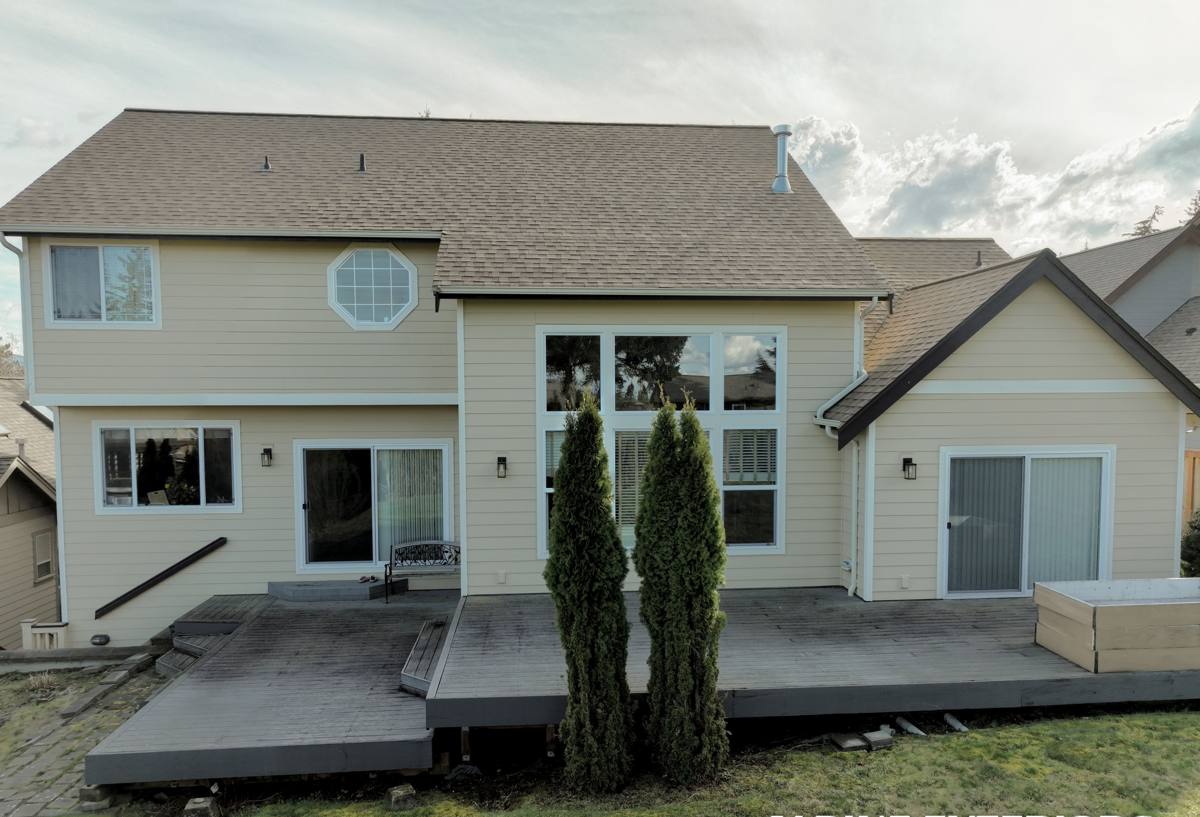
What Blaine's Coastal Conditions Actually Do to a Deck
Salt Air and Metal Corrosion
Salt-laden air doesn't need direct ocean spray to cause damage — it travels on the wind and settles on any exposed metal. Fasteners, hinges, post bases, and railing brackets rated for general Pacific Northwest rain can still corrode faster than expected within a mile or two of the bay. Once corrosion starts on a structural connector, it weakens quietly, often long before it's visible from the surface.
Driving Rain and Moisture Intrusion
Wind off the water tends to push rain at an angle instead of straight down, which means water gets driven into places a standard rain pattern wouldn't reach — behind ledger board connections, under railing posts, into cut ends and fastener holes. If those points aren't properly flashed and sealed, moisture works its way into the framing and causes rot from the inside out, well before the deck surface shows any sign of a problem.
Moss, Algae and a Long Wet Season
Shaded or north-facing decks near tree cover can stay damp for months at a time. Moss and algae take hold on boards that don't drain or dry properly, which isn't just an appearance issue — it's a slip hazard, and over time it breaks down wood fiber and can stain composite surfaces. A deck built with the right board spacing, slope, and airflow underneath sheds water instead of holding onto it.
Choosing Decking Material for a Peace Arch Property
There's no single right material for every deck — it depends on budget, sun exposure, and how much upkeep an owner actually wants to do. What matters is picking a material with eyes open about how it behaves this close to saltwater and shade.
| Material | How It Handles Salt Air & Rain | Maintenance | Typical Lifespan Here |
|---|---|---|---|
| Pressure-treated wood | Good if properly sealed; end grain and fastener points need attention | Annual cleaning, re-sealing every 1-2 years | 15-20 years with upkeep |
| Cedar | Naturally rot-resistant but softer; needs consistent finish maintenance near salt air | Regular cleaning, staining every 2-3 years | 15-20 years with upkeep |
| Capped composite | Doesn't absorb moisture like wood; resists moss staining better | Periodic washing, no sealing or staining | 25-30 years |
| PVC decking | Fully moisture-resistant, best option for constant shade or standing water risk | Occasional washing only | 25-30+ years |
Composite and PVC cost more up front but shift the long-term work away from finish maintenance, which matters on a deck that spends half the year damp. Wood costs less initially but only performs well if someone stays on top of sealing and cleaning — skip that in this climate and the payoff disappears fast.
What a Correctly Built Deck Involves Here
Ledger Board Flashing and Attachment
The ledger board — where the deck attaches to the house — is the single most common point of failure on decks we're called to repair. It has to be flashed with proper metal or membrane flashing, not just caulked, and fastened with lag bolts or through-bolts rated for the load, not deck screws. Done wrong, it's invisible until the framing behind it is already rotten.
Footings and Framing for Local Soil and Drainage
Footings need to be sized and set below frost depth per Whatcom County code, and on properties near the water table or with poor natural drainage, that often means extra attention to how footings are formed and backfilled so they don't sit in standing water. Joist spacing should be tightened up from the bare code minimum when the decking material or expected snow/foot traffic load calls for it.
Under-Deck Airflow and Board Spacing
Gapping between boards and clearance underneath the structure both affect how fast a deck dries out after rain. Too tight, and moisture sits between boards feeding moss and mildew. Framing set too close to grade or too enclosed traps humidity underneath year-round. Both are easy to get wrong and both shorten a deck's life considerably in a climate that doesn't give wood much of a chance to dry out between storms.
Fasteners, Flashing and Hardware — Our Standard for This Exposure
This is where a lot of decks quietly fail early, and it's an easy place for a contractor to cut cost without an owner ever knowing until years later. For decks within a couple of miles of Semiahmoo Bay or Drayton Harbor, we default to stainless steel or heavy hot-dip galvanized fasteners and connectors rather than the standard coated deck screws that are fine further inland. We also use joist tape over exposed joist tops and proper flashing at every ledger and post connection point. It costs more in materials than the minimum code allows, but the alternative is hardware that starts rusting from the inside of a joint where nobody can see it until there's a real problem.
Railings, Stairs and Code Requirements
Blaine follows Whatcom County building code for residential decks, and most decks attached to a house or elevated more than a modest height off grade require a permit and inspection. A few points that come up on nearly every project:
- Guardrails are required above a certain deck height and must meet minimum height requirements, generally 36 to 42 inches depending on use
- Baluster spacing has to keep a 4-inch sphere from passing through, for safety around small children
- Stair rise and run have to stay within a consistent range — uneven steps are one of the most common inspection failures
- Any structural attachment to the house needs proper flashing and fastening, inspected before it's covered up
We pull the permits and handle the inspection process as part of the build, so it isn't left for the homeowner to sort out with the county.
Our Process for a Peace Arch Deck Project
The process is straightforward, but each step matters more in this location than it would somewhere with milder exposure:
- On-site visit to assess sun/shade exposure, drainage, existing structure condition, and proximity to salt air
- Design and material discussion based on how the space will actually be used and how much upkeep the owner wants long-term
- Permit drawings and submission to the county where required
- Demolition of any failing existing structure, with an honest look at what the old ledger and framing tell us
- Framing, flashing, and hardware installed to our coastal-exposure standard, not the bare code minimum
- Decking, railing, and stair installation with final grading for drainage
- Final walkthrough and inspection sign-off
Maintaining a Deck Through Blaine's Moss Season
A well-built deck still needs some seasonal attention in this climate. A short list that goes a long way:
- Sweep debris and standing leaves off the surface regularly through fall so they don't hold moisture against the boards
- Rinse or gently scrub visible moss and algae before it spreads, rather than waiting until it's established
- Check that gaps between boards stay clear of built-up debris that blocks drainage
- Inspect visible hardware once a year for early rust or corrosion, especially near the ledger and stair connections
- Reseal or restain wood decking on schedule rather than waiting until it's visibly gray or cracking
Why Hire a Crew That Already Works Peace Arch
A contractor who mostly builds decks inland, away from saltwater, can do good general carpentry and still get the details wrong for this specific setting — the wrong fastener grade, standard flashing instead of coastal-rated, framing that doesn't account for how long this area stays damp. Working this neighborhood regularly means we already know which corners of a lot catch the worst wind-driven rain, which yards hold moisture longest, and what the county actually wants to see at inspection. That's the difference between a deck that needs real repair work in five years and one that's still solid in twenty.
If you're planning a new deck or replacing one that's showing its age in Peace Arch, we're happy to take a look and give you a straightforward, no-pressure estimate — just fill out the form below.