 Blaine
 A Peninsula That Punishes Ordinary Siding
Point Roberts sits on its own piece of geography — a small peninsula hanging off the bottom of the Tsawwassen headland, surrounded by water on three sides and cut off from the rest of Whatcom County by land. That location is part of what makes it a beautiful place to own a home. It's also exactly why siding here takes more abuse than siding fifteen miles inland in Blaine. Wind off the water carries salt spray onto exterior walls almost daily. Rain comes in sideways more often than straight down. And the shaded, damp stretches of many lots grow moss on anything that holds moisture for more than a day or two. We've built our business around installing James Hardie fiber cement siding specifically because it's engineered to take that kind of punishment without the maintenance treadmill that comes with softer materials.
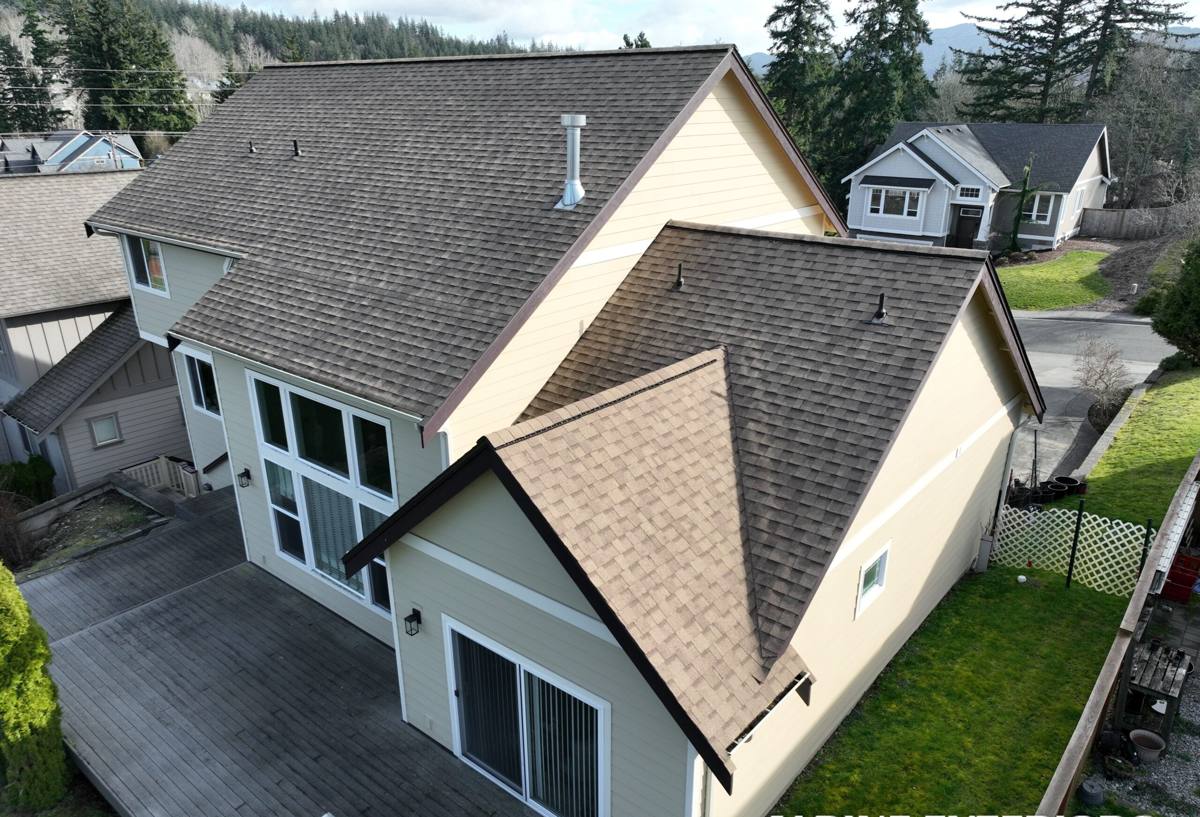
The Three Forces Working Against Your Siding
Salt Air
Airborne salt is corrosive and it's persistent. It settles on siding, trim, and fasteners, and over time it accelerates the breakdown of paint films, pulls moisture into porous materials, and corrodes uncoated metal. Homes closer to the water take the worst of it, but salt-laden air moves inland with the wind, so almost every property on the peninsula deals with it to some degree.
Driving Rain
Point Roberts gets the same wet Pacific Northwest winters as the rest of Whatcom County, but its exposure means rain frequently arrives wind-driven rather than falling straight down. Wind-driven rain finds its way behind loose panels, under failed caulk joints, and into any seam that wasn't detailed correctly the first time. A siding system that isn't built to shed water horizontally, not just vertically, is fighting the wrong battle here.
Moss Season
Cool, damp, and often shaded conditions for a good stretch of the year create ideal moss and algae growth on north-facing walls, under eaves, and anywhere air doesn't circulate well. Moss holds moisture against the surface it's growing on. On wood-based products, that's a direct path to rot. On siding with a poor factory finish, it's a path to staining and premature paint failure.
Why We Install Only James Hardie in This Environment
We don't offer vinyl, LP SmartSide, cedar, or primed spruce as options — not because those products don't have their place somewhere, but because we've made James Hardie fiber cement our standard for every home we side, and a coastal peninsula like Point Roberts is the clearest possible case for why.
HZ5 Climate Engineering
James Hardie manufactures its siding in different formulations for different climate zones, and Western Washington falls under the HZ5 category — engineered for regions with sustained moisture exposure and freeze-thaw cycling. That's a material decision made for the climate we actually have, not a one-size-fits-all product shipped the same way to every state.
ColorPlus Factory Finish
Most of what fails first on coastal siding is the finish, not the substrate underneath. James Hardie's ColorPlus Technology is baked on in a controlled factory environment through multiple coats, which gives it better adhesion and UV resistance than field-applied paint — and better resistance to the fading and chalking that salt air accelerates. It also carries its own dedicated finish warranty, separate from the product warranty on the siding itself.
A Non-Combustible, Dimensionally Stable Core
Fiber cement doesn't expand and contract with moisture the way wood-based products do, so it holds paint lines and seams tighter over time. It's also non-combustible, which matters given the dry-season wildfire risk that touches even wet coastal regions of Washington in late summer.
What a Correct Installation Actually Involves
James Hardie siding performs the way it's rated to perform only when it's installed to spec. This is where a lot of the real-world difference between a good siding job and a problem job actually comes from — not the material, the installation.
Drainage Plane and Rain Screen
Every wall needs a continuous water-resistive barrier behind the siding, with a drainage gap that lets any moisture that gets past the cladding escape instead of sitting against the wall sheathing. On a site taking regular wind-driven rain, skipping or shortcutting this layer is the single most common cause of hidden water damage.
Flashing and Fastening
Windows, doors, and any horizontal trim need properly lapped flashing so water sheds outward at every transition, not just at the field of the wall. Fasteners need to be the corrosion-resistant type James Hardie specifies, set to the correct depth and spacing — under-driven or over-driven nails are a common source of premature panel movement and cracking.
Joint and Caulk Detailing
Butt joints, corner boards, and trim intersections all need to be treated as potential water entry points, not just cosmetic seams. In a driving-rain environment, a joint that's "close enough" on a calm inland job isn't close enough here.
Our Process for Point Roberts Projects
- Exterior assessment — we inspect existing siding, trim, and visible sheathing for moss, moisture damage, and failed flashing before we ever talk product.
- Tear-off vs. overlay decision — we tell you honestly whether your walls need a full tear-off to address hidden moisture or rot, or whether a direct install is sound.
- Weather barrier and drainage plane — installed or verified before a single piece of siding goes up.
- James Hardie installation — panels, trim, and fastening done to manufacturer spec, with flashing detailed at every penetration and transition.
- Final walkthrough — we go over caulking, seams, and finish with you before we call the job done.
Why a Crew That Already Works Point Roberts Matters
Point Roberts is unusual to work in logistically, not just climatically. Getting crews, equipment, and material to the peninsula means routing through Canada, which adds planning that a contractor unfamiliar with the area often doesn't account for — leading to delayed start dates or rushed scheduling once they realize what's involved. A crew that already works this community has that logistics figured out, along with a working knowledge of Whatcom County permitting requirements and the specific microclimate patterns on the peninsula: which sides of a house take the worst wind-driven rain, which walls hold moss longest, where salt exposure is most aggressive. That's the kind of local knowledge that shows up in better flashing decisions and better product placement, not just faster scheduling.
Siding Materials in a Marine Climate: A Fair Comparison
| Factor | James Hardie Fiber Cement (HZ5) | Vinyl | Cedar |
|---|---|---|---|
| Salt air / moisture resistance | Engineered for sustained moisture exposure; non-combustible core | Won't rot, but can warp or crack with UV and temperature swings | Natural material; absorbs moisture, prone to rot without diligent upkeep |
| Finish durability | ColorPlus factory finish, separate finish warranty | Color is through the material but can fade and chalk over time | Requires repainting or staining on a recurring cycle |
| Moss/algae resistance | Dense, stable surface resists moisture retention | Can trap moisture behind panels in poor installations | Porous surface, moss and mildew take hold readily |
| Maintenance burden | Occasional washing; no repainting cycle with ColorPlus | Low, but damage often means full panel replacement | Regular refinishing needed to hold up in this climate |
| Fire rating | Non-combustible | Combustible | Combustible |
Keeping Hardie Siding Looking Right Between Coats of Rain
Even the right material benefits from a little seasonal attention on a site like this. None of the following requires a contractor — it's just what keeps siding performing the way it's supposed to between our visits.
- Rinse siding with a garden hose once or twice a year to clear settled salt residue, especially on water-facing walls.
- Trim back vegetation and branches that keep a wall shaded and damp longer than the rest of the house.
- Check gutters and downspouts before the wet season — overflow running down siding is a common cause of localized staining and moss growth.
- Look at caulk joints around windows and trim once a year; failed caulk is cheap to fix early and expensive to ignore.
- Watch for soft spots, dark streaking, or heavy moss buildup on north-facing and shaded walls — these are the first places problems show up.
Signs Your Current Siding Is Losing the Fight
If you're not sure whether your siding still has years left in it, these are the signs worth taking seriously:
- Moss or algae that returns within weeks of being cleaned off
- Paint that's chalking, peeling, or has an inconsistent sheen across the wall
- Rust streaking below fasteners or trim hardware
- Soft, spongy, or visibly warped panels, especially near the ground or under windows
- Gaps opening up at butt joints or corner boards
Any one of these on its own might just need a repair. Several together, especially on a home that's taken a few winters of direct wind and salt exposure, usually means it's time to talk about a full re-side.
If you're weighing your options for a Point Roberts home, we're happy to walk the property, look at what your siding is actually dealing with, and give you a straight answer on what it needs. Reach out for a free, no-pressure estimate using the form below.