 Blaine
 Siding Installation Built for Sandy Point's Coastal Exposure
Sandy Point sits close enough to the water that homes here take a different kind of beating than a house ten miles inland in Whatcom County. Salt-laden air moves through every day, wind-driven rain finds its way into gaps that would stay dry elsewhere, and the tree cover that makes the area beautiful also keeps siding shaded and damp long after a storm passes. Siding installation in this neighborhood isn't just about picking a product and nailing it up — it's about understanding how those three conditions work together to break down materials that aren't built for them.
We install siding across the Blaine area, and Sandy Point homes get a specific set of decisions applied to them: which product goes on the wall, how the water-resistive barrier and flashing are detailed, and how the crew accounts for wind exposure on the sides of the house that face open water or a clear line of wind. This page walks through what that actually looks like.
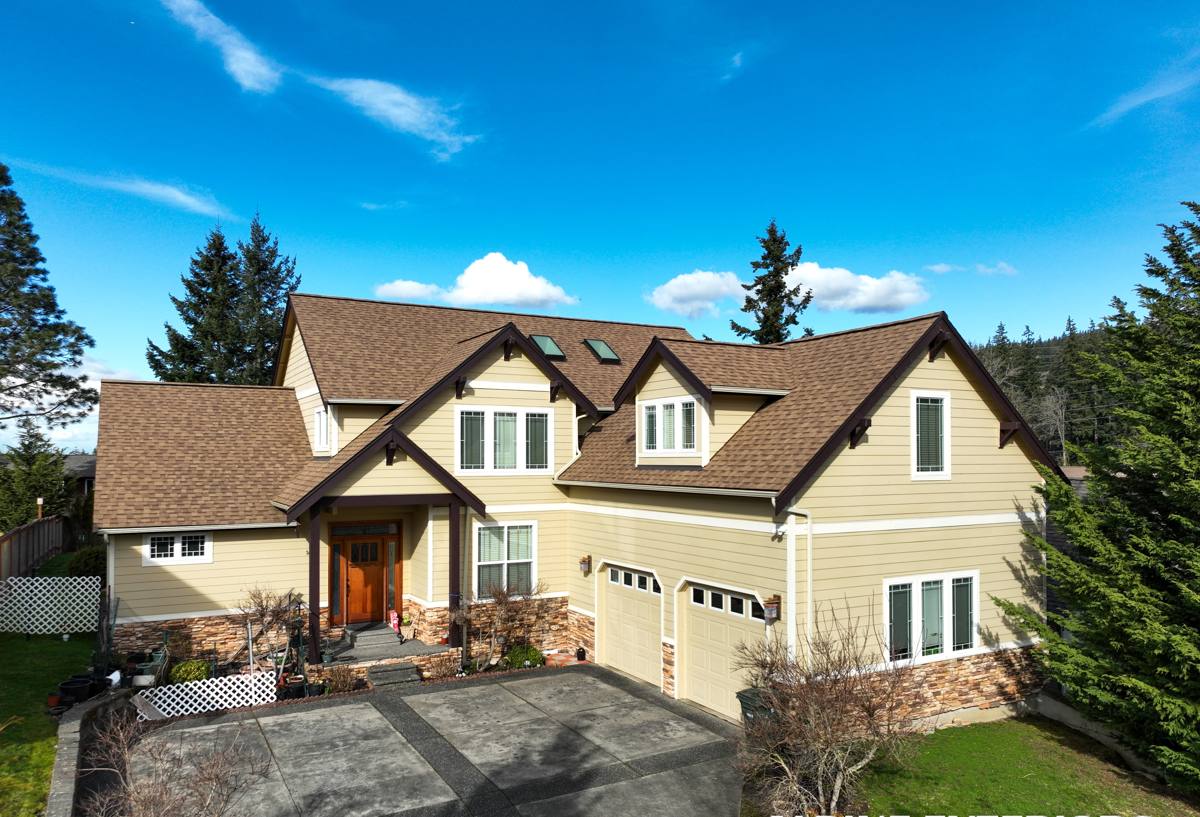
What Salt Air, Driving Rain, and Moss Do to Siding Over Time
Each of these three factors causes damage in a different way, and a siding system has to hold up against all three at once, not just one.
Salt Air
Airborne salt is corrosive to exposed metal — fasteners, flashing, trim edges — and it also draws moisture out of the air and holds it against surfaces longer than dry air would. On products that aren't dimensionally stable, that constant low-grade moisture exposure leads to swelling, softening, and eventually rot or delamination at seams and cut edges.
Driving Rain
Rain that comes in sideways, which is common on exposed lots near the water, doesn't behave like rain falling straight down. It gets pushed up under laps, into butt joints, and around window and door trim. A siding installation that only accounts for gravity-fed water shedding will leak here. The lap coverage, flashing details, and sealant joints all have to assume water is being pushed sideways and sometimes upward by wind pressure.
Moss and Prolonged Dampness
Tree-shaded lots and the region's long wet season mean siding can stay damp for days at a time, especially on north-facing walls. That's the environment moss, algae, and mildew need to establish. On porous or absorptive materials, moss roots into the surface itself; on a properly sealed and finished surface, it sits on top and washes or brushes off without damaging anything underneath.
What a Correct Siding Installation Involves
The siding itself is maybe half the equation. The other half is everything underneath and around it — the parts nobody sees once the job is done, but that determine whether the wall stays dry for the next 30 years or starts failing in five.
Weather-Resistive Barrier and Flashing Details
Every wall gets a continuous weather-resistive barrier installed correctly shingled — meaning each layer overlaps the one below it, so water always drains outward and down, never in. Windows, doors, and any wall penetration get properly integrated flashing so water is directed out onto the surface of the siding, not behind it. On exposed elevations, we pay particular attention to head flashing above windows and to the transitions where the wall meets the roofline, since those are the spots wind-driven rain finds first.
Fastening and Clearance Standards
Fiber cement siding has specific fastening requirements — nail placement, penetration depth, and spacing all matter for how the panel performs over time and how well it resists wind load. We also hold to proper clearances at the ground, roofline, and any horizontal surface like a deck or patio, so the bottom edge of the siding isn't sitting in standing water or splashback. Skipping these details is the single most common reason siding fails early, regardless of what brand is on the wall.
Joint and Seam Treatment
Every butt joint and seam is a potential entry point for water. Correct installation means these are treated with the manufacturer-specified approach — proper overlap, flashing behind joints, and sealant only where the manufacturer calls for it, not as a substitute for good flashing.
Why We Install Only James Hardie Fiber Cement
We made a decision as a company to install James Hardie fiber cement siding exclusively, and we don't deviate from that on any job, including here. It's worth explaining why, because homeowners in Sandy Point often ask.
Fiber cement is dimensionally stable — it doesn't swell, shrink, or warp with moisture the way wood-based products can, which matters directly given how much moisture this location deals with. It's also non-combustible, which is a real consideration anywhere with dry summer stretches and wildfire smoke seasons, even in a generally wet climate. James Hardie's HZ5 product line is engineered specifically for regions with cold, wet climates like the Pacific Northwest, with a formulation built to resist moisture-related damage over the long term.
The ColorPlus factory finish is also part of the decision. It's baked on in a controlled environment rather than field-applied, which gives it better adhesion and fade resistance than a site-painted finish — important on a coastal lot where UV, salt, and moisture are all working against a painted surface at once. Hardie backs the product with a strong transferable warranty, but that warranty is only as good as the installation behind it, which is why we're particular about the details above.
We don't install vinyl, LP SmartSide, Cemplank, Allura, primed spruce, or cedar. Each of those products has legitimate uses and each has committed customers. Our reasoning is specific to what we've found holds up best, with the fewest maintenance surprises, in this exact climate — not a claim that other products are defective.
Our Installation Process, Start to Finish
The process is the same core sequence on every Sandy Point job, adjusted for the specific exposure of the lot.
- Site walk and estimate. We look at the existing siding condition, the wall assembly if it's exposed anywhere, and which elevations take the most weather — usually the sides facing open water or prevailing wind.
- Tear-off and substrate check. Old siding comes off and we inspect the sheathing underneath for any rot or damage that needs to be addressed before new material goes on. This step catches problems that aren't visible from outside.
- Weather barrier and flashing installation. This is the layer that does the real work of keeping water out, installed before a single piece of siding goes up.
- Hardie installation. Panels or planks are installed to manufacturer fastening specs, with attention to clearances, joints, and trim details.
- Final walkthrough. We go over the finished job with the homeowner and address anything before calling it complete.
Cost Factors for Siding Installation in Sandy Point
Every home is different, so we don't quote a number until we've seen the house. What we can tell you is which factors move the price, and why they tend to matter more here than on an inland job.
| Factor | Why It Matters in Sandy Point |
|---|---|
| Wall condition underneath old siding | Coastal moisture exposure raises the odds of sheathing repair being needed before new siding goes on |
| Wind exposure of each elevation | Sides facing open water or a clear wind path often get extra flashing attention and drive labor time up on those walls |
| Home size and wall complexity | More corners, trim, and window openings mean more flashing and joint work regardless of location |
| Product line and profile chosen | HardiePlank, HardiePanel, and shingle-style profiles carry different material costs and installation time |
| Access and site conditions | Tree cover, tight lots, or limited driveway access common in this area can affect setup and labor time |
Signs Your Sandy Point Home Needs New Siding Now
Some warning signs are easy to miss until they've turned into a bigger repair. Worth checking for:
- Soft or spongy spots when you press on the siding, especially near the bottom edge or below windows
- Persistent moss or dark staining that comes back quickly after cleaning
- Visible gaps, cracking, or warping at seams and joints
- Paint that's peeling or bubbling on interior walls that back up to exterior siding — often a sign of moisture getting through
- Siding that feels consistently damp or cool to the touch well after rain has stopped
- Rising energy bills without another clear explanation, which can point to a compromised wall assembly
Any one of these on its own isn't necessarily an emergency, but a few together are worth a closer look before they turn into structural repair costs.
Why Hiring a Crew That Already Works Sandy Point Matters
Siding installation isn't identical from neighborhood to neighborhood, even within the same county. A crew that mostly works drier, less exposed inland sites doesn't necessarily apply the same level of attention to flashing and clearances that a coastal lot needs — not because they're careless, but because it's not the environment they're used to solving for. We work throughout the Blaine area and understand which details matter most on a lot like this: which elevations to treat as high-exposure, how much clearance to hold at grade, and where wind-driven rain is most likely to find a weak spot.
That local familiarity also shows up in smaller, practical ways — knowing what tree cover and shade patterns typically do to a north wall, or having a realistic sense of how weather windows affect scheduling for exterior work in this part of Whatcom County.
After Installation: What Sandy Point Homeowners Should Expect
Correctly installed Hardie siding with a factory ColorPlus finish is low-maintenance, not zero-maintenance. An occasional rinse to clear salt residue and any moss buildup, particularly on shaded walls, keeps it looking the way it should. Because the finish is factory-applied rather than field-painted, you're not looking at a repaint cycle the way you would with some other siding materials — that's part of the long-term value of the product, and part of why we stand behind installing it correctly the first time.
If you're weighing a siding replacement in Sandy Point, we're happy to take a look at the house and walk you through what we're seeing, with no pressure to move forward. The form below gets you a free estimate from a crew that already knows this stretch of the coast.