 Blaine
 Windows for a Shoreline Climate
Cherry Point sits on open water along the Salish Sea, north of Blaine in Whatcom County, and that location shapes what a window actually has to withstand here. Homes closer to the shoreline take steady wind off the water, salt-laden air, and driving rain that hits siding and window openings sideways rather than straight down. Add in the long stretch of wet, low-sun months that Whatcom County sees every year — the season when moss and algae take hold on anything that stays damp — and you have a set of conditions that ages windows faster than they'd age in a drier, more sheltered part of the state.
None of that means Cherry Point homes need exotic products. It means the installation details that are optional in a mild climate — flashing sequence, drainage planes, sealant choice, frame material — stop being optional. Get them right and a window installation should hold up for decades. Get them wrong and you're looking at trapped moisture, rot, and fogged glass well before the window itself would have failed on its own.
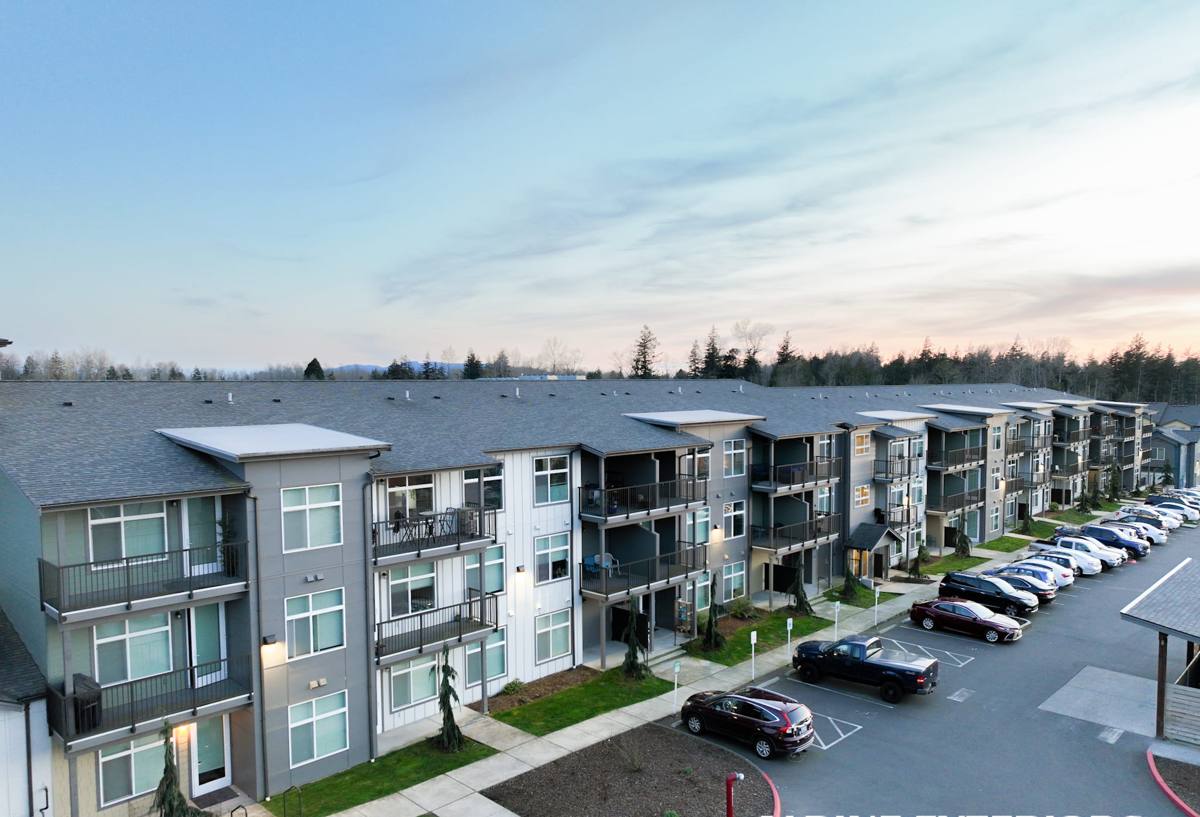
Why Windows Fail Faster Near Cherry Point
Wind-driven rain finds the gaps
Ordinary rain falls down and mostly sheds off a wall. Wind-driven rain off the water gets pushed sideways and upward into any gap around a window frame — a poorly lapped flashing, a bead of caulk that's cracked, a nailing fin that wasn't sealed correctly. Once water gets behind the exterior finish, it doesn't dry out quickly in our climate. It sits against the framing and works.
Salt air is hard on hardware and finishes
Homes within the reach of salt spray see faster corrosion on window hardware — hinges, locks, balance mechanisms, and screen frames — and faster breakdown of cheaper exterior coatings. This isn't unique to Cherry Point, but it's more pronounced here than in inland Whatcom County neighborhoods, and it's a real factor in choosing frame material and hardware finish.
A long moss season means sustained moisture, not just rain events
Whatcom County's wet season isn't just about total rainfall — it's about how many consecutive weeks stay damp with limited drying sun. That's the same condition that lets moss and algae colonize roofs, siding, and window sills. On windows specifically, it shows up as black growth in sill corners, sealant that stays soft and fails early, and wood trim that never gets a chance to fully dry between rain events.
Signs a Cherry Point Home Needs New Windows
Not every symptom means full replacement, but these are the signs worth having a professional actually look at rather than just re-caulking and hoping:
- Fogging or a visible haze between panes — the seal on a double-pane unit has failed and the gas fill is gone
- Soft or discolored trim and sill wood, especially at the bottom corners where water collects
- Visible daylight or a noticeable draft around the sash even when the window is latched
- Windows that are difficult to open, close, or lock — often a sign the frame has shifted or the mechanism has corroded
- Recurring moss or black staining at the sill that comes back within weeks of cleaning
- A noticeable jump in heating costs with no other explanation
- Paint or finish that's bubbling or peeling specifically around the window opening, not the wall generally
What a Correct Installation Actually Involves
The window unit itself is only part of the job. In a climate like Cherry Point's, the installation detailing around it matters as much or more:
Flashing and drainage, in the right order
Flashing has to be layered so water always sheds outward and downward — sill pan first, then side flashing, then the window, then head flashing lapped over the top, integrated with the house wrap so nothing gets trapped behind the finish. Skipping the sill pan or flashing out of sequence is the single most common cause of hidden rot behind a "new" window.
Sealant selection and placement
Not every exterior sealant is rated for the same movement and UV exposure, and using the wrong one — or caulking a spot that should actually be left open as a weep point — causes problems instead of preventing them. Weep holes at the sill need to stay clear so any water that does get in can drain back out.
Proper shimming and squaring
A window that isn't shimmed level and square will bind, won't seal evenly against the sash, and puts uneven stress on the frame — which shows up years later as premature hardware failure or a sash that won't latch tight.
Interior and exterior air sealing
Insulating the gap between the rough opening and the window frame (without overpacking it, which can bow the frame) and sealing the interior air barrier separately from the exterior water barrier keeps moisture from condensing inside the wall cavity.
Choosing a Frame Material for This Location
Frame material is one of the bigger decisions on a marine-exposed job. There's no single right answer for every home — it depends on budget, the home's style, and how close you are to the water.
| Frame Material | Salt Air / Moisture Resistance | Maintenance | General Cost Range* |
|---|---|---|---|
| Vinyl | Good — won't rot or corrode; quality varies by manufacturer | Low — occasional cleaning | Lower end of the range |
| Fiberglass | Very good — dimensionally stable, holds up well to salt exposure | Low | Mid to upper range |
| Wood-clad (exterior clad, wood interior) | Depends heavily on cladding integrity and installation quality | Higher — cladding seams and any exposed wood need monitoring | Upper range |
| Aluminum | Prone to corrosion and condensation in marine air unless thermally broken | Moderate to high near the water | Varies |
*General ranges only — actual pricing depends on window size, glass package, number of openings, and site access. We'll give you real numbers for your home during an estimate.
For homes close to Cherry Point's shoreline, we generally steer customers toward vinyl or fiberglass over uncoated aluminum, mainly because of how those materials hold up to sustained salt exposure with less upkeep. Wood-clad windows can still be the right call for a specific architectural style — the trade-off is a maintenance schedule you need to actually keep up with in this climate.
Our Installation Process
- On-site assessment — we look at the existing openings, check for hidden moisture or rot behind the trim, and measure for accurate, custom-fit units
- Product selection — we walk through frame material, glass package, and hardware options suited to a wind- and salt-exposed site
- Removal and inspection — old windows come out carefully so we can inspect the rough opening and framing underneath before anything new goes in
- Repair as needed — any soft or water-damaged framing gets addressed before a new window goes into it; installing a new window over a bad opening just hides the problem
- Flashing, install, and seal — sill pan, side and head flashing, shimming, insulation, and sealant applied in the sequence that actually sheds water
- Interior and exterior finish — trim, caulking, and touch-up work to match the surrounding siding and interior finish
- Final walkthrough — every window operated, checked for square and smooth function, before we call the job done
Why a Crew That Already Works Cherry Point Matters
Window installation techniques that are perfectly fine in a drier climate can be inadequate here. A crew that regularly works this stretch of Whatcom County already knows to over-build the flashing detail rather than treat it as optional, to choose sealants and hardware finishes rated for salt exposure, and to recognize hidden moisture damage in older framing before it becomes a bigger repair mid-project. That local pattern recognition is hard to get from a crew that only occasionally works marine-exposed sites — and it's the difference between a window that performs for 20-plus years and one that needs attention again in five.
Living With a Long Moss Season
Even a correctly installed window needs a little seasonal attention in this climate. A few habits go a long way toward protecting the investment:
- Rinse or brush sills and tracks clear of moss and debris a couple of times during the wet months, especially on north- and west-facing windows
- Check that weep holes at the base of each window stay open and unblocked
- Inspect exterior caulking lines annually and have any cracked or shrunken sealant redone before the rainy season sets in
- Keep nearby vegetation trimmed back so sills and trim get some airflow and sun rather than staying shaded and damp
None of this requires special equipment or a big time commitment — it's the same kind of light seasonal upkeep that protects any exterior surface in Whatcom County, applied consistently.
Get an Honest Look at Your Windows
If your Cherry Point home has windows that are drafty, foggy, hard to operate, or showing moisture damage at the sill, it's worth having someone look before deciding whether you need repair or full replacement. We'll give you a straightforward, no-pressure estimate based on what we actually see at your home — use the form below to get started.