 Blaine
 Window Installation Built for Nooksack's Climate
Homes in and around Nooksack sit in one of the more demanding climates in Whatcom County for exterior work. You get a mix of coastal-influenced salt air drifting in off the Salish Sea, long stretches of driving rain, and a moss season that can run most of the year in shaded, north-facing spots. Windows take the brunt of all three. A window that's a poor fit for this climate, or one that was installed without the right flashing and sealing details, won't just look tired sooner — it will let water into your wall framing, where the real damage happens out of sight.
This page covers what window installation actually requires in the Nooksack area: what the local climate does to windows over time, what a correct installation looks like from the framing out, how to think about window material and cost, and what our process looks like on your home.
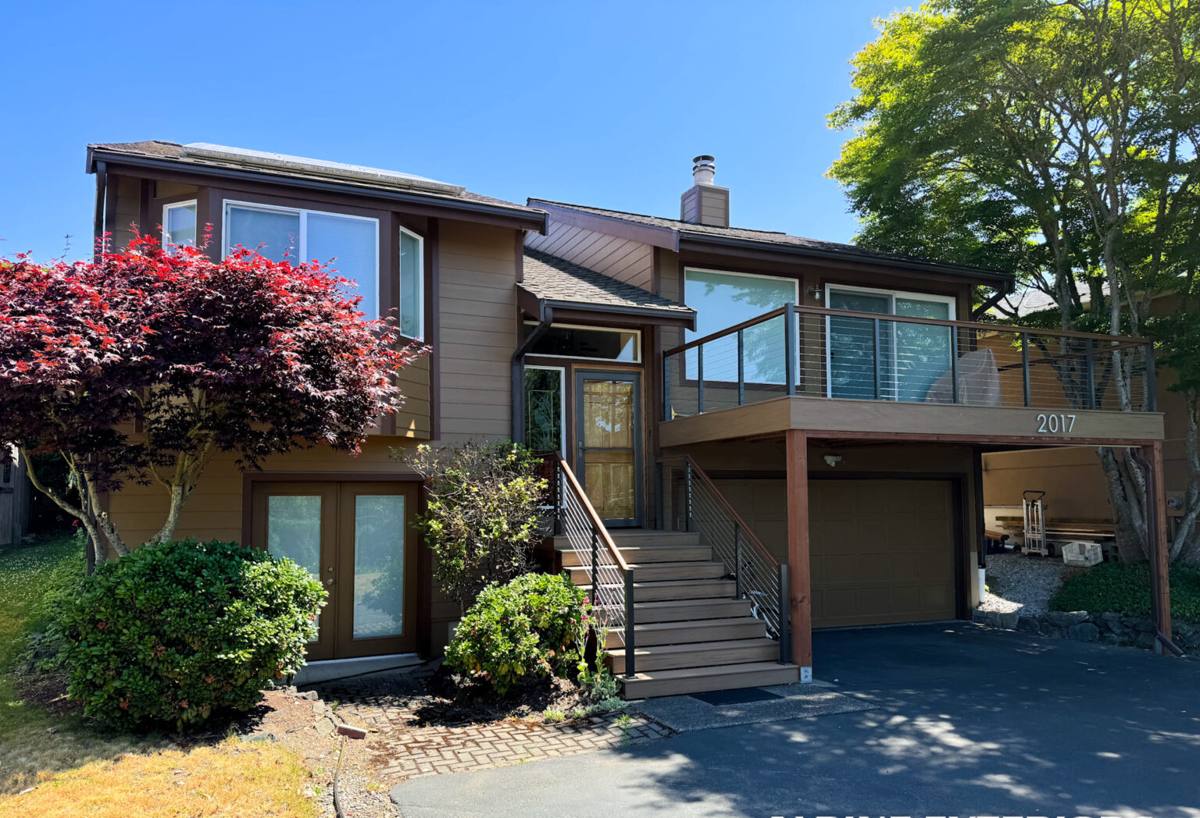
What Whatcom County Weather Does to Windows Over Time
Window failure in this region rarely happens all at once. It's usually a slow process that starts with a small gap in the sealant or flashing and grows over several wet seasons until it's a visible problem — fogged glass, soft trim, or a draft you can feel standing next to the frame.
Salt Air and Corrosion
Even homes set back from the water deal with salt-laden air moving through the region, especially during winter storms. Salt accelerates corrosion on window hardware — hinges, locks, and especially aluminum components — and it breaks down cheaper finishes faster than manufacturers' warranties assume. This is why hardware quality and finish matter more here than in a drier inland climate.
Wind-Driven Rain and Water Intrusion
Rain in this part of Washington doesn't just fall straight down — wind pushes it sideways into wall assemblies, especially on exposed elevations. A window opening is one of the most vulnerable points in a wall for exactly this reason. If the flashing isn't layered correctly (so water sheds down and out, never sideways or up under the siding), driving rain will find the gap eventually. This is the single most common cause of hidden rot we find behind older window installations.
Moss, Mildew, and Trapped Moisture
Whatcom County's long damp season means anything that stays wet, stays wet for a while. Moss and mildew growth on sills, trim, and the siding around windows isn't just cosmetic — it's a sign that water is sitting somewhere it shouldn't be, or that airflow around the window is being blocked. Wood trim in these damp, shaded spots needs either genuinely good drainage detailing or low-maintenance materials, because repainting a moss-stained sill every year or two gets old fast.
Signs Your Nooksack Home Needs New Windows
Not every issue means a full window replacement, but these are the signs worth taking seriously before another wet season passes:
- Visible fog or moisture trapped between the panes of a double-pane window (the seal has failed)
- Soft, discolored, or spongy trim and sill material around the window frame
- Noticeable draft near a closed window on a windy day
- Windows that are difficult to open, close, or lock — often a sign the frame has shifted or swollen
- Paint that keeps bubbling or peeling in the same spot near a window, even after repainting
- Persistent moss or dark staining on the siding directly below a window
- Rising heating bills with no other obvious explanation
- Visible daylight or gaps around the frame from outside
What a Correct Window Installation Actually Involves
Window installation looks simple from the outside — old window out, new window in — but the parts that determine whether it lasts fifteen years or fails in three are mostly hidden once the trim goes back on.
Flashing and Water Management
Before a new window ever goes into the opening, the rough opening needs to be prepped with flashing that integrates properly with the existing house wrap or weather-resistive barrier. That means a sill pan to catch and direct any water that gets past the window itself, side flashing that laps over the sill pan, and head flashing that laps under the house wrap above — so water always moves down and out, shingle-style, never getting trapped behind the siding.
Air Sealing and Insulation
The gap between the window frame and the rough opening needs to be sealed and insulated correctly — not overpacked with expanding foam (which can bow the frame and cause the window to bind) and not left with gaps that let cold air and moisture pass through. This step is invisible once trim is reinstalled, which is exactly why it's the step most often rushed on lower-quality installs.
Fit, Shimming, and Squaring
Every window needs to be shimmed level, plumb, and square in the opening before it's fastened. A window that's slightly out of square will still look fine on install day, but it will operate poorly, wear its hardware unevenly, and put stress on the seals — problems that show up months or years later, not on day one.
Choosing the Right Window for This Climate
There's no single "best" window material for every home — it depends on your budget, your home's style, and how much upkeep you want to take on. Here's how the common options compare for a coastal-influenced, wet Whatcom County climate:
| Frame Material | Moisture & Salt-Air Performance | Maintenance | Typical Lifespan |
|---|---|---|---|
| Vinyl | Good — won't rot or corrode; seams are the main weak point if not welded well | Low — occasional cleaning, no painting | 20–30 years |
| Fiberglass | Very good — dimensionally stable, resists warping in wet/dry cycles | Low | 30–40 years |
| Wood-clad | Depends entirely on cladding integrity and sill detailing — exposed wood is a poor fit for this climate | Higher — cladding and interior wood need periodic attention | 20–30 years with upkeep |
| Aluminum | Prone to corrosion in salt-influenced air unless properly finished; also conducts heat/cold | Moderate | 15–25 years |
For most homes in the Nooksack area, we lean toward vinyl or fiberglass frames specifically because they don't give moisture or salt air anything to work with over time. That's a professional standard based on how these materials behave in wet, coastal-influenced climates — not a knock on wood-clad windows generally, which can perform well in drier regions or with disciplined maintenance.
Our Installation Process
- On-site assessment — we look at your existing windows, the condition of the rough openings, and any signs of water damage or rot before quoting anything.
- Product selection — we walk through frame material, glass package, and style options that fit your home and budget.
- Opening prep — old windows are removed and the rough opening is inspected; any damaged framing or sheathing is addressed before a new window ever goes in.
- Flashing and sill pan installation — proper water management is built in before the window is set.
- Window setting and shimming — leveled, squared, and fastened per manufacturer specifications.
- Insulation and sealing — the gap around the frame is insulated and sealed correctly, inside and out.
- Trim and finish work — interior and exterior trim reinstalled or replaced, caulked, and finished.
- Final walkthrough — every window is opened, closed, and checked for a square, weathertight fit before we consider the job done.
What Affects the Cost of Window Installation
Window pricing varies a lot based on a handful of factors. We give exact numbers only after seeing your home, but here's what generally moves the price up or down:
| Factor | Why It Matters |
|---|---|
| Number of windows | Per-window cost usually drops on larger jobs due to shared setup and labor efficiency |
| Frame material | Vinyl is typically the most budget-friendly; fiberglass and wood-clad cost more upfront |
| Window size and type | Large picture windows, bays, and custom shapes cost more than standard double-hung sizes |
| Condition of the rough opening | Hidden rot or framing damage found during removal adds repair work before the new window goes in |
| Glass package | Upgraded low-E coatings or gas-filled units add cost but improve efficiency and comfort |
| Accessibility | Second-story or hard-to-reach windows take more time and equipment |
Why Hire a Crew That Already Works in Nooksack
A window installer who mainly works in a different climate — or who treats every job as a generic "remove and replace" — is more likely to skip the flashing and sill detailing that this region actually requires. We work siding and window projects throughout the Blaine and Whatcom County area regularly, which means we've seen firsthand what happens when driving rain and salt air find a weak spot, and we build our installs to close those gaps before they start.
Working locally also means we understand how window replacement interacts with the rest of your exterior — siding, trim, and moisture barriers — rather than treating the window as an isolated product swap. That matters most on older homes in the Nooksack area, where the existing wall assembly may need some attention alongside the window itself.
Get a Free, No-Pressure Estimate
If your windows are showing any of the signs above, or you're just planning ahead for your next exterior project, we're happy to take a look and give you honest options — no pressure, no pushy sales pitch. Fill out the form below to schedule a free estimate for window installation on your Nooksack-area home.