 Blaine
 Why Bellingham-Area Roofs Take a Different Kind of Beating
Homes around Bellingham sit close to the water on the Salish Sea, and that location shapes what a roof has to survive here. Salt-laden marine air works its way into metal fasteners, flashing, and vents year-round, and it doesn't take a storm to do it — a steady coastal breeze off Bellingham Bay is enough over a few seasons. Add wind-driven rain that comes in at an angle instead of straight down, and you get water finding its way under shingle edges and around penetrations that would stay dry in a drier inland climate.
Then there's moss. Whatcom County's cool, damp stretch from fall through spring — and often lingering into summer under tree cover — gives moss and algae a long runway to establish themselves on north-facing slopes and shaded valleys. Once moss takes hold, it holds moisture directly against the roofing material, which is a different and more damaging problem than simple weathering. A roof replacement done right in this area has to plan for all three of these factors together, not just swap old shingles for new ones.
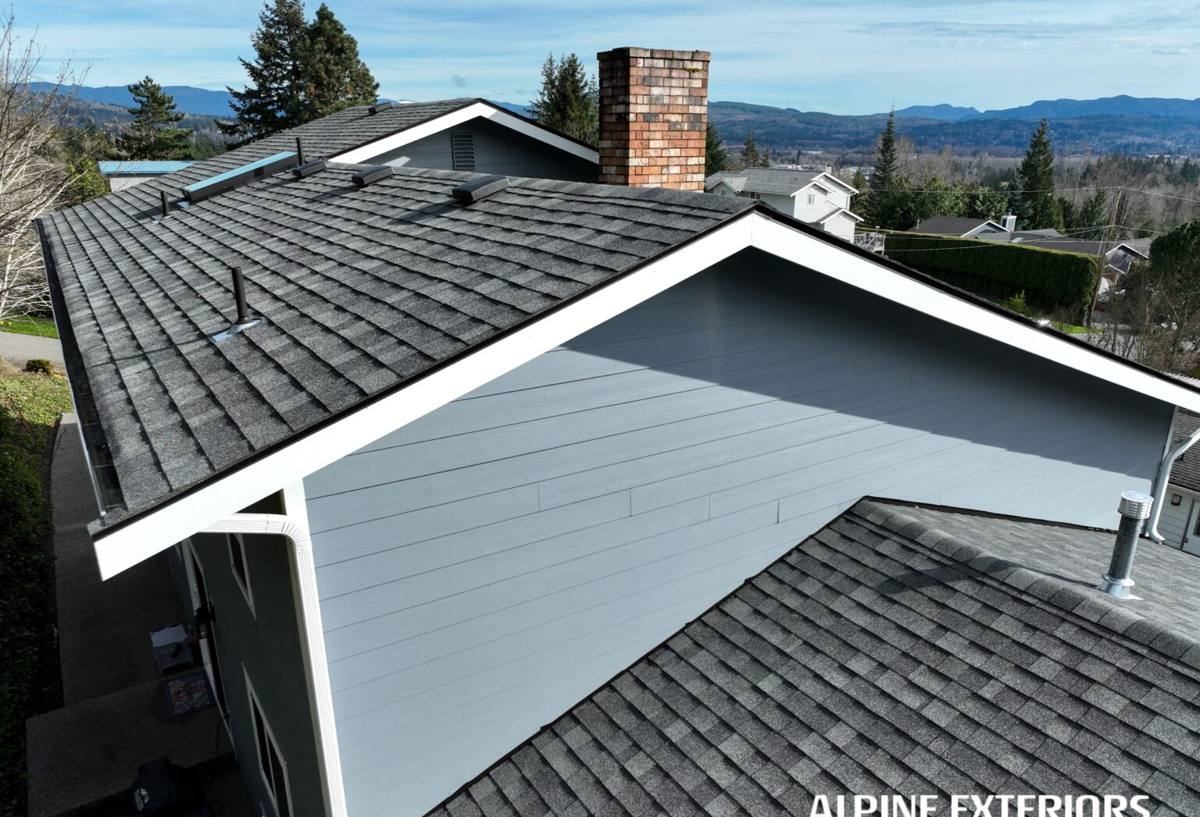
Signs a Bellingham-Area Roof Needs Replacing, Not Just Repair
Not every roof problem calls for full replacement, but there's a point where patching becomes a temporary fix on a roof that's already lost its structural reliability. Common indicators we look for on inspections in this area include:
- Granule loss heavy enough to expose the asphalt mat underneath, especially on south- and west-facing slopes
- Shingles that are curling, cupping, or cracking at the edges
- Moss mats thick enough to hold visible moisture against the roof deck rather than just surface staining
- Soft or spongy spots underfoot, which usually mean the decking beneath has taken on water
- Repeated leaks at valleys, chimney flashing, or vent boots despite prior repairs
- Daylight visible through the roof deck from inside the attic
- A roof approaching or past 20 years old, especially if moss and moisture have shortened its effective life
If a roof is showing two or more of these at once, replacement usually costs less over time than another round of spot repairs.
What a Correct Roof Replacement Involves Here
Tear-Off and Deck Inspection
We remove the existing roofing down to the deck rather than layering over it. That's the only way to find rot, soft sheathing, or damaged framing that's been hidden under the old material — and in a climate this wet, hidden deck damage is common on roofs over 15 years old. Any compromised sheathing gets replaced before anything new goes down.
Underlayment and Water Protection
Given the amount of wind-driven rain this area sees, underlayment choice matters more here than in drier parts of the state. We use synthetic underlayment as a baseline and add self-adhering ice-and-water membrane at eaves, valleys, and roof penetrations — the spots where water is most likely to be pushed backward under normal conditions.
Flashing and Fasteners for Salt Air
Around Bellingham Bay, standard fasteners and thin flashing corrode faster than they would inland. We spec corrosion-resistant flashing and fasteners rated for coastal exposure at chimneys, skylights, and wall-to-roof transitions, since these are the first places a marine climate finds a weak point.
Ventilation
A roof that isn't ventilated properly traps moisture in the attic, which shortens shingle life from underneath and feeds condensation problems independent of anything happening outside. We balance intake and exhaust ventilation as part of every replacement, not as an optional add-on.
Choosing Materials for a Marine Climate
There's no single "best" roofing material for every home — the right choice depends on the home's exposure, roof pitch, tree cover, and how much long-term maintenance the homeowner wants to take on. Here's how the common options compare for this climate specifically:
| Material | Moss & Moisture Resistance | Salt Air Durability | Typical Lifespan Here | Upfront Cost Tier |
|---|---|---|---|---|
| Architectural asphalt shingle | Good with proper ventilation and periodic cleaning | Good; use corrosion-resistant flashing | 20-25 years | Economical |
| Standing seam metal | Excellent — moss struggles to grip smooth metal | Very good with coastal-rated coatings | 40-50+ years | Premium |
| Cedar shake | Requires the most upkeep; traps moisture without regular treatment | Moderate; fasteners need coastal-grade hardware | 20-30 years with maintenance | Premium |
| Composite/synthetic shake | Good; won't absorb moisture like real wood | Good | 30-40 years | Mid-to-premium |
We're honest with homeowners about trade-offs rather than steering everyone toward the same product. Cedar shake has real appeal, but in a climate this damp it demands a maintenance commitment — regular cleaning and treatment — that not every homeowner wants to take on, and we'd rather set that expectation upfront than have it become a surprise five years in. Metal carries a higher installation cost but sheds moss and moisture better than any other option, which matters most on shaded, north-facing roofs.
Our Replacement Process, Start to Finish
- Inspection and estimate: We walk the roof (or use a drone where pitch or access makes that safer), check the attic for ventilation and moisture issues, and give a written estimate — no pressure, no inflated urgency.
- Material selection: We go over the options above against your roof's exposure, tree cover, and budget.
- Permitting: Full roof replacements typically require a permit; we handle that paperwork with the local building department.
- Scheduling around weather: We plan tear-off days around forecasted dry windows, since an open roof deck can't sit exposed in this climate.
- Tear-off and deck repair: Old material comes off, the deck gets inspected, and any damaged sheathing is replaced before we move forward.
- Underlayment, flashing, and installation: Ice-and-water membrane, synthetic underlayment, coastal-rated flashing, and the new roofing material go on per manufacturer specification.
- Ventilation check: Intake and exhaust ventilation are verified before closing out the job.
- Cleanup and walkthrough: Magnetic sweep for nails, full site cleanup, and a walkthrough so you know what was done and what to watch for.
- Warranty paperwork: Manufacturer and workmanship warranty documentation handed over in writing.
Keeping Moss and Moisture From Cutting a New Roof's Life Short
A new roof's lifespan depends a lot on what happens after installation. A few habits make a real difference in Whatcom County's climate:
- Keep gutters clear so water isn't backing up under the eaves during heavy rain
- Trim back overhanging branches to cut down shade and airflow blockage that lets moss take hold
- Have moss buildup removed with a soft wash rather than a pressure washer, which can strip granules and shorten shingle life
- Check attic ventilation isn't blocked by insulation, especially after any attic work
- Schedule a roof check every couple of years, particularly after a hard winter
What to Expect During the Project
Most residential roof replacements in this area take one to three days of active work once tear-off starts, depending on roof size, pitch, and whether deck repairs are needed. The bigger scheduling factor is weather — we don't start tear-off without a reasonably dry window, since an exposed deck in a sudden Whatcom County downpour is a problem nobody wants. We'll walk you through the planned schedule before work begins and keep you posted if weather pushes the timeline.
Why a Crew That Already Works Bellingham Matters
A roofing crew based here and working this area regularly has already seen how homes in this climate age — which slopes hold moss longest, which flashing details tend to fail first near the water, and which older homes in the area have roofing details that need extra attention during tear-off. That local knowledge shows up in fewer surprises during the job and in material and detail choices that are matched to how this specific climate treats a roof, rather than a generic approach pulled from a drier region. It also means we're close by if a question comes up after the job is done.
Before You Sign — A Homeowner's Checklist
- Get a written estimate that itemizes tear-off, materials, underlayment, and flashing — not just a lump sum
- Confirm the contractor is licensed, bonded, and insured, and ask to see current documentation
- Ask what underlayment and ice-and-water protection are included, not just the visible shingle or metal
- Ask how ventilation will be handled, not just assumed to be adequate
- Get the warranty terms in writing — both manufacturer and workmanship coverage
- Ask whether the crew pulls the permit or expects you to
- Check for local references or completed work you can see in the area
If your Bellingham-area roof is showing its age or you just want an honest read on how much life it has left, we're happy to take a look. Fill out the form below for a free, no-pressure estimate — we'll tell you straight what we find, whether that's a replacement or a smaller repair.