 Blaine
 Why Bellingham Windows Wear Out Differently
Bellingham sits close enough to Bellingham Bay and the Salish Sea that salt-laden air is a real factor in how exterior materials age, and that's on top of the rain load Whatcom County gets most of the year. Old aluminum-frame windows corrode faster here than the same windows would fifty miles inland. Wood sashes that aren't sealed and maintained take on moisture and start rotting at the corners. And in the shaded, damp yards common around Bellingham, moss and algae find a foothold on sills, tracks, and exterior trim within a couple of seasons if nothing is done about it.
None of that means every old window is doomed — plenty of well-built, well-maintained windows last decades even in this climate. But when a window starts failing here, it's usually a combination of a few things happening at once: seal failure letting in moisture, frame material that can't shed water fast enough, and buildup (moss, mildew, grime) that traps moisture against the frame instead of letting it dry. A window replacement done right in this region has to account for all three, not just swap in a new unit and caulk around the edges.
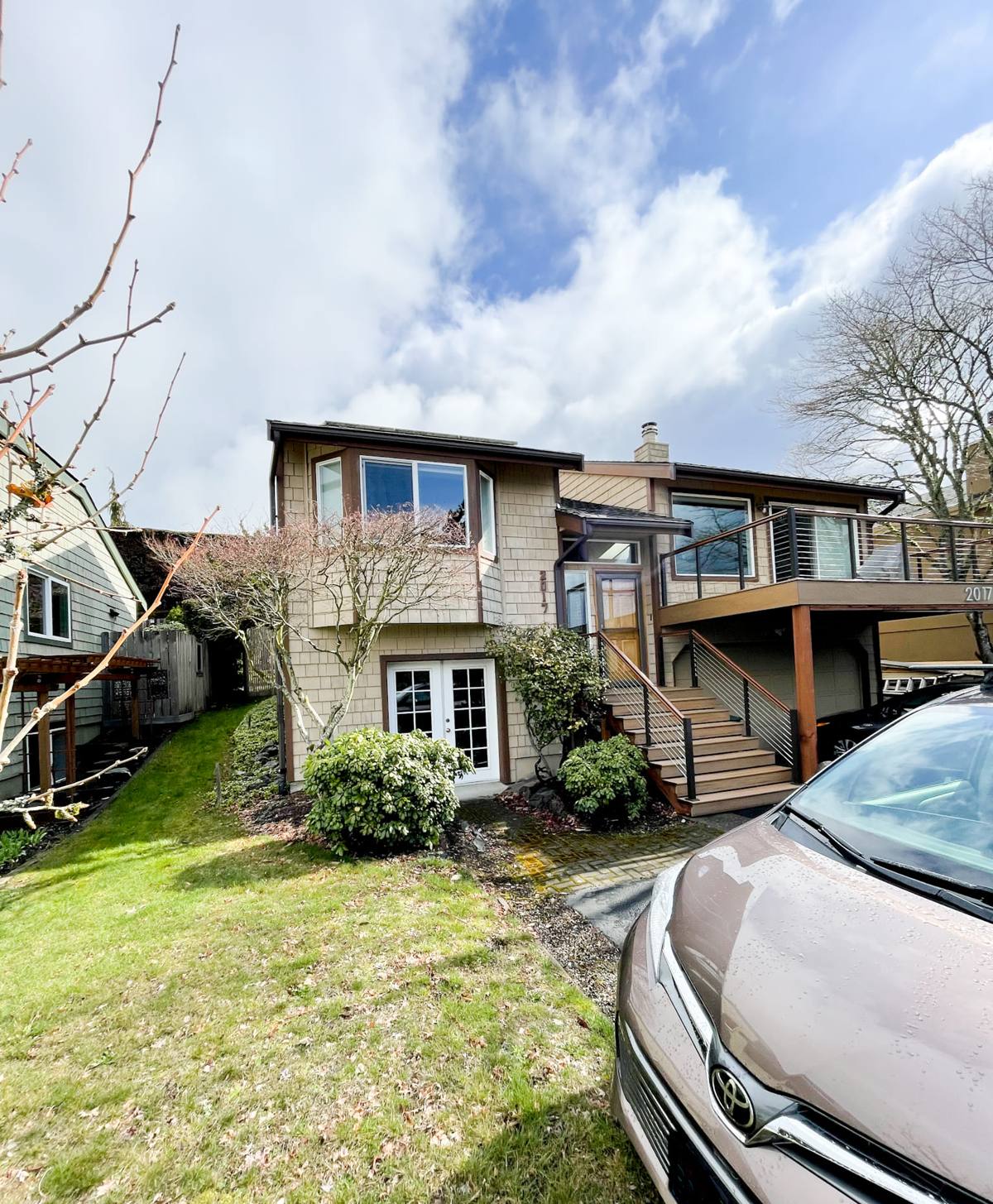
What Driving Rain and Moss Season Actually Do to a Window
Driving rain and wind-driven water
Bellingham's weather doesn't just rain straight down — wind off the water pushes rain sideways against west- and south-facing walls, which is exactly where a lot of Bellingham homes have their largest window openings for the view. Wind-driven rain finds any weak point in the flashing or sealant and pushes water behind the trim, where it can sit against sheathing and framing for months without anyone noticing until there's a soft spot or a stain on the interior sill.
The long moss season
From fall through spring, Whatcom County stays wet and mild enough that moss, lichen, and algae grow steadily on anything that doesn't dry out between rain events — window sills, bottom rails, and trim in shaded or north-facing spots especially. Moss holds moisture against the frame like a sponge. On wood windows that means accelerated rot. On vinyl and aluminum it's mostly cosmetic, but it's still a sign that water is sitting where it shouldn't, and it makes it harder to see early signs of a failing seal underneath.
Salt air and corrosion
Closer to the bay, salt air speeds up corrosion on aluminum frames, hardware, and screws. Hinges and locks stiffen up or seize, and pitting on aluminum sills and tracks becomes a maintenance headache years before it would show up on a similar home further from the water.
What a Correct Window Replacement Job Involves
Swapping the glass unit itself is the easy part. Where window replacement jobs succeed or fail long-term in this climate is in the details around the opening:
- Sill pan flashing — a sloped, sealed pan under the window that directs any water that gets past the exterior seal back outside instead of into the wall cavity.
- Proper flashing sequencing — flashing tape and building paper (or house wrap) lapped correctly, shingle-style, so water always sheds downward and outward, never into a seam.
- Backer rod and quality sealant — the right sealant for the substrate, applied so it can flex with temperature and moisture changes without cracking.
- Shimming and squaring — a window that isn't shimmed level and square will bind, won't seal evenly, and will wear its weatherstripping unevenly.
- Insulation at the gap — low-expansion foam or backer rod and insulation in the gap between the frame and rough opening, not just caulk at the surface.
- Interior and exterior trim reset — trim and casing reinstalled (or replaced) cleanly, with the exterior side sealed against the specific driving-rain exposure of that wall.
Skip any one of these and the new window can still fail early — often in a way that looks identical to the old problem, just a few years later.
Choosing Materials for a Coastal Whatcom County Climate
There's no single "best" window material for every home — it depends on the home's age, wall assembly, budget, and how exposed a given wall is to wind and rain. Here's how the common options generally hold up in this specific climate:
| Frame Material | How It Handles This Climate | Maintenance |
|---|---|---|
| Vinyl | Doesn't corrode or rot; handles moisture and salt air well; can expand/contract with temperature swings | Low — occasional cleaning, no painting or sealing |
| Fiberglass | Very stable dimensionally, strong moisture and corrosion resistance, holds paint well if a custom color is wanted | Low — durable finish, minimal upkeep |
| Wood (clad or unclad) | Good insulator and classic look, but bare wood is vulnerable to rot in our wet season without diligent upkeep | High for unclad wood; moderate for clad wood |
| Aluminum | Prone to corrosion and pitting in salt-air exposure closer to the bay; conducts cold and can condense | Moderate to high near the water |
For most Bellingham homes, especially anything with real exposure to wind off the bay, we steer people toward vinyl or fiberglass for the moisture and corrosion resistance, or clad-wood if the interior look of real wood matters and the owner is comfortable with the added upkeep. We don't push bare aluminum replacements in this climate — not because aluminum is a bad product everywhere, but because the corrosion and condensation issues it develops in coastal Whatcom County conditions create maintenance problems we'd rather steer a homeowner away from up front.
Glass and glazing
Double-pane, low-E glass is the standard for this region — it cuts heat loss during our long cool season and reduces condensation on the interior glass, which is a common complaint in older single-pane or poorly-sealed windows once the weather turns damp. Argon-filled units add a bit more insulating performance for a modest cost difference.
Our Process for a Bellingham Window Replacement
- On-site assessment — we look at each window's actual condition, the wall's exposure to wind-driven rain, and any signs of past water intrusion, moss buildup, or frame damage.
- Measure and order — precise measurements for the openings, factoring in whether we're doing a pocket (insert) replacement or a full-frame replacement down to the rough opening.
- Prep and removal — old windows removed carefully, opening inspected for hidden rot or water damage before anything new goes in.
- Flashing and sill pan work — this is where most of the long-term performance is decided, and it's not optional or rushed.
- Install, shim, and seal — window set level and square, insulated, sealed inside and out with materials suited to this climate.
- Trim and finish — interior and exterior trim finished cleanly, caulk lines tooled properly so they hold up to weather instead of cracking after one wet season.
- Walkthrough — we check operation, seals, and finish with the homeowner before we call it done.
Insert vs. full-frame replacement
An insert (pocket) replacement reuses the existing frame and is faster and less invasive, which works fine when the existing frame is still sound and square. A full-frame replacement removes everything down to the rough opening — more labor, but it's the right call when there's frame rot, the opening is out of square, or we find water damage once the old window comes out. We'll tell you honestly which situation you're in rather than defaulting to whichever is easier for us.
What Affects the Cost
| Factor | Why It Matters |
|---|---|
| Insert vs. full-frame | Full-frame costs more in labor and materials but is sometimes the only correct fix |
| Frame material | Vinyl is typically the most budget-friendly; fiberglass and clad-wood cost more upfront |
| Window size and type | Large picture windows, bays, or custom shapes cost more than standard double-hung or slider sizes |
| Number of windows | Doing a whole house at once is usually more cost-efficient per window than one-offs |
| Hidden damage | Rot or water damage found once the old window is out adds repair time before the new one can go in |
| Access and wall height | Second-story or hard-to-reach windows take longer and may need staging or lifts |
We won't quote a job over the phone with any real accuracy — an in-person look at the openings, framing, and exposure is what makes a quote honest instead of a guess.
Why Local Experience in Bellingham and Whatcom County Matters
A crew that already works this specific area knows which wall orientations in Bellingham take the worst of the wind-driven rain, what moss and moisture damage typically looks like on homes here versus drier parts of the state, and which flashing and sealant details actually hold up through a full Whatcom County wet season rather than just looking good on install day. That's knowledge that comes from doing this work here repeatedly, not from a general contractor passing through the area for a one-off job.
Local experience also means knowing the practical side: typical permitting expectations for window replacement in this jurisdiction, common framing quirks in the area's housing stock by era, and realistic timelines given how often weather affects outdoor work here. None of that is glamorous, but it's the difference between a replacement that's still performing well in fifteen years and one that starts leaking again in three.
Signs Your Bellingham Home Needs Window Replacement
- Visible condensation or fogging between the panes (a sign the seal has failed)
- Drafts you can feel around the frame even when the window is fully closed and locked
- Wood trim or sills that feel soft, spongy, or show staining or discoloration
- Moss or algae buildup that keeps returning on sills or bottom rails after cleaning
- Windows that are difficult to open, close, or lock — often a sign of a warped or swollen frame
- Noticeably higher heating costs with no other explanation
- Paint peeling or bubbling on interior trim near the window, which often points to trapped moisture
If you're noticing a couple of these, it's worth having someone look before it becomes a bigger repair. Not every symptom means a full replacement — sometimes it's a repair or reseal — but you want an honest read on which one you're dealing with.
Get an Honest Look at Your Windows
If your Bellingham home has windows showing their age — fogging, drafts, sticking sashes, or moss that won't quit coming back — we're happy to come take a look and give you a straight assessment of what's actually going on and what it would take to fix it right. No pressure, no upsell script, just an honest estimate based on what we see at your home. Fill out the form below to get started.