 Blaine
 Siding Repair in Birch Point: A Different Job Than a Full Tear-Off
Birch Point sits on the Whatcom County coastline just outside Blaine, close enough to open water that homes here deal with a heavier dose of salt air, wind-driven rain, and moss growth than houses set further inland. That exposure is exactly why siding repair requests from this stretch of coastline tend to look different than the ones we get from drier, more sheltered neighborhoods — the damage shows up sooner, and it's often concentrated in predictable spots: low courses near grade, corners that catch the wind, and shaded walls that never fully dry out between storms.
Repair is its own discipline, separate from a full siding replacement. A good repair matches the existing material and profile, ties correctly into the surrounding drainage and flashing detail, and holds up under the same salt air and driving rain that caused the original damage — not just patch the visible symptom and leave the underlying cause untouched. This page walks through what siding repair actually involves for a Birch Point home, how we decide when repair makes sense versus when it doesn't, and why hiring a crew that already works this part of the coastline changes the outcome.
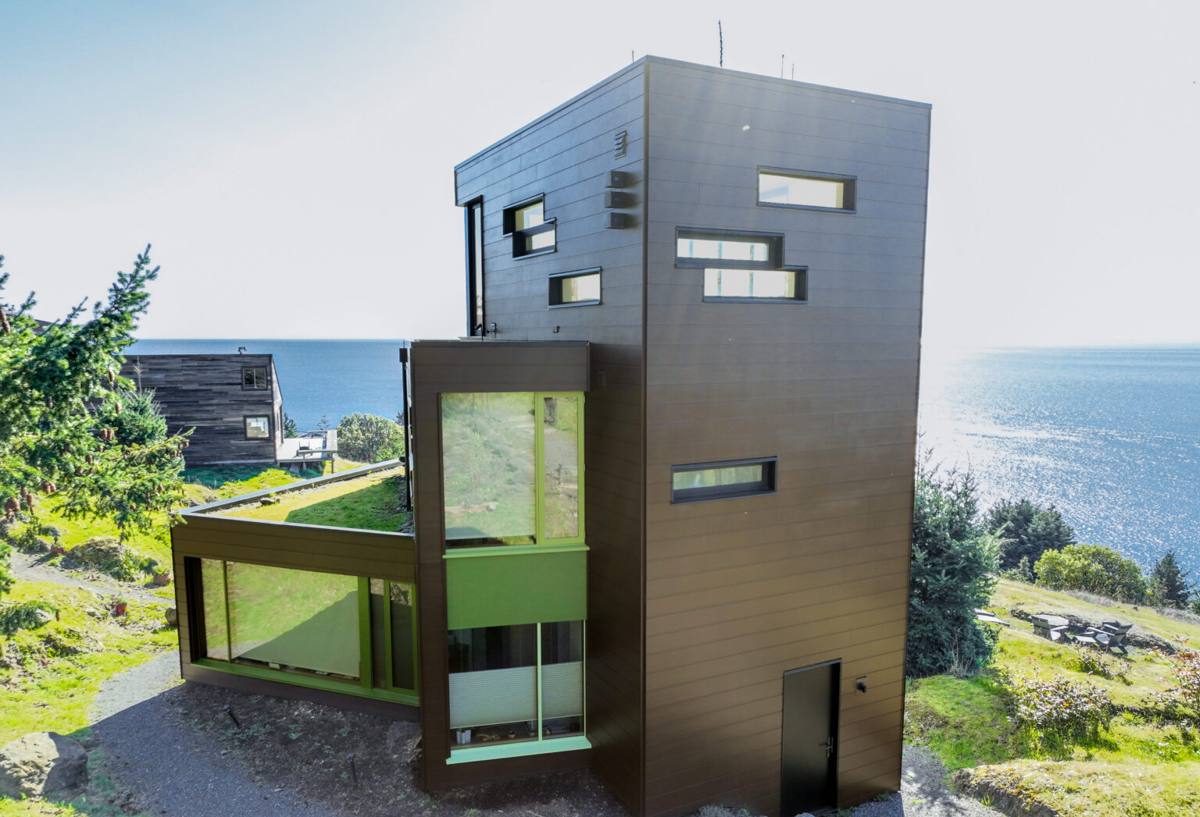
What This Stretch of Coastline Does to Siding
Salt Air and Corrosion
Birch Point's proximity to open water means homes here take on more salt-laden air, day in and day out, than properties a few miles inland. Salt accelerates corrosion on fasteners, flashing, and any exposed metal trim, and it breaks down lower-quality finishes faster than a dry climate would. A lot of the repair calls we see start with a fastener that let go, a piece of flashing that corroded through, or a finish that failed years ahead of schedule — all downstream of the same salt exposure.
Driving Rain That Hits Sideways
Storms coming off the water rarely drop rain straight down on a Birch Point home. Wind pushes it sideways into siding joints, window and door flashing, and the transitions where a roof meets a wall — points that a simple annual rainfall total doesn't capture. That sideways load is often the real cause behind a soft spot or a stained interior wall that first shows up as a small cosmetic issue on the outside.
A Long Moss Season
Mild temperatures and near-constant moisture add up to a moss and mildew season that can run most of the year on shaded or north-facing walls around Birch Point. Any siding surface with even a little porosity becomes a growth surface over time, and once moss or mildew is established, it tends to hold moisture against the material longer than it would otherwise sit — which speeds up whatever breakdown is already underway underneath.
Signs a Birch Point Home Needs Siding Repair, Not Just a Wash
Some surface growth and weathering is normal in this climate. The signs below usually mean something more than a cleaning is needed:
- Soft, spongy, or bouncy spots when you press on the siding, especially near the bottom courses or close to grade
- Cracked, split, or visibly warped boards, particularly at corners and around window and door trim
- Gaps between panels, boards that flex when pushed, or fasteners that have backed out or popped
- Dark staining, streaking, or moss that keeps returning quickly after it's cleaned off
- Peeling paint, a musty smell, or soft drywall on interior walls that back up to the affected section
- Visibly failed caulking or sealant at trim joints, seams, and penetrations
Any single item on that list is worth a closer look. A few of them together, especially paired with an interior sign, usually means water has already moved past the siding and into the wall assembly.
Repair or Replace? How We Make the Call
Not every damaged section needs a full re-side, and not every repair request should end with just a patch. We look at how contained the damage is, what's causing it, and how the rest of the siding is holding up before recommending either path.
| Situation | Likely Approach | Why |
|---|---|---|
| Isolated impact damage or a single cracked board | Spot repair | Damage is contained and the surrounding material is still sound |
| Failed flashing or caulking causing a localized leak | Section repair plus flashing correction | Fixing the water source matters as much as replacing the visible board |
| Soft or rotted sheathing found behind multiple boards | Section repair with sheathing replacement | The damage has moved past the siding into the wall structure |
| Widespread warping, cracking, or moisture damage across several walls | Full replacement | Repeated repairs on failing material rarely outlast a proper re-side |
| Existing non-Hardie siding nearing the end of its service life | Full replacement in most cases | Patching a product that's already breaking down system-wide is a short-term fix |
We'll always tell a homeowner honestly when a repair is the right call and when it isn't. A contractor who recommends full replacement for every service call isn't doing you any favors, and one who patches damage that's clearly spreading isn't either.
What a Correct Siding Repair Actually Involves
Matching Material and Profile
A repair that doesn't match the existing board width, profile, and reveal stands out immediately and can also create a water path where the new and old material meet. Getting this right takes more care on an older installation, where the original product line may no longer be in current production.
Color Matching with ColorPlus
On homes with James Hardie's factory-applied ColorPlus finish, we match the existing color as closely as current product lines allow. Because ColorPlus is baked on at the factory rather than brushed on site, an exact match on an older or discontinued color isn't always possible — we're upfront about that before starting so there are no surprises once the repair is in.
Flashing and Drainage Corrections
Most siding damage we find on repair calls traces back to a flashing or drainage detail that failed, not a defect in the siding material itself. A repair that replaces the visible board but leaves the same flashing gap in place is likely to fail again in the same spot. We correct the underlying drainage detail as part of the repair, not as a separate upsell.
Fastening to Spec
Repaired sections need to be fastened to the same specification as new installation — correct fastener type, spacing, and penetration depth. A repair that's nailed in loosely or with the wrong fastener will move, gap, or let water in again well before the surrounding siding needs attention.
Why We Repair — and Replace — with James Hardie Fiber Cement Only
We install James Hardie fiber cement exclusively, and that standard carries over into repair work. We don't install LP SmartSide, vinyl siding, Cemplank, Allura, primed spruce, or cedar, even for a partial repair, because introducing a different material into an existing wall creates its own set of moisture and expansion mismatches down the line.
When a Birch Point home already has non-Hardie siding and needs repair, we'll assess it honestly. Small, contained damage on an otherwise sound installation can often be repaired in the existing material without us installing more of it ourselves, or we'll be direct that the product's condition points toward a full re-side rather than another round of patching. Either way, we won't tell a homeowner a patch will hold up long-term if what we're actually seeing points to system-wide wear.
Where repair does call for new material, James Hardie gives us a product we can stand behind fully in this climate:
- Non-combustible core: Fiber cement doesn't feed a fire the way wood-based siding products can.
- Factory-applied ColorPlus finish: Baked on under controlled conditions, so it resists fading and chalking longer than field-applied paint.
- Climate-engineered HZ product lines: Hardie's HZ5 formulation is built for regions with sustained moisture and freeze-thaw cycling, which fits coastal Whatcom County.
- Dimensional stability: Fiber cement doesn't swell, cup, or warp the way engineered wood can after repeated wet-dry cycles.
- Strong transferable warranty: Backed by one of the more robust warranty structures in the industry, provided installation follows Hardie's spec.
Our Repair Process in Birch Point
We start with an on-site look at the damaged area and the surrounding siding, checking for how far the moisture or physical damage actually extends versus what's visible from the outside. From there we put together a clear, written scope that spells out whether we're recommending a spot repair, a section repair with flashing corrections, or full replacement, along with an honest reason for that recommendation.
- On-site assessment of the damage, including probing for soft spots and checking flashing and drainage at the affected area
- Written scope and estimate before any work begins, with the repair-versus-replace reasoning explained plainly
- Removal of damaged material and inspection of the sheathing and water-resistive barrier underneath
- Correction of any flashing or drainage issue found, not just replacement of the visible board
- Installation of matched material, fastened to spec, with color matched as closely as current product allows
- Final walkthrough so the homeowner can see exactly what was found and what was fixed
Why a Local Birch Point Crew Matters for Repair Work
Repair work rewards speed and familiarity in a way full replacement doesn't. A crew that's out to Birch Point regularly can respond to a soft spot or a failed flashing detail before the next storm off the water pushes more moisture into the same gap, and that turnaround time is often the difference between a straightforward patch and a section repair that's grown into a bigger job. Working this stretch of coastline consistently also means we already know where damage tends to concentrate — low courses near grade, shaded north walls, corners exposed to prevailing wind — so an assessment doesn't start from scratch every time.
A Quick Checklist Before Hiring for a Siding Repair
- Ask whether they're recommending a repair or a replacement, and why — get the reasoning, not just the price
- Confirm they'll address the underlying cause (flashing, drainage, a fastening issue) and not just the visible board
- Ask what material they'll use for the repair and how closely it will match the existing siding
- Confirm current Washington contractor licensing and active liability insurance
- Get a clear, written scope of work before any contract is signed
If you've spotted a soft spot, a cracked board, or a section of siding that's just not holding up the way it should on a Birch Point property, we're happy to take a look and give you an honest read on what it needs — repair or otherwise. Reach out below for a free, no-pressure estimate.