 Blaine
 Deck Building in California Creek: Built for the Conditions Here, Not a Catalog Photo
A deck in California Creek doesn't live the same life as a deck built forty miles inland. Between the salt-laden air coming off the water, the amount of driving rain that blows in sideways during winter storms, and a moss and algae season that can stretch for months under tree cover, this part of Whatcom County asks more of a deck than most manufacturer specs assume. We build decks specifically for this neighborhood, which means we don't treat it as a generic backyard project — we treat it as a structure that has to survive a coastal, wet, shaded climate for decades.
This page is about one thing: building or replacing a deck for a California Creek property, done the right way for the conditions this area actually sees.
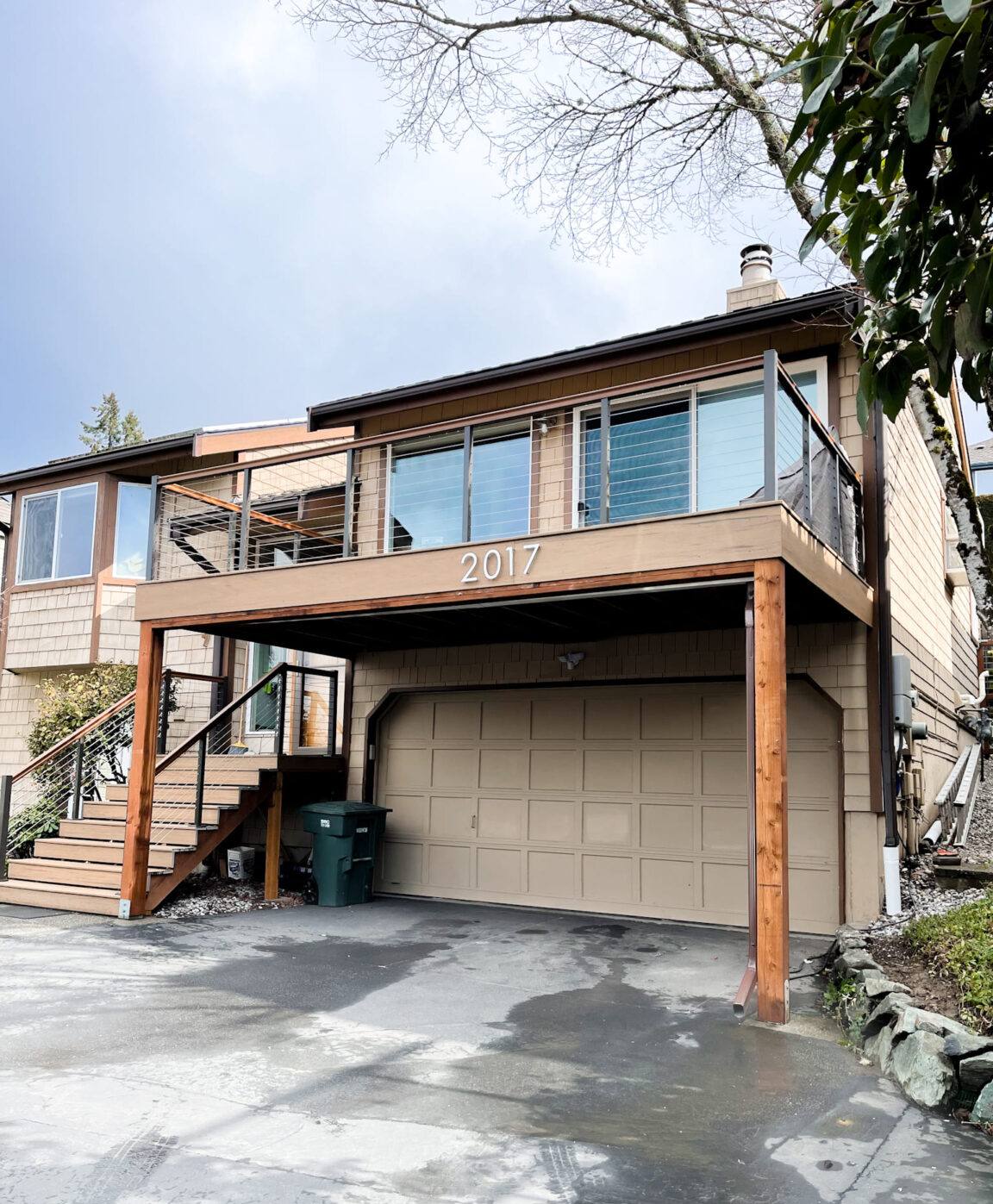
What Local Conditions Actually Do to a Deck
Salt Air and Corrosion
Being close to the water means airborne salt settles on every exposed surface — including the metal you can't see. Fasteners, joist hangers, post bases, and structural screws take the brunt of this over years, and cheap or mismatched hardware corrodes faster than homeowners expect. Corrosion doesn't announce itself; it works quietly inside connections until a hanger or ledger bolt is compromised.
Driving Rain
Blaine gets rain that doesn't fall straight down — wind pushes it at an angle, which means water finds its way into gaps, under boards, and behind ledger connections that would stay dry in a calmer climate. A deck built without that in mind will trap water where it shouldn't, and trapped water is where rot starts.
Moss, Algae, and Shade
Many California Creek lots have mature trees and enough shade to keep decking damp for extended stretches, especially through the fall and winter. That moisture, combined with organic debris from overhanging trees, feeds moss and algae growth on decking surfaces and framing alike. Beyond looking bad, moss holds moisture against wood and turns a dry-in-a-day surface into one that stays wet for a week, and it makes boards slick and genuinely dangerous underfoot.
What a Correctly Built Deck Looks Like Here
A deck built for this environment isn't dramatically different in appearance from any other deck — the difference is almost entirely in what's underneath and how it's assembled. The visible decking is the part homeowners notice; the framing, flashing, fasteners, and drainage detailing are what determine whether that deck is still solid in fifteen years.
- Ledger board properly flashed and separated from the house wall so water can't wick into the structure
- Corrosion-resistant structural hardware rated for coastal or treated-lumber contact, not general-purpose fasteners
- Joist spacing and blocking that match the actual decking material's span rating, not a generic layout
- Gaps and drainage paths that let water shed off the surface and out from under the deck instead of pooling
- Post bases set to keep wood off standing water and away from constant ground moisture
- Decking material chosen with this area's shade and moisture load in mind, not just upfront cost
Choosing a Decking Material for a California Creek Property
There's no single "best" decking material — there's a best match for a given lot, budget, and how much upkeep the homeowner actually wants to do. In a shaded, damp, salt-air environment, the trade-offs matter more than they would somewhere drier.
| Material | How It Handles This Climate | Maintenance Burden | General Cost Position |
|---|---|---|---|
| Pressure-treated wood | Solid if detailed and sealed well; needs consistent upkeep to resist moss and moisture | Higher — regular cleaning and re-sealing | Lowest upfront cost |
| Cedar | Naturally rot-resistant but still absorbs moisture in shaded, damp spots without maintenance | Moderate to high — periodic sealing | Mid-range |
| Composite decking | Doesn't rot, but can still grow surface moss/algae in constant shade — needs occasional cleaning | Lower — no sealing, periodic washing | Higher upfront cost |
| PVC/capped composite | Best moisture resistance of the common options; least affected by damp, shaded conditions | Lowest — mostly rinsing | Highest upfront cost |
We'll walk through these honestly for your specific lot — how much sun the deck actually gets, how close you are to the water, and what upkeep you're realistically willing to do — rather than pushing whatever has the best margin. Each material has a legitimate place; the decision should be based on trade-offs in maintenance, moisture behavior, and long-term appearance, not a sales pitch.
Framing and Substructure: Where Deck Failures Actually Start
Most deck problems homeowners eventually deal with don't start with the decking boards — they start underneath, where nobody's looking. Ledger attachment, joist hardware, and post footings are the parts that determine whether a deck is safe, not just whether it looks good.
Ledger Attachment
The ledger board — where the deck ties into the house — is the single most important structural connection on most decks, and it's also the connection most exposed to water intrusion if it isn't flashed correctly. In a climate with as much driving rain as this area sees, a poorly flashed ledger is a slow-motion problem that can take years to show itself.
Hardware and Fasteners
Given the salt air here, we don't treat hardware selection as an afterthought. Structural connectors and fasteners need to be rated for the type of lumber and the environment they're going into — mismatched metals or under-spec fasteners corrode faster and can fail well before the visible decking shows any wear.
Footings and Posts
Footings need to be set below frost depth and sized for the load, with posts detailed to keep end grain away from standing water. On lots with drainage issues or heavy shade, we pay extra attention to how water moves around and under the structure.
Our Process for a California Creek Deck Build
- On-site assessment — we look at sun exposure, tree cover, drainage, proximity to the water, and the condition of any existing structure before recommending anything.
- Honest material conversation — trade-offs on maintenance, moisture behavior, appearance, and budget, laid out plainly.
- Permitting — we handle the paperwork with the appropriate local jurisdiction so the project is built to code from the start.
- Demolition and structural build-out — including ledger flashing, corrosion-resistant hardware, and footings sized correctly for this soil and climate.
- Decking installation — with attention to spacing and drainage detailing that accounts for this area's rain and shade.
- Final walkthrough — so you understand exactly what maintenance the specific material and layout will need going forward.
Permits and Local Considerations
Deck projects in and around Blaine typically require permitting through the appropriate local jurisdiction, and requirements can touch on setbacks, height, guardrail specs, and footing depth. Properties closer to the water or within certain shoreline-adjacent areas may have additional review depending on their exact location. We handle the permitting conversation directly rather than leaving homeowners to figure out which rules apply to their lot.
Maintaining a Deck in This Climate
Even the best-built deck needs some ongoing attention in a shaded, damp, salt-air environment. The good news is that most of it is simple and infrequent if the deck was built correctly to begin with.
- Sweep off leaves and organic debris regularly, especially in fall — trapped debris holds moisture and feeds moss
- Clean moss and algae off the surface at the first sign of growth rather than waiting until it's established
- Check fastener heads and visible hardware periodically for early signs of corrosion or lifting
- Keep gutters and downspouts near the deck clear so runoff isn't dumping extra water onto or under the structure
- Re-seal wood decking on the manufacturer's recommended schedule — don't stretch it out to save time
- Confirm drainage paths under the deck stay clear of leaves and debris buildup
Why a Crew That Already Works This Area Matters
Deck building isn't exotic work, but building one that holds up specifically in a coastal, shaded, high-rainfall pocket of Whatcom County is a different exercise than building the same deck somewhere drier and sunnier. A crew that regularly works California Creek and the surrounding Blaine area already knows what the salt air does to hardware over time, what the shade and tree cover do to decking surfaces, and how the rain moves across these lots. That familiarity shows up in the details — flashing, fastener selection, drainage planning — that don't show up in a sales brochure but absolutely show up fifteen years later.
If you're planning a new deck or replacing one that's showing its age, we're happy to take a look and talk through what makes sense for your specific property. Reach out for a free, no-pressure estimate using the form below.