 Blaine
 Board & Batten in a Salt-Air, High-Moisture Corner of Whatcom County
Cherry Point sits in one of the more exposed pockets of Whatcom County — close enough to the Strait of Georgia and the marine waters around Blaine that salt-laden air, wind-driven rain, and a long, damp moss season are simply part of owning a home here. Board and batten siding is a popular choice in this area because of its clean, vertical, farmhouse-adjacent look, but that same profile — flat panels with raised battens covering the seams — is unforgiving of weak materials or careless installation. Done right, it sheds water and shrugs off salt air for decades. Done wrong, it traps moisture behind the battens and fails from the inside out long before it looks bad from the street.
This page is specifically about board and batten siding for homes in and around Cherry Point, not board and batten in general. The material choice, the fastening pattern, the flashing details, and the maintenance schedule all need to account for what this stretch of coastline actually does to a house over the course of a Whatcom County winter.
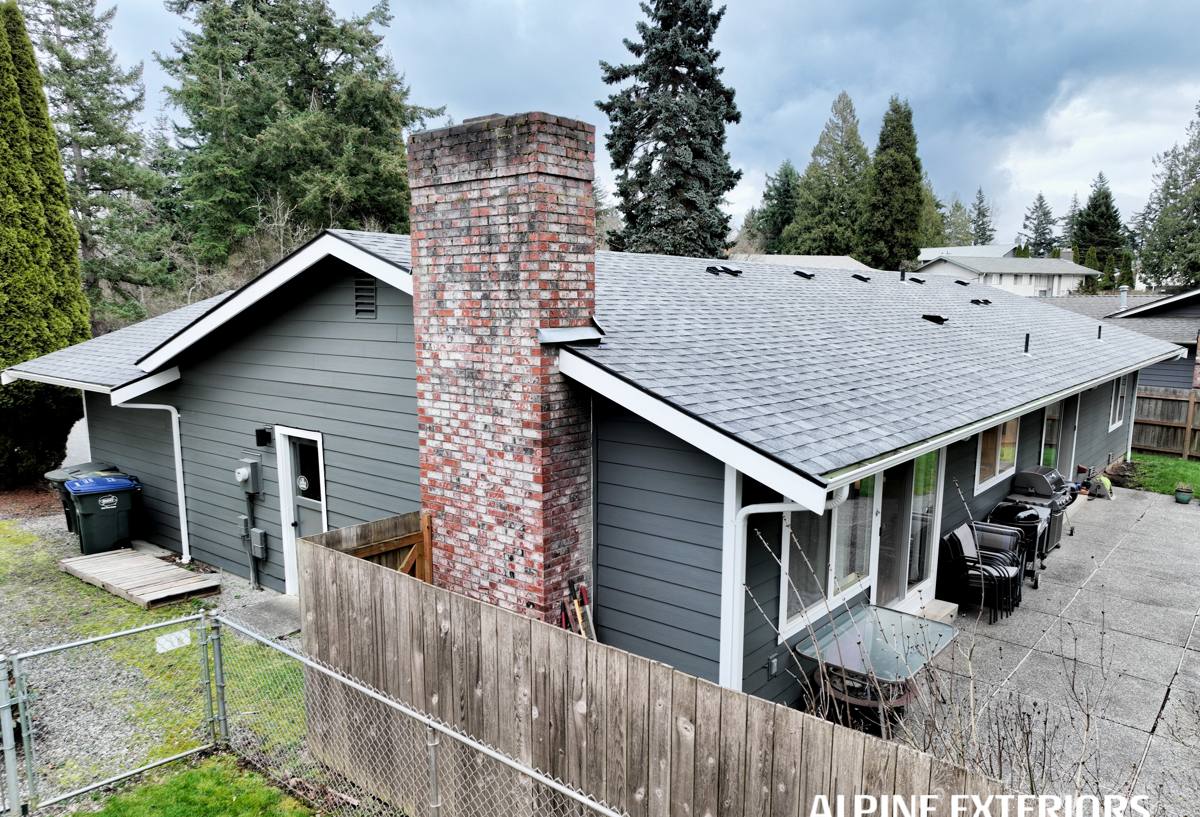
What Cherry Point's Climate Does to Board & Batten Siding
Three conditions drive almost every siding problem we see in this area:
- Salt air corrosion. Proximity to marine water accelerates corrosion of fasteners, staples, and any exposed metal trim. Siding that relies on standard fasteners or thin flashing tends to show rust streaks and loosened battens years before it should.
- Driving rain off the water. Storms moving in off the Strait push rain sideways, not straight down. Board and batten's vertical seams are more exposed to wind-driven water than horizontal lap siding, which makes correct water management behind every batten non-negotiable.
- A long moss and mildew season. Whatcom County's damp, overcast stretches — especially on north- and west-facing walls with less sun exposure — give moss, algae, and mildew a long runway. Porous or poorly sealed materials stain and hold moisture longer than they should.
None of these conditions are unique to Cherry Point, but the combination is more concentrated here than it is a few miles inland, which is why we treat exterior work in this area a little differently than a job in downtown Blaine or Ferndale proper.
What Correct Board & Batten Actually Involves
Board and batten is often described as if it's just "panels with strips over the seams," but the part that actually determines whether it lasts is what happens underneath. A correct installation includes:
Water-Resistive Barrier and Rainscreen Considerations
A properly lapped weather-resistive barrier goes on before any siding, with seams taped and penetrations flashed. On exposed, rain-heavy walls, we often recommend a furring strip or rainscreen gap behind the panels so any moisture that does get past the surface has somewhere to drain and dry instead of sitting against the wall sheathing.
Fastening Into the Battens, Not Just the Panel
Battens should be fastened through to framing with corrosion-resistant fasteners, spaced to hold tight against wind loads without over-driving and cracking the material. In a salt-air environment, fastener choice is not a place to cut corners — the wrong fastener is often the first thing that fails.
Flashing at Every Horizontal Transition
Window heads, door heads, roof-to-wall intersections, and the base of the wall all need proper flashing and drip edges. Board and batten's vertical lines can make these transitions less obvious visually, which is exactly why they need to be done with more care, not less.
Joint and Butt-Seam Treatment
Where panels meet — at outside corners, inside corners, or mid-wall butt joints — the seam has to be backed, caulked with a compatible sealant, and covered so it can't wick water. A batten that simply covers a gap without a backer or proper caulk is a moisture path waiting to happen.
Why We Install James Hardie Fiber Cement for This Profile
We install James Hardie fiber cement siding exclusively — we don't install vinyl, LP SmartSide, Cemplank, Allura, primed spruce, or raw cedar board and batten, and in a climate like Cherry Point's, that's a deliberate standard, not a brand preference.
- Non-combustible material. Fiber cement doesn't feed a fire the way wood-based products can, which matters for long-term insurance and safety considerations regardless of coastal exposure.
- Engineered for wet climates. Hardie's HZ5 product line is specifically engineered for the kind of moisture and freeze-thaw cycling the Pacific Northwest sees, rather than being a general-purpose product adapted after the fact.
- ColorPlus factory finish. A factory-applied, baked-on finish holds color and resists the fading and chalking that field-painted wood or engineered wood siding is prone to — especially useful on walls that take direct salt spray and sun.
- Doesn't absorb water like wood-based panels. Cement-based board and batten doesn't swell, rot, or delaminate at the edges the way wood and wood-composite products can when they take on repeated moisture.
- A real, transferable warranty backing the product itself, on top of our own installation workmanship.
We're not going to claim other board and batten materials are worthless — cedar has real appeal, engineered wood has its fans, and vinyl is inexpensive. But on a wall that's going to take direct wind-driven rain and salt air for the next twenty-plus years, we've made the call that fiber cement is the material we're willing to stand behind, and it's the only one we install.
Comparing Board & Batten Material Options
| Material | Moisture Behavior in Marine Air | Maintenance | Typical Lifespan |
|---|---|---|---|
| James Hardie fiber cement | Does not absorb/swell; engineered HZ5 line for wet climates | Occasional wash; factory finish reduces repainting | Decades, with proper installation |
| Cedar / primed spruce | Absorbs moisture; prone to swelling, cupping, rot at exposed edges | Regular refinishing, caulk inspection, moisture monitoring | Shorter, especially unmaintained |
| LP SmartSide / engineered wood | Wood-strand core is moisture-sensitive if edges or seams fail | Edge sealing, caulk maintenance, field-painted upkeep | Moderate, installation-sensitive |
| Vinyl | Doesn't rot, but can warp/crack in wind and temperature swings; not rigid enough for a true board & batten look | Low, but limited repair options if damaged | Moderate |
This isn't an exhaustive cost comparison — pricing depends on the size and complexity of the home — but it reflects the trade-offs we weigh when we recommend a material for a coastal Whatcom County wall.
Our Process for a Cherry Point Board & Batten Project
- On-site assessment. We look at wall exposure, current siding condition, moisture history, and which elevations take the most wind-driven rain.
- Tear-off and sheathing check. Old siding comes off and we inspect the sheathing underneath for hidden rot or moisture damage before anything new goes on.
- Weather barrier and drainage plane. A properly lapped barrier goes down, with furring or a rainscreen gap where the wall's exposure calls for it.
- Panel and batten installation. Hardie panels go up first, followed by battens fastened into framing with corrosion-resistant fasteners.
- Flashing and sealant details. Every window, door, roofline, and seam gets flashed and sealed to spec — not just caulked over.
- Final inspection and walkthrough. We review the finished work with the homeowner before calling the job done.
What to Check If You're Evaluating Existing Board & Batten
- Soft or spongy spots when you press on the panel, especially near the base of the wall
- Battens that have pulled loose or show gaps where they meet the panel
- Rust streaks running down from fastener heads or trim
- Persistent moss or dark staining that returns quickly after cleaning
- Peeling or chalking paint on wood-based board and batten
- Visible cracking at butt joints or corners
Any of these on their own might just mean a maintenance item. Several at once, especially on a wall that faces the water, usually means the siding is past due for a real evaluation.
Why Local Experience in Cherry Point Matters
A crew that already works this stretch of Whatcom County knows which walls in the Cherry Point area take the worst of the weather off the water, how the moss season here compares to more sheltered parts of Blaine, and what kind of flashing and fastening actually holds up under sustained salt exposure — not just what a spec sheet says should work in general. That local pattern recognition is what turns a board and batten installation from "installed correctly on paper" into "still performing after a decade of Whatcom County winters."
If you're weighing a board and batten project for a home in the Cherry Point area, we're happy to take a look and talk through what your specific walls need — no pressure, no obligation. Reach out for a free estimate using the form below.