 Blaine
 Siding Built for the Nooksack Area's Weather, Not Against It
Homes around Nooksack sit in one of the tougher stretches of Whatcom County when it comes to exterior wear. You've got salt-laden air drifting in off the Strait, driving rain that comes in sideways more often than straight down, and a moss and algae season that can run eight or nine months out of the year on a shaded north wall. Siding here doesn't fail because it's old — it fails because it was never matched to what this climate actually does to a wall assembly. We install James Hardie fiber cement exclusively, and on Nooksack-area homes specifically, that choice comes down to how the product handles moisture, salt exposure, and constant damp — not just how it looks on install day.
This page is about one job in one area: putting correct James Hardie siding on a home near Nooksack. Not a general product pitch, not a citywide overview — what your specific wall assembly needs, what a correct install actually involves, and why a crew that already works this part of the county gets it right the first time.
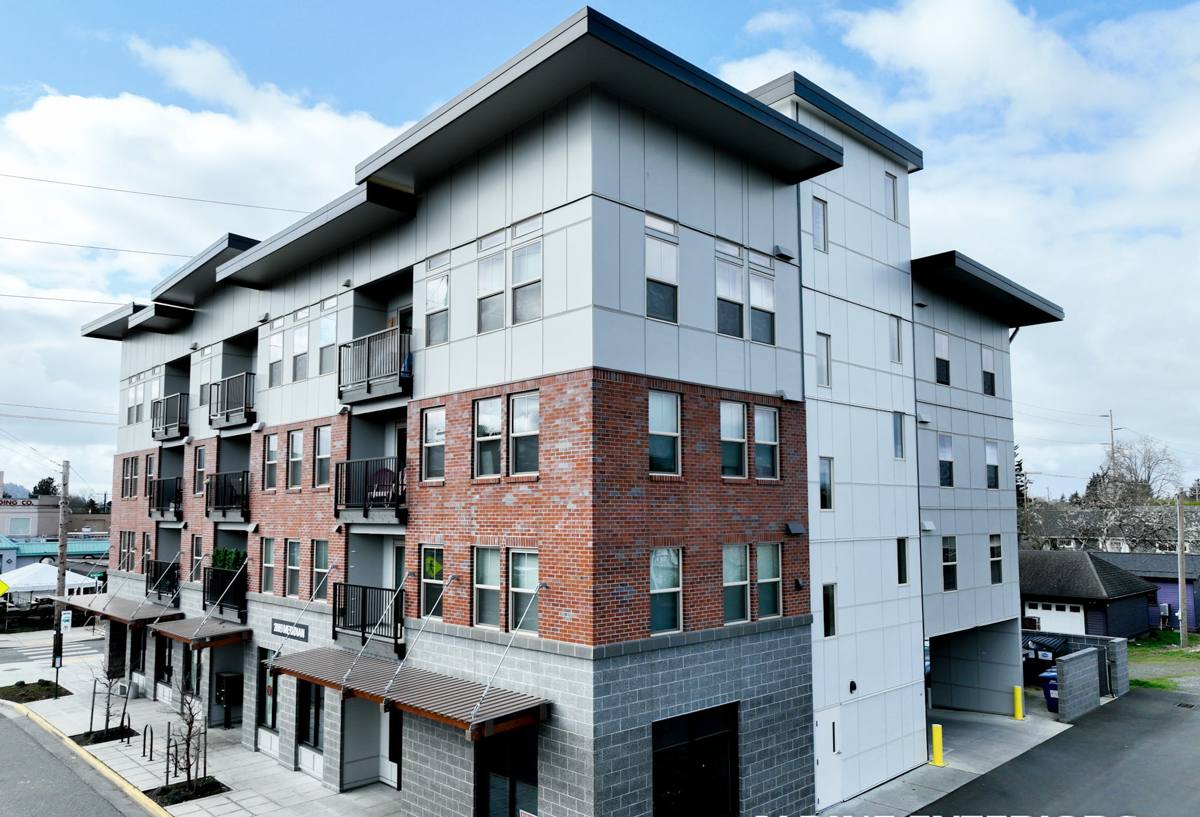
What This Climate Does to a Wall Over Time
Salt Air and Corrosion
Salt-laden coastal air accelerates corrosion on anything metal — fasteners, flashing, trim tape edges, even the cut heads of nails if they're not properly coated or set. On a lot of siding products, that corrosion shows up as rust streaking or fastener pop long before the siding itself is worn out. It's a slow problem, which is exactly why it gets ignored until it's expensive.
Driving Rain and Wind-Driven Moisture
Rain that comes in at an angle doesn't behave like rain falling straight down. It gets pushed up under laps, into seams, and behind poorly sealed trim. A siding system that relies on face-sealing (caulk and paint doing all the work to keep water out) tends to fail here faster than in drier, calmer climates, because the water pressure at laps and penetrations is simply higher.
Moss, Algae, and Prolonged Dampness
Shaded walls, tree cover, and long stretches of overcast, damp weather mean moss and algae get a real foothold on siding that stays wet. Wood-based products are especially vulnerable because organic growth feeds on the material itself once moisture gets past the surface finish. Fiber cement doesn't offer that food source, which matters a lot on north- and west-facing walls in this area.
Why James Hardie Is What We Put on Nooksack-Area Homes
James Hardie fiber cement is cement, sand, and cellulose fiber — not wood, not vinyl, not a wood-composite product. That composition is the whole reason it holds up here:
- It doesn't rot, and it's not a food source for moss or fungal growth the way wood-based siding and trim can be.
- It's dimensionally stable — it doesn't swell, cup, or crack from repeated wet-dry cycling the way wood and some composites do.
- Hardie's ColorPlus factory finish is baked on and warranted separately from the substrate, so it resists the fading and chalking that salt air and UV speed up on field-painted siding.
- James Hardie engineers its HZ5 product line specifically for wetter, harsher climates like the Pacific Northwest coast — it's not a one-size-fits-all product across the country.
- It's non-combustible, which matters for insurance and peace of mind independent of the moisture question.
We don't install LP SmartSide, vinyl, Cemplank, Allura, primed spruce, or cedar. Some of those are decent products in the right application, but none of them hold up as consistently in this specific combination of salt exposure, wind-driven rain, and extended damp shade — and we'd rather stand behind one system we trust completely than offer five and hope the homeowner picks right.
What a Correct Installation Actually Involves
Moisture Management Behind the Siding
The siding itself is only part of the system. A correct install starts with a properly lapped weather-resistive barrier and a drainage plane that lets any moisture that does get past the cladding drain back out instead of sitting against the sheathing. This is the part that's invisible once the job is done — and the part that determines whether the wall is dry in ten years or rotting from the inside out.
Fastening and Fastener Choice
Given the salt air, fastener corrosion resistance isn't optional. We use fasteners rated for the exposure and set them to Hardie's blind- or face-nailing specs — over-driven or under-driven nails are one of the most common causes of premature siding failure, and it's a detail that's easy to rush and hard to spot from the ground.
Flashing and Penetrations
Every window, door, and penetration is a place water pressure from driving rain can find a way in. Correct head flashing, kick-out flashing at roof-wall intersections, and properly sealed (not just caulked) penetrations are what actually keep wind-driven rain out — caulk is a backup, not the primary defense.
Clearance and Ventilation
Hardie specifies minimum clearances from grade, roof lines, and decks for a reason: siding installed too close to the ground or to a horizontal surface stays wet longer and traps debris, moss spores included. We hold those clearances even when it means a slightly less "flush" look, because that gap is what keeps the bottom courses dry.
Caulking and Joint Treatment
Butt joints and trim junctions get treated correctly the first time — quality sealant, correct joint width, and paint-grade caulk only where it's actually rated for exterior movement. In a climate this wet, a poorly caulked joint doesn't just look bad in a year, it's a moisture entry point.
How Our Process Works on a Nooksack-Area Home
| Step | What We Do | Why It Matters Here |
|---|---|---|
| Assessment | Inspect existing siding, sheathing, and trim for moisture damage, moss growth patterns, and problem areas (shaded walls, poor drainage spots) | Identifies hidden rot or drainage issues before they're covered up |
| Removal | Strip old siding and trim down to sheathing | Lets us inspect and repair the water-resistive barrier and sheathing directly |
| Barrier and Drainage Plane | Install or repair weather-resistive barrier with a proper drainage gap | This is what actually protects the wall long-term, not just the visible siding |
| Flashing | Install corrosion-resistant flashing at all penetrations and transitions | Directly addresses wind-driven rain intrusion points |
| Hardie Installation | Install HZ5 panels or lap siding to spec: correct fasteners, nailing pattern, clearances | Matches the product to the exposure it will actually face |
| Trim and Caulking | Install trim, seal joints correctly, finish with ColorPlus-matched caulk | Closes remaining entry points without relying on caulk alone |
| Final Walkthrough | Walk the job with the homeowner, check clearances and finish | Confirms the details that matter most in this climate were actually followed |
Moss and Algae: Reducing the Long-Term Battle
No siding is moss-proof if it's kept wet enough long enough — but fiber cement takes away the food source that lets organic growth actually colonize a wall surface the way it can with wood or wood-composite siding. Combined with correct clearances (so bottom courses aren't sitting in splash-back or ground moisture) and keeping vegetation trimmed back from north-facing walls, Hardie siding on a Nooksack-area home should need only occasional gentle washing to stay clean — not scraping, treating, or repainting to fight moss the way older wood siding often does.
Why a Crew That Already Works This Area Matters
Fastener specs, clearance requirements, and flashing details in a manufacturer's install guide are the baseline — but knowing which walls on a given property will actually take the worst of the driving rain, where moss pressure is going to be worst based on tree cover and sun exposure, and how salt air is realistically going to affect fastener choice over a 20- or 30-year span is local knowledge. A crew that installs Hardie across Whatcom County and the Blaine area regularly sees how these choices play out on real homes in this exact climate, not a generalized national average. That's the difference between a technically correct install and one that's actually correct for this property.
Signs Your Current Siding Is Losing the Fight
- Persistent moss or algae staining that returns within weeks of cleaning
- Soft spots, especially near the bottom courses or around window trim
- Visible fastener rust streaks or popped nail heads
- Peeling or chalking paint that's returned faster than expected after repainting
- Gaps opening up at butt joints or trim corners
- A musty smell near exterior walls, which can point to moisture already behind the cladding
What This Typically Costs
Every Hardie project is priced from the actual scope — wall area, trim complexity, tear-off condition, and access — so we won't quote a number without seeing the home. In general, expect the cost to sit above vinyl and comparable to or somewhat above cedar, reflecting both the material and the correct-install labor described above. What that price buys is a factory-finished, climate-engineered product with a real transferable warranty and none of the ongoing maintenance cycle that wood and some composite products carry in this climate. We'll walk through the specifics for your home during a free estimate.
If you're in the Nooksack area and dealing with siding that's losing the fight against moss, salt air, or wind-driven rain, we'll come take a look and give you a straight, no-pressure estimate on what correct James Hardie siding would cost for your home — no obligation, no upsell to a product we wouldn't put on our own houses.