 Blaine
 Cherry Point Roofs Work Harder Than Most
Homes out toward Cherry Point sit close enough to the water that the roof is dealing with something most inland Washington houses never see: near-constant exposure to salt-laden air off the Strait of Georgia, combined with the wind-driven rain that comes through Whatcom County in fall and winter. Add in a shady, damp shoulder season that runs long here, and you've got a roof that's fighting moss growth for a good chunk of the year. None of that is a reason to panic about your roof — but it is a reason to replace it correctly the first time, with materials and details chosen for this specific exposure, not a generic spec sheet.
A roof replacement done right for a Cherry Point property accounts for wind uplift at the edges, moisture that wants to sit under moss mats, and fasteners and flashings that can corrode faster in salt air than they would ten miles inland. This page covers what that actually looks like — what to watch for, what a correct job includes, and how we handle the work.
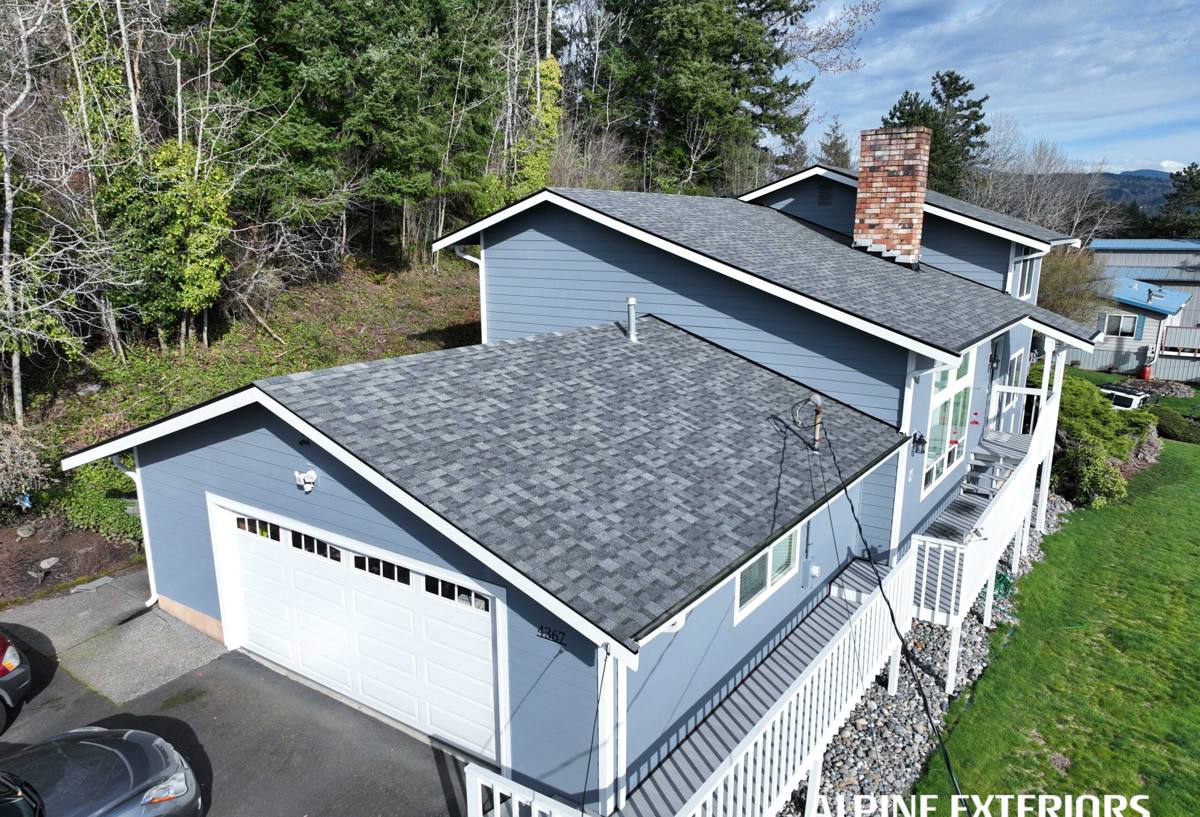
Signs Your Roof Has Reached the End of Its Life
Roofs rarely fail all at once — they show warning signs first. In this area, watch for:
- Granule loss showing up in gutters or at downspout splash zones, which means asphalt shingles are losing their protective coating
- Moss or algae mats that keep coming back within a season or two of cleaning, especially on north-facing or shaded slopes
- Curling, cupping, or cracked shingles, particularly on slopes that catch the most wind
- Soft spots in the decking when walked on, which usually means moisture has gotten past the roofing surface
- Rust streaks or corrosion around flashing, vents, or exposed fasteners — more common here than in drier inland climates
- Daylight visible through the attic roof boards, or damp insulation after a storm
Any one of these can sometimes be repaired. Several of them together, or a roof that's already at or past its expected service life, usually means repair is a short-term patch on a longer-term problem. We'll always tell you honestly which situation you're in.
What a Correct Roof Replacement Actually Involves
Tear-Off, Not Overlay
We remove the existing roofing down to the decking rather than layering new material over old. Overlaying hides problems — soft decking, trapped moisture, damaged flashing — instead of fixing them, and it voids most manufacturer warranties. In a climate that already pushes moisture into every gap it can find, starting clean matters.
Decking Inspection and Repair
Once the old roofing is off, we check the sheathing for rot, delamination, or soft spots — problems that are common on older Whatcom County homes where a roof went past its service life before replacement. Any damaged decking gets replaced before anything new goes down; nothing gets covered up.
Underlayment Built for Wet Climates
We use synthetic or self-adhered underlayment appropriate for a marine climate, with ice-and-water shield at eaves, valleys, and any low-slope transitions where wind-driven rain is most likely to work its way backward under the roofing.
Flashing at Every Penetration
Chimneys, vent pipes, skylights, and wall-to-roof transitions are where the vast majority of roof leaks actually start — not in the field of the roofing material itself. We install new flashing at every one of these, matched to the roofing system, not reused from the old roof.
Fasteners and Hardware Rated for Salt Exposure
For properties this close to the water, we use corrosion-resistant fasteners and hardware rather than standard-grade materials that can rust prematurely in salt air. It costs a little more up front and pays for itself in years of service life.
Material Choices for a Salt Air, High-Moss Climate
There's no single "best" roofing material for every house — the right choice depends on your roof's pitch, your budget, and how much maintenance you want to do. Here's how the common options stack up for a Cherry Point property specifically:
| Material | Moss/Moisture Behavior | Salt Air Durability | Maintenance |
|---|---|---|---|
| Architectural asphalt shingle | Good with proper ventilation; algae-resistant granules help | Solid when paired with corrosion-resistant flashing/fasteners | Periodic moss treatment recommended |
| Standing seam metal | Excellent — moss struggles to gain a foothold on smooth vertical seams | Needs a coated, marine-rated finish to resist salt corrosion long-term | Low; occasional rinse |
| Cedar shake | Prone to moss and moisture retention without diligent upkeep | Weathers naturally but needs regular treatment near salt air | Highest — regular cleaning and treatment required |
Our default recommendation for most Cherry Point homes is a quality architectural asphalt shingle with algae-resistant granules, or standing seam metal for homeowners who want the lowest long-term maintenance and don't mind the higher upfront cost. We steer clients away from untreated cedar shake in this specific microclimate — not because it's a bad product everywhere, but because the moisture retention and moss risk here mean it demands more upkeep than most homeowners want to commit to. That's a maintenance trade-off, not a knock on the material itself.
Ventilation: The Detail That Prevents Repeat Problems
A new roof with poor attic ventilation will develop the same moss and moisture issues as the old one, just on a delay. Proper intake at the eaves and exhaust at the ridge keeps the underside of the decking dry and temperature-balanced, which does two things: it slows moss regrowth on the surface, and it prevents condensation from building up inside the attic during our cool, damp winters. When we replace a roof, we evaluate your existing ventilation and correct it as part of the job rather than treating it as an upsell — it's part of doing the roof correctly.
How Our Process Works
- On-site inspection. We walk the roof (or use imaging where access is limited) and check attic ventilation, decking condition, and flashing details, not just the shingle surface.
- Written estimate. You get a clear scope and price — material options, tear-off and disposal, and any decking or flashing repairs called out separately so there are no surprises.
- Scheduling around the weather. We plan tear-off days around forecast windows so your home isn't exposed longer than necessary — a real consideration in a region where a dry stretch isn't guaranteed.
- Tear-off and decking repair. Old roofing comes off, decking is inspected and repaired as needed, and debris is hauled off site.
- Underlayment, flashing, and roofing installation. Installed in the sequence and to the specs that keep water moving out, not in.
- Final walkthrough. We review the finished roof with you, including ventilation and any maintenance recommendations specific to your property.
Why a Crew That Already Works Cherry Point Matters
Roofing that's engineered for a dry inland climate isn't automatically wrong here — but it needs adjustments a crew unfamiliar with this stretch of Whatcom County might skip: heavier-duty fasteners for salt exposure, extra attention to ridge and eave ventilation for moss control, and flashing details sized for wind-driven rain rather than straight-down rain. A crew that regularly works properties along this part of the coast has already worked through those adjustments and knows which details actually matter for a roof out here versus a roof twenty miles inland. That experience shows up in fewer callbacks and a roof that's still performing well a decade or two later.
After Your New Roof Goes On
A correctly installed roof still benefits from basic upkeep, especially in a moss-prone, salt-air environment. A simple annual routine goes a long way:
- Clear gutters and downspouts each fall before the heavy rains start
- Have moss treated at the first sign of regrowth rather than letting it establish
- Trim back overhanging branches that keep sections of the roof shaded and damp
- Do a visual check after major windstorms for lifted or missing shingles
- Have flashing and attic ventilation checked every few years, not just when there's a visible problem
Most manufacturer warranties also require this kind of basic maintenance to stay valid, so it's worth keeping a simple record of when you last had the roof checked or treated.
What Affects the Cost of a Cherry Point Roof Replacement
Every roof is a little different, but the same handful of factors drive most of the price difference between projects:
| Factor | Why It Matters |
|---|---|
| Roof size and pitch | Steeper roofs take longer to work safely and use more material per square foot of coverage |
| Number of existing layers | Multiple old layers mean more tear-off labor and disposal cost |
| Decking condition | Rotted or soft sheathing found during tear-off adds material and labor to replace |
| Material selection | Asphalt, metal, and cedar carry different material and installation costs |
| Roof complexity | Valleys, dormers, chimneys, and skylights each add flashing work and time |
| Site access | Difficult access for equipment or material staging can add labor time |
Because of these variables, we don't quote roof replacements over the phone — an accurate number requires seeing the actual roof. What we can tell you honestly is that a properly done tear-off and replacement, with correct ventilation and flashing, almost always costs less over the life of the roof than a cheaper job that needs early repairs or a second replacement.
Ready for an Honest Look at Your Roof?
If your roof is showing wear, or you just want an honest read on how much life it has left, we're glad to take a look. Reach out using the form below for a free, no-pressure estimate — we'll tell you straight whether you need a full replacement, a targeted repair, or just a maintenance plan to get more years out of what you have.