 Blaine
 Cherry Point Sits Right Where the Climate Gets Hard on Siding
Cherry Point is about as close to the Strait of Georgia as a home in Whatcom County gets. That proximity is the whole story when it comes to choosing and installing exterior siding out here. Homes in this stretch take a different kind of weathering than a house ten miles inland in Blaine or Ferndale — steady onshore wind, salt-laden air, driving rain that comes in sideways more often than straight down, and a moss season that can run from October clear through April in a wet year. None of that is dramatic on any single day. It's the accumulation, year after year, that separates siding that lasts thirty-plus years from siding that starts failing at year twelve.
We install exclusively James Hardie fiber cement siding, and we've priced out and turned down other products for good reasons we'll explain below. This page is specifically about what a correct siding installation looks like for a Cherry Point property — not a generic overview of siding in general.
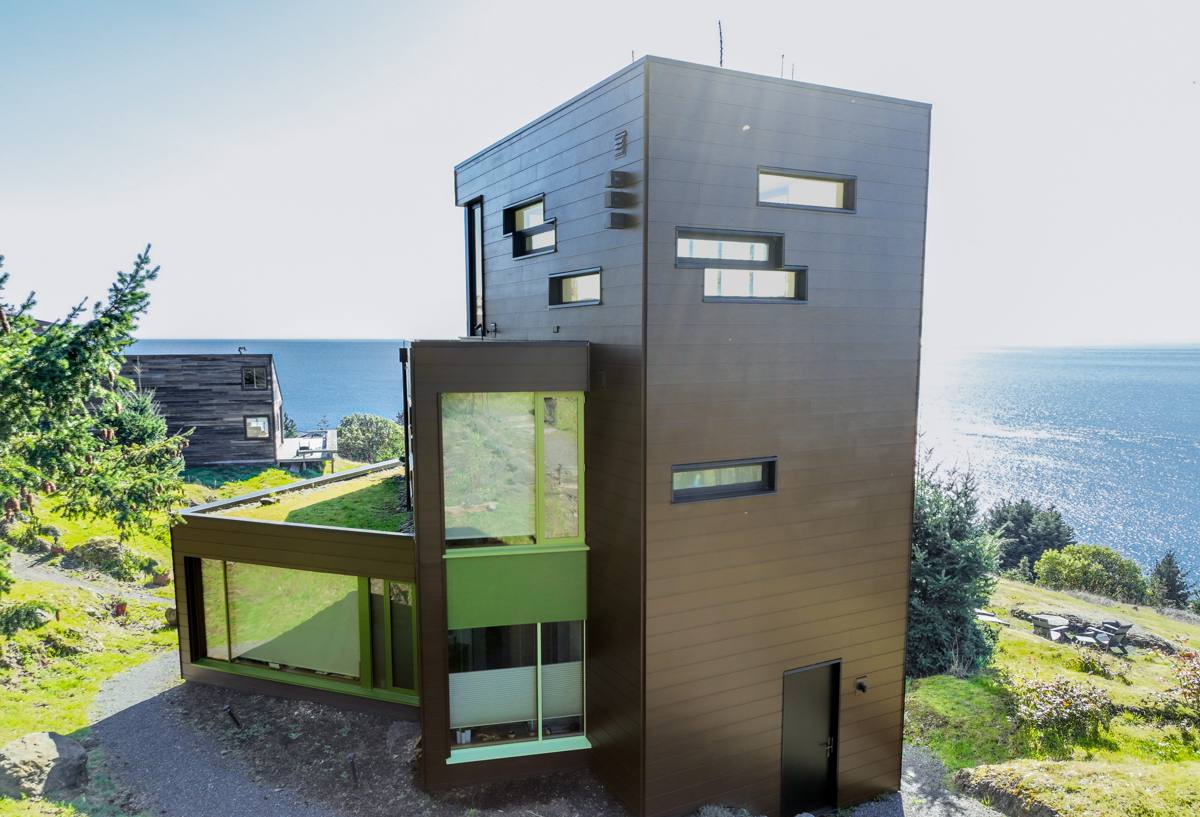
What Salt Air, Driving Rain, and Moss Actually Do to a Wall
Salt Air
Airborne salt from the Strait doesn't just sit on the surface of your siding — it works its way into fasteners, flashing, and any exposed cut edge. Over time it accelerates corrosion on anything that isn't rated for a marine or near-marine environment, and it breaks down cheaper paint finishes faster than a manufacturer's warranty documentation usually accounts for. Homes closer to the water need fastener and flashing choices that assume ongoing salt exposure, not the standard inland spec.
Driving Rain
Wind off the water pushes rain horizontally into wall assemblies, not just down over them. That means the parts of an installation most homeowners never think about — the drainage plane behind the siding, the flashing details at windows and penetrations, the way panels are lapped and gapped — matter more here than they would on a sheltered inland lot. A siding job that would hold up fine in a low-wind location can fail years early on a wall that regularly takes rain at an angle.
Moss and Prolonged Dampness
Whatcom County's wet season is long, and Cherry Point's exposure means walls often stay damp longer after a storm than they would a few miles inland. Moss and mildew need sustained moisture to establish, and once they get a foothold on siding — especially in shaded elevations or under eaves with poor airflow — they hold moisture against the surface and accelerate whatever degradation is already happening underneath.
Why This Isn't Just "Standard Siding Installation, But Closer to Water"
A lot of siding problems we get called out to inspect on this side of the county trace back to a job that was installed correctly for an average Pacific Northwest home, but not for one sitting in a higher salt-and-wind exposure zone. The material itself often isn't the whole problem — it's fastener corrosion at year eight, caulk joints that failed under sustained wind-driven rain, or a drainage gap that wasn't sized for how much moisture actually needs to get out from behind the wall here.
Getting it right on a Cherry Point home means treating the site conditions as the starting point for every decision — not applying a standard spec and hoping it holds.
Why We Install James Hardie and Nothing Else
We made the decision years ago to install only James Hardie fiber cement siding, and a marine-influenced climate like Cherry Point's is exactly the kind of environment that decision was made for.
- Non-combustible material that doesn't rely on a surface coating to resist heat or embers, and doesn't soften or warp from sustained sun and heat cycling.
- Engineered HZ product lines built specifically for climate zones like ours, where moisture exposure is the primary long-term threat rather than extreme heat or freeze-thaw cycling.
- ColorPlus factory finish, baked on in a controlled environment rather than field-painted, which holds color and resists the fading and chalking that salt air and UV exposure cause faster out here than inland.
- Dimensionally stable fiber cement that doesn't swell, cup, or rot the way wood-based products can when they take on repeated moisture, and doesn't become brittle in cold, damp winters the way some engineered wood products can over time.
- A strong transferable warranty backed by a manufacturer that engineers specifically for regional exposure, not a one-size-fits-all national spec.
We don't install vinyl, LP SmartSide, Cemplank, Allura, primed spruce, or cedar. Each of those products has real strengths in the right application, but for a Cherry Point exposure specifically, we've seen enough of the trade-offs — moisture sensitivity, maintenance burden, or finish durability under salt and UV — that we won't put our name on the installation. Hardie fiber cement is what we've standardized on because it's engineered for exactly this kind of climate and holds up to it with proper installation.
What a Correct Installation Actually Involves Here
The product is only half the equation. Most of what determines whether siding lasts thirty years or twelve on a Cherry Point home comes down to installation details that aren't visible once the job is finished.
Drainage Plane and Rainscreen
A proper rainscreen gap behind the siding lets any moisture that does get past the surface drain and dry out instead of sitting against the wall assembly. Given how much wind-driven rain this stretch of shoreline sees, we treat this gap as non-negotiable, not an upgrade option.
Flashing at Every Penetration
Windows, doors, hose bibs, vents, and any other wall penetration are the places water finds its way in first. Correct step flashing, head flashing, and kick-out flashing at rooflines are what keep driving rain from tracking behind the siding at these points.
Fastener Selection
In a salt-air environment, fastener corrosion resistance matters more than it does inland. We use fasteners appropriate to the exposure rather than defaulting to a standard interior-zone spec, because a corroding fastener eventually compromises the whole panel around it.
Joint Treatment and Caulking
Panel joints and butt seams are where a lot of failures start under sustained wind-driven rain. Correct gapping, backer rod use where called for, and a quality sealant rated for the exposure keep those joints performing instead of opening up after a few wet seasons.
Manufacturer Installation Specification
James Hardie publishes climate-specific installation requirements, and following them — clearances, fastener patterns, caulking practices — is what keeps the manufacturer's warranty intact. A lot of the siding failures we inspect trace back to a shortcut on one of these details, not a defect in the material itself.
How Siding Materials Actually Compare in This Exposure
| Material | Salt Air / Moisture Performance | Maintenance Burden Here | Typical Longevity, This Exposure |
|---|---|---|---|
| James Hardie Fiber Cement | Engineered for climate exposure; factory finish resists fading and moisture damage | Low — periodic wash, no repainting on schedule | 30+ years with correct install |
| Vinyl | Can warp or become brittle under sustained wind and temperature swings; seams are a moisture entry risk | Low upfront, but replacement often needed sooner in high-exposure zones | Variable, often shorter in high-wind coastal exposure |
| Cedar | Attractive but absorbs moisture readily; needs ongoing sealing/staining to resist rot and moss | High — regular refinishing and moss treatment required | Shorter without diligent, ongoing maintenance |
| LP SmartSide (engineered wood) | Wood-strand core is moisture-sensitive at cut edges and joints if not maintained precisely | Moderate to high — edge sealing and inspection matter more here | Depends heavily on installation and upkeep |
This is a general comparison based on how these materials typically behave in sustained salt-air and driving-rain exposure — not a claim about any specific product's failure rate. It's the reasoning behind why we standardized on one material rather than offering all of them.
Our Process for a Cherry Point Job
The steps are similar to any professional siding installation, but each one gets adjusted for this location's exposure:
- On-site assessment — we look at wind exposure, elevation-by-elevation shading (which affects moss risk), existing moisture damage, and current flashing conditions before quoting anything.
- Tear-off and sheathing inspection — old siding comes off and we check the sheathing underneath for rot or moisture damage before anything new goes up, since covering a compromised wall just hides the problem.
- Weather barrier and rainscreen installation — sized and detailed for this exposure, not a generic inland spec.
- Flashing at every penetration and roofline — done before siding installation begins, not patched in afterward.
- James Hardie panel installation — installed to the manufacturer's climate-specific spec, with fastener and joint treatment appropriate to salt-air exposure.
- Final inspection and walkthrough — we review the completed work with the homeowner and explain what maintenance, if any, the finish requires going forward.
Keeping Siding Healthy After Installation in This Climate
Correct installation does most of the work, but a little homeowner awareness goes a long way in a moss-prone, salt-air location:
- Rinse siding once or twice a year, especially shaded north- and east-facing walls where moss tends to establish first.
- Keep gutters clear so overflow doesn't run down the wall face and stay damp longer than necessary.
- Trim back vegetation that shades siding and traps moisture against the wall.
- Check caulking at trim and penetrations every year or two — sealant is the first thing to show wear under driving rain.
- Watch for moss or dark streaking early; it's far easier to rinse off than to remove once it's established.
- After major windstorms, do a quick visual check for loose trim or gapped joints rather than waiting for a scheduled inspection.
Why a Crew That Already Works This Area Matters
Anyone can install siding to a general spec. Getting it right at Cherry Point means already understanding how this specific shoreline exposure behaves — which elevations take the worst of the wind-driven rain, how fast moss establishes on a shaded wall here versus an inland one, and what flashing and fastener choices actually hold up to sustained salt air rather than just meeting a minimum code requirement. A crew that's worked this stretch of Whatcom County repeatedly brings that judgment to the job before the first panel goes up, not after a callback.
If you're planning a siding project at Cherry Point or anywhere else around Blaine, we're glad to walk the property, look at your specific exposure, and give you a straightforward, no-pressure estimate using the form below.